Category: Mobile Apps

  • 5 Key Benefits of Turning Your Website into an App with vendrux

    5 Key Benefits of Turning Your Website into an App with vendrux

    Having a strong presence on smartphones is no longer just beneficial. It’s essential. 

    While every online business needs a responsive website, native mobile apps offer a more immersive and accessible experience that can drive serious growth (and profit) for your business. 

    More than 2,000 successful companies have turned to Vendrux for help, coming away with high-quality mobile apps for very little investment (and no risk).

    If you want to convert a website into an app, Vendrux is the best way to do it.

    Let’s explore why you’d want to do it – and why Vendrux provides the perfect solution for transforming your website into a powerful mobile app without the traditional headaches of app development.

    __wf_reserved_inherit
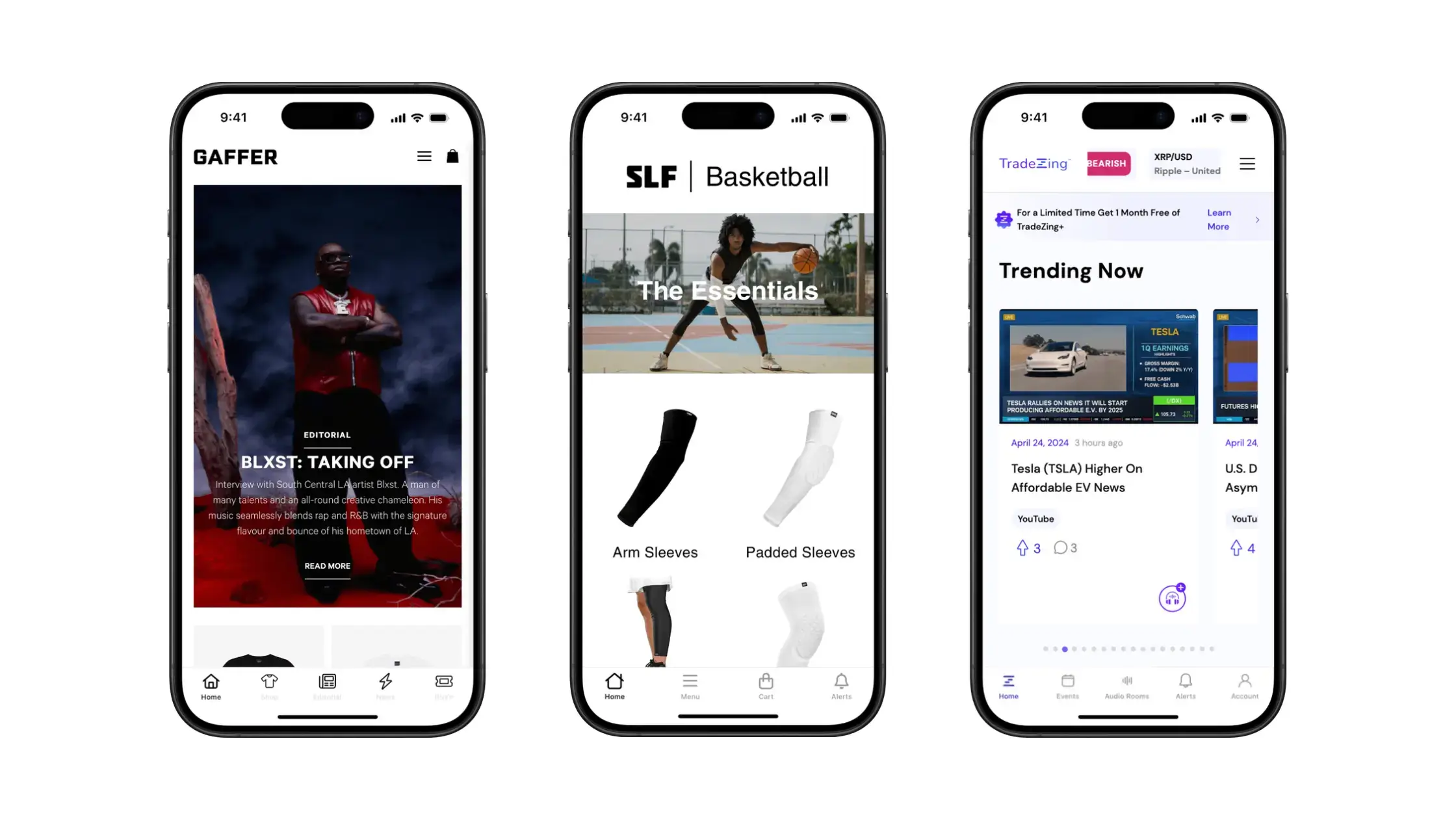
    Just a few examples of successful apps built with Vendrux

    Why Convert Your Website into an App with Vendrux?

    More than half of all web traffic now comes on mobile.

    Some industries, such as ecommerce, are becoming firmly mobile-first.

    Mobile apps have become an essential part of any long-term retention strategy. But they can still be a drain on your resources if you choose the wrong way to build your app.

    Here are five reasons why your business needs an app, and why Vendrux is the right way to build it.

    1. Increase User Engagement on Mobile

    The statistics don’t lie—mobile usage continues to dominate digital consumption patterns. 

    According to recent data, users spend over 4 hours per day on mobile devices, with 88% of that time happening within apps (rather than mobile browsers).

    When you convert your website into an app with Vendrux, you tap into this behavioral shift and create a more engaging mobile experience. App users consistently demonstrate:

    • Longer session durations: On average, mobile app sessions last 3-4 times longer than mobile web sessions.
    • Higher interaction rates: Users engage with more content and features when using native apps.
    • More frequent visits: App users return to your platform 2-3 times more often than mobile website visitors.

    Check out more mobile app statistics.

    This enhanced engagement stems from the improved user experience apps provide—faster loading times, smoother navigation, and the convenience of having your brand just a tap away on their home screen.

    2. Drive Higher Retention and Incremental Revenue Gains

    Apps naturally drive higher retention rates.

    The business impact of improved retention can’t be overstated. Converting your website visitors into app users creates a more sticky relationship with your brand.

    • Reduced churn: App users are 3-5 times less likely to abandon your platform compared to mobile web visitors.
    • Increased lifetime value: The combination of greater usage frequency and longer customer relationships leads to substantially higher customer lifetime value.
    • Incremental revenue: Turning more web users into app users creates more high-LTV power users, resulting in incremental revenue gains from people using your app instead of your website.

    This revenue boost comes from multiple sources, depending on the industry.

    Ultimately, the math is clear. More usage and more stickiness = more profit.

    3. Create a Direct Line to Your Customers

    Reaching your audience has become increasingly challenging for modern businesses.

    • Organic social media reach continues to decline (these platforms have been “pay to play” for a while now).
    • Email deliverability faces challenges, with open rates hovering around 20% for most industries.
    • Search algorithms constantly change, creating uncertainty in your traffic sources.

    A mobile app establishes an owned communication channel that bypasses these limitations.

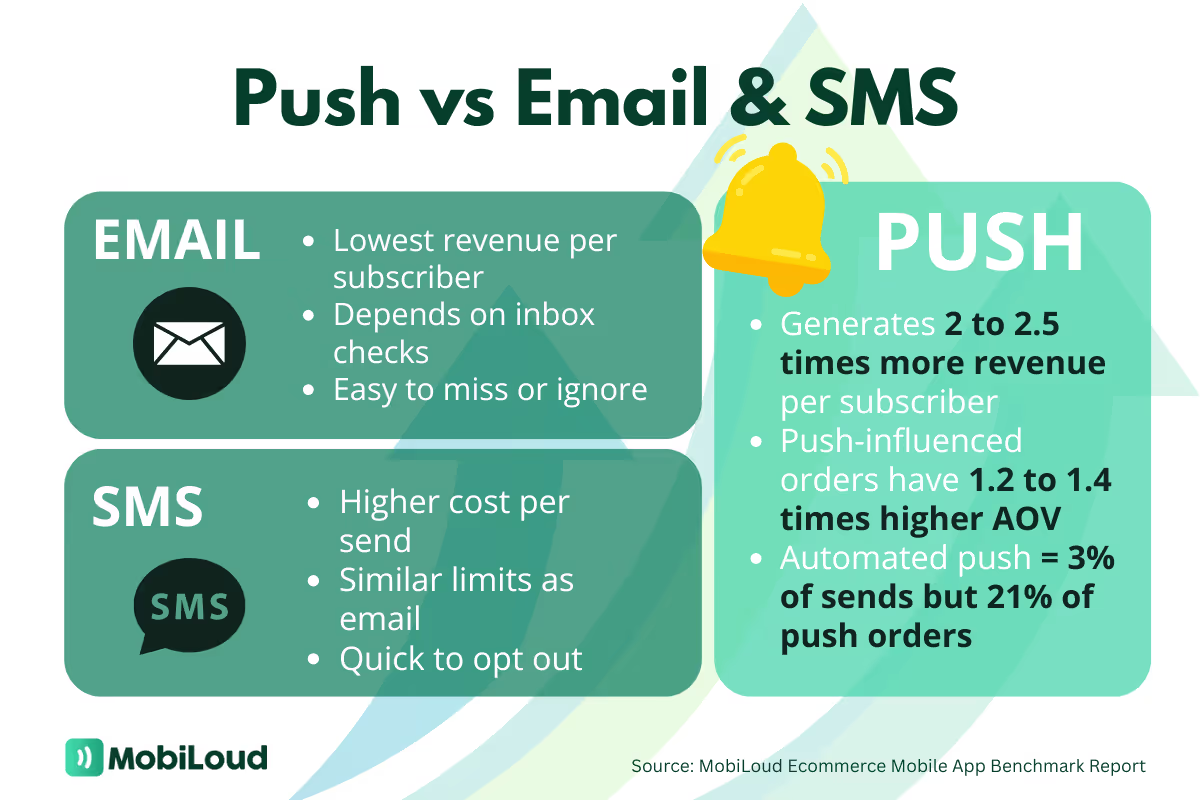
    Push notifications provide an immediate, highly visible way to reach users, with:

    • Open rates of 50-80%, far exceeding email.
    • Near-instant visibility compared to other channels.
    • Zero incremental cost per message sent (unlike SMS).
    • Sophisticated targeting options based on user behavior.

    This direct line to your customers enables you to drive engagement, promote new offerings, and nurture relationships without depending on third-party platforms or algorithms.

    4. Save $100k+ vs Custom Development

    Traditional app development represents a significant investment of both time and money:

    • Custom iOS and Android development typically costs $150,000-$300,000 for initial builds.
    • Development timelines often stretch 6-12 months before launch.
    • Ongoing maintenance requires dedicated developers and additional budget.

    Vendrux eliminates these barriers by:

    • Reducing costs by 90%+ compared to custom development.
    • Launching your app in under 30 days, rather than months or years.
    • Requiring zero technical resources from your team.
    • Handling all maintenance and updates automatically.

    This dramatic reduction in cost and complexity removes the risk traditionally associated with mobile app launches, making it accessible to businesses of all sizes.

    5. Maintain a Single Codebase and a Streamlined Workflow

    Perhaps one of the most compelling benefits of Vendrux is the operational simplicity:

    • No duplicate content management: Update your website and your app updates automatically.
    • No separate development teams: Your existing web developers can maintain everything.
    • No synchronization issues: All content, features, and updates stay consistent across platforms.
    • No additional QA processes: Testing your website ensures your app works properly.

    This unified approach eliminates the common headache of managing multiple platforms with different codebases, freeing your team to focus on improving your core web experience (and allowing you to focus on business growth), rather than juggling multiple versions of your digital presence.

    How it Works

    The process of converting a website into a mobile app with Vendrux is streamlined and managed entirely by our team. 

    Here’s a step-by-step overview:

    1. Kickoff & Setup

    Start with a free preview of your app – and use our configuration dashboard to customize it to your liking, and play around with an interactive preview.

    __wf_reserved_inherit

    2. App Configuration

    When you give the go-ahead, the Vendrux team builds the app, mirroring your website’s design and functionality, while adding small touches that make your website come to life as a true mobile app with a fully native look and feel.

    3. Customer Testing

    In 1-2 weeks you’ll receive preview versions for testing.

    Try out the app on your own devices, and send us any feedback on features and experience for us to incorporate into the build.

    4. Quality Assurance

    At the same time, Vendrux’s QA team tests the app on all devices, fixing bugs, clearing kinks and catching any usability issues before proceeding.

    5. Store Submission

    Once your app is ready for launch, we take care of submitting your app to both the Apple App Store and Google Play.

    We’ll create eye-catching screenshots, writing optimized descriptions to help with discovery, and handling all the technical requirements that the stores ask for.

    We manage the whole submission process, including any back-and-forth with the review teams. There’s nothing at all for you to do here!

    6. Final Optimization

    During the review period, we proactively monitor your app’s status.

    Whether we get feedback from your team or the app store reviewers, this is our chance to make those final adjustments that will make your app really shine.

    7. Launch & Growth

    We’ll coordinate the release of your app, providing a launch strategy and helping you set up engagement tools like push notifications, as well as promotional banners on your website to start bringing in your first app users.

    Want to learn more? Get a free preview of your app; a live prototype that shows what’s possible with Vendrux (and how the end product is 97% as good as what you’d get from a custom, million-dollar app).

    Final Thoughts: Are You Ready to Build a High-Impact, Risk-Free Mobile App?

    Your business can’t afford to miss the opportunities that come with launching your own mobile app.

    Vendrux offers the perfect balance—all the benefits of native mobile applications without the traditional costs, technical challenges, or ongoing maintenance headaches.

    Custom app development is fraught with risk.

    • Hundreds of thousands of dollars invested that your app needs to recoup.
    • Massive opportunity cost from undertaking such a big project.
    • The risk that the app won’t measure up to your mobile web experience (and thus be a total waste of money).
    • Juggling multiple teams, and hiring developers that are unfamiliar with your business and existing codebase.
    • Operational complexity going forward (more than double the work, and often mid-5 figures per month in maintenance costs).

    By leveraging your existing website investment and extending it to native mobile apps, you create new channels for engagement, retention, and revenue growth while maintaining operational simplicity.

    The question isn’t whether you can afford to build a mobile app—with Vendrux, it’s whether you can afford not to.

    Ready to take the next step? Get a free consultation now to see how quickly and affordably we can transform your website into powerful iOS and Android apps that drive real business results.
  • 8 Benefits of Mobile Apps for Your Business (And 4 For Your Users)

    8 Benefits of Mobile Apps for Your Business (And 4 For Your Users)

    Today, most customer journeys start and finish on mobile devices.

    More than half of all internet traffic comes on mobile. Mobile dominates ecommerce. And most web-first businesses are missing one of the most powerful assets for the mobile customer experience; a mobile app.

    Only 4.5% of successful ecommerce businesses have an app. The numbers are similar in other segments, such as SaaS, publishing, and membership sites. That means the majority of businesses are missing out on some powerful benefits.

    We’re going to explore those benefits in this article. Keep reading and learn all the top benefits of mobile apps – for both your business, and your customers.

    Vendrux helps businesses like yours launch fast, powerful mobile apps – with none of the overhead of custom development. Learn more: check out the benefits of turning your website into an app with Vendrux.

    The Benefits of Mobile Apps for Businesses (Greater Retention, Higher Revenue & Profits)

    A mobile app isn’t just a vanity project. It’s a powerful (mobile-first) customer engagement tool for your brand.

    Mobile apps help build stronger customer relationships, drive higher revenue, and create a powerful moat for your business.

    And with the cost of building an app today (assuming your business already has a mobile-optimized website), the ROI is almost too good to ignore.

    Let’s dive deeper into the biggest benefits of mobile apps for your business.

    1. Increased Retention and Customer Loyalty

    Many businesses in many different industries struggle with retention. It’s very difficult to get customers consistently coming back to your website.

    Your app lives on your customer’s home screen; always just a tap away.

    That kind of visibility and convenience makes it far more likely for your customers to return.

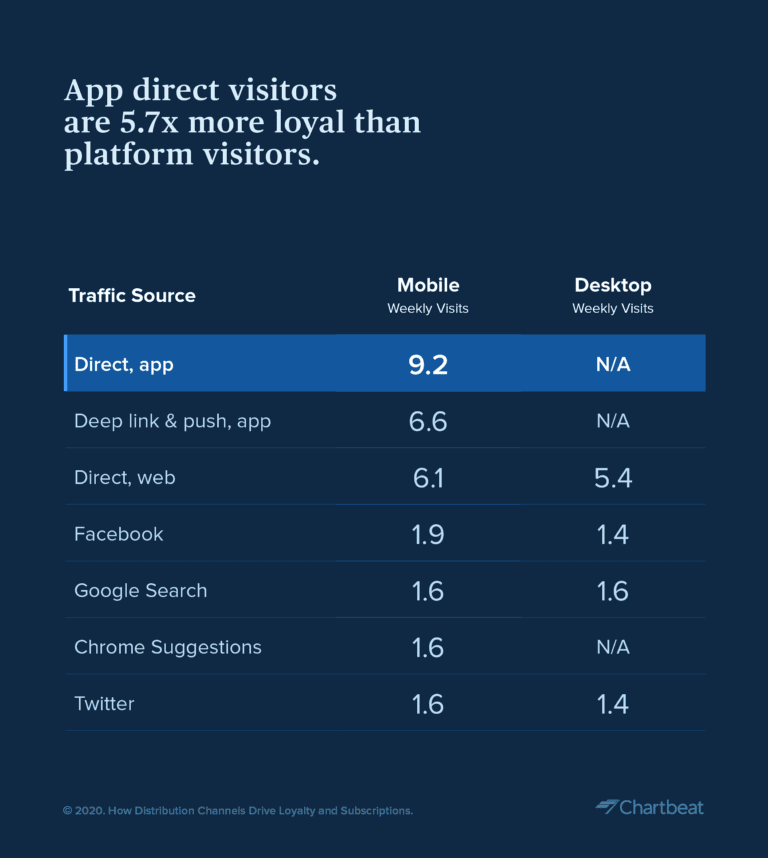
    Mobile apps average more repeat visits, more purchases (app users purchase 3-7x more often), and overall much better customer retention than websites.

    “When looking at weekly visits by traffic sources across mobile and desktop experiences, we saw that app direct visitors are nearly 6x more loyal than platform visitors.” – Chartbeat

    Image via Chartbeat

    2. Direct, High-Impact Communication

    Mobile apps give you access to mobile push notifications.

    __wf_reserved_inherit

    Push notifications cut through the noise in a way email and SMS just can’t anymore.

    With open rates of 80-90%, they’re one of the most effective tools you have for driving action.

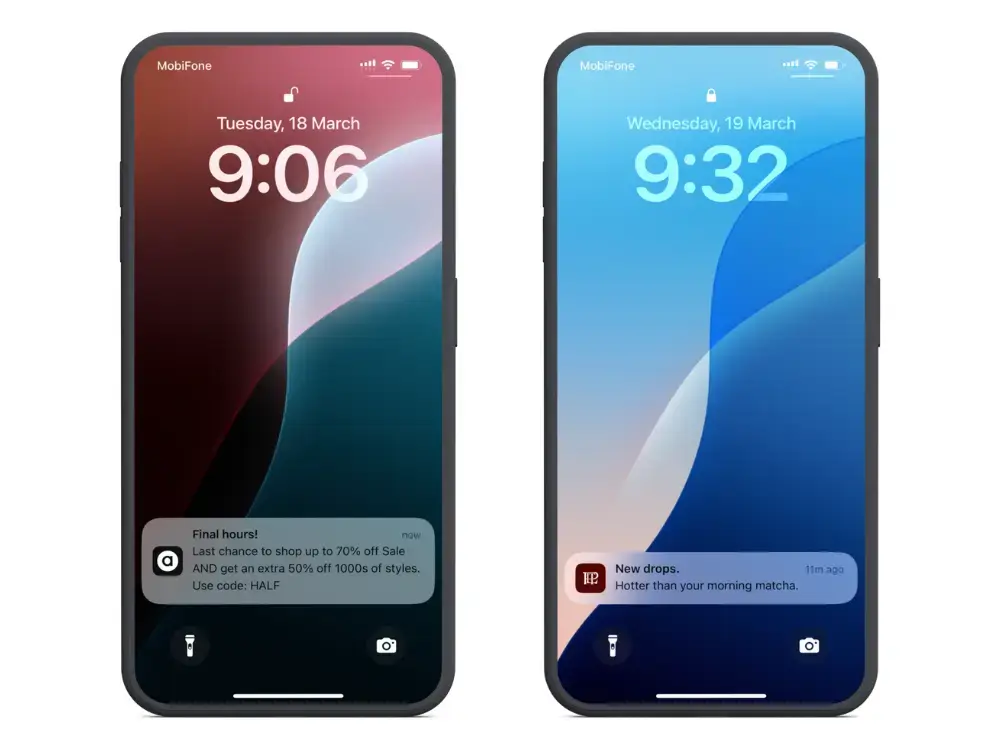
    Whether you’re promoting a sale, chasing after abandoned carts, announcing a new product drop, or sharing breaking news, apps let you reach your audience instantly, with messages that actually get seen.

    3. Better Revenue Metrics

    When customers use your app, they have longer sessions, more frequent sessions, and convert at 3x as often.

    Apps reduce distractions, keeping the user attentive and engaged for longer, and makes every part of the experience smoother for smartphone users.

    It’s easy to get into the app. Native payment options like Apple Pay and Google Pay make paying easy.

    There are fewer drop-offs, less friction, and a much higher chance of turning visits into purchases.

    This all adds up to more revenue for your business.

    4. Better Profit and Sustainability

    Most business are built on a foundation of sand. They rely on paid acquisition (Google/Meta ads), algorithms (Google Search) or inconsistent referral traffic for the bulk of their sales.

    Mobile apps let you own your customers. You get a direct line to their home screen. You don’t have to worry about being throttled by an algorithm, or constantly rising acquisition costs.

    Revenue you make from app users is all profit. Push notifications cost nothing to send, and there’s no ad spend to stay on your customer’s home screen.

    The more engagement comes through your app, the more profitable, and sustainable your business becomes.

    5. Enhanced Visibility and Brand Authority

    Your brand being in the App Store and Google Play Store adds a new layer of legitimacy.

    It puts your brand in a place reserved for established players, and trustworthy companies.

    It also gives you new ways to be found. People can find you through the app stores. Your brand shows up in more organic searches.

    You’re easier to find, and harder to forget.

    __wf_reserved_inherit

    6. Personalization & First-Party Data

    Businesses are struggling for reliable data from their customers today.

    Cookies, stringent privacy protections from platforms like iOS, are making it difficult to track user behavior and understand your audience.

    A mobile app is a source of first-party data. It’s an owned platform, where you own all the analytics and all the data.

    This allows you much better insights into your customers, and the ability to build hyper-personalized, hyper-relevant experiences.

    7. Expanded Revenue Streams

    Your app can also open up new ways to monetize and engage your audience.

    In-app memberships. Exclusive product drops. App-only content and experiences. In-app purchases. Loyalty programs that integrate with the real world.

    Apps give you the ideal sandbox to test and scale new revenue plays (without a third-party controlling what you can and can’t do).

    The Starbucks rewards app – a great example of building a loyalty program through mobile apps.

    8. A Better User Experience

    Apps are a better experience for your users too.

    That’s why 90% of mobile time is spent on apps. Users spend an average of 3.5 hours per day using apps, compared to less than half an hour on mobile browsers.

    More user engagement is a win for your business. It means higher customer satisfaction, more time spent with your brand, and more valuable customer interactions.

    Even if your app just mirrors your website, it still feels better to use for returning customers than having to remember and type the URL every time. That’s why app users stick around for much longer.

    Ready to explore launching your own mobile app? It’s easy – and you could be live in less than a month. Get a free preview of your app to see what’s possible.

    Benefits of Mobile Apps for Users (More Convenient, Mobile-First UX)

    We’ve talked about the business upside. But your customer base aren’t begrudgingly using apps. Your best customers will willingly download your app, because the user experience is so much better.

    Here’s what makes apps a win from your customers’ point of view:

    1. Speed and Convenience

    Apps are faster, more efficient, more convenient.

    It’s not just a tech thing. While native apps load content faster, even hybrid apps (which are mostly built from the same code as a website) are still smoother and faster to use.

    __wf_reserved_inherit
    The Amazon Shopping app is a hybrid app – and it drives billions of dollars in revenue

    You can open from one tap on the home screen. No typing a URL, no browser tabs. Automatically logged in. Smoother navigation, fast checkout, with mobile payments integrated by default.

    2. Personalized and Relevant Experiences

    Again, direct access to first-party data is not just a win for you. It’s a win for your customer.

    Brands are able to create more personalized, more relevant experiences. The experience in an app feels tailored to the user.

    It makes them feel more like a VIP. Like the app is built for them; on the web, you’re just one of millions.

    3. Native Features

    Mobile websites are built for the browser; and most are built for desktop browsers.

    The mobile browser experience has gotten a lot better, but it’s still a square peg in a round hole, not made for mobile users.

    Apps are built specifically for mobile devices. They open up native device features, like push notifications, camera and GPS integration, and offline mode (in some cases).

    All of this elevates the user experience in a way the browser can’t.

    4. Exclusivity

    If there’s one thing your customers crave more than anything, it’s exclusivity.

    They want to feel special. They want to be a VIP. They want perks and content and access to experiences that not everyone has.

    Exclusive product drops, early access, these are perks that customers will gladly download an app for.

    How to Build Your Own Mobile App

    Launching your own mobile app is a great way to make meaningful progress towards your business goals.

    Yet for many, mobile app development feels daunting. It’s a new, possibly costly, time-consuming endeavor.

    But if you already have a website, and it’s already well-optimized for mobile, creating a mobile app is easy with our web to app platform, Vendrux.

    It’s a low cost, all the work is done for you, and you’ll get apps for both iOS and Android operating systems that look and feel like million-dollar native apps.

    __wf_reserved_inherit

    The apps fully replicate your web experience, with the necessary native mobile features added on top. All up, you could be live in less than a month.

    Here’s how it works:

    1. Connect your website and book your onboarding call
    2. Our team reviews your site and configures the first version of your app within 1 business day.
    3. Once you receive your app preview, we’ll help customize the app’s design, navigation, and branding based on your feedback. We’ll align on final details to get your app ready for testing.
    4. Test your app on real devices. We’ll do our own testing, and implement any final updates based on your team’s feedback.
    5. Prepare for launch. We submit your app to the App Store and Google Play, manage approvals, and provide promotional templates and assets to help you plan your rollout.
    6. Launch your app to your customers. We help you set up app marketing campaigns, as well as push notifications (welcome sequences, cart abandonment reminders).

    We help you every step of the way to start building customer loyalty, increasing repeat purchases, and boosting retention from day one.

    Vendrux handles everything. From app configuration, to testing, app store submission, and post-launch maintenance.

    You get a polished, branded app, that provides a seamless user experience for your users, backed by a team that’s done this thousands of times.

    Vendrux is great for ecommerce apps, SaaS apps, marketplaces, digital publishers, and more. Want to see what kind of businesses are thriving with Vendrux? Check out these case studies.

    Wrapping Up

    When you put it all together, it’s clear: mobile apps offer numerous advantages for today’s businesses.

    From providing a more engaging experience for users, to higher retention rates, mobile apps are the best way to connect with your customers and get more revenue.

    Apps aren’t just marketing channels. They’re a direct line to your customers’ mobile phones.

    And the best news is, with Vendrux, you can build an app with all the essential features of a native app, and none of the downsides.

    Interesting? Get a free preview of your app now to see what’s possible.

  • Android vs iOS Market Share: Most Popular Mobile OS in 2026

    Android vs iOS Market Share: Most Popular Mobile OS in 2026

    The smartphone market is a two-player game. 

    Android and iOS together account for over 99% of all mobile devices worldwide. Every other mobile operating system is either dead or statistically irrelevant.

    So which platform is actually winning? That depends on what you’re measuring. 

    In this guide, we break down the latest market share data across regions, countries, app stores, and revenue to give you the full picture for 2026.

    Want to launch an app, but not sure which platform to build it for? With Vendrux, you can easily launch apps for both iOS and Android, with no extra lift. Click here to learn more about how we can help you launch the perfect iOS and Android apps.

    Android vs iPhone Market Share: Which Smartphone OS Is More Popular?

    According to StatCounter data, Android holds a 70.36% global market share compared to iPhone’s 29.25%.

    In raw numbers, that translates to approximately 3.9 billion Android users versus 1.56 billion iPhone users worldwide.

    There are roughly 4.7 billion smartphone users globally, though the total number of active smartphone devices is higher (over 7 billion) since many people own more than one device.

    Android’s dominance comes primarily from its availability across hundreds of manufacturers at every price point. Samsung leads with about 31% of the Android vendor market, followed by Xiaomi (16%), Vivo (11%), and Oppo (10%). Apple, of course, is the sole manufacturer of iOS devices.

    Key Android vs iOS Statistics

    In the US, the market share data flips: iOS is the clear winner with nearly 60% of the market.

    Let’s dive into more Android vs iOS statistics now.

    Market Share by Country

    The split between Android and iOS varies significantly by country. In wealthier markets, iOS tends to lead or run close to even. In emerging markets, Android dominates by wide margins.

    Country iOS Android
    United States 59.8% 40.0%
    Canada 60.9% 38.8%
    United Kingdom 49.7% 49.8%
    Germany 41.2% 57.9%
    China 22.3% 77.3%
    India 4.8% 94.9%

    Source: StatCounter

    A few things stand out. 

    • The US and Canada remain strong iOS markets, with Apple holding roughly 60% in both countries.
    • The UK is now essentially a coin flip, with Android and iOS virtually tied at just under 50% each. 
    • In India, Android’s dominance is nearly total at 95%.

    Market Share by Continent

    Zooming out to a continental level, the pattern is clear: iOS leads in North America and Oceania, while Android dominates everywhere else.

    Region iOS Android
    North America 58.7% 41.0%
    Oceania 56.9% 42.3%
    Europe 39.0% 60.5%
    Asia 18.7% 80.9%
    South America 18.3% 81.5%
    Africa 15.8% 83.0%

    Source: StatCounter

    One notable shift: Europe has moved significantly toward iOS over the past couple of years. iOS now holds 39% in Europe, up from around 33% previously. 

    That’s a meaningful gain and reflects growing iPhone adoption across Western European markets.

    Mobile Operating System Market Share: 2009 to Present

    The smartphone market looks nothing like it did 15 years ago. 

    In 2009, the landscape was fragmented across Symbian, BlackBerry, Windows Mobile, and the early versions of iOS and Android.

    Android didn’t overtake iOS in global market share until 2012. By 2017, it had crossed 70% worldwide and has hovered in the 70-73% range ever since. iOS has remained stable in the 27-30% range during the same period.

    Every other platform has effectively disappeared. Symbian is gone. BlackBerry is gone. Windows Phone is gone. 

    The market consolidated into a duopoly, and it’s been that way for nearly a decade.

    Mobile OS Market Share Trends in the US

    The US is an exception to the global pattern. iPhone has been the dominant smartphone platform in America for years, and that hasn’t changed.

    As of 2026, iOS holds 59.8% of the US mobile market compared to Android’s 40%.

    That’s remained relatively stable, fluctuating within a few percentage points year to year.

    The reasons are partly economic (higher average incomes support premium device pricing), partly ecosystem-driven (iMessage, AirDrop, and Apple’s integrated ecosystem create strong lock-in), and partly cultural. In the US, the iPhone is the default, especially among younger demographics.

    Android vs iOS App Store Statistics

    Both the Google Play Store and Apple App Store are massive, but the gap between them has narrowed significantly.

    Metric Google Play Apple App Store
    Total apps 2.21 million 2.12 million
    Free apps 97.0% 95.2%
    Paid apps 3.0% 4.8%
    Gaming apps 12.1% 10.0%
    Non-gaming apps 87.9% 90.0%

    Source: 42matters

    This is a big change from previous years. Google Play used to have roughly twice as many apps as Apple. That’s no longer the case. 

    Google undertook a major cleanup effort, removing millions of low-quality and abandoned apps from the store. The result is that both stores now sit at roughly the same size, around 2.1-2.2 million apps.

    The distribution of free vs paid apps is similar on both platforms, with free apps making up the vast majority. 

    Apple has a slightly higher percentage of paid apps (4.8% vs. 3.0%), which aligns with its user base’s greater willingness to pay.

    iOS vs Android Revenue Statistics

    Despite Android’s much larger install base, iOS generates significantly more revenue.

    In 2025, total global consumer spending on mobile apps and games reached $155.8 billion, up 21.6% year-over-year. iOS accounted for approximately 70% of that spending.

    Category Total (2025) iOS Share
    Total spending $155.8 billion ~70%
    Gaming $72.2 billion ~61%
    Non-gaming apps $82.6 billion ~75%
    Subscriptions $79.5 billion ~73%

    Sources: Appfigures via Dataconomy, Business of Apps

    There are a couple of things worth highlighting.

    First, 2025 marked the first year that non-gaming apps generated more revenue than games

    Non-gaming spending hit $82.6 billion (up 33.9% year-over-year) while gaming came in at $72.2 billion. This is a significant shift from even just a few years ago when gaming dominated mobile revenue.

    Second, subscription revenue has exploded

    At $79.5 billion, subscriptions now account for roughly half of all consumer spending on mobile apps. iOS users drive nearly three-quarters of that, which explains why the App Store remains so much more lucrative for developers despite having fewer users.

    The bottom line: Android has the users, but iOS has the wallets. If you’re building a business on mobile, you can’t afford to ignore either platform.

    Android vs iOS Market Share (Tablets)

    The tablet market tells a slightly different story from smartphones. Apple’s iPad still leads, and it’s actually gained a bit of ground recently.

    Platform Tablet Share (Jan 2026)
    iOS (iPadOS) 55.9%
    Android 43.8%

    Source: StatCounter

    Back in 2012, Apple controlled around 85% of the tablet market. Android tablets gradually chipped away at that lead throughout the 2010s. 

    But the current split of roughly 56/44 in Apple’s favor has held fairly stable, and iPad has actually regained a few points recently.

    Other Players in the Mobile OS Market

    Beyond Android and iOS, there’s not much left. Here’s the complete breakdown of mobile operating systems according to StatCounter’s data:

    Operating System Market Share
    Android 70.36%
    iOS 29.25%
    Samsung 0.25%
    KaiOS 0.02%
    Linux 0.01%
    Other / Unknown 0.11%

    Source: StatCounter

    It wasn’t always this way. In 2012, Symbian, BlackBerry OS, Series 40, and Windows Phone all held meaningful market share. By 2026, every one of those platforms is gone. 

    The mobile OS market is a two-player game, and there’s no realistic challenger on the horizon.

    Samsung’s Tizen still technically exists at 0.25%, primarily on older devices in specific markets. KaiOS, which powers basic feature phones, registers at 0.02%. Neither is relevant for app development or mobile strategy decisions.

    Is It Better to Develop for Android or iPhone?

    If you’re deciding where to launch a mobile app for your business, the answer is straightforward: develop for both.

    Android and iOS together represent over 99.6% of the global smartphone market. Choosing one platform means leaving a massive portion of potential users on the table. 

    If you go iOS-only, you’re missing 70% of the world’s smartphone users. If you go Android-only, you’re missing the platform that generates 70% of app revenue.

    The traditional barrier has been cost. Building native apps for both platforms means two separate codebases, two development teams, and double the maintenance. That’s a significant investment, easily $100K+ for a custom build, plus ongoing costs.

    That’s where a different approach comes in. 

    Instead of building two separate apps from scratch, you can extend your existing website into native iOS and Android apps. 

    Your website already has your full product catalog, checkout flow, account management, and every integration you’ve set up. A native app built on top of your website inherits all of that, without rebuilding anything.

    With Vendrux, your website becomes a fully native mobile app on both platforms. You keep your entire existing tech stack. Every update you make to your website is instantly reflected in the app. And you unlock native features like push notifications, a home screen icon, and an App Store and Google Play presence, all without separate development projects.

    We’ve built 2,000+ apps for brands across every major ecommerce platform, including Shopify, WooCommerce, Magento, Salesforce Commerce Cloud, and custom-built sites.

    Curious whether a mobile app makes sense for your brand? Book a free strategy call to see your website as a native app. No commitment.

  • What is a Native App?

    What is a Native App?

    A native app is a mobile app made for one specific platform (typically iOS or Android), which users download directly to their phones.

    Native apps are different from other mobile solutions, like hybrid apps and Progressive Web Apps. Hybrid apps wrap web code in an app shell. Progressive Web Apps (PWAs) make websites feel like apps. Native apps are built from scratch for each platform, using Swift (for iOS apps) and Java/Kotlin (for Android apps).

    Native frameworks let apps use all phone features, like the camera, GPS, push notifications, and secure storage. Native apps also run faster and smoother than other options.

    The Distinction Between Native Apps and Hybrid Apps

    Technically, a native app is different from a hybrid app (or a cross-platform app, like an app built using React Native or Flutter).

    However, the term “Native App” is often used to describe all mobile apps that users can download and run locally on their phones.

    So you’ll generally see apps broken down into two categories:

    • Web apps (including Progressive Web Apps): interactive websites that run in the browser.
    • Native apps (including hybrid and cross-platform apps): mobile apps that a user can download from the app store and use on their phone.

    For a deeper look at the differences between Native, Hybrid and Web apps, check out this article.

    Why Mobile Apps Matter for Online Stores

    Mobile apps (including native and hybrid apps) convert better, and contribute significant revenue potential for ecommerce businesses (and other types of online business).

    Brands see 2-3 times higher purchase rates in apps than on mobile websites. Some brands report app users spend 4-7 times more over their lifetime.

    Why Do Apps Convert Better Than Mobile Websites?

    Native apps work better because they’re built for phones. They load faster. Scrolling is smoother. Touch responses happen instantly. These small improvements add up when you’re shopping on a small screen.

    Apps also remove common shopping headaches. Users stay logged in, payment info stays saved, and checkout takes just a few taps with Apple Pay or Google Pay. On mobile websites, users often re-enter info and deal with slower loading speeds.

    There’s also a mental difference. When someone downloads your app, they’re choosing to connect with your brand. The app icon reminds them of you every day. The full-screen experience feels more focused than a web browser.

    Data backs this up. Brands see about 63% more sales in apps than on mobile web. App users also browse more products and engage more with content.

    How Apps Build Customer Loyalty

    Apps excel at keeping customers coming back. As ads get more expensive, and traditional retention channels like email are becoming saturated, apps give brands a direct line to their best customers.

    Push notifications are the star feature. Unlike emails that get lost in crowded inboxes, push messages appear instantly on phone screens. They have much higher open rates. Brands can send timely alerts about new products, restocks, or sales.

    Beauty brand Recode Studios gets 17% of people to buy when they send cart reminder pushes. You can’t do this with mobile web users.

    Apps also work great for loyalty programs. About 42% of people download apps to show brand loyalty. And 60% stay loyal because of app-only perks. The cycle reinforces itself. Your best customers download the app. They get the best deals, and their loyalty grows even stronger.

    Apps can personalize better than websites. Since users stay logged in, you can greet them by name. Show their loyalty status. Display products based on what they’ve bought before.

    This makes shopping feel more personal, and improves the user experience – driving higher conversion rates and retention.

    The Business Case for Apps

    Native apps have the potential to drive real business results for online brands.

    Let’s look at real results from different brands.

    • Hobbiesville found that 10% of customers use their app. But those customers bring in 40% of revenue. The app converts 3 times better than their mobile site. Push messages work twice as well as emails.
    • BrüMate saw 43% more conversions in their app. Sales per visit were 56% higher. Within months, the app drove 10-20% of all sales.
    • Rainbow Shops gets 10% of online revenue from their app. App shoppers have 7 times higher lifetime value. They spend 10% more per order.

    The pattern is clear. App users buy more often and spend more money. As long as you can keep startup costs and overhead low, the return makes sense.

    How to Build an App Without Breaking the Bank

    High costs used to stop brands from building apps. But new tools have changed that.

    Instead of building custom native apps, many brands now convert their mobile website into an app. They use special frameworks or service providers, like Vendrux, which costs 95% less than building from scratch.

    The difference in quality between a native app and a hybrid app (which is what you get with a service like Vendrux) is rapidly decreasing.

    Sleefs said their hybrid app was “99% as good as native.” They got 30% higher order values and 40% better conversions through their hybrid mobile app.

    You don’t need fully custom apps to see results.

    Start small. Launch a basic version of your mobile site as an app. Add native features like push notifications. Then improve based on user feedback.

    This lets you start making money from your app without huge startup costs.

    One key is to make sure your app connects to your existing systems. Customers should have the same experience everywhere.

    Hybrid apps make this easy. You can maintain one shared codebase, and ensure the experiences are fully synced across all platforms.

    When going live, launch to your best customers first. Email loyal shoppers with an invite and first-purchase discount. They’ll give you feedback before you launch to everyone.

    Making Your App Successful

    Building an app is just the start. Success comes from ongoing work to keep users engaged. Here’s how top brands do it.

    Push Notifications – Your Secret Weapon

    Push notifications need strategy. Nobody wants spam on their phone. But done right, they’re incredibly powerful.

    Segment Your Messages

    • Don’t blast everyone with the same message
    • High-value customers should feel like VIPs
    • New users need different messages than loyal fans
    • Someone who bought shoes doesn’t need baby clothes alerts

    Use Smart Targeting

    • Location matters: promote rain boots when rain is coming to their area
    • Behavior matters: remind someone about items in their cart
    • Timing matters (send lunch deals at 11 AM, not midnight)

    Make It Personal

    • Use their name
    • Reference their past purchases
    • Mention their loyalty status
    • Show you know what they like

    Personalization That Converts

    Since users stay logged in, you can create magic. Here’s what works:

    Smart Product Display

    • Show items in their size first
    • Display their favorite categories up front
    • Hide products they never buy
    • Feature complementary items to past purchases

    Easy Reordering

    • One-tap reorders
    • Show “buy again” buttons for consumable products
    • Send reminders when they might run out
    • Make subscription setup simple

    Curated Collections

    • Create “Picked for You” sections
    • Use quiz results to guide recommendations
    • Show trending items in their style
    • Feature new arrivals in their preferred brands

    Loyalty Programs That Work

    Apps and loyalty programs are perfect partners. Here’s why:

    App-Exclusive Benefits

    • Give app users early access to sales
    • Offer bonus points for app purchases
    • Create app-only products or colors
    • Send surprise rewards through push notifications

    Seamless Integration

    • Show point balance prominently
    • Make redemption one-tap easy
    • Display progress to next reward level
    • Celebrate milestones with special offers

    VIP Treatment

    • Create tiers that unlock in-app features
    • Give top customers a special app experience
    • Offer concierge chat for best customers
    • Provide exclusive content or tutorials

    Fresh Content Strategy

    Apps need reasons for people to open them. Successful brands update regularly:

    Product Launches

    • Debut new items in-app first
    • Create countdown timers for drops
    • Allow pre-orders for app users
    • Show behind-the-scenes content

    Flash Sales and Deals

    • Run app-only sales weekly
    • Create time-sensitive offers
    • Use push alerts for surprise deals
    • Reward daily check-ins

    Valuable Content

    • Add style guides and lookbooks
    • Create how-to videos
    • Share user-generated content
    • Build community features

    Interactive Elements

    • Add wishlists and boards
    • Enable social sharing
    • Create polls and quizzes
    • Let users rate and review

    The key is consistency. Update something every week. Give people a reason to open your app regularly. Soon it becomes a habit. And habits drive sales.

    Tracking Success

    To get an idea of your mobile app’s performance, watch these key metrics:

    • Downloads and Active Users: Track daily and monthly active users. Good apps retain 20-30% of users after 30 days.
    • Conversion Rates: Apps typically convert 2-3 times better than the mobile web.
    • Order Values: Track average order values in your app (mobile apps generally drive more value per session/order than mobile web).
    • Lifetime Value: This is your most important metric. App users often spend 4-7 times more over time.
    • Revenue Share: Successful apps drive 10-30% of online sales (some categories see even higher percentages).
    • Push Performance: Track push open rates and conversion rates, as well as optin rates (you should aim for at least 60-70% optin rates for push notifications).

    Common Mistakes to Avoid

    • Don’t assume people will find your app. Promote it on your website. Email customers about it. Give reasons to download.
    • The app can’t be worse than the website. Users expect apps to work better, not worse. Poor apps, with recurring bugs or missing features, hurt your brand.
    • Don’t forget maintenance. Apps need updates for new phone features and bug fixes. Plan for ongoing costs.
    • Don’t overspend at the start. Prove the concept with a simple app before adding expensive features.
    • Follow app store rules. Each app store store has specific guidelines to follow. Breaking them delays launch or gets your app removed.

    The Future of Shopping Apps

    Several trends are shaping the future:

    AI Integration

    Artificial intelligence will transform how apps understand and serve customers.

    This isn’t science fiction. It’s happening right now.

    Apps will get smarter at recommending products. They’ll use weather, trends, and preferences to personalize shopping. Apps will guess what you need before you know.

    AR Shopping

    Augmented Reality removes the biggest online shopping fear: “Will this work for me?” Native apps can use phone cameras in ways websites can’t.

    New apps will let you try on makeup virtually. See furniture in your room. All this will make apps much more useful than websites.

    Better Web Apps

    PWA technology is improving. More brands will use both – PWAs for everyone and native apps for best customers. We’ll become used to seeing more app-like experiences on the web.

    Privacy Focus

    First-party data becomes more valuable as tracking gets harder. Apps provide this data, but customers want transparency.

    Apps collect valuable data with permission. As long as this permission is granted, and apps are transparent about how they collect and use data, apps will become a crucial tool for brands to use to understand their customers.

    More Features

    Apps might expand beyond shopping.

    While more common in Asia, the super app concept is spreading. Apps are becoming more than shopping destinations.

    Think resale features or social communities within shopping apps, as well as mobile payment solutions (like Alipay in China).

    Your Next Steps

    Native apps are no longer optional for serious online brands. They drive more sales, create loyal customers, and provide a direct connection to shoppers.

    Success comes from using app strengths well. Push notifications, easy checkout, and personalization create real value. Start simple, measure everything, and improve based on data.

    Remember that apps need ongoing attention. Plan for marketing, updates, and new features. The brands winning with apps treat them as living products.

    As mobile shopping grows and ads get pricier, apps offer a path to better customer relationships. The question isn’t if you need an app. It’s whether you’re ready to build one that truly serves your customers and grows your business.

    Ready to turn your website into a high-performing mobile app?

    Vendrux helps ecommerce brands launch fully branded apps that drive more conversions, higher order values, and better retention (without rebuilding from scratch).

    We handle everything for you, from setup to App Store approval, with ongoing support to guarantee ROI.

    If you want to launch your own mobile app, without the tax of custom development, start by getting a free preview of your app now.

  • How to Use In‑App AI Chatbots to Drive Engagement

    How to Use In‑App AI Chatbots to Drive Engagement

    When most people hear “chatbot,” they picture the clunky boxes of the past. That era is over. Today’s in-app AI chatbots feel less like a dead end and more like a real conversation. They guide, answer, and smooth out the experience in ways that actually help.

    Why does this matter? Because your mobile app is often the front door to your brand. If users hit a wall and have to leave the app to email support or wait on hold, many won’t come back. An in-app chatbot keeps them moving. It solves simple problems in the moment and makes the whole experience feel effortless.

    Will it fix everything? No. But in a crowded app store, “smooth and supported” often makes the difference between an app that gets deleted and one that earns a permanent spot on the home screen.

    What is a Mobile App AI Chatbot?

    An in-app AI chatbot is a digital assistant built right into the app. Instead of bouncing users out to a website or FAQ page, it answers questions where they already are.

    And these aren’t the old keyword bots that spit out generic links. Thanks to natural language processing (NLP) and machine learning, modern chatbots understand intent. 

    If someone types, “I forgot my password,” the bot doesn’t just drop a login page link. It can walk them through troubleshooting, send them directly to reset, or even trigger the reset for them — depending on how it’s set up.

    It’s basically like having a support rep available 24/7, without the wait times. The result: faster answers, less frustration, and a smoother experience that keeps people inside your app.

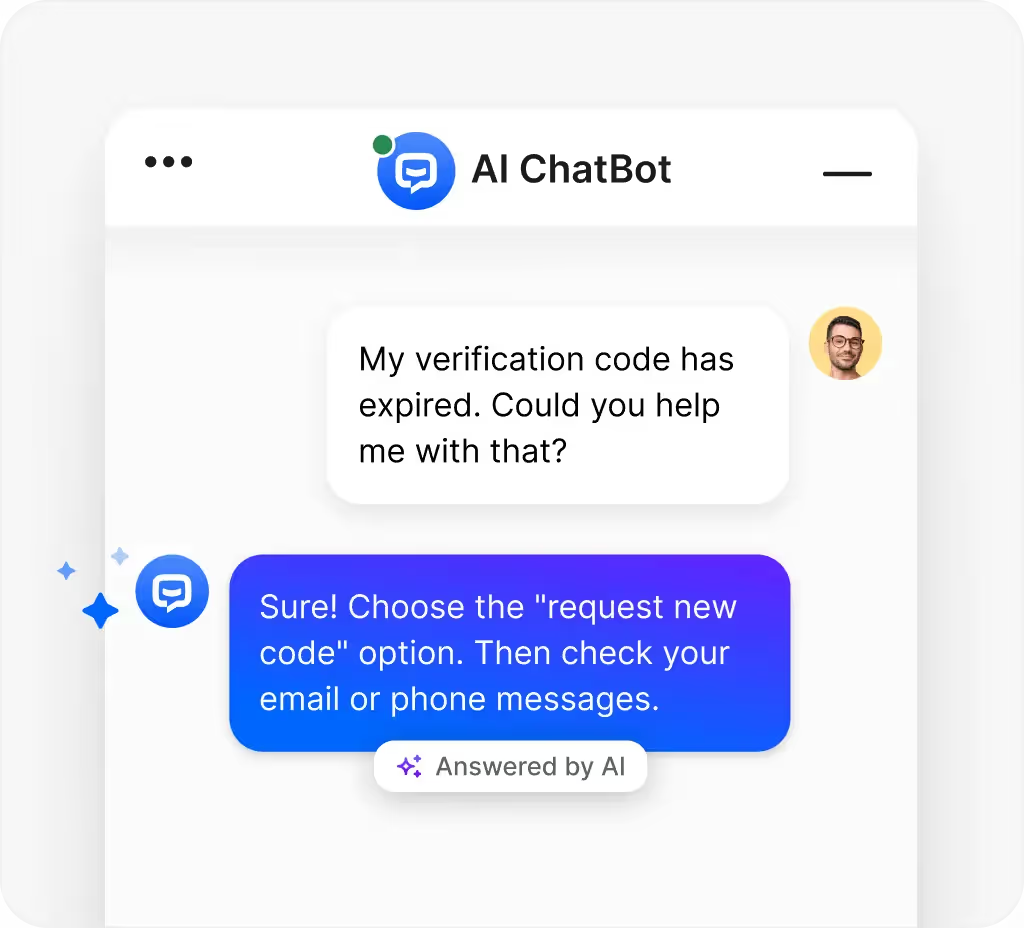
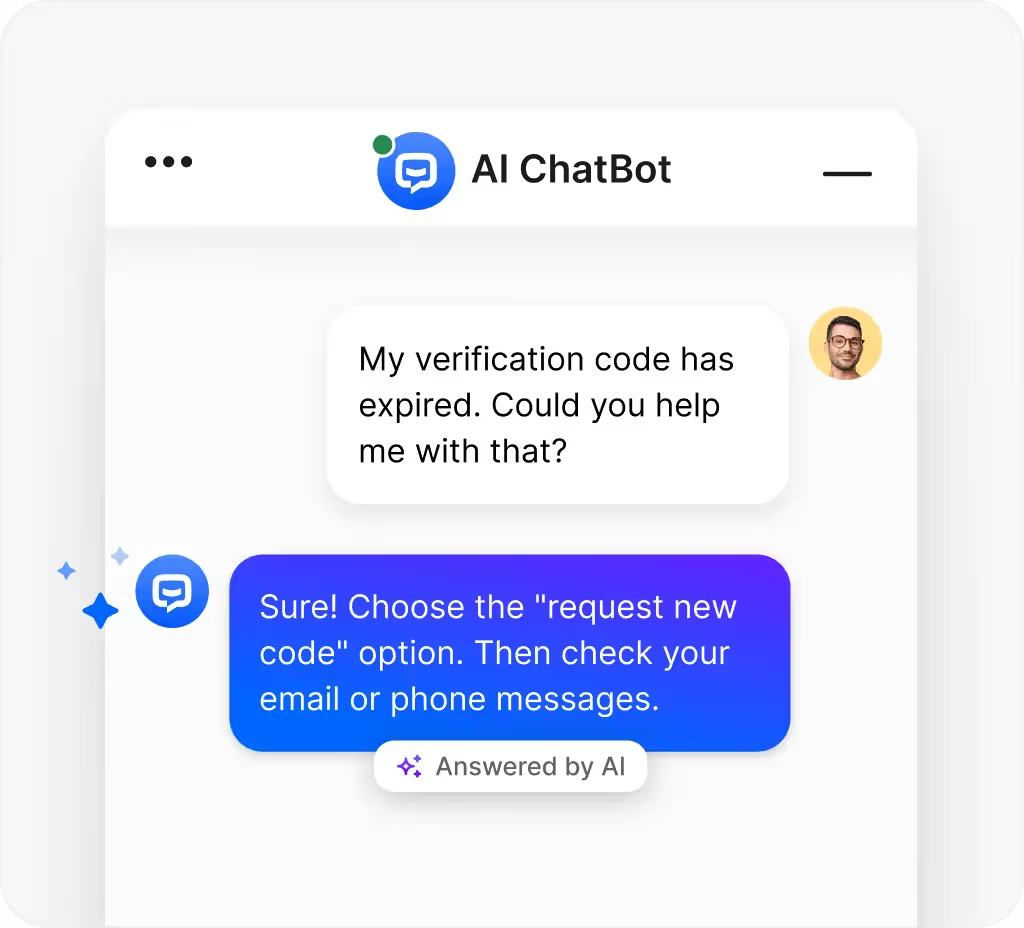
    example of an AI chatbot – via ChatBot

    Why In-App Conversational AI is Transforming Mobile Apps

    People download apps for convenience. They expect to shop, bank, book, or learn without friction. Slow them down, and they’ll move on.

    That’s where AI-powered chatbots shine. Instead of forcing users to dig through menus or wait for a human agent, they can just ask in plain language and get an immediate answer.

    The easier the experience, the more likely people are to stick around. Chatbots don’t need to be flashy. They just need to quietly remove friction. And often, that’s what keeps your app on someone’s home screen instead of the delete list.

    Benefits of AI Chatbots for Mobile Apps

    Integrating AI chatbots into mobile apps has multiple benefits. We’ve listed some of the major advantages below.

    1. A smoother user experience

    Picture this: someone forgets their login. Without a chatbot, they’re forced to close the app, dig through email, reset, and circle back. With a chatbot? They type “reset password” and are guided straight back in.

    These little moments don’t make headlines. But they make or break how your app feels. A smooth app feels invisible in the best way.

    2. Faster problem solving

    Unlike humans, chatbots don’t clock out. At midnight or midday, they can deliver instant answers to simple questions.

    Even a quick update like “your order shipped today” cuts frustration and keeps users engaged. Fast answers reduce abandonment.

    3. More reliable support

    Staffing a team to cover every question 24/7 is expensive. Chatbots handle the repetitive stuff and collect useful details before handing complex cases to humans. 

    The result? Consistency for users and a smoother handoff for your team.

    4. Lower costs

    Every ticket resolved by a bot is one less for your support team. That saves time, reduces overhead, and frees your people to focus on high-value work instead of repeating the same answers over and over.

    5. Extra sales opportunities

    Chatbots don’t just fix problems. They can drive growth. From suggesting add-ons to highlighting discounts or upgrades, they can spark incremental revenue that compounds over time.

    Use Cases of AI Chatbots in Mobile Apps

    AI chatbots aren’t just for customer service. They show up across industries, quietly removing friction wherever users get stuck. 

    Here are a few examples:

    • Ecommerce: Virtual shopping assistants, order tracking, returns, product recommendations.
    • Banking: Balance checks, transaction history, fraud alerts.
    • Healthcare: Appointment scheduling, patient inquiries, medication reminders.
    • Travel: Real-time flight updates, rebooking help, itinerary support.
    • Education: Study tips, progress tracking, tutoring assistance.

    The common thread: whenever users hesitate or hit a roadblock, the chatbot gives them a path forward, without leaving your app.

    Pro Tip: Combine in-app chatbots with Push Notifications, to spark engagement with your app users, both when they’re in the app or between sessions.

    How to Integrate an AI Chatbot Into a Mobile App

    There are a couple of parts to adding a chatbot to your app.

    One is technical – how the code works. We’re not going to get too deep into this (and a lot of chatbot apps will do this for you, without you having to code too much).

    The other is about weaving it into the flow of the app so it feels natural. 

    Here’s how to do it right:

    1. Map the conversations

    Start by listing the questions your users ask the most, and the problems they face repeatedly. 

    What do they expect the chatbot to do – reset a password, track an order, answer billing questions? There’s your foundation.

    2. Pick the right solution

    Some frameworks are quick to set up, others allow deep customization. 

    Decide what matters most: speed, flexibility, or advanced features. Choose a tool that fits both your goals and your team’s resources.

    Read more: The Best Chatbot Apps for Shopify Stores

    3. Design the interface

    Good design makes or breaks chatbot adoption. Users should know instantly where to type, how to send, and how to exit.

    • Small bubble in the corner or full-screen chat? Test what feels best.
    • Match the chatbot’s look and feel to the rest of your app so it doesn’t feel like a bolt-on.
    • Add quick-reply buttons or suggested prompts for users who don’t know what to type.

    4. Test, tweak, improve

    Launch day isn’t the finish line; it’s the starting point.

    Watch how real users interact. Do conversations stall? Do the same questions keep coming up unanswered? 

    Use that feedback to refine wording, add shortcuts, and smooth out rough edges. Small tweaks add up to a bot that feels natural over time.

    The Cost of Integrating an AI Chatbot in Your Mobile App

    How much does it cost to add an AI chatbot? The short answer: it depends on scope. A simple FAQ bot might cost a few thousand dollars. A fully customized system that hooks into back-end tools can easily climb into six figures.

    What drives the price:

    • Complexity of the bot’s functions
    • Level of customization (from off-the-shelf to fully bespoke)
    • Depth of integration with your existing systems
    • Ongoing maintenance and updates
    • Hosting and infrastructure needs

    And remember: this isn’t a one-and-done project. Chatbots need monitoring and refinements to stay useful. Budgeting for ongoing improvements is what keeps a bot feeling alive instead of outdated.

    Vendrux: Seamless Chatbot Integration Across Web and App

    Building a chatbot that works consistently between your website and mobile app is complex. Most solutions require separate implementations, creating inconsistent user experiences and doubling your development work.

    Vendrux solves this problem. When you integrate a chatbot into your website, Vendrux automatically makes it work in your app; no additional coding required. 

    Your chatbot functions identically across both platforms because they share the same codebase.

    This means:

    • One chatbot integration instead of two separate builds
    • Identical functionality and user experience on web and app
    • Automatic updates when you improve your web chatbot
    • No technical expertise needed on your end

    With Vendrux’s done-for-you service, we handle the entire app creation process while ensuring your chatbot integrates seamlessly. 

    Your users get the same smooth, AI-powered support whether they’re on your website or in your app.

    Looking to launch an app for your website? Learn how Vendrux helps you easily convert your website into a native mobile app.

    Final Thoughts

    AI chatbots aren’t magic. They won’t solve every issue or guarantee every user sticks around. But they do something powerful: they reduce friction, answer questions faster, and make apps feel easier to use.

    When users feel supported inside the app, they’re less likely to quit, and more likely to stay loyal. Over time, that means better retention, stronger engagement, and often higher revenue.

    For teams willing to invest and keep improving, chatbots become a quiet but steady driver of growth. Not flashy, not gimmicky. Just effective.

    Frequently Asked Questions on In-App AI Chatbots

    Can an AI chatbot work offline in a mobile app?

    No. Most chatbots need internet access to process language and fetch data.

    How much does a custom chatbot cost?

    It varies. A basic FAQ bot might be a few thousand dollars. A complex, deeply integrated bot can cost six figures.

    What data is needed to train a chatbot?

    FAQs, product info, past customer interactions, and behavior patterns are common training inputs.

    Do AI chatbots drain battery life?

    Not much. Most of the heavy processing happens on external servers, not the phone itself.

    Can a chatbot handle in-app purchases or transactions?

    Yes, but only with secure integrations. Make sure it complies with payment standards.

  • Gamification in Ecommerce Apps (How to Increase Engagement and AOV)

    Gamification in Ecommerce Apps (How to Increase Engagement and AOV)

    Acquiring customers is expensive; keeping them engaged and spending is harder. That’s why more ecommerce brands are turning to gamification, turning shopping into a loop of progress and reward.

    The global gamification market will reach $19.4 billion in 2025, growing 26% annually, with nearly a third coming from retail and ecommerce. Studies show gamified stores can lift purchase intent by 30% or more and drive repeat buying.

    Here’s how gamification in ecommerce apps helps brands grow:

    • Boosts engagement: Shoppers stay longer, interact more, and return for progress-based rewards.
    • Raises AOV: Incentives like spend milestones and free-shipping trackers encourage bigger baskets.
    • Builds loyalty: Achievements, points, and streaks turn shopping into habit and strengthen brand connection.

    This article explains how ecommerce teams can apply gamification to increase engagement, AOV, and long-term customer value.

    What is Gamification in Ecommerce?

    Gamification in ecommerce means applying the same mechanics that make games engaging (e.g., points, rewards, levels, and challenges) to the shopping experience.

    The goal isn’t to turn a store into a video game. It’s to make every action—browsing, adding to cart, checking out—feel like progress toward a reward. When shoppers see their effort pay off, they stay longer and spend more.

    Popular examples include:

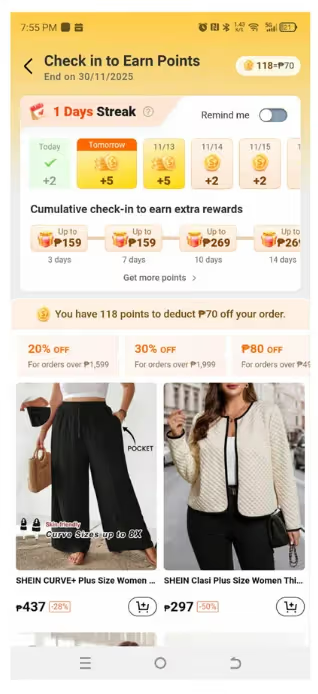
    • Shein and Temu: daily streaks, points, and reward wheels that turn shopping into habit.
    • Starbucks Rewards: tiers and stars that unlock perks and drive repeat orders.
    • Nike Run Club: badges and milestones that link activity to product engagement.

    Gamification makes buying interactive instead of transactional, motivating customers to return, spend again, and build loyalty over time.

    Why Gamification Is the Future of Ecommerce

    Ecommerce is entering a new phase where growth depends less on acquiring new customers and more on keeping existing ones active. Gamification addresses this shift directly by combining loyalty systems with the psychological triggers that drive engagement and repeat behavior.

    The data makes this clear:

    • The global gamification market is projected to have reached $19.4 billion by 2025, growing at an annual rate of 26%.
    • Nearly one-third of that growth comes from retail and ecommerce, as brands use gamified systems to drive engagement and retention.
    • Global ecommerce sales will have hit $6.4 trillion in 2025.
    • As competition and acquisition costs rise, ecommerce teams are using gamification to improve retention, lifetime value (LTV), and average order value (AOV).

    Research supports this shift:

    Another confirmed that habit formation and perceived enjoyment strongly predict loyalty and repeat purchases in gamified shopping.

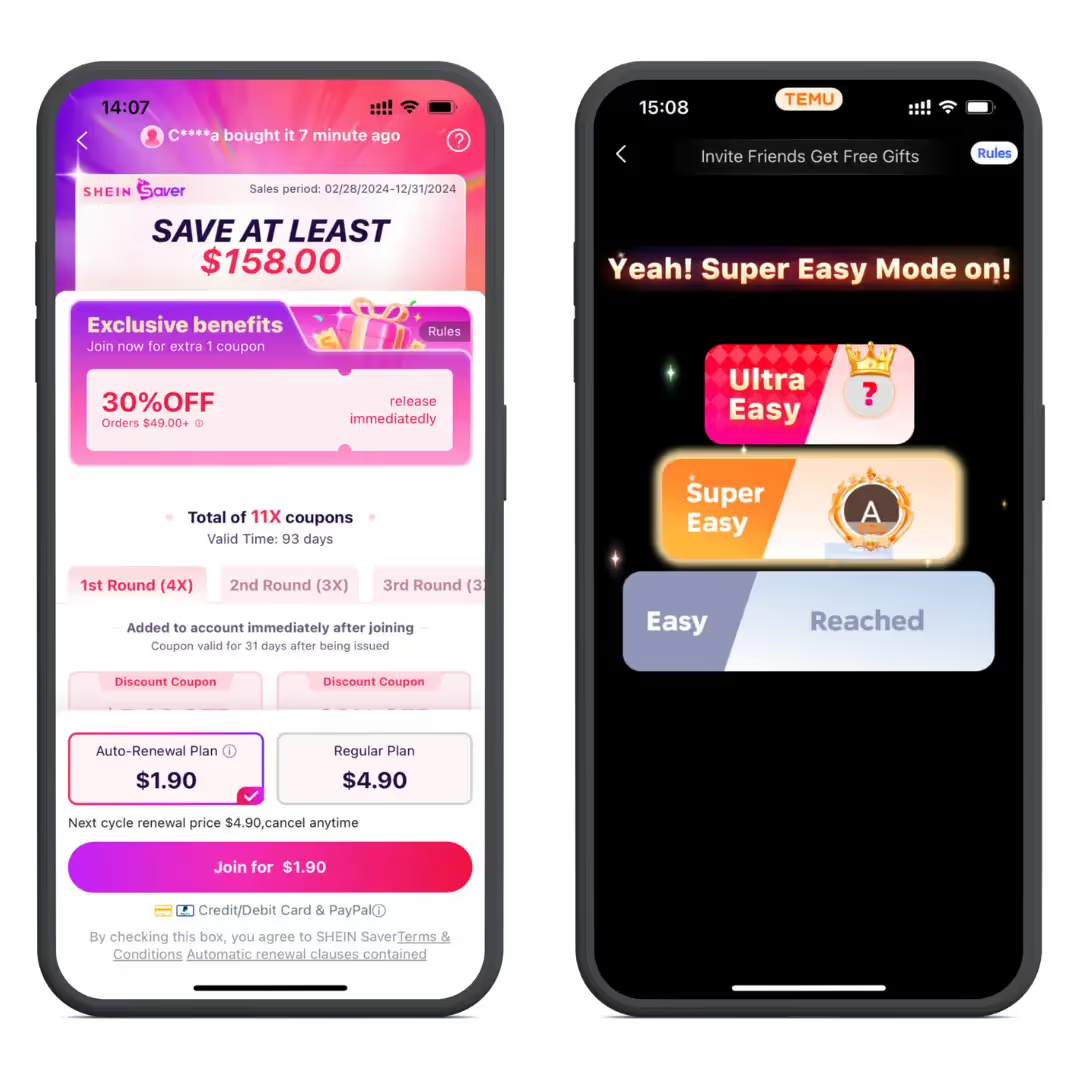
    Shein andTemu’s mobile apps are a strong example of gamification in action

    Loyalty Apps: The Engine Behind Gamification

    Gamification works best when paired with loyalty programs. Points, tiers, and milestone-based perks turn routine purchases into progress.

    • Starbucks Rewards uses stars and tiers to increase order frequency and retention.
    • Temu and Shein use daily challenges and coins to drive repeat app visits.
    • Nike Membership connects achievements with exclusive offers and access.

    These systems do more than encourage purchases; they build emotional investment. Every repeat action earns recognition, which strengthens brand connection and raises lifetime value (LTV).

    The Psychology Behind Gamified Shopping

    Gamification taps into how people naturally think and behave. Customers love seeing progress, earning rewards, and being recognized.

    Study shows that:

    • Progress bars and levels trigger a sense of accomplishment.
    • Streaks and badges reinforce habit loops that increase repeat sessions.
    • Leaderboards and challenges activate friendly competition, boosting engagement and satisfaction.

    By connecting psychological motivation with business incentives, gamification transforms ecommerce from a series of purchases into a continuous cycle of interaction and reward. That’s why it’s not just a marketing tactic; it’s a long-term growth strategy.

    How Gamification Drives Engagement, Loyalty, and AOV

    Gamification impacts the metrics that matter most to ecommerce growth: engagement, repeat purchase rate, and average order value (AOV). By turning shopping into a series of small, rewarding actions, it builds momentum that keeps customers active and spending.

    1. Higher Engagement

    Gamification turns passive browsing into active participation.

    • Features like progress bars, streaks, and daily challenges motivate shoppers to return and maintain progress.
    • Gamified ecommerce experiences can increase engagement by up to 40%.
    • “Perceived enjoyment” and “habit formation” are top predictors of sustained app activity.

    Takeaway: Shoppers who feel progress stay longer and interact more often.

    2. Stronger Loyalty and Habit Formation

    Rewards create emotional commitment and routine buying behavior.

    • Gamified loyalty systems increase repurchase intention by 30–50%.
    • Habit-forming elements (like streaks and milestones) tap into the brain’s reward system, reinforcing repeat use.

    Takeaway: Rewarded behavior becomes repeated behavior — the foundation of retention.

    3. Higher Average Order Value (AOV)

    Gamification nudges shoppers to spend more through progress visibility and tiered rewards.

    • Progress-to-reward cues (“Spend $10 more for free shipping”) raise AOV by 12–20%.
    • Tier systems and spin-to-win incentives create positive reinforcement at checkout.

    Takeaway: Showing shoppers how close they are to a reward encourages them to spend more.

    4. Smarter Personalization and Data Collection

    Gamified quizzes and challenges collect valuable first-party data.

    • Customer choices during games and quizzes reveal preferences without invasive tracking.
    • That data powers better product recommendations and retention campaigns.

    Takeaway: Gamification personalizes the experience while enriching your marketing data.

    5. Brand Buzz and Organic Reach

    Gamified moments spark sharing and conversation.

    • Achievements, streaks, or “wins” naturally lead to user-generated content.
    • Brands using gamification see higher social engagement and referral activity.

    Takeaway: Fun experiences generate visibility without additional ad spend.

    What’s Trending in Gamified Shopping Apps

    Gamification in ecommerce is evolving fast as shoppers expect more than discounts—they want progress, recognition, and entertainment.

    • Points-based loyalty systems: Customers earn points for purchases, shares, or reviews, then redeem them for discounts or freebies.
    • Quick-win games: Features like “spin the wheel” deliver instant gratification and nudge impulse buys.
    • Progress tracking: Visual cues like bars and trackers show shoppers how close they are to unlocking rewards or perks.
    • Leaderboards and challenges: Competition, whether with friends or strangers, adds excitement and drives repeat engagement.

    Loyalty and progress-based systems now account for nearly one-third of gamified retail applications. These mechanics don’t just make shopping fun; they extend session time, increase purchase frequency, and strengthen loyalty over time.

    Gamification in Action: 12 Standout Examples

    If you want to know what ecommerce trends work, and which are vapor, look at what the world’s biggest brands are doing.

    Those brands are building fun, engaging, gamified experiences.

    Here are 12 brands showing how gamification can transform shopping into something engaging, sticky, and fun.

    1. Lego – An Interactive Playground

    Lego turned its brand into more than toys with digital platforms where people can build, share, and unlock achievements. By mixing creativity with game mechanics, Lego keeps fans engaged long after the purchase.

    Lego interactive playground helps maintain engagement.

    2. KFC – “Shrimp Attack” Mini-Game

    In Japan, KFC ran a playful mobile game where beating animated shrimp unlocked coupons. It turned promotions into entertainment, driving engagement and immediate purchases.

    3. Shein & Temu – Streaks, Points, Progress

    Shein and Temu offer a masterclass in gamification, with apps that feel like a hybrid between TikTok and Candy Crush – rather than a classic shopping app.

    Learn more about how these ecommerce giants use personalization to drive engagement.

    4. Forest – Habit Building Made Rewarding

    Stay off your phone, grow a virtual tree. Simple, visual, and motivating. The lesson for ecommerce: small, visible rewards make behavior change stick.

    5. William Painter – Spin-to-Win Discounts

    A spin-the-wheel on their site offers free shipping, % off, or freebies. It injects instant excitement at checkout and nudges bigger baskets.

    6. Casper – Guided “Mattress Finder” Quiz

    Casper turns choice overload into a game. A short quiz maps needs to products, making the purchase feel personalized (and faster).

    7. Fabulous – Personalization Through Quizzes

    Fabulous uses onboarding quizzes and progress milestones to tailor the journey. Retailers can mirror this to collect preferences and deliver spot-on recommendations.

    8. M&M’s – Design-Your-Own Candy

    Customization as play: pick colors, add text, make it yours. Creative control boosts time on site and repeat orders for gifts and events.

    9. Pit Viper – Playful UI That Feels Like a Game

    Humor, unexpected visuals, and interactive touches turn browsing into a vibe. It proves that tone and UI can gamify without literal “games.”

    10. Starbucks – Stars, Tiers, and Perks

    A gold standard loyalty loop: earn stars, hit tiers, unlock rewards. Clear progress + visible payoff = repeat visits and higher lifetime value.

    11. Nike Run Club – Challenges and Badges

    Community, streaks, and milestones keep runners motivated. That engagement flows back into apparel and gear – content and commerce reinforcing each other.

    12. L’Occitane – “Seeds of Dreams” Campaign

    An eco-themed interactive experience where planting virtual seeds leads to rewards. It ties values to incentives, turning participation into purchases.

    How to Add Gamification to Your Store

    Gamification only works if it’s done with intention. Here’s how to bring it into your ecommerce experience the right way:

    1. Set clear goals

    Decide what matters most: more engagement, higher average order value, or increased sales. Your goals should shape the mechanics you choose. Quizzes or challenges are great for engagement; purchase-based milestones work best for sales.

    2. Pick the right tools

    Not every game element fits every brand. A “spin-the-wheel” promo might excite deal hunters, while tiered levels and exclusive perks work better for status-driven customers. Match the tools to your audience.

    3. Build loyalty into the flow

    A loyalty program should feel baked into the experience, not bolted on. Keep the points system simple, easy to track, and visibly rewarding so customers see value right away.

    4. Track and improve

    Gamification isn’t set-and-forget. Pay attention to what customers actually respond to (challenges, discounts, streaks) and refine over time. Small tweaks compound into big results.

    Building unique features in a mobile app can be difficult. Vendrux lets you build exciting gamification features on your website, and seamlessly transfer these features to your mobile app. Learn more about how we help you build unique experiences, without the cost of traditional app development.

    What Are the Best Ways to Gamify Your Store?

    You don’t need to rebuild your ecommerce experience from scratch to use gamification effectively. The key is to apply mechanics that create progress, reward, and motivation—without disrupting the buying journey.

    Here are proven techniques that drive engagement, loyalty, and higher AOV:

    1. Quick-Win Discounts

    Use instant rewards like scratch cards or “spin-the-wheel” promos to spark excitement and boost conversions.

    • Encourages impulse buys and checkout completion.
    • Keeps the experience playful without hurting margins.

    Example: William Painter’s spin-to-win feature increases conversions by turning checkout into a game.

    2. Quizzes and Interactive Journeys

    Personalized quizzes make shopping interactive and help match products to customer needs.

    • Builds engagement through participation.
    • Doubles as zero-party data collection for better recommendations.

    Example: Casper’s “Mattress Finder” quiz simplifies decisions and shortens the path to purchase.

    3. Competitions and Challenges

    Create streaks, community leaderboards, or share-based contests to keep shoppers coming back.

    • Fosters friendly competition and repeat visits.
    • Expands reach when participants share progress or achievements.

    Example: Nike Run Club’s challenges link physical goals with digital rewards, driving both engagement and brand loyalty.

    4. Habit-Forming Streaks

    Reward consistency, not just purchases.

    • Daily login bonuses, activity streaks, or timed missions keep customers active in the app.
    • Builds long-term retention by tapping into habit loops.

    Example: Shein’s daily check-ins and coin rewards maintain high app re-engagement rates.

    Shein rewards check in to encourage continuous engagement.

    5. Progress Visualization

    Show customers how close they are to the next reward or perk.

    • Increases motivation to complete a purchase.
    • Can raise average order value by 12–20% when tied to visible milestones.

    Example: Free-shipping progress bars encourage customers to add extra items to hit the threshold.

    6. Loyalty Programs

    Tie rewards to actions that reinforce retention—purchases, referrals, and reviews.

    • Points and tier-based rewards encourage repeat buying.
    • Creates a clear sense of advancement over time.

    Example: Starbucks Rewards uses stars and tiers to drive repeat visits and higher lifetime value.

    Effective gamification isn’t about adding gimmicks. It’s about turning progress into motivation. So every visit, click, and purchase feels like part of a rewarding journey.

    Final Thoughts

    Gamification isn’t just about making shopping fun; it’s about turning interaction into growth. When done right, it lifts engagement, raises average order value, and turns one-time buyers into loyal customers.

    From progress bars to loyalty apps, the same principles that make games addictive can make ecommerce more profitable. As acquisition costs rise, retention-focused tools that reward action, rather than discounting it, are what set leading brands apart.

    The takeaway: customers who feel progress and recognition come back more often and spend more when they do.

    If you’d like to see how gamified experiences could work for your store, book a consultation with Vendrux and start building your own high-retention ecommerce app.

    Frequently Asked Questions

    What are the key benefits of gamification in ecommerce?

    It boosts engagement, loyalty, and sales. It also creates buzz around your brand and gives you valuable customer data for personalization.

    How does gamification impact retention and order value?

    Progress bars, streaks, and rewards make customers come back more often and spend more per visit. Habit drives retention; rewards drive bigger baskets.

    What’s the best gamification solution for my store?

    It depends on your audience. Bargain hunters love spin-to-win discounts; status-driven shoppers prefer tiered rewards and achievements.

    Can gamification work for B2B ecommerce?

    Yes. Progress tracking, milestones, and reward systems motivate professionals just as much as consumers.

    Does gamification apply outside of shopping?

    Absolutely. Education apps, fitness platforms, and productivity tools all use game-like elements to boost engagement, and the same tactics work in retail.

  • Why Your BigCommerce Store Needs a Mobile App

    Why Your BigCommerce Store Needs a Mobile App

    BigCommerce merchants already compete hard on product, experience, and retention. But as mobile has become the default way customers browse and buy. And one channel consistently outperforms everything else for conversion, purchase frequency, and lifetime value: your own mobile app.

    A BigCommerce storefront can be fast, optimized, and well-designed,  but it still lives inside the browser, competing with distractions, session loss, and limited re-engagement options. 

    A mobile app changes that. 

    It creates a direct, persistent, higher-intent shopping channel that helps you retain more customers and grow LTV faster.

    Below are the clearest reasons why your BigCommerce store needs a mobile app

    1. Mobile Web Leaks Revenue; Apps Don’t

    Mobile shoppers are quick. They bounce easily, get distracted, and switch contexts throughout the day. Even the best-optimized mobile site competes with tab switching, lost sessions, and checkout friction.

    Your app breaks that pattern immediately.

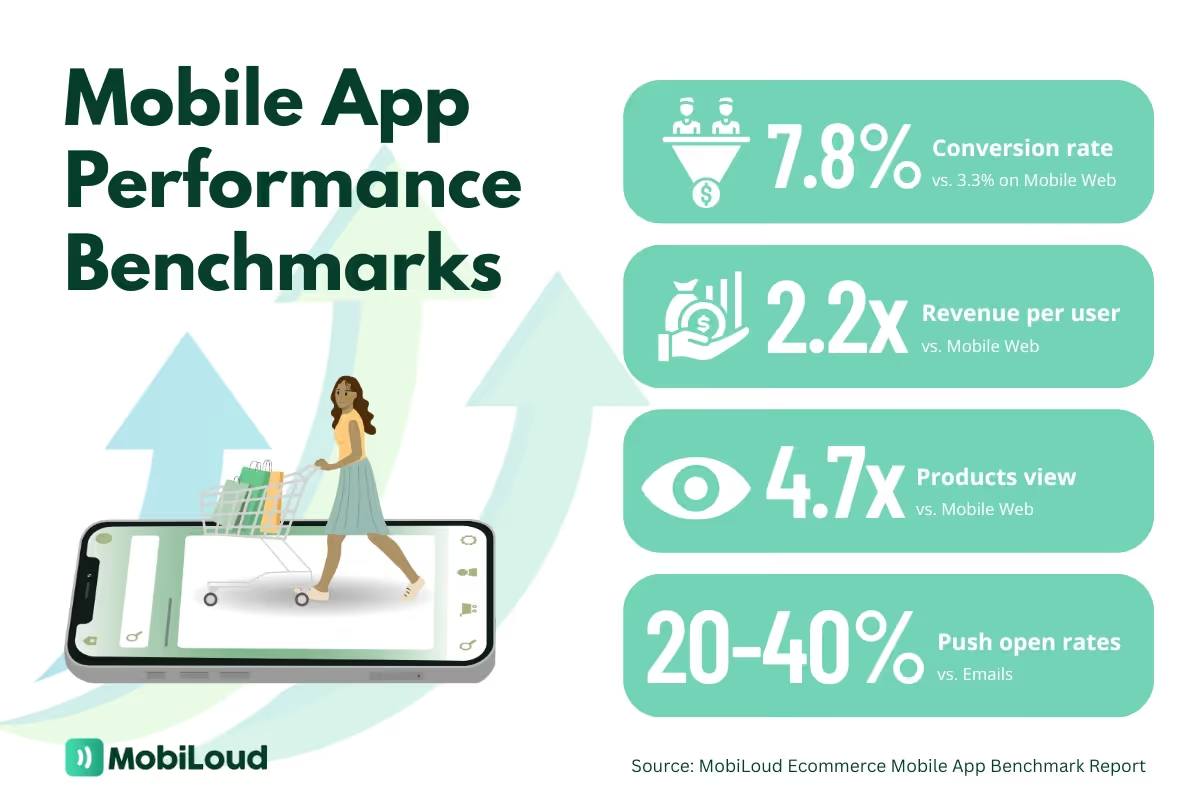
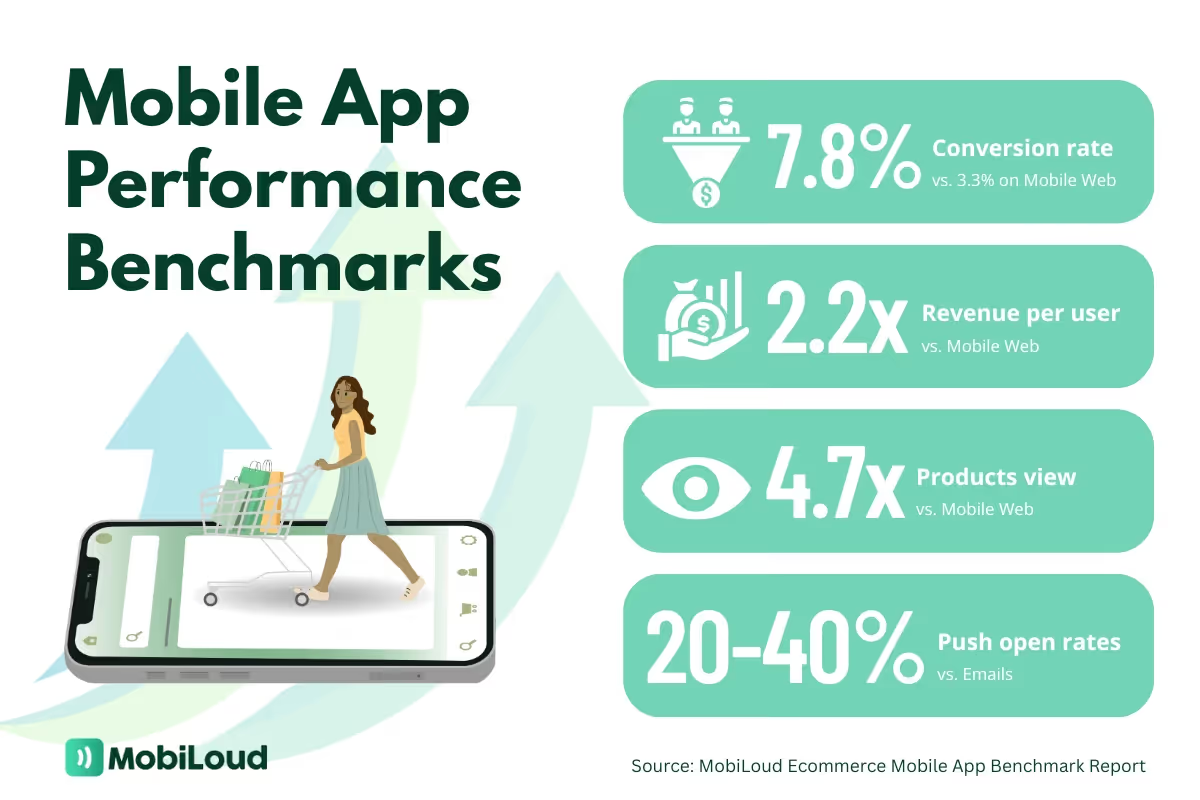
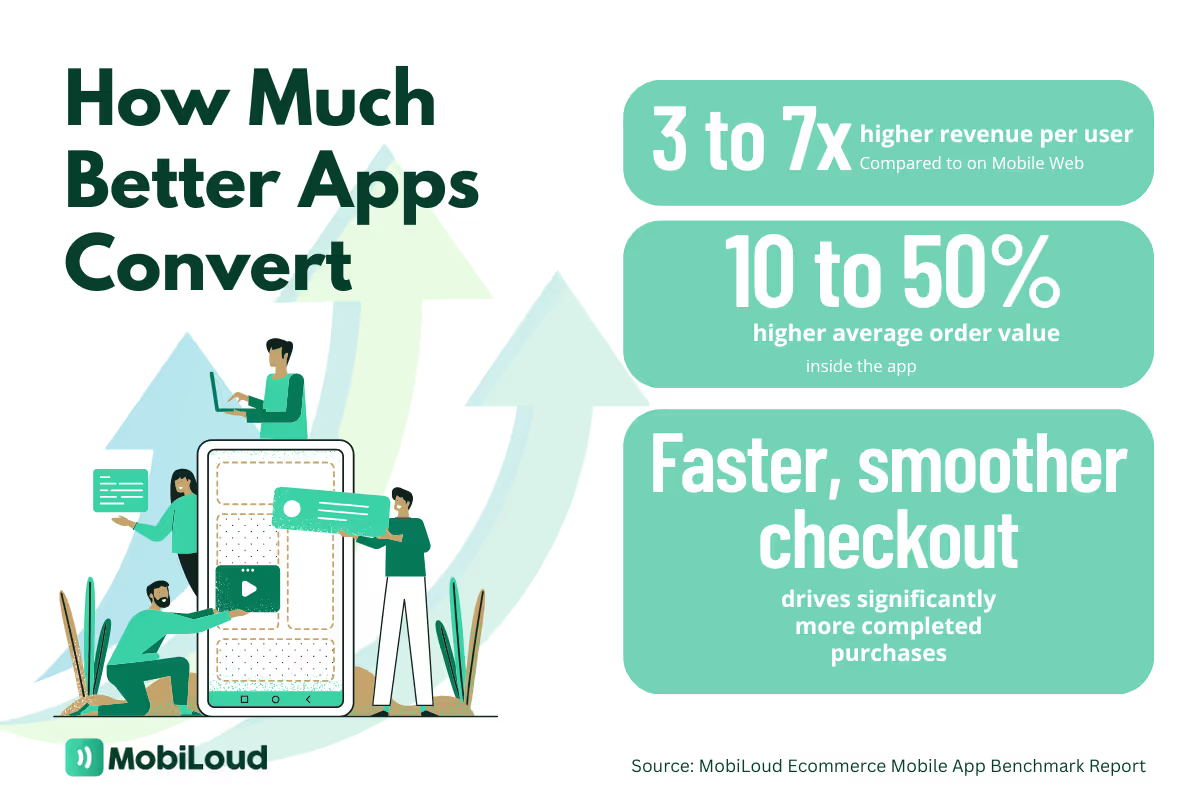
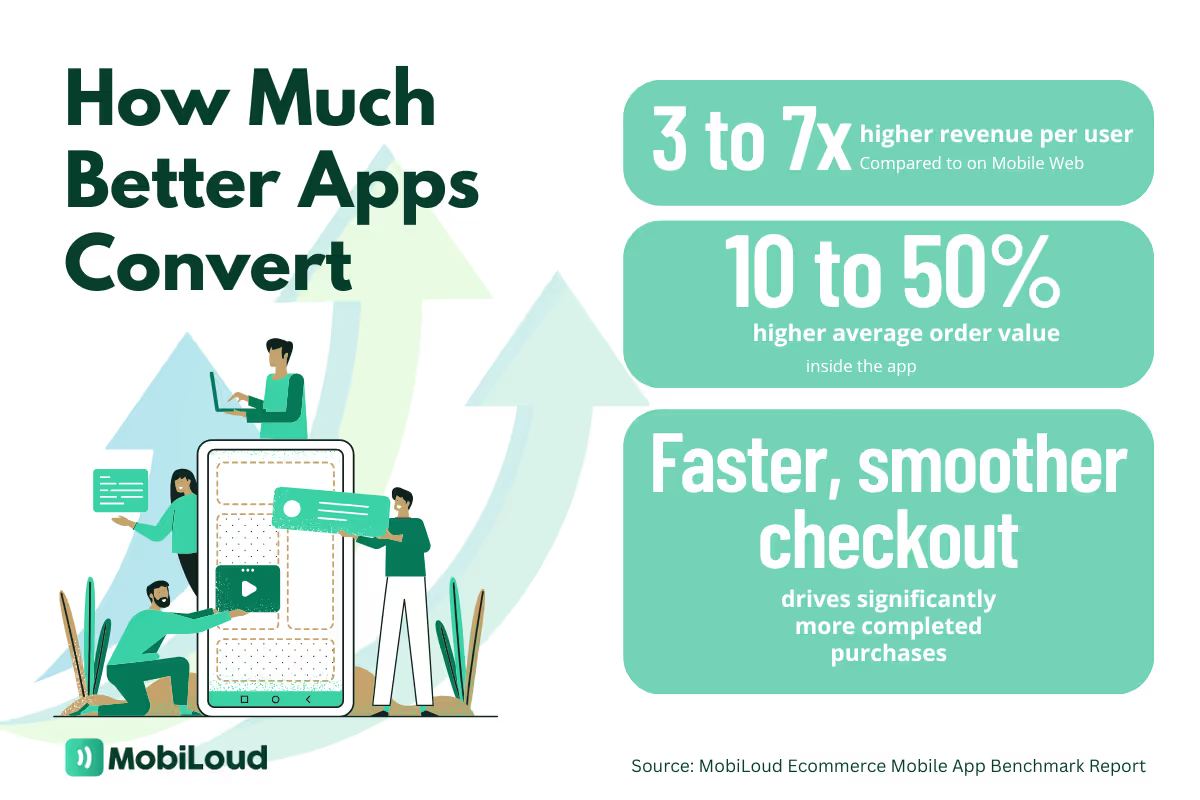
    From our Ecommerce Mobile App Benchmark Report:

    And BigCommerce’s own numbers show the same shift. During Cyber Week, 35% of all BigCommerce orders came from mobile devices, with mobile order volume up 7% year over year.

    Your customers are already buying on mobile; apps simply help you capture more of that demand with deeper sessions and higher intent.

    With an app, shoppers get:

    • One-tap entry
    • Saved login and payment details
    • No browser interruptions
    • A direct path back to your store

    These behaviors compound into longer sessions, higher AOV, and stronger repeat buying. For many BigCommerce brands, this alone justifies launching an app.

    2. Apps Unlock Push Notifications; Your Highest-ROI Retention Channel

    Every BigCommerce brand deals with rising acquisition costs and noisy communication channels:

    • Email is crowded
    • SMS is expensive
    • Paid ads get less efficient every quarter

    Push notifications give you a free, unlimited, high-intent channel that goes straight to your customers’ home screens.

    In our benchmark data:

    • Abandoned cart pushes converted at 10–22%
    • Campaign pushes converted at 6%+
    • Push-driven return sessions increased 3–5x

    Push notification for your BigCommerce store alone often covers the entire ROI of launching an app. It’s one of the rare channels that gets more powerful as your list grows, without increasing costs.

    3. Apps Dramatically Increase Purchase Frequency

    Repeat purchases are where BigCommerce brands win: beauty, supplements, apparel, home goods, lifestyle products, and subscription-driven categories all rely on ongoing engagement.

    Your app helps deliver that by:

    • Living on the customer’s home screen
    • Building habitual usage
    • Making browsing frictionless
    • Pulling customers back without ads

    Across verticals, app users return 3–5x more often than mobile web users. And because your app removes friction across login, browsing, and checkout, it consistently moves customers toward more frequent buying behavior.

    This is one of the strongest LTV levers available to BigCommerce merchants.

    Get deeper data on how apps beat mobile web for conversion and retention; download the Ecommerce Mobile App Benchmark Report.

    4. Apps Give Your Brand a Controlled, Premium Shopping Environment

    BigCommerce storefronts are strong, but browsers still limit what you can control inside the customer’s session. A mobile app gives you a clean, focused, branded space that feels closer to a native retail experience.

    This matters most for brands that:

    • rely on high-impact merchandising
    • manage loyalty or subscriptions
    • run large, complex catalogs
    • care about discovery and repeat browsing

    In the benchmark report, app users viewed nearly 5x more products, which directly supports catalog-rich stores. For beauty, apparel, and lifestyle brands, this deeper browsing behavior has a meaningful impact on retention and AOV.

    5. Your Competitors Already Have Apps, and Customers Expect Them

    Across most BigCommerce categories, the top-performing brands already use apps as part of their retention strategy. Customers have adopted the behavior, and the expectation is clear: if they’ve bought from you more than once, many assume there’s an app waiting for them.

    Recent buyer data reinforces this shift.

    According to the SCAYLE U.S. Shopper Survey, 

    • 63% of shoppers prefer brands with a mobile app, and 
    • 60% expect personalized offers inside it. 

    Customers now see apps as a normal part of the buying experience, especially in categories with strong loyalty or repeat purchasing.

    If you don’t offer an app:

    • Customers stay on lower-converting mobile web
    • You lose a high-intent push channel
    • Competitors with apps earn more repeat purchases
    • Loyalty engagement declines

    For high-growth BigCommerce brands, not offering an app has become a competitive disadvantage.

    6. BigCommerce Stores Scale Best When They Own Their Channels

    Scaling on BigCommerce is about controlling more of your customer relationships. Apps help you do that by giving you:

    • A durable owned channel (push)
    • A permanent presence on your customer’s device
    • Direct re-engagement that doesn’t rely on CPMs or algorithms
    • Richer behavioral and lifecycle data

    As acquisition costs rise and attribution gets harder, owning a high-intent, zero-cost channel becomes a major advantage. An app gives BigCommerce brands a long-term, sustainable way to grow retention and LTV.

    7. Apps Strengthen Your Omnichannel Footprint

    Many BigCommerce merchants sell across multiple touchpoints: 

    • Online storefronts, 
    • Marketplaces, 
    • Retail locations, 
    • Fulfillment channels, 
    • Loyalty programs, and 
    • Customer support.

    A mobile app brings these together into a single, consistent customer experience.

    A customer can:

    • Browse and buy
    • Track orders
    • Access loyalty rewards
    • Manage subscriptions
    • Receive updates

    All these without jumping between channels.

    This aligns perfectly with how omnichannel BigCommerce merchants operate. An app becomes the “home base” for the customer experience, strengthening retention across every touchpoint.

    8. Apps Provide Faster Reordering and Account Management

    A significant portion of BigCommerce stores also serve B2B buyers, and these customers expect consumer-grade convenience.

    A mobile app makes daily purchasing smoother with:

    • Fast catalog access
    • Two-tap reordering
    • Past order lookups
    • Saved carts and lists
    • Mobile-friendly approvals
    • Invoice and payment access

    Reports show that companies investing in streamlined digital workflows outperform peers in customer satisfaction and operational speed.

    If you’re a B2B or B2B2C merchant on BigCommerce, an app makes buying easier for your customers who are often working on-the-go.

    Conclusion: The Fastest Way to Launch an App for BigCommerce

    Apps consistently outperform mobile web across conversion, session depth, purchase frequency, and long-term value. BigCommerce merchants feel this lift even more because of their repeat-purchase models, product discovery needs, and strong mobile traffic.

    Vendrux gives BigCommerce brands the simplest, fastest way to launch a high-quality mobile app:

    • No rebuild
    • Full connection to your existing BigCommerce storefront
    • Launch in ~4 weeks
    • Unlimited push notifications
    • All maintenance included

    See your BigCommerce store as a real mobile app with a free preview.

  • Why Your Salesforce Commerce Cloud Store Needs a Mobile App

    Why Your Salesforce Commerce Cloud Store Needs a Mobile App

    Salesforce Commerce Cloud (SFCC brands) operate at a different scale:

    • High-volume, 
    • Omnichannel, 
    • Global. 

    They care about retention, loyalty, and long-term customer value. 

    A mobile app isn’t a vanity project for these teams. It’s a performance channel that compounds over time and gives them an advantage their competitors can’t match on the mobile web.

    If your store is on SFCC, below are the clearest reasons why your SFCC store needs an app.

    1. Your Customers Already Shop on Mobile, and Apps Convert Far Better

    Most SFCC brands see the majority of their traffic coming from mobile. But even a strong mobile site still competes with friction that apps don’t face: 

    • Taps close tabs, 
    • Browser sessions expire, and 
    • Distractions pull shoppers away.

    Apps flip that behavior.

    From our latest findings in the Ecommerce Mobile App Benchmark Report:

    • App users convert at 7.8%, compared to 3.3% on mobile web
    • They view 4.7x more products per session
    • They drive 2.2x more revenue per user

    That lift alone explains why so many SFCC launch an app and treat apps as a core revenue engine, not an experiment.

    2. Retention Is a Priority, and Apps Strengthen Repeat Purchase

    SFCC merchants depend on repeat buyers. Beauty, fashion, luxury, lifestyle, CPG are just some of the categories that win through purchase frequency, loyalty program engagement, and second/third purchases.

    Apps drive that behavior by:

    • Living on the home screen
    • Saving login and payment details
    • Creating habitual browsing
    • Making loyalty and subscriptions easier to engage with

    Across categories, app customers come back more often, browse longer, and spend more. For brands with strong repeat potential, this compounds quickly.

    3. Push Notifications Give You an Owned Channel With No CPMs Attached

    Every SFCC brand faces the same pressure:

    • Email is crowded
    • SMS is expensive
    • Paid media costs rise every year
    • Algorithms limit reach

    Push notifications cut through all of it.

    They’re instant, free, and unlimited. That’s perfect for:

    • Product drops
    • Back-in-stock alerts
    • Abandoned carts
    • Replenishment reminders
    • Personalized offers

    In our benchmark, push notifications reached 28% average open rates, far higher than email or SMS. 

    So if you’re already using Salesforce CRM, Loyalty, or Einstein, push notifications in your SFCC store becomes one of the most effective extensions of their existing personalization stack.

    “See how push notifications perform across industries in our Ecommerce Mobile App Benchmark Report.”

    4. Personalization Hits Harder in an App Environment

    SFCC brands invest heavily in segmentation and 1:1 journeys. An app gives them the perfect environment to execute those plays:

    • A fully branded, controlled space
    • First-party behavioral data they own
    • Clear pathways for personalized merchandising
    • Support for in-app messaging, dynamic content, and micro-intent triggers

    According to the SCAYLE U.S. Shopper Survey, customers are:

    • 63% more likely to buy again from a brand with an app
    • 60% more likely to engage with personalized experiences inside an app

    Apps take the personalization your SFCC teams already build and make it land better.

    5. Your Competitors Already Have Apps, and Customers Expect It

    The following SFCC-heavy verticals already use apps:

    • Top beauty brands 
    • Top apparel brands
    • Top luxury brands 
    • Leading omnichannel retailers

    Customers have already formed the habit. If a shopper buys from you more than once, they expect to find your app in the store.

    Without one, you give up:

    • Daily home-screen presence
    • Free communication via push
    • Stronger loyalty touchpoints
    • Deeper brand recognition

    This is one of the clearest competitive gaps SFCC brands run into.

    6. Apps Keep Up With How Customers Actually Shop Now

    Customers like fast and worry-free shopping, and apps make it possible for them. 

    • In-app checkout is faster.
    • In-app browsing is smoother.
    • In-app loyalty sticks better.

    And as AI-led shopping accelerates, apps are becoming the natural home for these experiences.

    With Agentforce Commerce, Salesforce introduced a new generation of AI-driven shopping. These agents can answer product questions, recommend items, and guide customers through buying decisions. Salesforce said AI-driven features can influence 22% of all orders, making them a major lever for relevance and conversion.

    Apps are the best environment for these interactions because they:

    • Keep customers logged in
    • Maintain state between steps
    • Offer more consistent UI layers
    • Support deeper personalization

    If you’re planning to adopt Agentforce in your SFCC, a mobile app makes the experience smoother, more stable, and more effective from day one.

    7. Apps Help SFCC Brands Deliver Consistent UX Across Markets

    Many SFCC brands operate across:

    • Multiple regions
    • Multiple languages
    • Multiple currencies
    • Multiple catalogs

    Mobile web fragmentation creates friction. Apps simplify it.

    A mobile app lets you:

    • Centralize the experience
    • Maintain consistent branding
    • Deliver faster Ux across regions
    • Reduce confusion and drop-off for international customers

    If you run a global SFCC team, this reduces operational load while improving customer experience.

    Vendrux syncs your SFCC languages, currencies, and catalogs automatically. You manage everything once in SFCC and the app updates itself.

    8. Apps Provide Faster Reordering and Account Management

    Many SFCC merchants run B2B or B2B2C channels, where buyers order on the job and expect consumer-grade speed. They need fast access to catalogs, negotiated pricing, past orders, invoices, and account-specific rules, without friction.

    A mobile app makes everyday purchasing smoother with:

    • Two-tap reordering
    • Quick access to past orders
    • Invoice and payment management
    • Saved carts and lists
    • On-the-go approvals

    According to the IBM State of Salesforce report, companies investing in streamlined digital workflows outperform peers in both customer satisfaction and operational speed.

    If you’re a B2B merchant on SFCC, an app makes daily purchasing easier and more reliable for your buyers who work primarily on mobile.

    Give your buyers a faster way to reorder and manage accounts with a B2B app powered by your SFCC site. All your pricing, rules, and workflows work exactly as they do today.

    9. Apps Fit Naturally Into the Omnichannel Retail Ecosystem

    Most SFCC brands don’t live in a single channel. They operate across stores, ecommerce, service, fulfillment, and loyalty, and customers jump between these touchpoints all the time.

    A mobile app brings all of that together in one place.

    Salesforce’s State of Service report notes that companies with connected channels are 1.4x more likely to deliver effective digital and AI-driven customer interactions. An app strengthens that by giving shoppers a single, consistent hub for:

    • Browsing and buying
    • Tracking orders and deliveries
    • Accessing loyalty rewards
    • Booking services or appointments
    • Managing profiles and preferences
    • Receiving updates and alerts

    Instead of moving between sites, emails, and store systems, customers get a seamless flow, which is exactly how SFCC is designed to operate.

    Conclusion: The Fastest Way to Launch an App for SFCC

    Apps outperform mobile web across conversion, engagement, and long-term value, and SFCC brands feel that lift more than most because of their scale and customer expectations.

    Vendrux gives SFCC merchants the simplest, fastest path to launch a high-performance mobile app:

    • No rebuild
    • Full connection to your existing SFCC site
    • Launch in ~4 weeks
    • Unlimited push notifications
    • All maintenance included

    See how your SFCC storefront would look and feel as a real app with a free preview.

  • Do Shopping Apps Boost Conversion Rate & LTV? How?

    Do Shopping Apps Boost Conversion Rate & LTV? How?

    Short answer: yes, dramatically.

    Long answer: apps change how your best customers shop in ways mobile sites can’t. They buy faster and come back more often because the experience is smoother and more dependable.

    Most of your traffic is already on mobile. Mobile web works well for browsing, but checkout often gets interrupted. A page reloads, a login expires, or a notification pulls them out of the flow.

    An app removes those interruptions. It opens fast, keeps people signed in, and gives them a steady place to shop.

    Our Benchmark Report shows this clearly. Many brands see three to seven times more revenue per user inside their app compared to mobile web.

    This article explains why apps perform this well and what that means for your store, from reducing friction to building retention and lifting lifetime value.

    1. Apps eliminate friction from the buying experience (→ higher conversion rate)

    If you’ve ever watched someone try to check out on your mobile site, you know where things fall apart. A page stalls. A password is forgotten. A form field resets. A tiny interruption becomes a lost sale.

    An app removes those moments.

    It opens instantly and keeps people logged in. Shipping and payment details stay saved, and checkout feels stable instead of fragile. And an app is always one tap away.

    When you take friction out of the buying experience, more people finish the purchase.

    You can see it in the numbers. Many stores in our Benchmark Report see three to seven times higher revenue per user inside their app. Average order value often rises ten to fifty percent because a smoother experience encourages bigger baskets.

    Real brands show this in their numbers.

    Tadashi Shoji saw conversion and revenue per user climb as more customers shifted into the app.

    Country Life Natural Foods saw the same effect. A smoother journey led to higher conversion and stronger order values.

    This is the foundation for everything an app does. Before you talk about push or loyalty, it starts here: remove friction, and shoppers finish the purchase. And when you remove enough friction, they come back more often.

    2. Apps create a closed, distraction-free environment

    Mobile browsing works well for quick lookarounds, but it rarely holds attention. A shopper opens a product page, then a notification pulls them away. Tabs stack up. The page reloads. It’s normal browser behavior, not a conscious choice to leave.

    An app changes that setting.

    When someone opens your app, they’re entering a space that feels contained. No tabs hovering. No browser prompts. Fewer moments that break momentum.

    This matters because shopping isn’t just about interest. It’s about staying focused long enough to make a decision.

    The State of Ecommerce 2026 Strategy Deck highlights this idea. It shows that when distractions drop, people stay engaged longer, session value rises, and they make decisions faster. People browse more, compare more, and commit faster.

    You can see this play out in real stores. Tadashi Shoji, Kiokii, and Country Life Natural Foods all saw customers spending more time in their apps than on mobile web. Nothing dramatic changed; customers just stayed in the environment longer.

    Focused sessions lead to better outcomes. More browsing. More product discovery. More completed checkouts.

    A distraction-free space isn’t just a nicer experience. It quietly supports stronger conversion.

    3. Push notifications outperform email and SMS (→ more sessions → more purchases)

    Email and SMS depend on people checking their inbox. Push reaches them instantly.

    And that difference shows up fast.

    In our Benchmark Report, push subscribers generate two to two and a half times more revenue per subscriber than email or SMS. There’s no inbox to sift through. Customers tap the message and land right back in the app.

    Push orders also carry more value. They come in with a one point two to one point four times higher average order value than traffic from email or SMS.

    Automation pushes this even further. One brand generated more than thirty thousand dollars in a single month from push, and half of it came from automated abandoned-cart messages. These messages made up only three percent of all sends, but drove twenty-one percent of push-attributed orders.

    Kiokii sees this pattern daily. Their app brings customers back far more often than mobile web, and push is a major reason. A timely message gets people to return, not just browse once.

    Repeat sessions lead to repeat purchases. Push is one of the simplest ways to spark both.

    4. Apps turn your best customers into super customers

    Every store has a small group of customers who buy often and rarely hesitate once they find something they want. They’re already committed shoppers, and they just need a smoother path.

    An app gives them that path.

    Our Benchmark Report shows that app users generate three to seven times more revenue per user. It becomes obvious why when you look at their behavior. High-intent shoppers don’t want delays. When the app opens quickly and checkout takes seconds, they follow through instead of bouncing.

    The pattern holds in repeat behavior too. Sixty percent of first‑time app buyers make another purchase.

    You can see this across brands:

    • Country Life Natural Foods saw their most loyal customers returning more frequently after the app launch.
    • Kiokii noticed their app users coming back far more consistently than mobile web shoppers, especially when they received timely push alerts.
    • Tadashi Shoji found that their app outperformed the website on every retention metric.

    These customers don’t need convincing. They simply need an experience that matches how quickly they want to shop. The app gives them that and turns an already valuable segment into a dependable source of revenue.

    5. Apps increase retention through habit formation

    People don’t always shop because they planned to. They shop because something sparks the thought. A moment of interest. A notification. A familiar icon they tap without thinking.

    An app makes that possible in a way mobile web can’t match.

    When your store sits on the home screen, it becomes part of someone’s routine. They don’t need to search for you or wait for an email. The store is right there whenever they feel like seeing what’s new.

    This is where retention starts to shift — when people return naturally.

    When customers return without paid ads or constant promotions, lifetime value rises and acquisition costs fall.

    The State of Ecommerce 2026 Strategy Deck reinforces this point. It points out that loyalty programs, personalization, and recurring engagement are major drivers of retention. People stick with brands that show up consistently and make returning easy.

    You can see this in Country Life Natural Foods. Their app users came back more often simply because opening the store was effortless.

    Habit is powerful, and an app is one of the few tools that can create it.

    6. Apps centralize loyalty, rewards, subscriptions, and repeat flows

    Retention doesn’t come from the first purchase. It comes from everything that happens afterward: loyalty points, refill reminders, subscriptions, early access, recommendations, and wishlists.

    These features exist on the mobile web, but they often compete with too much noise. People forget to log in. Tabs reset. The experience isn’t built for long-term engagement.

    Inside an app, these same features work the way they’re supposed to.

    Customers stay logged in. Loyalty points are visible every time they open the app. Refill reminders arrive through push right when they matter. Subscriptions are easier to update. VIP drops feel more exclusive. Recommendations feel more personal because they’re based on real browsing patterns.

    The State of Ecommerce 2026 strategy report reinforces this. It points out that personalized access, rewards, loyalty programs, and smart promotions are central to modern ecommerce, and an app is the most natural place for them to live.

    You can see this in real brands.

    Kiokii uses app-based loyalty and promos to keep customers engaged.

    Country Life Natural Foods uses their app to deliver personalized content and stronger repeat flows.

    When loyalty features live inside the app instead of being scattered across emails and browser prompts, customers actually use them. And when they use them, LTV rises.

    7. Apps give you more owned data and better personalization

    Personalization only works when you truly understand how people shop. Mobile web makes that harder because sessions are shorter, drop-offs happen more often, and tracking can miss key parts of the journey.

    An app closes those gaps.

    You can see real session patterns: which categories people browse, how they move from product to checkout, and how to segment them based on actual behavior—not guesses.

    This kind of data makes your timing better, and timing is often what turns interest into a sale.

    The State of Ecommerce 2026 deck points to the rise of advanced personalization and AI-powered experiences. Those approaches only work when you have steady, reliable behavioral data, and an app is the channel that provides it.

    Some brands are already using this advantage.

    reLink Online builds stronger segments and sends more accurate targeting based on app behavior.

    Sleefs uses app-level data to power smarter push messages and more relevant offers.

    When you understand your customers more clearly, you can reach them in ways that feel natural and well timed. An app is the channel that makes that possible.

    How Vendrux Helps

    Apps work. They remove friction, bring customers back, and turn your best buyers into reliable revenue.

    The challenge is building one without slowing your team down.

    Vendrux solves that by taking your existing site and turning it into a mobile app without rebuilding anything. Your checkout, your design, and your integrations all carry over. We handle the setup, publishing, and maintenance.

    You get the lift of an app without the cost or complexity of a full rebuild.

    Want to see your app in action? We’ll show you a preview or walk you through it on a quick call.

  • How to Measure Mobile App ROI for Ecommerce (And Present It to Your Board)

    You know a mobile app should drive revenue for your ecommerce brand. But when your CEO or board asks “what’s the actual return on this?”, you need more than “apps are good for engagement.” 

    You need a framework that separates direct revenue impact from indirect value, and numbers you can put into a finance deck.

    Mobile apps can (and usually do) drive a meaningful lift in revenue for ecommerce businesses. Real revenue – incremental revenue – revenue that would not have existed otherwise.

    But you’ve got to have a way to show the ROI; to show the business case for investing in your app. This article breaks down how.

    The Direct ROI Metrics That Show Up in Your P&L

    These are the numbers that translate directly to revenue and can be tracked in your analytics platform. They’re the foundation of any ROI conversation because they’re hard to argue with.

    Revenue Per User

    This is one of the clearest ROI metrics for showing the value of your app.

    “Something we’ve noticed is that users who use the app are better customers. Either they spend more or they spend more often.”
    – Svend Hansen, Bestseller

    We consistently find that app users are significantly more valuable (spend more) on a user for user basis.

    Here are some examples:

    Some of these customers are just higher-value customers to begin with. It makes sense that these customers congregate in your mobile app. But it’s still valuable to be keeping these buyers closer, in a channel where it’s easier to get in touch, easier for the customer to come back, and naturally higher-retention.

    How to measure it: Total app revenue divided by active app users, compared to total mobile web revenue divided by mobile web visitors, over the same period. Use a 90-day or 6-month window to smooth out seasonal spikes.

    Average Order Value

    App users typically spend 10-50% more per order than mobile web shoppers. A more focused shopping environment, faster navigation, and saved preferences all contribute to these numbers we’ve seen:

    How to measure it: Segment your AOV by channel in your analytics or commerce platform. Compare app transactions against mobile web transactions. If you’re using Shopify, you can filter orders by traffic source in your reports.

    Purchase Frequency

    App users don’t just spend more per order; they come back more often. And every additional purchase from an existing customer is pure margin, since you’ve already paid to acquire them.

    App users purchase roughly 33% more often than non-app users. And 60% of first-time app buyers make at least one more purchase, compared to lower repeat rates on mobile web.

    How to measure it: Track orders per customer over a 90-day window, segmented by channel. Compare the repeat purchase rate of app users against your mobile web and desktop cohorts.

    Customer Lifetime Value Uplift & Revenue Contribution

    App user CLV is typically 2.8-5x higher than web-only shoppers. The compounding effect drives this: more frequent visits lead to more purchases, which increase total spend, which improves your unit economics across the board.

    “Only about 5% of users are on the app, but they generate around 50% of sales.”
    — Narasimha Pinnelli, Architect at Junior Couture

    That stat from Junior Couture is worth sitting with. A small percentage of your user base, your most loyal customers, can generate an outsized share of revenue when they have a native app to shop from.

    This is something we see consistently – the share of a brand’s revenue that comes on the app is significantly higher than the share of customers using it.

    Some examples:

    • Pharmazone: 63% of online revenue from their app.
    • Kiokii: 10% of their customer base using the app, generating 35% of total online revenue.
    • Tadashi Shoji: 18% of total online revenue from their app.

    Your app doesn’t need mass adoption to deliver meaningful ROI. It needs to reach the right customers.

    Push Notification Revenue

    Unlike every other metric on this list, push revenue is directly attributable. It’s not an argument of “you’re just moving sales from the website to the app”.

    You send a push, a customer taps it, they buy something. That’s a clean attribution path that even your most skeptical analyst will accept.

    Across brands studied in Vendrux’s ecommerce benchmark report, abandoned cart push notifications alone generate between $10K and $200K per month. Pharmazone sees a 22% conversion rate on abandoned cart pushes, recovering five figures monthly from carts that would otherwise be lost.

    Push campaigns typically deliver 3-5% click-through rates, which is 3-5x higher than email. And because push notifications are a zero-cost channel after setup (no per-message fee like SMS), every dollar of push-driven revenue drops almost entirely to your bottom line. Think of it as a free version of SMS, as PetShop.co.uk’s founder puts it.

    How to measure it: Use UTM parameters on all push notification links. Klaviyo, OneSignal, and most push providers offer built-in revenue attribution. Track push-attributed revenue as its own line item in your monthly reporting. For a deeper look at the economics, see our breakdown of the economics of push notifications.

    The Indirect ROI (What Doesn’t Show in a Dashboard But Moves the Needle)

    Not every form of value shows up in a GA4 report. These metrics are harder to attribute directly, but they matter (especially when the core of your argument comes from real, attributable revenue, as discussed above).

    Avoided Acquisition Cost

    You’ve already seen that app users buy more often. The indirect value of that is the acquisition cost you don’t have to spend to replace churned customers.

    Think about it in concrete terms: if your customer acquisition cost is $40 and your app keeps even 500 customers from churning per year, that’s $20,000 in avoided acquisition spend, before counting the revenue those retained customers generate. Rainbow Shops sees a 7x higher mobile customer lifetime value from app users, which means each retained app user is worth seven times more than the cost of their retention.

    This won’t show up as a line item in your app revenue report. But it shows up in your overall CAC efficiency and your LTV-to-CAC ratio, which are numbers your finance team is already tracking.

    Reduced Dependence on Paid Channels

    Every push notification you send is a message you didn’t have to pay for. There’s no per-message cost (unlike SMS at $0.01-0.05 per message), no algorithmic throttling (unlike email deliverability), and no ad spend required.

    For a brand sending 100,000 SMS messages per month at $0.02 each, that’s $2,000/month or $24,000/year. If even a fraction of those messages shift to push notifications, the savings add up quickly, and the engagement rates are typically higher.

    This isn’t about replacing email or SMS entirely. It’s about adding a zero-cost channel that reaches your most engaged customers with near-instant delivery and higher visibility. For more on how push compares to other channels, see our push vs email comparison.

    Brand Presence and Home Screen Real Estate

    This is the hardest metric to quantify, but it’s real. When your app icon sits on a customer’s home screen next to Amazon, Instagram, and their banking app, you occupy mindshare that no amount of retargeting ads can buy.

    Consumers spend 201.8 minutes per month in shopping apps compared to 10.9 minutes on mobile websites. When the app is there, they’re going to use it.

    You’re making it easy for them. You’re staying present, 24/7. It’s like an always-on display ad, with one-tap entry to your store.

    Part of this shows up in session frequency. But the mindshare is worth even more than that. It’s what drives long-term customer retention.

    How to Present Mobile App ROI to Your Board

    Having the data is one thing. Presenting it so that finance and leadership approve the investment (or the continued spend) is another. Here are the four frameworks that tend to work.

    The Cohort Comparison

    The simplest and most compelling approach. Take two groups of customers over the same 90-day period: app users and non-app users. Compare their behavior side by side.

    Metric Mobile Web Users App Users
    Sessions per Customer (90 days) 3.2 14.8 (4.6x)
    Average Order Value $85 $110 (+29%)
    Orders per Customer (90 days) 1.2 2.1 (+75%)
    Revenue per User (90 days) $112 $692 (6.2x)
    90-Day Repeat Purchase Rate 22% 48%

    Sample data based on Vendrux benchmark averages. Your numbers will vary, but the direction is consistent.

    This table does most of the talking for you. When a board member sees a 6x difference in revenue per user, the conversation shifts from “should we invest?” to “how fast can we scale adoption?”

    The Revenue Attribution View

    Show what percentage of your total online revenue flows through the app. Present it as a new revenue stream, not a redistribution.

    Brands on Vendrux typically see 10-30% of total online revenue come through their app, with high-performers reaching 50-60%. Some examples:

    The question your board will ask: “Is this incremental, or is it just shifting from the website?” The short answer is that it’s a mix, but the behavioral data supports real incrementality. 

    App users visit more often, convert at higher rates, and spend more per order. Even conservative estimates typically show that at least 25-50% of app revenue is net new.

    The Payback Period

    This is the slide that gets finance teams to nod. Show how quickly the app pays for itself.

    Monthly app cost divided by incremental monthly revenue equals payback period. For a brand doing $10M+ in annual revenue, the payback period could be measured in weeks, not months. 

    Of course, that depends greatly on how much you spend on your app, too. We’ll break down the specific math in the next section.

    The Opportunity Cost Frame

    Sometimes the most persuasive argument isn’t what you’ll gain; it’s what you’re leaving on the table.

    Only 4.56% of US ecommerce brands with $100K+ monthly revenue have a mobile app. Meanwhile, your customers are trained by Amazon, Sephora, Nike, and every other major retailer to expect an app experience. The question isn’t whether your customers want an app. It’s whether they’ll keep choosing you without one.

    Pair this with a stat on mobile app engagement vs mobile web to show the gap between where your customers spend their time and where your brand currently shows up.

    Want help building the business case?

    If you already have GA4 or Shopify analytics set up, we can run the ROI math with your actual traffic and revenue numbers. No guesswork, no generic benchmarks.

    Vendrux has built 2,000+ apps over the last 10+ years, including hundreds of high-revenue ecommerce apps. We’ve seen how the numbers play out across every vertical and revenue tier.

    Book a Free Strategy Call

    Why the Math Almost Always Works

    Here’s the part most ROI articles skip: the denominator matters as much as the numerator. 

    If you’re spending $250,000+ on a custom native app build with a 9-12 month timeline and an ongoing development team, the ROI bar is high. You need significant revenue just to break even.

    But if your investment is a fraction of that, with no development team and no rebuild, the equation tilts dramatically in your favor.

    With a service like Vendrux, your investment is insignificant, compared to the potential return.

    Vendrux lets you launch custom mobile apps, built on top of your existing tech stack. Your full checkout, your loyalty program, your integrations, everything works from day one because it’s powered by the same site your customers already use. The total cost is predictable: a monthly fee (starting at $1,499/mo, or $1,274 on annual billing), which is meaningfully more affordable than the cost of mobile devs working full-time on your app.

    That changes the ROI math entirely. Here’s what it looks like at different revenue levels:

    $10M Brand $20M Brand $50M Brand
    Monthly App Revenue (25% of total) $208,333 $416,667 $1,041,667
    Incremental Share (50%) $104,167 $208,333 $520,833
    Monthly Gross Profit (at 45% margin) $46,875 $93,750 $234,375
    Vendrux Monthly Cost $1,274 $1,274 $1,274
    Monthly Net Return $45,601 $92,476 $233,101
    ROI Multiple 36.8x 73.6x 184x

    Assumptions: 25% of total revenue flows through the app (based on Vendrux benchmarks showing a 10-30% range). 50% of that app revenue is net incremental. Gross margin of 45%, which is typical for DTC ecommerce. Vendrux cost of $1,274/month with annual billing discount ($15,288/year).

    These figures are relatively conservative, but still show the app is a no-brainer.

    A $20M brand generates nearly $92,000 per month in incremental gross profit from a $1,274 monthly investment. That’s a ~74x return, every month.

    Even if you cut every assumption in half, 12.5% of revenue through the app and only 25% of that being incremental, the ROI for a $20M brand is still over 18x. The math is almost impossible to break.

    “The expense isn’t that big…it’s a no-brainer.”
    — David Cost, VP of Ecommerce, Rainbow Shops

    And this doesn’t account for the indirect value: reduced SMS spend, higher retention, increased lifetime value, or the brand equity of having your icon on your customers’ home screens. Those are real economic benefits that make the actual return even higher than the table shows.

    To see what the numbers look like for your specific revenue level, try Vendrux’s ecommerce app revenue calculator.

    Some of the apps we’ve built at Vendrux

    The biggest risk with a mobile app isn’t that it won’t deliver ROI. It’s waiting too long to find out. Every month without an app is another month where your most loyal customers are shopping through a mobile browser instead of a native experience that keeps them coming back.

    If you want to see what the numbers look like for your brand specifically, book a free strategy call

    We’ll run the math with your actual revenue and traffic data, no commitment, no generic benchmarks. Just a clear picture of what your app could deliver.