Category: Mobile Apps

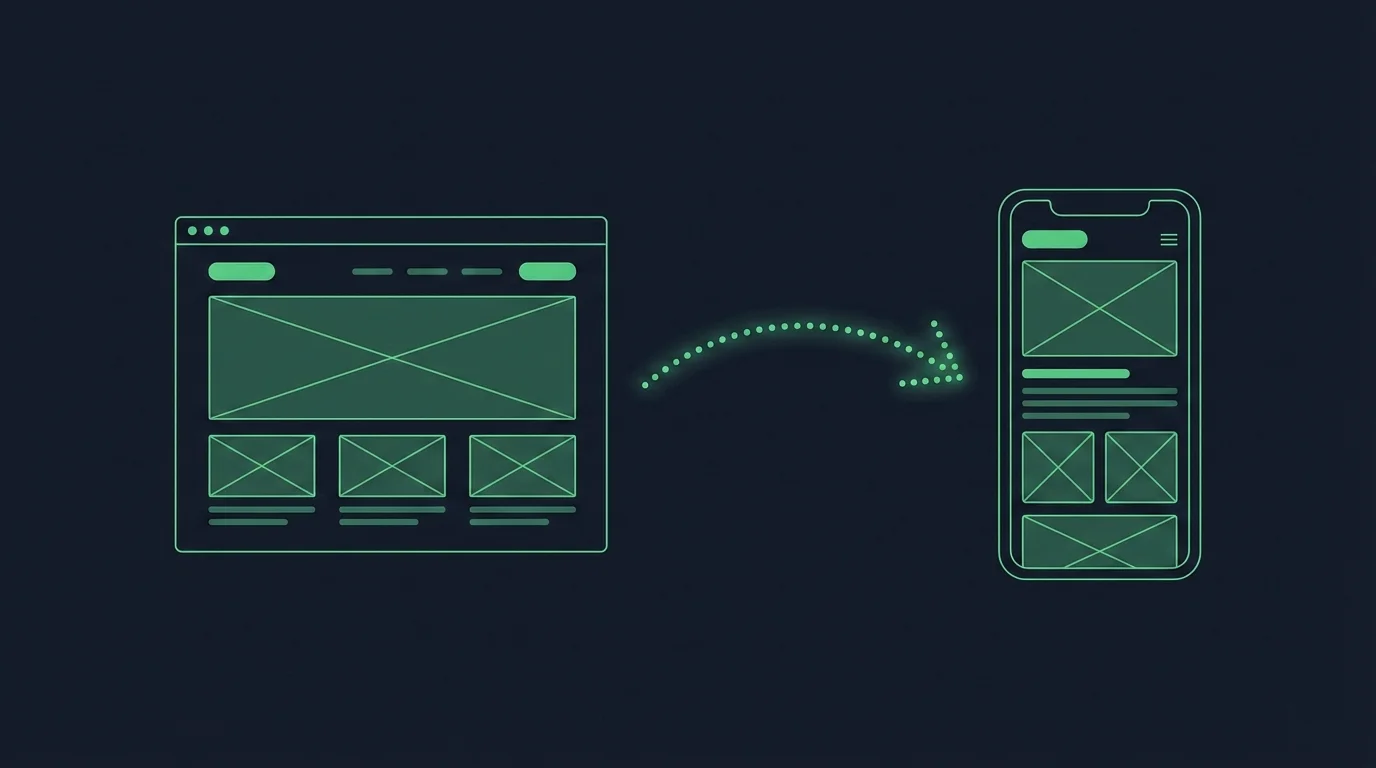
  • Mobile Apps vs Mobile Websites (Why 90% of Mobile Time is Spent in Apps)

    Mobile Apps vs Mobile Websites (Why 90% of Mobile Time is Spent in Apps)

    More than 60% of global web traffic now comes from mobile devices. But how people use their phones is just as important as the fact that they’re on them – and this is where the gap between mobile apps and mobile websites gets interesting.

    The data is clear: when people pick up their phones, they overwhelmingly open apps, not browsers.

    According to the latest data from Sensor Tower’s State of Mobile 2026 report, users spend less than 6% of their smartphone time in browsers and search apps. The rest – over 90% – goes to mobile apps.

    This isn’t a new trend, but it’s accelerating. And for businesses that rely on mobile traffic, the implications are significant.

    In this article, we break down the latest statistics on mobile apps vs mobile websites, explore why users prefer apps, and explain what this means for brands looking to maximize engagement, conversions, and retention on mobile.

    Running an ecommerce brand? We operate the Retention Edge, a free weekly newsletter on how to drive sustainable growth through retention & CX. See what Retention Edge is about →

    Mobile App vs Mobile Website Statistics (2026 Data)

    Before getting into the “why,” let’s look at the numbers. These are the most up-to-date statistics available on how people use mobile apps compared to mobile websites.

    Over 90% of Mobile Time Is Spent in Apps

    This stat has been consistent for years. But the gap is actually widening.

    • 2020: eMarketer reported that 88% of mobile internet time was spent in apps.
    • 2025: Sensor Tower’s State of Mobile 2026 report found that users spend less than 6% of smartphone time in browsers; putting app usage at roughly 94% of total mobile time.

    The implication is straightforward: when people are on their phones, they’re using apps. 

    Mobile browsers are primarily used for quick searches and one-off tasks, not for sustained engagement.

    Average Daily Time Spent on Mobile Apps

    Globally, users now spend an average of 3.6 hours per day in mobile apps, according to Sensor Tower. 

    That adds up to 5.3 trillion total hours spent in apps worldwide in 2025 – a 3.8% increase year-over-year.

    Some regional highlights:

    RegionAvg. Daily App Time
    Indonesia~6 hours
    Thailand~5.6 hours
    Argentina~5.3 hours
    United States~4+ hours
    United Kingdom~4+ hours
    Canada~4+ hours

    In almost every major market, time spent in apps has grown steadily over the past several years.

    App Downloads Are Flat, but Spending Is Surging

    An interesting trend: the total number of app downloads globally has plateaued at roughly 150 billion per year (Sensor Tower) or approximately 107 billion counting only the App Store and Google Play (Appfigures).

    But consumer spending in apps tells a different story:

    • $167 billion in global in-app purchase revenue in 2025, up 10.6% year-over-year (Sensor Tower).
    • For the first time, non-gaming in-app spending ($85.6B) surpassed gaming ($81.8B).
    • Shopping app installs grew 70% overall, and 123% on iOS – driven largely by the rise of ecommerce apps.

    Users aren’t downloading more apps. They’re spending more time and money in the apps they already have – which is a strong signal that apps drive deeper engagement than mobile websites.

    Mobile Commerce Is Growing Fast

    Mobile commerce (m-commerce) now accounts for a growing majority of all online sales:

    YearMobile Share of Ecommerce
    202252%
    202354%
    202457%
    2025 (est.)59%
    2028 (proj.)63%

    In the US alone, mobile commerce reached $564 billion in 2024 and is projected to hit $649 billion in 2025. About 1.65 billion people worldwide now shop on mobile devices.

    And within mobile commerce, 54% of mobile transactions happen in apps rather than mobile browsers (Criteo).

    Check out more mobile commerce statistics here

    Mobile vs Desktop Traffic Share

    As of early 2026, mobile devices account for roughly 62–64% of global web traffic (Statcounter). But this varies significantly by region:

    RegionMobileDesktop
    Global~63%~35%
    United States~43%~57%
    United Kingdom~54%~46%
    Asia~70%+~28%

    Even in markets where desktop still leads for general browsing (like the US), ecommerce traffic skews much more heavily mobile; 75% of ecommerce site traffic comes from mobile devices.

    Why Mobile Apps Outperform Mobile Websites

    The usage statistics tell us that people spend their time in apps. But the performance data is even more telling for businesses.

    Higher Conversion Rates

    Across industries, mobile apps consistently convert at higher rates than mobile websites:

    • Apps convert at roughly 3x the rate of mobile websites in ecommerce (Criteo, Button).
    • App users view 286% more products per session than mobile web users (Criteo).
    • Overall, apps average 157% higher conversion rates than mobile websites.

    Some industry-specific figures (app vs mobile web):

    IndustryApp Conversion Advantage
    On-demand services+307%
    Entertainment+233%
    Travel+220%
    Retail+94%

    The reasons behind this are practical: apps load faster, store user preferences, and reduce friction at checkout. 

    An app user who’s already logged in, with payment details saved, is far more likely to complete a purchase than someone navigating a mobile browser.

    Push Notifications

    One of the biggest advantages mobile apps have over mobile websites is push notifications. 

    Direct access to a user’s lock screen is something a mobile website simply cannot replicate at the same level.

    Here are the latest benchmarks (Pushwoosh, Airship 2025 data):

    • Average push notification CTR: 4.6% on Android, 3.4% on iOS.
    • Rich push notifications (with images/media): 9.2% CTR vs 6.9% for simple text pushes.
    • Push notification conversion rate: 4.4% average.

    For context, email marketing benchmarks sit at roughly 15–25% open rates and 1% click-through rates. 

    Push notifications consistently outperform email by a wide margin, particularly for time-sensitive offers, back-in-stock alerts, and flash sales.

    Learn more: the Ultimate Guide to Push Notifications for Ecommerce Brands

    Stronger Retention

    App retention is notoriously difficult. Most apps lose 77% of their daily active users within three days. But the apps that do retain users see far greater lifetime value than mobile websites.

    Here’s some key retention data to make note of:

    • Shopping apps are among the best-retaining categories, consistently outperforming average benchmarks.
    • Users who opt in to push notifications show 2-3x higher retention rates (Airship).
    • AppsFlyer’s 2025 forecast projects that 80% of future revenue will come from 20% of existing users (the “retention-first” economy).

    This is where apps shine over mobile websites. A mobile website visitor may browse and leave. An app user has made a commitment – they’ve downloaded your app, given it space on their home screen, and (often) opted in to notifications. 

    That commitment translates to repeat visits and higher lifetime value.

    Why Users Prefer Mobile Apps

    The data shows that apps win on performance metrics. But what actually drives users to prefer apps over mobile browsers?

    Native Performance and Speed

    Mobile apps are installed on the device, which means they can load content faster than a mobile website that needs to fetch everything from a server. 

    Core UI elements, images, and layouts are already stored locally.

    Apps consistently deliver faster load times, smoother scrolling, and more responsive interactions than mobile websites, even well-optimized ones.

    This is particularly notable for media-heavy apps – it’s why you watch Netflix on the app, not on a mobile browser.

    Personalization and Stored Preferences

    Apps remember you. Your login credentials, your browsing history, your saved items, your preferences, all stored locally. This means every session picks up where the last one left off.

    On a mobile website, you’re often starting from scratch: logging in again, re-entering details, navigating back to where you were. The friction adds up.

    Home Screen Presence

    The biggest difference?

    When a user downloads your app, your brand lives on their home screen. That persistent visibility – your icon sitting alongside the apps they use every day – is a level of brand presence that a mobile website bookmark can’t match.

    It also means one tap to open, rather than opening a browser, typing a URL, and waiting for the page to load.

    Access to Device Features

    Mobile apps can use device capabilities that mobile websites either can’t access or can only access in limited ways:

    • Push notifications — the most impactful for most businesses.
    • Camera and barcode scanning — useful for product lookup, visual search, and AR features.
    • GPS and location services — for store locators, local offers, and delivery tracking.
    • Offline access — apps can cache content for use without an internet connection.
    • Biometric authentication — Face ID and fingerprint login for faster, more secure access.

    A Contained, Distraction-Free Experience

    When a user is in your app, they’re in your environment. There’s no address bar tempting them to navigate elsewhere, no competing tabs, no pop-ups from other sites.

    This contained experience keeps users focused and engaged, which is a big part of why session times and conversion rates are consistently higher in apps.

    What Mobile Websites Still Do Better

    It wouldn’t be honest to present mobile apps as universally superior without acknowledging what mobile websites do well. In reality, the two serve different purposes.

    Discovery and SEO

    Mobile websites are indexed by search engines. Mobile apps are not. 

    If someone is searching Google for a product, a solution, or information, they’re going to find your website – not your app.

    For acquisition and top-of-funnel traffic, a mobile website is essential. No app can replace the organic visibility that a well-optimized website provides.

    No Download Barrier

    Downloading an app requires a decision. The user needs to go to the app store, wait for the download, grant permissions, and dedicate home screen space. 

    That’s a meaningful barrier, especially for first-time visitors who don’t yet know your brand.

    A mobile website is instant. No commitment required. This makes it the better channel for first impressions and casual browsers.

    Cross-Platform Accessibility

    A mobile website works on any device with a browser – phone, tablet, desktop, any operating system. An app needs to be built for iOS and Android separately (or through a cross-platform solution).

    For reaching the widest possible audience with the lowest friction, a mobile website wins.

    Lower Cost to Build and Maintain

    Building and maintaining a custom native app from scratch typically costs anywhere from $50,000 to $300,000+, with ongoing maintenance costs on top of that. A mobile-optimized website is significantly less expensive to create and update.

    That said, this gap has narrowed considerably with solutions like Vendrux that let you extend your existing website into a mobile app (more on that below).

    The Best Mobile Strategy: Have Both

    Given everything above, the question isn’t really “mobile app or mobile website?” It’s how to use both effectively.

    The most successful brands today use a two-channel mobile strategy:

    1. Your mobile website handles discovery, SEO, and first-time visitors. This is how new customers find you.
    2. Your mobile app handles engagement, retention, and repeat purchases. This is how you keep your best customers coming back.

    Think of it as a funnel: your website acquires users, and your app retains them.

    “In our experience, users break into two camps. There are users who prefer to buy on the app and users who prefer using the browser. You can’t convince one to go the other way – you need to meet them where they are.”
    — David Cost, VP of Ecommerce, Rainbow Shops

    Not every visitor will download your app – and that’s fine. Your mobile website serves them well. 

    But for the segment that does download, you get access to push notifications, higher conversion rates, and a direct, owned channel to your most valuable customers.

    Who Should Prioritize a Mobile App?

    A mobile app makes the most sense for brands that:

    • Already have meaningful mobile traffic. If mobile visitors make up a significant share of your traffic, an app gives them a better experience.
    • Rely on repeat purchases. Subscription brands, fashion, beauty, food and beverage. Any business where customer retention drives revenue.
    • Want an owned marketing channel. Push notifications give you a direct line to your customers, independent of email deliverability, social media algorithms, or ad costs.
    • Have a strong existing website. If your website already works well on mobile, extending it into an app is straightforward.

    How to Get Both Without Building From Scratch

    If you already have a mobile website, you don’t need to build a separate app from scratch. 

    That’s the traditional approach. And it’s expensive, slow, and creates two separate platforms to maintain.

    Vendrux takes a different approach. It extends your existing website into fully native iOS and Android apps. Your app and website stay in sync; update your site, and your app updates automatically.

    Some of the mobile apps we’ve built for successful, high-revenue brands

    This means you get:

    • A native app with full app store presence on both iOS and Android.
    • Push notifications to re-engage your most valuable customers.
    • Your full website experience in a native app – every feature, every integration, every page.
    • Launch in weeks, not months. No rebuild, no separate codebase.
    • A fully managed service. Vendrux handles the build, submission, maintenance, and updates.

    This approach works with any website platform – Shopify, WooCommerce, Magento, custom-built sites, and more.

    Brands like Bestseller (Jack & Jones, Vero Moda), Tadashi Shoji, and John Varvatos use Vendrux to maintain both a mobile website and a native app without the complexity and cost of building from scratch.

    Want to see what your website would look like as an app? 

    Get a free app preview now, or book a free consultation with one of our team to discuss whether a mobile app makes sense for your business.

    Sources: Sensor Tower State of Mobile 2026, eMarketer/Insider Intelligence, Statcounter, Criteo, Pushwoosh 2025 Benchmarks, Airship 2025 Benchmarks, AppsFlyer, Appfigures, Statista, Red Stag Fulfillment.

  • How Much Does it Cost to Create an App in 2026?

    How Much Does it Cost to Create an App in 2026?

    The mobile app industry is booming, and your business wants in. But how much does it cost to create an app for your business?

    A mobile app cost depends on a great number of factors. These include the complexity of your project, how you hire people to work on the project, and whether you want to go all out to build a fully native app.

    However, if you want a benchmark for mobile app development costs, to help you get a rough idea of how much it costs to make an app, that’s what we’re going to give you. We’ll share a range of figures, depending on your needs, and help you understand whether developing an app is viable for your business.

    How Much Does It Cost to Build an App? (The Short Answer)

    Most app projects in 2026 fall somewhere between $10,000 and $300,000, with the average cost for a funded startup’s v1 app landing around $80,000-$250,000

    But that range is almost uselessly broad without context. The final number depends on three things: 

    • What you’re building
    • Who’s building it
    • How you choose to build it.

    If you want both iOS and Android (which most businesses do) custom native development means building two separate apps. That roughly doubles the cost compared to a single-platform build. 

    Cross-platform frameworks (React Native, Flutter) reduce that duplication, by increasing the code overlap between the two platforms.

    Then there are no-code tools, which don’t require developers (and thus let you launch for much cheaper).

    Alternatively, if you’re building from the starting point of an existing website, a website-to-app platform eliminates a significant amount of the cost and effort of building a brand new app from scratch.

    The rest of this guide breaks down each cost driver in detail so you can estimate what your specific app will actually cost.

    One important note before we get into numbers: all the cost ranges in this guide are estimates based on aggregated data from GoodFirms, Clutch, Indeed salary data, freelancer rates from Upwork, and published agency pricing.

    Your actual cost will depend on your specific requirements, and quotes from real development teams will always be more accurate than industry averages.

    App Development Cost by Complexity

    The single biggest factor in app development cost is complexity. A simple app with basic features costs 5-10x less than an enterprise build with custom backends, integrations, and advanced functionality.

    Simple Apps ($10,000-$60,000)

    Simple apps include things like calculators, basic productivity tools, content-display apps, and single-purpose utilities. They typically have:

    • 5-10 screens
    • Standard UI components (no custom animations)
    • Basic user authentication
    • Minimal or no backend (local data storage)
    • Single platform (iOS or Android, not both)

    At the lower end ($10,000-$25,000), you’re looking at an MVP with core functionality only. At the higher end ($40,000-$60,000), you get polished design, basic analytics, and both platforms.

    Development timeline: 2-3 months for a single platform, 3-4 months for both.

    Mid-Complexity Apps ($60,000-$150,000)

    This is where most business apps fall. Mid-complexity apps include features like:

    • Payment processing and in-app purchases
    • User profiles and account management
    • Real-time messaging or chat
    • Location services and maps integration
    • Push notification systems
    • Third-party API integrations (payment gateways, CRMs, analytics)
    • Custom UI/UX design

    An ecommerce app with a product catalog, cart, checkout, and user accounts typically costs $50,000-$150,000 for custom development, depending on the number of integrations and the level of design customization.

    Development timeline: 3-6 months.

    Complex and Enterprise Apps ($150,000-$300,000+)

    Enterprise-grade apps include features like real-time data synchronization across devices, advanced security protocols, machine learning or AI functionality, multimedia processing, complex admin dashboards, and multi-language support.

    Examples: banking and fintech apps, telehealth platforms, social networking apps, large-scale marketplace apps.

    The costs here can exceed $300,000 easily, especially when you factor in extensive backend architecture, sensitive data security protocols, and regulatory compliance requirements (HIPAA, PCI-DSS, SOC 2).

    Some enterprise builds run $500,000 to $1M+ when both platforms, admin tools, and ongoing development contracts are included.

    Development timeline: 9-12+ months, sometimes longer for highly regulated industries.

    What About Cost by App Type?

    Different app categories tend to cluster at different cost levels because of the features they typically require. Here are rough ranges for common app types (custom development, both platforms):

    • Ecommerce apps (product catalog, cart, checkout, user accounts): $50,000-$150,000
    • On-demand / delivery apps (real-time tracking, maps, payments, driver and customer sides): $80,000-$200,000
    • Social networking apps (profiles, feeds, messaging, media sharing): $100,000-$300,000
    • Marketplace apps (two-sided with seller and buyer flows, listings, transactions): $100,000-$250,000
    • Fintech / banking apps (secure transactions, regulatory compliance, account management): $150,000-$400,000
    • Healthcare / telehealth apps (HIPAA compliance, video calls, patient records): $120,000-$300,000
    • SaaS / productivity apps (dashboards, analytics, team features): $50,000-$150,000
    • Content and media apps (article/video feeds, subscriptions, offline access): $30,000-$100,000

    These ranges assume custom native or cross-platform development with a professional team. A website-to-app approach for ecommerce or content apps can reduce costs to a fraction of these numbers, since the core functionality already exists on the website.

    What Factors Drive App Development Cost?

    Beyond complexity, several other variables affect the final price tag. Understanding these helps you estimate more accurately and make smarter tradeoffs.

    Feature Complexity

    Every feature compounds the cost. A chat feature, for example, isn’t just a text input and a message bubble. It requires WebSocket infrastructure, message storage, notification logic, and potentially moderation tools. Individual feature costs add up:

    • Push notifications (basic): $1,500-$5,000
    • User authentication and profiles: $2,000-$5,000
    • Payment integration (Stripe, Apple Pay): $3,000-$8,000
    • In-app chat (third-party SDK): $2,000-$5,000
    • In-app chat (custom-built): $10,000-$15,000
    • Social login (per network): $500-$1,000
    • Analytics integration: $1,500-$3,000
    • Offline mode with data sync: $8,000-$12,000

    The cost is largely driven by development time. More features means more hours billed. 

    A useful exercise before getting quotes: rank your features by priority and get separate estimates for a Phase 1 launch versus the full feature set. This gives you flexibility to cut scope if the initial quotes come in higher than your budget.

    AI-powered features are increasingly common in 2026, and they come with a significant cost premium. Adding machine learning-based product recommendations, chatbot functionality, or image recognition can add $20,000-$150,000 to the project depending on complexity. For most ecommerce apps, AI features are better handled through third-party integrations (like Algolia for personalized search or Nosto for recommendations) than custom-built models.

    Platform Choice (iOS, Android, or Both)

    Building for a single platform costs roughly half of building for both. Native iOS development uses Swift or SwiftUI; native Android development uses Kotlin or Java. These are entirely separate codebases, which means separate development teams, separate testing cycles, and separate maintenance.

    For most businesses launching a consumer app, you need both platforms. Android holds roughly 72% of global market share, while iOS dominates in the US and high-income markets. 

    Skipping one platform means leaving a significant portion of your audience without access.

    This is one reason cross-platform frameworks and website-to-app solutions have gained traction; they let you ship to both platforms without doubling the cost.

    Design and UX Requirements

    A basic app using standard platform UI components (Material Design for Android, Human Interface Guidelines for iOS) is significantly cheaper than one with custom illustrations, animations, micro-interactions, and a bespoke design system.

    Design costs typically run 10-15% of the total project budget. For a $100,000 app, that’s $10,000-$15,000 for design work, which includes wireframing, prototyping (usually in Figma or Sketch), visual design, and asset creation.

    Tablet optimization adds roughly 50% to the design and development budget. Supporting both landscape and portrait orientations adds another 30%.

    Backend Infrastructure and API Integrations

    Most non-trivial apps need a backend: a server, database, and API layer that stores data, manages user accounts, processes transactions, and connects to third-party services.

    Backend development typically costs $6,000-$30,000 depending on complexity. A simple backend using Firebase or AWS Amplify costs less than a custom-built backend with multiple microservices.

    Third-party integrations (Stripe for payments, Twilio for SMS, Algolia for search, Klaviyo for email) each add development time. Expect $1,000-$5,000 per integration for straightforward implementations, more for custom configurations.

    Security and Compliance

    For most consumer apps, basic security (HTTPS, encrypted storage, secure authentication) is included in standard development. But if you’re handling financial data (PCI-DSS compliance), health data (HIPAA), or serving EU customers (GDPR), compliance requirements can add $10,000-$50,000+ to the project.

    Security audits and penetration testing, which are recommended before any public launch, typically cost $5,000-$15,000 from a third-party firm.

    Even standard consumer apps need to account for data privacy regulations. If your app collects user data (which almost every app does), you need a privacy policy, consent mechanisms, and often data deletion capabilities. 

    The EU’s GDPR requires explicit consent for data collection, the right to data deletion, and breach notification procedures. California’s CCPA has similar requirements. Meeting these requirements isn’t optional, and non-compliance penalties are steep.

    App Development Cost by Region

    Here’s the biggest factor that influences the cost of your app: where your developers are located.

    Hourly rates vary 3-5x between regions – a developer in New York City will almost certainly charge more than one in Eastern Europe or South Asia – making this is often the single biggest lever for controlling budget.

    RegionHourly RateSimple AppMid-Complex App
    North America$70-$150/hr$40K-$90K$100K-$250K+
    Western Europe$60-$110/hr$35K-$75K$80K-$200K
    Eastern Europe$40-$70/hr$20K-$50K$50K-$120K
    Latin America$40-$70/hr$20K-$50K$50K-$120K
    South / SE Asia$20-$50/hr$10K-$30K$30K-$80K

    Sources: Compiled from Index.dev, Arc.dev, and Qubit Labs rate surveys.

    Why Location Affects More Than Just the Hourly Rate

    Lower hourly rates don’t always mean lower total cost. Communication overhead, timezone gaps, and differences in project management maturity can increase the number of hours needed. 

    A $40/hr team that takes 50% more hours to deliver ends up costing the same as a $60/hr team that ships on time.

    Eastern Europe and Latin America have become popular middle-ground choices, offering 35-40% savings compared to US rates with stronger timezone overlap (Latin America especially for US-based companies) and mature development practices.

    When evaluating quotes from teams in different regions, ask for total project cost estimates (not just hourly rates) and check references from past clients in your market. The cheapest hourly rate doesn’t always mean the cheapest project.

    How Much Does It Cost to Hire an App Developer?

    So far we’ve been looking primarily at the overall cost of building an app. But what this really comes down to is:

    Hours to build your app x hourly cost of developers to build it

    This is true whether you hire developers independently, or hire an agency to build your app. It’s all labor economics, at the end of the day.

    So if we want to deconstruct the cost of building an app further, we’ll look at the baseline cost you can expect for the people who will build your app – covering a few different avenues.

    Freelance App Developers

    Freelancers on platforms like Upwork and Toptal charge $25-$150/hr depending on experience and location. For a simple app, you might end up hiring 1-2 freelancers, with total costs in the $10,000-$50,000 range.

    The upside is flexibility and lower overhead. The downside is that you’re managing the project yourself. 

    You need to handle coordination between designers, frontend and backend developers, and QA. For anything beyond a basic app, project management will be a significant time commitment.

    App Development Agencies

    Agencies like those listed on Clutch and GoodFirms charge $100-$300/hr (US-based) or $40-$100/hr (offshore). They provide a full team: project manager, designers, developers, and QA.

    The upside is reduced management burden and a more predictable process. The downside is cost; a US-based agency building a mid-complexity app will typically quote $100,000-$300,000+. Many agencies also require minimum project sizes ($25,000-$50,000+).

    In-House Development Teams

    Hiring full-time mobile developers means annual salaries of $80,000-$180,000 per developer in the US, plus benefits, tools, and management overhead. 

    A minimum viable team (1 iOS developer, 1 Android developer, 1 designer, 1 backend developer), US-based, could cost $350,000-$700,000+ per year in fully loaded compensation.

    That’s a lot. Yet for a custom mobile app, it’s required, since mobile apps are not a “one-and-done” project: they required constant maintenance and updates to remain operational.

    “If we had unlimited time and money, we would probably go for a custom native app, but that is half a million to a million a year to maintain.”
    — David Cost, VP of Ecommerce at Rainbow Shops

    Here’s a breakdown of the difference:

     FreelancersAgencyIn-House
    Cost Range$25-$150/hr$40-$300/hr$350K-$700K+/yr
    Project MgmtYou manageIncludedYou manage
    Best ForSimple apps, MVPsMid to complex appsOngoing dev capacity
    Risk LevelHigher (varies)ModerateLower (full control)
    Timeline ControlLimitedGoodFull

    How Long Does It Take to Build an App?

    The other core factor in the cost of your app: development timeline.

    More dev hours = higher cost. It’s a pretty simple equation. It also happens to be longer until you can get a return on your investment, and see actual revenue come through the app, the longer it takes to launch it.

    Here’s what you can expect in terms of timeline.

    • Simple apps (5-10 screens, basic functionality): 2-3 months for a single platform, 3-4 months for both iOS and Android.
    • Mid-complexity apps (payments, integrations, custom design): 3-6 months. This is where most business apps land.
    • Complex/enterprise apps (advanced features, regulatory compliance): 9-12+ months. Some large-scale projects stretch to 18 months or longer.
    • Website-to-app platforms: 2-4 weeks. Because these platforms build on your existing website, there’s no feature development phase.

    A common mistake with app development is underestimating the timeline. Nearly half of app projects exceed their original budget, and scope creep during development is the primary cause. 

    Defining a clear requirements document before starting development is the single most effective way to control both timeline and cost.

    The MVP Approach: Controlling Cost Through Phased Launches

    One of the most effective ways to manage both timeline and budget is to launch with a minimum viable product (MVP) first, then iterate based on real user data.

    An MVP includes only the core features needed to deliver value. For an ecommerce app, that might be: product browsing, search, add-to-cart, checkout, and push notifications. Nice-to-haves like wishlists, loyalty programs, and personalized recommendations can come in Phase 2.

    This approach works because:

    • Lower initial investment. An MVP might cost $20,000-$40,000 instead of $80,000-$150,000 for the full feature set.
    • Faster time to market. You can launch in 2-3 months instead of 6-9 months, and start generating revenue and user data sooner.
    • Better allocation of budget. Real user behavior data tells you which Phase 2 features actually matter, so you don’t spend $15,000 building a feature nobody uses.
    • Reduced risk. If the app doesn’t gain traction, you’ve invested $30,000, not $150,000.

    The tradeoff is that your initial app will be more limited. For ecommerce brands with an existing website, a website-to-app approach effectively gives you a “full-featured MVP” from day one, since it carries over all your website’s functionality, without the phased development tradeoff.

    How Much Does It Cost to Maintain an App?

    The launch price is just the beginning. Apps require constant updates, and maintenance costs are ongoing for as long as the app is live.

    A standard industry estimate is 15-20% of the initial development cost per year for maintenance. For a $100,000 app, that’s $15,000-$20,000 annually. Apps in regulated industries like fintech and healthcare often run higher, at 20-25%+ per year.

    This is likely not something you can skip. If you do, expect bugs to pop up, your user experience to suffer, and the return from your app to plummet.

    What Maintenance Covers

    • Bug fixes and performance optimization. Issues surface after launch that weren’t caught in QA. Devices, OS versions, and network conditions in the real world are more varied than any test environment.
    • OS compatibility updates. Apple and Google release major OS updates annually. Each update can break existing functionality, requiring development time to test and fix.
    • Third-party integration updates. Payment gateways, analytics SDKs, and other integrations release breaking changes periodically. Someone needs to monitor and update these.
    • New feature development. Users expect apps to improve over time. Stagnant apps lose engagement and accumulate negative reviews.
    • Security patches. Vulnerabilities are discovered regularly. Keeping dependencies up to date is essential.

    Hidden Ongoing Costs People Forget

    Beyond maintenance development, there are several costs that aren’t always included in initial estimates:

    • App Store fees: Apple charges $99/year for a developer account. Google charges a $25 one-time fee.
    • Cloud hosting and infrastructure: Depending on traffic and data volume, hosting on AWS, Google Cloud, or Azure can run $50-$500+/month for a typical business app. High-traffic apps pay significantly more.
    • SSL certificates, CDN, and monitoring tools: Typically $50-$200/month combined.
    • Analytics platforms: Basic analytics (Firebase, Google Analytics) are free. Enterprise analytics (Mixpanel, Amplitude) start at $25-$100/month and scale with usage.
    • Push notification services: Free at low volumes (Firebase Cloud Messaging), but enterprise push platforms like OneSignal or Braze charge based on audience size.

    All-in, a $100,000 app might cost $20,000-$35,000/year to keep running when you include both maintenance development and infrastructure costs. Over a three-year period, total maintenance costs often exceed the original development investment.

    How to Reduce App Development Costs

    If the numbers above feel daunting, there are legitimate ways to lower the cost without compromising on quality.

    Cross-Platform Frameworks (React Native, Flutter)

    Instead of building separate native apps for iOS and Android, cross-platform frameworks let you write one codebase that compiles to both platforms. React Native (developed by Meta) and Flutter (developed by Google) are the two most popular options in 2026.

    The cost savings are real: a cross-platform app typically costs 50-75% of building two separate native apps. For a mid-complexity app, that might mean $60,000-$100,000 instead of $100,000-$150,000.

    There may be some tradeoffs in terms of user experience, performance and platform-specific features. But for most business apps, the differences are negligible. For gaming, AR/VR, or apps with heavy device-hardware integration, it’s more likely you’ll notice the difference between an iOS app built with React Native and one built in Swift.

    One thing to note: cross-platform doesn’t eliminate the dual-platform problem entirely. You still need to test on both platforms, handle platform-specific behaviors (notifications work differently on iOS vs Android, for example), and maintain the codebase over time. 

    It reduces cost, but it’s not a 50% reduction.

    No-Code App Builders

    Tools like Glide ($99-$799/month), Thunkable (from $38/month), and Softr ($29-$199/month) use drag-and-drop interfaces to let non-developers build apps without writing code.

    These work well for simple internal tools, prototypes, and basic apps with limited functionality. For consumer-facing apps that need custom design, complex integrations, or performance optimization, no-code builders may limit you too much. There’s a natural ceiling to what you can build with these tools.

    That said, if you’re building a simple internal tool or testing an idea before committing to a full build, no-code platforms are the cheapest option available. 

    Just be aware that migrating away from a no-code platform later, if you outgrow it, often means starting from scratch. There’s no codebase to export and build on. So while it’s cheap to start, it can be an expensive dead end if your app needs evolve beyond what the platform supports.

    Learn more about the Best Mobile App Builders available today.

    Website-to-App Platforms

    Here’s where you can really save on the cost of your app, and completely flip the ROI equation on its head.

    Some mobile apps are “from scratch” projects. The business plan, distribution, etc is all built around the app.

    But if you’re building a mobile app for an existing business, with a website customers buy from (like an ecommerce brand), you may not need a “from scratch” build.

    A service like Vendrux turns your existing website into an app, skipping the cost of an expensive rebuild.

    It uses the functionality of your website to power the app. This means you don’t need to rebuild all of this from the ground up in your app.

    The difference? You’re looking at an upfront cost in the low-four figures, with a manageable monthly cost perhaps a tenth of what you’d pay for just one developer on staff.

    Vendrux simply turns your responsive website into a full-featured mobile app

    It’s ideal for apps that don’t need any significant new functionality from what already exists on the web. Ecommerce apps are the best example: shoppers usually don’t need a drastically different experience in an app; just a more convenient way to browse and buy, as they do on the web.

    For this, it makes little sense to build a custom app, when converting what you’ve already built is so much more cost-effective.

    How Much Does It Cost to Make an App With Vendrux?

    Here’s what the cost looks like to turn your site into an app with Vendrux:

    • Monthly subscription: starting from $799/month
    • One-time setup fee: variable (typically low four figures)
    • Maintenance cost: minimal 

    Vendrux handles the entire process: app development, QA, App Store and Google Play submission, and ongoing maintenance. You don’t need mobile developers on staff, and you don’t need to manage a second codebase.

    See more details about our pricing here.

    Here’s how that compares to other development approaches:

     Native DevCross-PlatformVendrux
    First-Year Cost$60K-$180K+$40K-$120K+~$12K-$13K
    Annual Maintenance$9K-$30K+/yr$6K-$20K+/yr~$9.6K/yr (included)
    Time to Launch3-12 months2-9 months~4 weeks
    Dev Team RequiredYesYesNo
    Site Feature ParityRequires rebuildRequires rebuildAutomatic

    It’s also much easier to predict – since Vendrux’s costs aren’t variable, whereas you never really know how many hours a custom app build is going to take (and how many hours will be needed month to month for maintenance).

    The cost difference is significant, but it’s the operational difference that matters most for ecommerce brands. 

    With custom development, every change to your website (new product page, updated checkout, seasonal promotion) needs to be separately implemented in the app. With Vendrux, your app stays in sync with your website automatically.

    “The app’s been invaluable to us. The cost we’re paying versus what we’re getting back is tenfold.”
    — Nick Barbarise, Director of IT at John Varvatos

    “The expense isn’t that big… it’s a no-brainer.”
    — David Cost, VP of Ecommerce at Rainbow Shops

    Vendrux has launched 2,000+ apps across Shopify, WooCommerce, Magento, BigCommerce, Salesforce Commerce Cloud, and custom platforms. We excel in helping mid-market and enterprise ecommerce brands, with custom features and custom tech stacks, launch apps that retain all the unique features from their website – without a six-figure dev cost.

    You get an app with native push notifications, deep linking, a home screen icon, and full App Store distribution. It’s everything you need in a mobile app, without the typical cost, making the decision to launch an app a real no-brainer.

    How the Process Works

    Here’s how to explore launching your app with Vendrux:

    1. Book a strategy call. Fill out a form with your website URL, and on a short call our team will discuss your goals, answer your questions, and assess whether Vendrux is the right fit (or whether you’re better to build custom).
    2. Vendrux builds your app. If you’re happy to move forward, we take care of the entire build, taking 99% of the work off your hands and out of your mind.
    3. Launch in 30 days. Vendrux handles everything. Your app goes live on the App Store and Google Play while you focus on running your business.

    If you want to learn more, see examples of other sites that went this route, and learn about the impact your app could make, book your free strategy call now.

  • How to Turn Your Website into a Mobile App (2026 Guide)

    How to Turn Your Website into a Mobile App (2026 Guide)

    Mobile traffic probably accounts for the majority of your visitors now. But, a fully-optimized, fast, responsive mobile website isn’t enough. Not on its own.

    Mobile apps convert better, retain better, and give you access to push notifications. That’s true. Apps convert at roughly 3x the rate of mobile websites in ecommerce. App users shop more frequently, spend more per order, and stick around longer.

    Most online businesses today should have their own app. Especially because, for brands with a successful, mobile-friendly website, it’s not a whole new project. You have a great base to start with.

    If you want to turn your website into a mobile app, this guide is for you. It covers every option for turning your website into a mobile app: what each approach costs, how long it takes, and who it’s right for. 

    Can You Actually Turn a Website into an App?

    Yes. And it’s more common than most people realize.

    Turning a website into an app means taking your existing web content and delivering it through a native app framework, with native capabilities layered on top: push notifications, app store presence, native navigation, and deep linking.

    The result is a real app that users download from the App Store and Google Play. A native app that uses your website as its content engine – which happens to be the same way many of the biggest apps in the world already work.

    Multiple studies have found that 83-90% of Android apps contain hybrid web components in their code. Even among apps with 100,000+ users, more than half use web content as part of their architecture. 

    Amazon, Shopify, Instagram, and Gmail all blend native and web elements in their mobile apps. Shopify published a detailed engineering post describing web-based views as “a critical part of Shopify’s mobile strategy.”

    These companies could build everything natively. They choose not to, because using web content lets them ship faster and maintain less code. The same principle applies to your business, just at a different scale.

    For a deeper technical breakdown, see our guide to native apps vs hybrid apps.

    Why Turn Your Website into an App?

    If you’re still weighing whether an app is worth it, here are the numbers that matter.

    Mobile users spend their time in apps, not browsers

    Over 90% of smartphone time is spent in apps. The latest data from Sensor Tower’s State of Mobile 2026 report found that users spend less than 6% of their phone time in browsers. When your customers pick up their phones, they’re opening apps, not typing URLs.

    Apps convert and retain better

    Mobile apps convert at roughly 3x the rate of mobile websites in ecommerce. App users also view significantly more products per session and return more frequently.

    The retention gap is even bigger. App users typically deliver 3-7x higher lifetime value than mobile web visitors, driven by higher order frequency, larger average orders, and stronger brand loyalty.

    Push notifications give you a new, high-visibility, high-ROI marketing channel

    Push notifications reach your customers on their lock screen, instantly, at zero cost per send.

    They’re virtually guaranteed to be seen; unlike emails, which are getting seen and opened less and less.

    For ecommerce brands, push notifications are the reason to build an app.

    Automated push notifications for cart abandonment, back-in-stock alerts, and flash sales can drive hundreds of thousands in new revenue each month, with very little in the way of variable costs.

    Your competitors are launching apps

    According to Vendrux’s 2025 Benchmark Report, 21.5% of US brands doing $5M+ per month in revenue already have a mobile app. That number is growing. For brands with strong repeat-purchase models, an app is quickly becoming table stakes rather than a competitive advantage.

    Dive deeper: Get our latest Ecommerce Mobile App Benchmark Report to see the real numbers apps are generating for DTC ecommerce brands. 

    Three Ways to Turn Your Website into a Mobile App

    There are three main approaches, each with different cost, effort, and control trade-offs.

     Custom DevelopmentDIY App BuildersWebsite-to-App
    Upfront cost$100K-$500K+$50-$1,500~$1-2K setup
    Monthly cost$5K-$20K+$50-$1,500~$1,000
    Time to launch6-12 months1-4 weeks~4 weeks
    Team effortHigh (dev team)Medium (5-10 hrs/wk)Low (minimal)
    Updates sync to app❌ No❌ No✅ Automatic
    Any website platform✅ Yes❌ No✅ Yes
    CustomizationTotalTemplate-limitedMirrors your site
    Who manages itYou / dev teamYouService provider

    Now, let’s take a deeper look at the three ways to turn a website into an app.

    Option 1: Custom Native App Development

    This means hiring developers (or an agency) to build an app from scratch using platform-specific code. Swift or Objective-C for iOS, Java or Kotlin for Android. Two separate codebases, two development cycles, two maintenance burdens.

    When it makes sense:

    • The app IS your product (think Uber, Duolingo, or a banking app)
    • You need device-specific features that don’t exist on the web (AR, NFC, complex offline workflows)
    • You have the budget ($100K-$500K+) and are comfortable with a 6-12 month timeline
    • You have an in-house engineering team to maintain it after launch

    When it doesn’t:

    • You already have a working website and want the app to mirror that experience
    • You don’t have dedicated mobile developers on staff
    • You need to launch in weeks, not months

    Custom development delivers maximum control, but it’s the most expensive option by a wide margin. You’re essentially building a second product. Factor in $50K-$150K per platform for the initial build, plus 10-20% of the build cost annually for maintenance and updates.

    “There is no real business case for building an app from scratch for $1M+ when our mobile website is already good enough!”
    — Thomas Moberg, Product Owner, Bestseller (Jack & Jones, Only, Vero Moda)

    Option 2: DIY App Builders

    No-code app builder platforms let you create a mobile app yourself, without hiring developers. 

    While there are many general-purpose no-code app builders, the only ones that are really relevant for this conversation are those built for ecommerce.

    These tools connect with your store via platform APIs (typically working with Shopify – though there are some that also work with Magento and WooCommerce), and let you pull product data into pre-built app templates.

    When it makes sense:

    • You want direct, hands-on control over the app’s design and layout
    • You have a team member who can own setup and ongoing management
    • You’re on a platform with strong builder support (most options are Shopify-only)
    • Budget is the primary constraint

    When it doesn’t:

    • You don’t have someone to manage the app as an ongoing project
    • You’re on WooCommerce, BigCommerce, Magento, Salesforce Commerce Cloud, or a custom platform (there are options, albeit more limited)
    • Your website is heavily customized and you don’t want to rebuild that in the app
    • You want app and website to stay in sync automatically

    The subscription price for DIY app builders can vary greatly, from as little as $49 per month, to $1,500+ per month. The cost depends on the depth of features you need, and how much customization you need (some allow dev customization, but it’s generally around $1.5K extra just for access to dev tools).

    But consider this: that cost doesn’t include the cost of your team’s time: designing screens, configuring integrations, updating the app when your site changes, and troubleshooting issues. At typical loaded hourly rates, that’s $1,000-2,000/month in labor on top of the subscription. 

    The total cost of ownership is closer to custom development than the sticker price suggests.

    Option 3: Website-to-App Services

    This approach takes your existing website and extends it into native iOS and Android apps. 

    Your website remains the single platform you manage. Updates to your site appear in the app automatically. No separate codebase, no rebuilding.

    The service provider builds a native app framework (generally using Swift, Java, and Kotlin), then integrates your web content within that framework and adds native capabilities on top: push notifications, native navigation menus, a home screen icon and an app store listing.

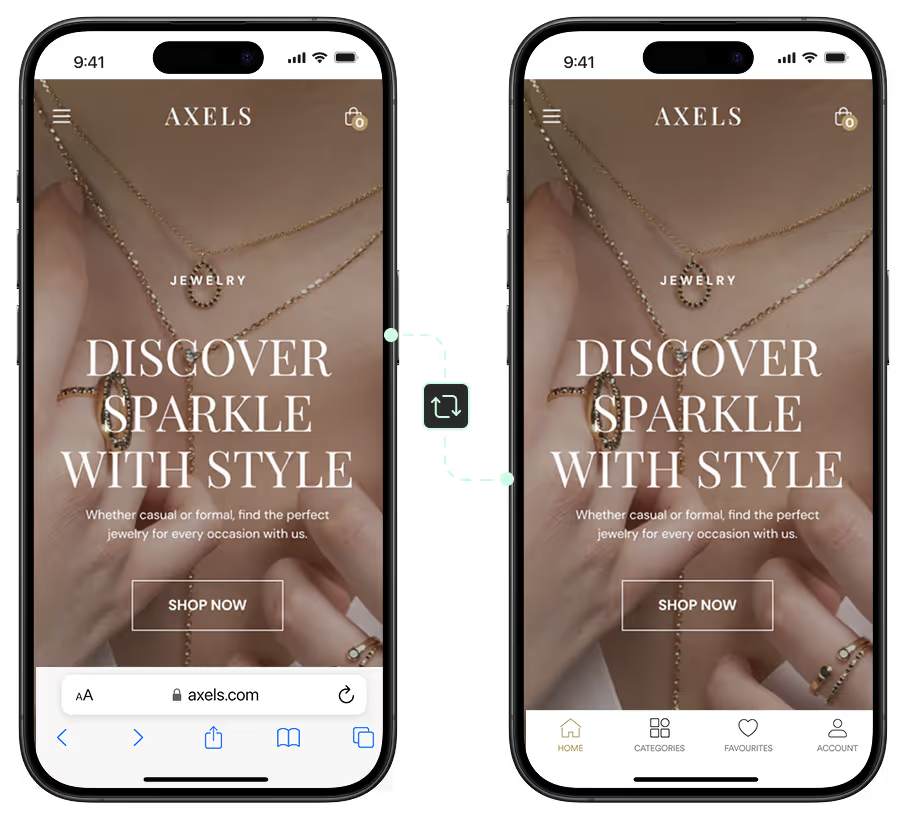
    The John Varvatos app shows how subtle changes from website to app can make a big difference.

    The result is a production-ready app that users download from the App Store and Google Play. And it’s the most straightforward example of actually converting your website into a mobile app.

    When it makes sense:

    • You already have a solid, mobile-responsive website
    • You want app store presence and push notifications without rebuilding your tech stack
    • You want someone else to handle the build, app store submission, and ongoing maintenance
    • You’re on a niche website platform (incompatible with no-code tools), you have custom integrations that DIY app builders can’t handle, or you have a completely custom-built website

    When it doesn’t:

    • You want the app to be a fundamentally different experience from your website
    • You need native-only device features that don’t work on the web (AR, NFC, Bluetooth)
    • Your mobile website isn’t in good shape yet (fix that first; a website-to-app service can only be as good as the site it’s built on)

    Vendrux is the top website to app provider in this category, with 2,000+ apps launched over 10+ years across Shopify, WooCommerce, Magento, Salesforce Commerce Cloud, and fully custom platforms. 

    Other services exist as well. The key differentiator for website-to-app services as a category is that they’re fully managed: you’re not building or maintaining the app yourself.

    “Our website is already well-optimized so using Vendrux to transform our site into an app was a no-brainer. No crazy costs, no integration headaches, and we were launched in a month.”
    — Ahmed Yousef, Director of Ecommerce, Pharmazone

    What About AI App Builders and PWAs?

    Two other approaches come up often: AI-powered app generators and Progressive Web Apps. Both have a role, but neither is a full replacement for the three methods above.

    AI-generated apps

    Today, tools like Lovable, Bolt, and Replit let you describe what you want and generate a functional web app with AI. Some of these platforms have started offering mobile app export or conversion features, and there are also tools specifically built for mobile apps.

    For prototyping, side projects, and MVPs, these tools are genuinely impressive. I’ve used most of them.

    But for an established ecommerce brand that needs a production-grade mobile app, they’re not there yet. The generated code often needs significant manual work to be production-ready (especially to handle the complexities of an ecommerce store), and you’re on your own for app store submission, compliance, and long-term updates.

    If you’re evaluating these tools, the question to ask is: would you trust this to handle your customers’ checkout experience and payment information? For most serious businesses, the answer is not yet.

    Progressive Web Apps (PWAs)

    A PWA is a website built with modern browser APIs that can behave like an app: installable to the home screen, with some offline caching and (on Android) push notifications.

    PWAs are a good option for businesses that want app-like behavior without app store distribution. They’re cheaper to build, require no app store approval, and share a codebase with your website.

    But they’re not a real substitute for an actual mobile app.

    One problem is iOS. Apple limits what PWAs can do on iPhone: no App Store presence, restricted push notification delivery, no background sync, and all PWAs are forced through Apple’s WebKit engine.

    Your most valuable users are likely on iPhones, so this is a major issue.

    Yet even if you consider Android, where PWAs are more tolerated, they’re just not as effective as native apps. Users don’t treat them the same way. You’ll end up with a fraction of the downloads and usage as if you build a “real” app.

    Your brand being in the app stores is a major advantage – one you don’t get with PWAs

    How Much Does It Cost to Turn Your Website into an App?

    With any project, cost is usually the first question a business is going to ask.

    Here are some rough estimates:

    ApproachYear 1 CostYear 2+ AnnualTeam Time
    Custom development$150K-$400K+$30K-$80K+Significant (dev team)
    DIY app builder$2K-$20K$7K-$20K5-10 hrs/week
    Website-to-app service~$13-14K~$12KMinimal
    PWA$5K-$20KMinimalVaries

    Short answer: custom dev costs a lot. DIY app builders and website to app services typically cost more or less the same – both of which could end up being less than 1% of a custom app.

    The ROI of Turning Your Website into an App

    The most important number isn’t cost. It’s return on investment (ROI).

    For a brand doing $10M per year in online revenue, even a very conservative estimate of 5% of total revenue coming through the app translates to $500,000 per year. Against a website-to-app service cost of roughly $10K-$15K per year, that’s a 30-50x return.

    The math gets more dramatic as revenue scales.

    A $50M brand driving 20% of revenue through the app is looking at $10M in app revenue against the same $10K-$15K annual cost.

    At this level, not having an app is an irresponsible business decision.

    This doesn’t mean every business should rush to launch an app. But for brands with meaningful mobile traffic and a repeat-purchase model, the economics are hard to argue with.

    For a full cost breakdown by approach, see our full guide on mobile app development costs.

    How Long Does It Take?

    ApproachDev TimeApp Store ReviewTotal to Live
    Custom development4-12 months1-2 weeks5-14 months
    DIY app builder1-4 weeks1-2 weeks2-6 weeks
    Website-to-app service~2-3 weeks1-2 weeks~4 weeks
    PWA2-8 weeksN/A2-8 weeks

    Apple’s review process typically takes 5-7 business days per submission, and may require revisions. Google Play is generally faster. If you’re planning around a specific launch date (a holiday season, a product drop, a rebrand), build in buffer time for the review process.

    How to Choose the Right Approach

    If you’re not sure which path to take, start with three questions.

    What do you already have?

    If you have a working, mobile-responsive website that you’re happy with, the website-to-app approach is the fastest, lowest-risk path. You’re converting what already works rather than building something new.

    If the app needs to do things your website can’t (device hardware integration, complex offline features, a fundamentally different user experience), custom development is the way to go.

    If you want hands-on design control and have someone on your team to own the project, a DIY app builder can work.

    What’s your budget and timeline?

    Under $15K for year one and need to launch within a month or two? Go with a website-to-app service or DIY builder.

    Six figures and 6+ months available? Custom development becomes a realistic option.

    Trying to keep costs as low as possible? A PWA gives you some app-like features, but accept the iOS limitations before committing.

    Who’s going to manage this after launch?

    This is the question most people skip, and it’s the one that matters most long-term.

    No dedicated person for app management? A website-to-app service handles maintenance for you.

    With a DIY builder, you’re on your own for updates, troubleshooting, and keeping the app in sync with your site.

    Custom development requires ongoing engineering resources – so budget that into the cost, if you don’t have these resources in-house.

    Our Honest Stance on the Best Way to Convert a Website into an App

    We’re Vendrux. We built a website-to-app service. So yes, we’re biased.

    But here’s why we believe this approach is genuinely the best path for most online businesses.

    The web today is incredibly capable. You can build almost anything as a web experience: 

    • Flash UIs
    • Complex checkout flows
    • Loyalty programs, subscription flows
    • AI-driven, personalized recommendations
    • Interactive product configurators
    • Bundle builders, up-sells, guided buying assistants

    The list goes on. The gap between what’s possible on the web and what’s possible in a native app has narrowed to a sliver for most business use cases.

    And, for the majority of business, the mobile web is where you’ll get most of your traffic.

    So rather than rebuilding all of that in an app that lives separately from your website, and requires its own team to run, the smarter move is 

    • Invest in your website, make it as good as it can possibly be
    • Build any desired features or upgrades for the web
    • Extend your web experience into a native app

    You’ll get everything you need from a real mobile app, while basically managing one codebase.

    A few of the apps we’ve built at Vendrux

    Anything you build or improve on your website shows up in the app automatically, and you never have to worry about the two experiences falling out of sync.

    That’s real flexibility. Anything you can build for the web is possible in your app; and you can do so with your existing web dev team.

    There are cases where other approaches make more sense. 

    • If you need an app that’s fundamentally different from your website, custom development is the right call. 
    • If you want more control over every screen in your app (separate from your website) and have the team to manage it, a drag-and-drop builder can work.

    These are legitimate options that successful businesses are using.

    But the best choice for most ecommerce brands, online marketplaces, and engagement-driven SaaS businesses is building the best possible website and converting it into a native app.

    It’s zero-risk, low-overhead, high-ROI. 

    That’s what we do, and that’s why we built Vendrux.

    Ready to explore turning your website into an app? Get a free consultation now. No cost, no obligation.

    How Vendrux Turns Your Website into an App

    If the website-to-app approach sounds like the right fit, here’s what the process looks like with Vendrux.

    Vendrux is a fully managed service. You’re not building or maintaining the app yourself. The Vendrux team handles everything, from the initial build through app store submission and ongoing updates.

    How it works

    You can go from website to app in just three steps, in under a month.

    1. Book a strategy call. Fill out the form with your website URL. The team discusses your goals, answers your questions, and assesses whether your site is a good fit.
    2. Get your custom app preview. The Vendrux team builds a personalized preview of your app. You see exactly how your website looks and feels as a native app before committing.
    3. Launch. Vendrux handles the full build, QA testing, and app store submission. Your app goes live on the App Store and Google Play while you focus on your business.

    What you get

    • Native iOS and Android apps listed in both app stores
    • Full parity with your website: every feature, every integration, every page
    • Unlimited push notifications at no cost per send (integrated with OneSignal and Klaviyo)
    • Automatic sync: update your website, and the app updates too
    • Ongoing maintenance, updates, and support handled by Vendrux
    • Works with any platform: Shopify, WooCommerce, BigCommerce, Magento, Salesforce Commerce Cloud, and custom builds

    Vendrux has launched 2,000+ apps over 10+ years for brands including John Varvatos, Jack & Jones, Vero Moda, Tadashi Shoji and Pharmazone.

    “We tried six companies and I feel like you guys have the best combination of service, functionality, and price.”
    — Kenneth Chan, Founder & CEO, TOBI

    “Vendrux keeps this whole thing simple and streamlined. No more juggling two different platforms, no more wasted time on maintenance.”
    — Eric Lowe, Director of Ecommerce, XCVI

    Who it’s not for

    Vendrux works best for businesses with a strong existing website. If your mobile site needs significant work, fix that first. If you need the app to be a completely different experience from your website, or you need deep native device features (AR, NFC, complex offline workflows), custom development is a better fit.

    Get started

    Ready to talk through whether an app makes sense for your brand? 

    Book a free 30-minute strategy call with one of our app experts. We’ve built 2,000+ apps for brands like yours, and we’ll give you an honest assessment of whether this is the right move, what it takes to launch, and examples of what brands like yours are doing.