Category: Blog

  • How Much Does it Cost to Hire a React Native Developer in 2026?

    How Much Does it Cost to Hire a React Native Developer in 2026?

    You’re seeing the shift to mobile and realizing a responsive website isn’t enough to keep users coming back, you want that home screen icon.

    If you’re here, you’re probably asking a simple question: “How much will it cost me to hire a React Native developer in 2026?”

    React Native sounds like the perfect solution: “Write once, run anywhere.” You figure you can hire one developer for both iOS and Android, minimizing costs.

    Then you see the price tag.

    Hiring high-quality mobile talent in 2026 is a shock.

    Between soaring salaries, recruitment fees, and fierce competition for seniors, an “efficient” cross-platform project can easily spiral into a six-figure liability before you launch version 1.0.

    In this guide, we break down exactly what it costs to hire a React Native developer, from freelance rates to global salaries. We also uncover the hidden costs most budgets miss and reveal a “third way” to launch your app without hiring a single new employee.

    React Native Developer Salary 2026

    If you just want the numbers, here is the state of the market. React Native developers are among the most in-demand professionals in tech, and their compensation reflects that.

    The average base salary for a US React Native developer is typically $129,000 per year. However, averages are misleading. A junior might accept $80,000, while a senior architect can command $160,000+.

    Here is a snapshot of typical annual salaries for remote-friendly React Native roles by region:

    Region Junior (0–2 Years) Mid-Level (2–5 Years) Senior (5+ Years)
    United States $90,000 – $110,000 $115,000 – $140,000 $150,000 – $190,000+
    United Kingdom £40,000 – £55,000 £60,000 – £80,000 £80,000 – £110,000
    Western Europe €45,000 – €60,000 €65,000 – €85,000 €90,000 – €130,000
    Eastern Europe $35,000 – $50,000 $55,000 – $75,000 $80,000 – $110,000
    India & Asia $15,000 – $25,000 $30,000 – $55,000 $60,000 – $90,000

    Data sources: ZipRecruiter and Glassdoor, among others.

    Local-market salaries in regions like India are often lower, while highly experienced remote developers working for Western companies can command more.

    As you can see, location is the single biggest lever you have on price. But price is rarely the only factor. Let’s look at what actually drives these costs.

    Factors Influencing the Cost

    Why does one developer charge $40/hour while another invoices $150/hour? When you are budgeting for a React Native hire, three main variables will dictate your final spend.

    1. Location and Cost of Living

    Location is the biggest cost lever.

    • Onshore (US/UK/Canada): Highest cost. Best for communication and time zone alignment.
    • Nearshore (LatAm/Eastern Europe): The “Goldilocks” zone. Rates are 40-60% lower than onshore, with high technical standards and overlapping hours.
    • Offshore (Asia): Lowest rates. You can find incredible talent, but time zones and varying quality often require hands-on management.

    2. Experience Level

    Mobile app development is unforgiving. A junior web developer might break a CSS layout, and it looks a bit wonky.

    A junior mobile developer might ship a memory leak that crashes the app on 30% of your users’ devices.

    • Junior: Good for bug fixes and UI tweaks, but they cannot architect a scalable app.
    • Mid-Level: The workhorses. They can build features independently but need guidance on complex architectural decisions.
    • Senior: Essential for the first hire if you are building from scratch. If you are starting from zero, you cannot hire a junior. You need someone who knows how to structure the project, handle app store certificates, and manage native integrations.

    3. Engagement Model

    How you hire is just as important as who you hire.

    Freelancer ($50 – $150/hour): Flexible, but risky. Good freelance React Native developers are expensive and juggle clients. If they ghost you before launch, you have no recourse.

    Agency ($100 – $200/hour): Agencies offer reliability (PMs, QA, backups), but you pay a premium. A simple agency app often starts at $50,000-$100,000 for an MVP, according to typical cost breakdowns.

    Full-Time Employee (Salary): Total control and IP ownership, but the biggest commitment: hiring a full-time developer is a long-term liability, not a one-off project cost.

    In 2026, typical React Native hourly rates look roughly like this:

    • United States: $70–$150/hour
    • Western Europe: $50–$120/hour
    • Eastern Europe: $25–$80/hour
    • Latin America: $25–$90/hour
    • India & Asia: $20–$70/hour

    Your exact costs will depend on where you hire from, the seniority you need, and whether you work with freelancers, agencies, or full-time staff.

    The Hidden Costs of Hiring In-House

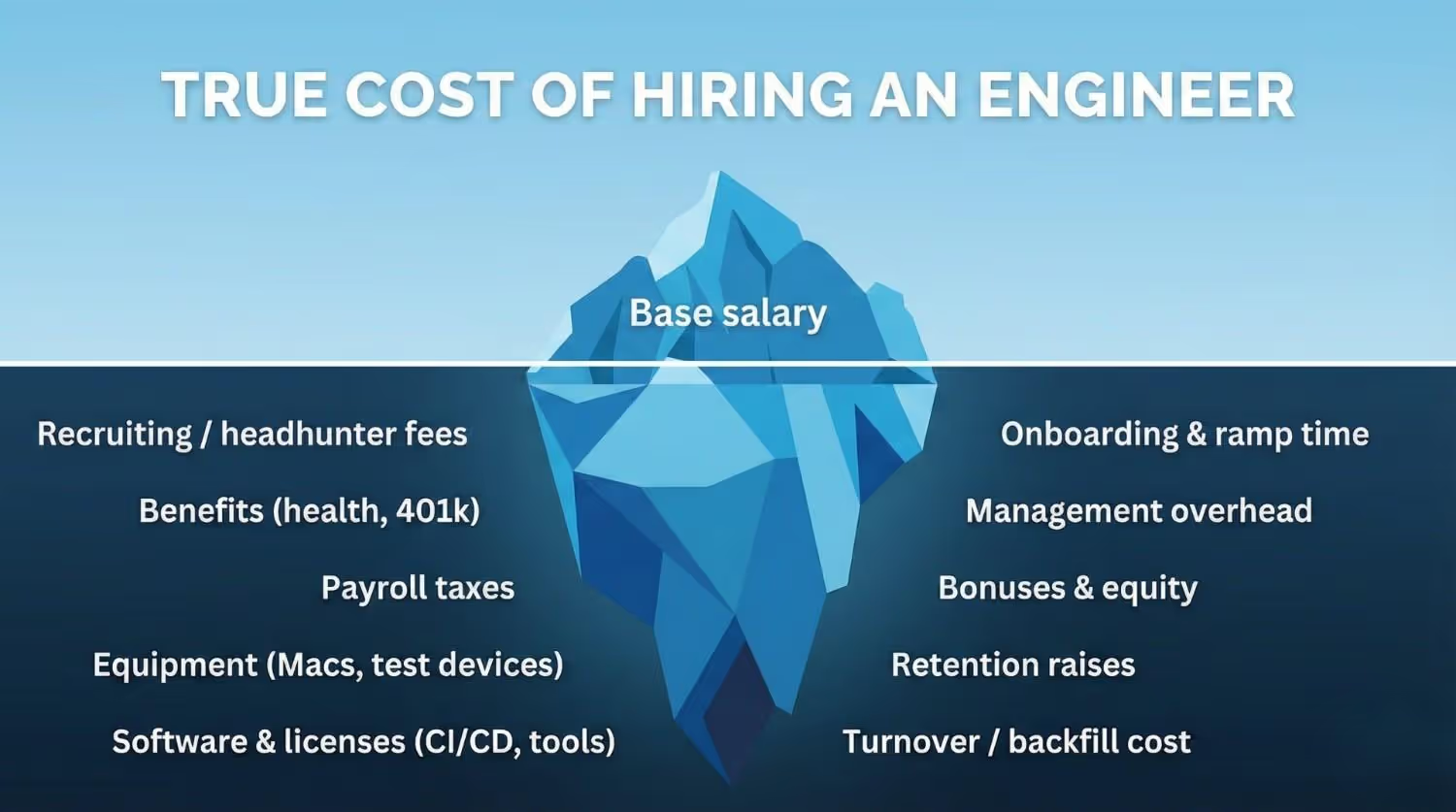
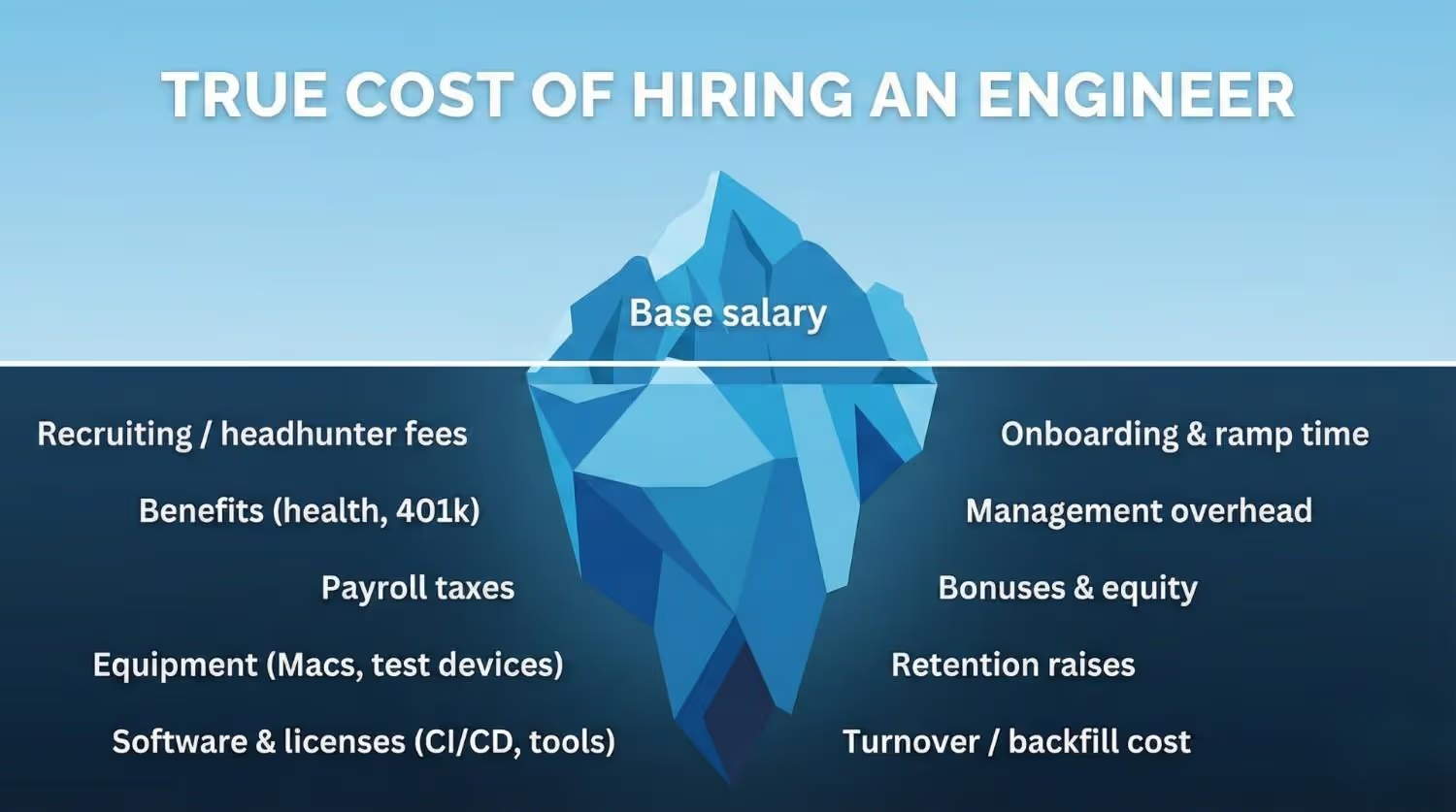
    Base salary is just the tip of the iceberg. Founders often budget $130,000 and assume that is the total cost. It isn’t. The “Total Cost of Ownership” is typically 1.25x to 1.5x that number.

    • Recruitment Fees/Time: Recruiters often charge 15-20% of the first year’s salary, a $25,000 check. Doing it yourself means 50+ hours of screening and interviewing.
    • Benefits and Taxes: Health insurance, 401k matching, and payroll taxes add up fast.
    • Equipment: You need top-tier MacBook Pros (iOS development requires macOS), test devices, and software licenses.
    • Equity: To attract top talent away from Big Tech, you will likely need to offer stock options.
    • Turnover Risk: The average engineer tenure is often under two years. If your sole developer leaves, development stalls completely.

    When calculating the cost to create an app, you have to factor in these operational realities. A $130k hire is really a $170k+ annual commitment.

    Keep React Native salaries in context with other build paths using our full cost breakdown for converting a website into an app

    React Native vs Native: Is it Cheaper?

    Is React Native cheaper than “true” native development (Swift/Kotlin)?

    The answer is yes, but not by 50%.

    Pure native requires two distinct codebases and often two teams (iOS and Android) and two salaries. With React Native vs native development, one developer can ship to both platforms using a single codebase.

    However, React Native isn’t magic.

    It sometimes requires “bridging” into native code for specific features (like advanced camera usage or background location). This means your React Native developer still needs to understand some Objective-C, Swift, Java, or Kotlin.

    This “unicorn” skillset is why senior React Native developers often command higher hourly rates than their pure-native counterparts, even if the total project cost is lower because you only need one of them.

    Set React Native against native builds before you commit with our guide to React Native vs native development

    Why You Might Not Need to Hire At All

    If you are a tech startup building the next Uber or TikTok, hiring a dedicated React Native team makes sense. The app is the product. You need custom gesture handling, complex local databases, and pixel-perfect transitions that require a full in-house engineering team.

    But what if you are an ecommerce brand or digital publisher?

    Your core product is your inventory or content. You already have a high-performing mobile website. You just need to package that experience into a native app to unlock push notifications and home screen real estate.

    For you, hiring a developer is inefficient.

    The Vendrux Alternative

    Vendrux is not a DIY builder, and it’s not an agency. We’re a fully managed service that turns your existing website into a premium native mobile app.

    Instead of committing $170k+ per year to a single in-house developer once you factor in benefits and overhead, or spending $150k/year rebuilding what you already have through an agency, Vendrux leverages your existing web infrastructure to launch in weeks for a tiny fraction of that on a predictable subscription.

    • No new code: Your app syncs 100% with your website. Update the site, and the app updates instantly. All the CRO work, templates, navigation, and checkout tweaks you’ve refined on the web carry over to the app automatically, so you don’t lose any of that effort.
    • Fraction of the cost: A flat setup fee and predictable monthly subscription cost significantly less than a junior developer.
    • Zero maintenance: We handle updates and technical maintenance. You don’t worry about iOS updates breaking your app. we do.
    • Native power: You get unlimited push notifications, native tab bars, and a dedicated pesence on the App Store and Google Play.

    This isn’t just theory. We helped buybuyBaby relaunch quickly after an acquisition, with limited engineering resources.
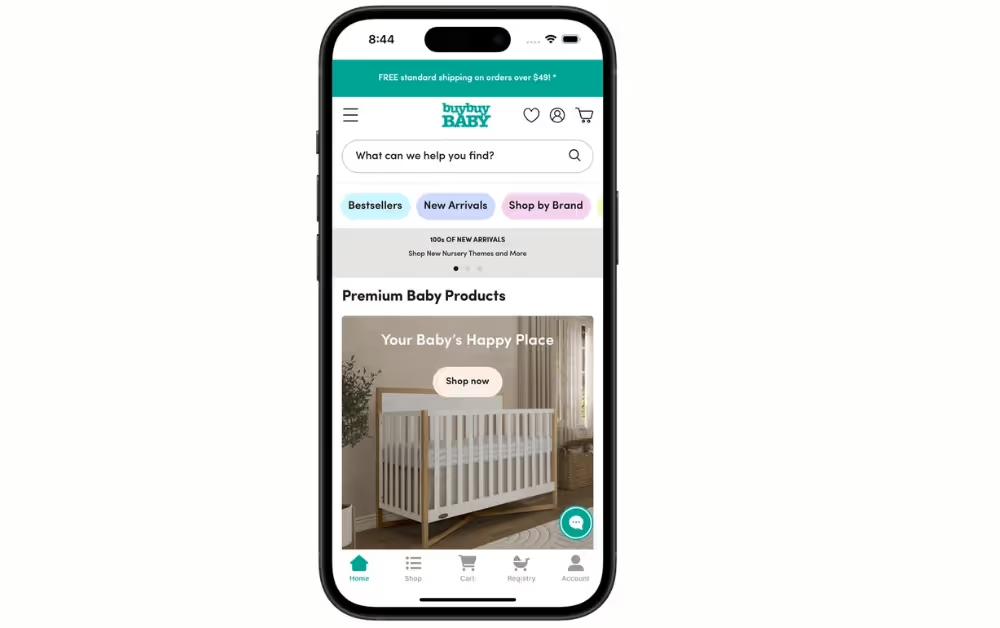
    This is what the Vendrux alternative looks like in practice from buybuyBaby

    Using Vendrux, they relaunched their mobile apps while cutting development costs by around 90% compared to a traditional custom rebuild, all while keeping a consistent experience across web and app.

    The result is a dedicated mobile channel that improves retention and customer lifetime value (LTV) without the cost and risk of building and maintaining an in-house mobile team.

    We also have additional case studies from other successful brands that have scaled their mobile apps with Vendrux, showing similar outcomes in faster launch times, significantly lower development costs, and stronger retention across their mobile users.

    Skip the hiring scramble and launch a live app faster with our step by step website to app guide

    Final Thoughts

    The cost to hire a React Native developer varies wildly from $50/hour for an offshore freelancer to $180,000/year for a Silicon Valley senior engineer.

    If you have the budget and the specific technical need for a custom-built product, React Native is a fantastic technology that saves time compared to pure native development.

    But for many founders, the goal isn’t “software development”, it’s business growth.

    If your goal is to launch a mobile channel to improve retention and drive sales, you likely don’t need to hire anyone. You just need to take the high-quality web experience you’ve already built and bridge it to the App Store.

    Vendrux lets you skip the hiring process, the payroll taxes, and the six-month roadmap. You get a top-tier app in weeks, not months, for a fraction of the price of a single hire.

    Your website is one step away from the App Store, book a demo with us to see how.
  • Do Shopping Apps Boost Conversion Rate & LTV? How?

    Do Shopping Apps Boost Conversion Rate & LTV? How?

    Short answer: yes, dramatically.

    Long answer: apps change how your best customers shop in ways mobile sites can’t. They buy faster and come back more often because the experience is smoother and more dependable.

    Most of your traffic is already on mobile. Mobile web works well for browsing, but checkout often gets interrupted. A page reloads, a login expires, or a notification pulls them out of the flow.

    An app removes those interruptions. It opens fast, keeps people signed in, and gives them a steady place to shop.

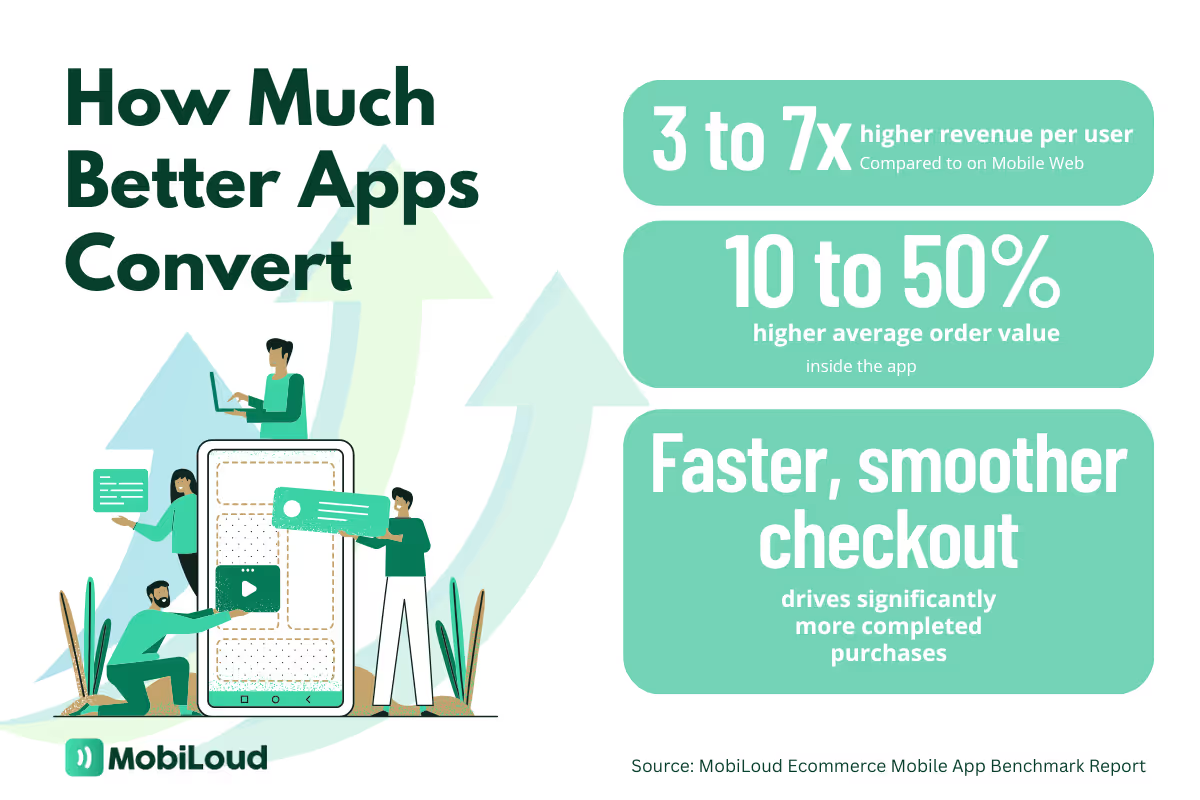
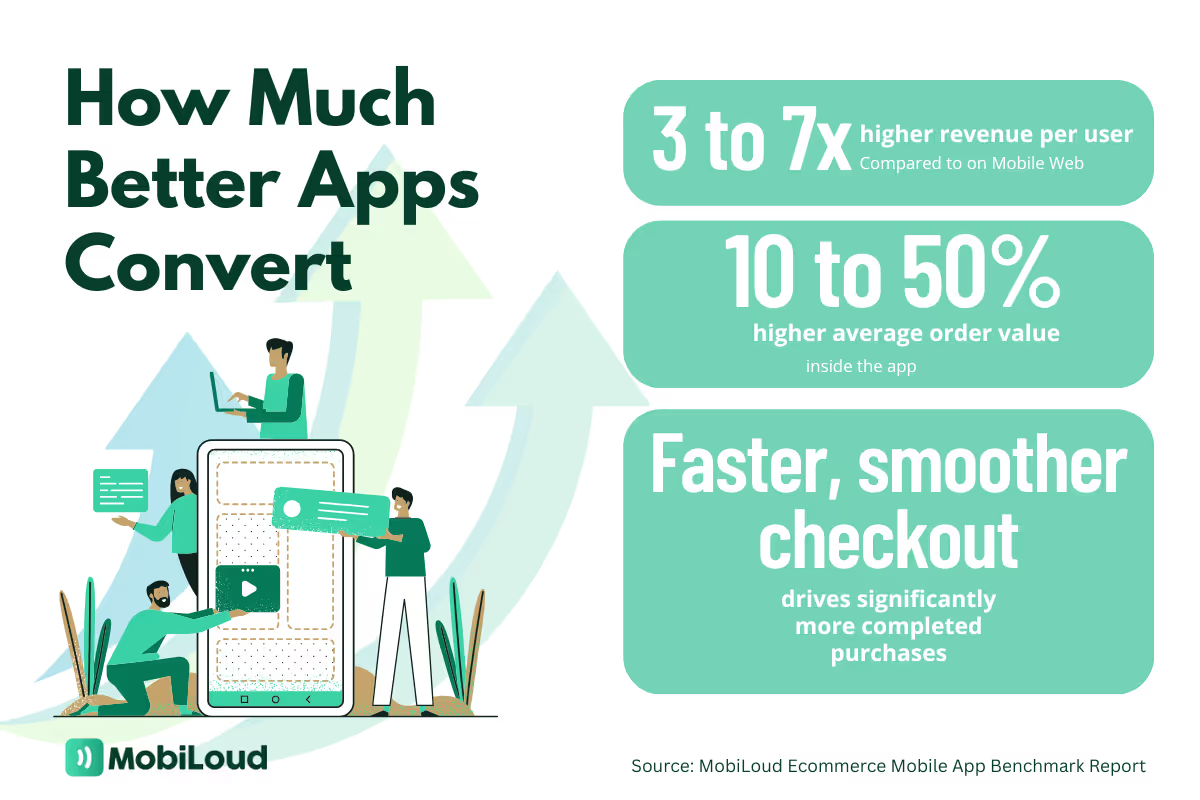
    Our Benchmark Report shows this clearly. Many brands see three to seven times more revenue per user inside their app compared to mobile web.

    This article explains why apps perform this well and what that means for your store, from reducing friction to building retention and lifting lifetime value.

    1. Apps eliminate friction from the buying experience (→ higher conversion rate)

    If you’ve ever watched someone try to check out on your mobile site, you know where things fall apart. A page stalls. A password is forgotten. A form field resets. A tiny interruption becomes a lost sale.

    An app removes those moments.

    It opens instantly and keeps people logged in. Shipping and payment details stay saved, and checkout feels stable instead of fragile. And an app is always one tap away.

    When you take friction out of the buying experience, more people finish the purchase.

    You can see it in the numbers. Many stores in our Benchmark Report see three to seven times higher revenue per user inside their app. Average order value often rises ten to fifty percent because a smoother experience encourages bigger baskets.

    Real brands show this in their numbers.

    Tadashi Shoji saw conversion and revenue per user climb as more customers shifted into the app.

    Country Life Natural Foods saw the same effect. A smoother journey led to higher conversion and stronger order values.

    This is the foundation for everything an app does. Before you talk about push or loyalty, it starts here: remove friction, and shoppers finish the purchase. And when you remove enough friction, they come back more often.

    2. Apps create a closed, distraction-free environment

    Mobile browsing works well for quick lookarounds, but it rarely holds attention. A shopper opens a product page, then a notification pulls them away. Tabs stack up. The page reloads. It’s normal browser behavior, not a conscious choice to leave.

    An app changes that setting.

    When someone opens your app, they’re entering a space that feels contained. No tabs hovering. No browser prompts. Fewer moments that break momentum.

    This matters because shopping isn’t just about interest. It’s about staying focused long enough to make a decision.

    The State of Ecommerce 2026 Strategy Deck highlights this idea. It shows that when distractions drop, people stay engaged longer, session value rises, and they make decisions faster. People browse more, compare more, and commit faster.

    You can see this play out in real stores. Tadashi Shoji, Kiokii, and Country Life Natural Foods all saw customers spending more time in their apps than on mobile web. Nothing dramatic changed; customers just stayed in the environment longer.

    Focused sessions lead to better outcomes. More browsing. More product discovery. More completed checkouts.

    A distraction-free space isn’t just a nicer experience. It quietly supports stronger conversion.

    3. Push notifications outperform email and SMS (→ more sessions → more purchases)

    Email and SMS depend on people checking their inbox. Push reaches them instantly.

    And that difference shows up fast.

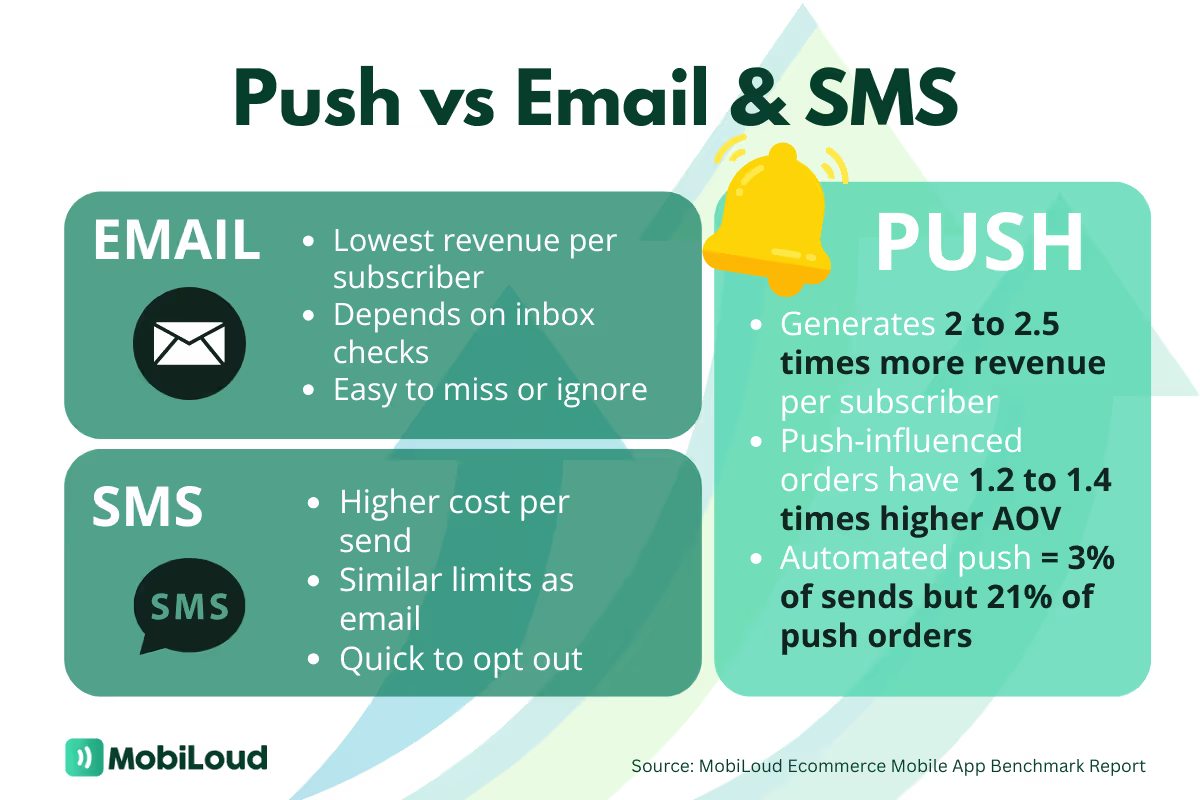
    In our Benchmark Report, push subscribers generate two to two and a half times more revenue per subscriber than email or SMS. There’s no inbox to sift through. Customers tap the message and land right back in the app.

    Push orders also carry more value. They come in with a one point two to one point four times higher average order value than traffic from email or SMS.

    Automation pushes this even further. One brand generated more than thirty thousand dollars in a single month from push, and half of it came from automated abandoned-cart messages. These messages made up only three percent of all sends, but drove twenty-one percent of push-attributed orders.

    Kiokii sees this pattern daily. Their app brings customers back far more often than mobile web, and push is a major reason. A timely message gets people to return, not just browse once.

    Repeat sessions lead to repeat purchases. Push is one of the simplest ways to spark both.

    4. Apps turn your best customers into super customers

    Every store has a small group of customers who buy often and rarely hesitate once they find something they want. They’re already committed shoppers, and they just need a smoother path.

    An app gives them that path.

    Our Benchmark Report shows that app users generate three to seven times more revenue per user. It becomes obvious why when you look at their behavior. High-intent shoppers don’t want delays. When the app opens quickly and checkout takes seconds, they follow through instead of bouncing.

    The pattern holds in repeat behavior too. Sixty percent of first‑time app buyers make another purchase.

    You can see this across brands:

    • Country Life Natural Foods saw their most loyal customers returning more frequently after the app launch.
    • Kiokii noticed their app users coming back far more consistently than mobile web shoppers, especially when they received timely push alerts.
    • Tadashi Shoji found that their app outperformed the website on every retention metric.

    These customers don’t need convincing. They simply need an experience that matches how quickly they want to shop. The app gives them that and turns an already valuable segment into a dependable source of revenue.

    5. Apps increase retention through habit formation

    People don’t always shop because they planned to. They shop because something sparks the thought. A moment of interest. A notification. A familiar icon they tap without thinking.

    An app makes that possible in a way mobile web can’t match.

    When your store sits on the home screen, it becomes part of someone’s routine. They don’t need to search for you or wait for an email. The store is right there whenever they feel like seeing what’s new.

    This is where retention starts to shift — when people return naturally.

    When customers return without paid ads or constant promotions, lifetime value rises and acquisition costs fall.

    The State of Ecommerce 2026 Strategy Deck reinforces this point. It points out that loyalty programs, personalization, and recurring engagement are major drivers of retention. People stick with brands that show up consistently and make returning easy.

    You can see this in Country Life Natural Foods. Their app users came back more often simply because opening the store was effortless.

    Habit is powerful, and an app is one of the few tools that can create it.

    6. Apps centralize loyalty, rewards, subscriptions, and repeat flows

    Retention doesn’t come from the first purchase. It comes from everything that happens afterward: loyalty points, refill reminders, subscriptions, early access, recommendations, and wishlists.

    These features exist on the mobile web, but they often compete with too much noise. People forget to log in. Tabs reset. The experience isn’t built for long-term engagement.

    Inside an app, these same features work the way they’re supposed to.

    Customers stay logged in. Loyalty points are visible every time they open the app. Refill reminders arrive through push right when they matter. Subscriptions are easier to update. VIP drops feel more exclusive. Recommendations feel more personal because they’re based on real browsing patterns.

    The State of Ecommerce 2026 strategy report reinforces this. It points out that personalized access, rewards, loyalty programs, and smart promotions are central to modern ecommerce, and an app is the most natural place for them to live.

    You can see this in real brands.

    Kiokii uses app-based loyalty and promos to keep customers engaged.

    Country Life Natural Foods uses their app to deliver personalized content and stronger repeat flows.

    When loyalty features live inside the app instead of being scattered across emails and browser prompts, customers actually use them. And when they use them, LTV rises.

    7. Apps give you more owned data and better personalization

    Personalization only works when you truly understand how people shop. Mobile web makes that harder because sessions are shorter, drop-offs happen more often, and tracking can miss key parts of the journey.

    An app closes those gaps.

    You can see real session patterns: which categories people browse, how they move from product to checkout, and how to segment them based on actual behavior—not guesses.

    This kind of data makes your timing better, and timing is often what turns interest into a sale.

    The State of Ecommerce 2026 deck points to the rise of advanced personalization and AI-powered experiences. Those approaches only work when you have steady, reliable behavioral data, and an app is the channel that provides it.

    Some brands are already using this advantage.

    reLink Online builds stronger segments and sends more accurate targeting based on app behavior.

    Sleefs uses app-level data to power smarter push messages and more relevant offers.

    When you understand your customers more clearly, you can reach them in ways that feel natural and well timed. An app is the channel that makes that possible.

    How Vendrux Helps

    Apps work. They remove friction, bring customers back, and turn your best buyers into reliable revenue.

    The challenge is building one without slowing your team down.

    Vendrux solves that by taking your existing site and turning it into a mobile app without rebuilding anything. Your checkout, your design, and your integrations all carry over. We handle the setup, publishing, and maintenance.

    You get the lift of an app without the cost or complexity of a full rebuild.

    Want to see your app in action? We’ll show you a preview or walk you through it on a quick call.

  • Hybrid App vs Website-to-App: A Practical Comparison for Your Ecommerce Website

    Hybrid App vs Website-to-App: A Practical Comparison for Your Ecommerce Website

    You have a mobile site that works.

    Traffic and revenue are there, leadership wants an app on your customers’ home screens, and now you are weighing a hybrid app vs website-to-app approach.

    On paper, both options sound similar.

    Either way, you end up with iOS and Android apps that load your existing site, let customers browse and buy, and support push notifications.

    The difference shows up in everything that happens after launch: who owns the codebase, who handles OS updates and app store policy changes, how much attention the app pulls from your core web roadmap, and whether it truly helps you retain your best customers or becomes another neglected channel.

    In this guide, we will compare hybrid apps and website-to-app services through the lens of cost, tech debt, and retention, using real-world constraints from ecommerce and content brands.

    Hybrid Apps

    When most teams talk about a hybrid app, they mean hiring an agency or internal developers to build a separate mobile app that talks to your existing backend and website.

    Under the hood, this usually means frameworks like Ionic, Apache Cordova, or React Native that let developers write much of the app using web technologies while still shipping as native iOS and Android apps.

    Hybrid apps can be powerful.

    They also come with serious operational overhead that is easy to underestimate when you are looking at polished case studies and proposal decks.

    What “Hybrid App” Means in This Context

    For this article, a hybrid app means:

    • You commission an agency or build an internal team.
    • They create a new app project using a hybrid framework.
    • The app pulls content and data from your existing website or APIs.
    • You now have a separate codebase and deployment pipeline for iOS and Android.

    If you need a deeper technical primer, our guide on what hybrid mobile app development is walks through how these frameworks work and where they sit relative to fully native apps and PWAs.

    The important thing for a founder or marketing leader is that this is a separate product. Even if it reuses your backend, the app has its own code, its own bugs, and its own backlog.

    Where Hybrid Apps Work Well

    Hybrid apps can be a great fit when:

    • You have an in-house engineering team with mobile or JavaScript expertise.
    • The app needs device-level features or offline behavior that go beyond what a website can reasonably do in a webview.
    • You treat the app as a strategic product with its own roadmap and are ready to invest in continuous releases, QA, and monitoring as platforms evolve.

    If you want to push the limits of what a mobile experience can do and you have the team to support that, building directly in hybrid frameworks and choosing from the best frameworks for hybrid app development can make sense.

    The challenge is that many brands go hybrid to “save money compared to fully native” while implicitly assuming the maintenance cost will also be low. That is rarely how it plays out.

    Second Codebase and Constant Coordination

    Every new feature on your site now triggers a question: “Do we need to implement this in the app too?”

    Sometimes the answer is yes immediately. Sometimes you delay and the app quietly drifts out of sync.

    Over a year or two you end up with:

    • Two sets of UI components to update when your branding evolves.
    • Two places to debug when third-party scripts, analytics, or checkout flows change.
    • Two teams or vendors who need to coordinate around launches and campaigns.

    This is the essence of technical debt in practice: messy code is only part of the problem; the real cost is the ongoing servicing of an additional system that must stay in step with your business.

    Because hybrid apps are still native apps at the distribution level, you also inherit:

    • OS-level changes from Apple and Google that can break logins, payments, or tracking.
    • App store policy changes that require updates just to stay listed.
    • Annual cycles of SDK updates, build tooling changes, and device quirks.

    Agencies will happily estimate a build. Very few will give you a realistic, multi-year picture of the maintenance load your team is signing up for.

    Operational Risk

    Hybrid projects often start with a strong relationship: you have a lead developer, a project manager, and a clear scope.

    Fast-forward two years, and the agency may have rotated key people, merged, or shifted focus. Your internal champion may have moved roles.

    When Apple tightens privacy rules, when a major OS release breaks part of your stack, or when you want to redesign the app, you are left trying to:

    • Re-brief a new agency team on years of context.
    • Rebuild trust in estimates and timelines.
    • Justify incremental budgets for “maintenance” work that doesn’t obviously drive revenue.

    For many ecommerce brands and publishers, that level of operational risk around a retention channel is hard to justify.

    Website-to-App Services

    A website-to-app service like Vendrux takes a different approach.

    Instead of building and maintaining a separate mobile product, it converts your existing website into iOS and Android apps and manages the app layer for you as an ongoing service.

    Technically, platforms like Vendrux ship fully native apps that keep your website as the base, while adding app-native capabilities on top. This includes push notifications, native navigation, and app-specific UI such as menus, tabs, and deep links.

    For users, it feels like a focused, branded app that stays in sync with your site.

    For your team, it means you still manage everything in one place, your website, without doubling the work across platforms.

    What Website-to-App Services Actually Do

    A good website-to-app partner does three big things for you:

    • Convert your existing site into apps. They use your current mobile site as the foundation, mapping navigation, login, checkout, and content flows into a native app experience.
    • Handle the native layer and app stores. They design and configure the app shell, integrate push, manage builds, and deal with Apple and Google until you are approved.
    • Maintain the app over time. When OS versions change or store policies shift, they do the engineering and submissions work to keep you live.

    The key design choice is that you keep a single codebase.

    Change a layout, add a new collection, or tweak your checkout on the site, and the app reflects it automatically.

    You can see how this works in practice in our overview of how to convert a website to an app and the detailed breakdown in our how it works page.

    Same Experience, Less Tech Debt

    Because website-to-app services build a thin but robust native layer around your site, you get much of what founders look for in a hybrid app without the second product:

    • No rebuild required. You keep every optimization, plugin, Shopify app, or custom integration that already works on your site.
    • Everything works instantly. If it works on your mobile web experience, it will work in the app as soon as it loads there.
    • Always in sync. There is no app backlog of “missing features” because the app and site share the same underlying logic and content.
    • Retention-first features. You add unlimited push notifications, home-screen presence, and app-only promotions on top of the experience that already converts.

    Our site-to-app feature overview dives deeper into how this architecture lets you avoid an extra layer of tech debt while still giving customers a real app on their phones.

    For marketing and product teams, this matters because it keeps the app aligned with your real growth levers: repeat purchases, loyal readers, and owned reach, rather than a constant fight to keep two codebases in sync.

    When Website-to-App Is Not the Right Fit

    Website-to-app shines when your website is already a strong, mobile-optimized product.
    It is not a magic fix for a weak or slow site.

    You may want a more traditional hybrid or native build if:

    • You need heavy offline functionality that cannot sensibly be driven by a web-based frontend.
    • You rely on deep, device-specific features that go beyond what can be integrated via webviews and native bridges.
    • You want an app experience that is intentionally very different from your website, with its own UX and content model.

    For most established ecommerce brands, publishers, and membership sites, though, the constraint is not “What can the app do technically?”

    It is “How do we create a great app channel without doubling our workload and tech debt?”

    That is where website-to-app services are structurally stronger.

    Hybrid App vs Website-to-App: Key Differences

    At a glance, a hybrid app and a website-to-app build might look almost identical to a customer. Under the hood and operationally, they are very different.

    In essence, a hybrid app is a custom build with its own app codebase that your team (or agency) develops and maintains.

    A website-to-app service is an ongoing partner that converts your existing website into iOS and Android apps and manages the app layer for you.

    Dimension Hybrid App (DIY / Agency) Website-to-App Service (Vendrux)
    Initial build Custom project with scoping, design, and development in a hybrid framework. Done-for-you configuration that turns your existing site into apps without a rebuild.
    Codebase Separate app codebase plus your website. Single website codebase; thin native shell managed by the vendor.
    Ownership You own and are responsible for app code, builds, and store submissions. Vendrux manages builds, updates, and submissions as an ongoing service.
    Time to launch Often several months including discovery, design, build, and QA. Typically around a month once assets and access are ready.
    Maintenance Continuous updates for OS changes, SDKs, and new devices handled by your team or agency. Included as part of the service; handled by the vendor with minimal lift from your team.
    Feature parity with site Must be implemented separately in the app. Easy for app to fall behind. Automatic, because the app mirrors your mobile site.
    Push notifications Depends on your implementation; often extra tooling and fees. Unlimited push as part of the platform, no per-subscriber fees.
    Tech debt High: second product, second roadmap, second set of integrations. Low: your website stays in control, and the app layer stays thin.
    Best for Teams treating the app as its own product with dedicated engineering capacity. Brands that want a powerful app channel with minimal distraction from their main web roadmap.

     If you want a deeper technology-first comparison across native, web, and hybrid approaches, our native, web, or hybrid apps guide goes further than we can here.

    How Vendrux Fits into This Decision

    Vendrux exists for brands that look at the table above and think: “We want the app as a retention engine, but we do not want to become an app company.”

    Vendrux is for teams who want results like this, but would rather keep their focus on the website and customers

    Rather than offering yet another DIY builder, Vendrux is a fully managed website-to-app service:

    • We convert your existing site into full-featured iOS and Android apps.
    • We handle app design, configuration, builds, and store approvals.
    • We maintain the native layer over time while you keep iterating on the website.

    No Rebuild and Everything Works Instantly

    There is no rebuild or migration.

    We start from your current site, whether it runs on Shopify, WooCommerce, Magento, a headless stack, or a custom backend.

    Because the app loads your existing site using the same templates and integrations, all of your:

    • Payment methods and checkouts.
    • Personalization tools and A/B tests.
    • Reviews, search, loyalty programs, and other key apps work in the app as soon as they work on the site.

    Our customers use this to move fast.

    They can redesign the homepage, launch new collections, or experiment with merchandising on the site, and know that the app will reflect those improvements automatically.

    Fully Managed, With No Extra Tech Debt

    Vendrux’s team builds, launches, and maintains the apps as a service.

    You do not need an internal app team, and you do not need to budget for periodic rebuilds as platforms change.

    Behind the scenes, that includes:

    • Monitoring OS and policy changes from Apple and Google.
    • Updating SDKs, build tooling, and app configurations as required.
    • Handling resubmissions and resolving review feedback.

    From your side, you keep a single roadmap: your website.

    There is no second backlog of “app-only” fixes to worry about unless you want to add app-specific features intentionally.

    A Real Retention Engine on the Home Screen

    By moving your best customers into an app that lives on their home screen, receives unlimited targeted push notifications, and provides a focused browsing environment without browser clutter or competing tabs, you turn your mobile presence into a more durable, retention-focused channel.

    Our articles on critical mistakes with web-to-app tools and cross-platform app development show how brands use this kind of setup to keep repeat purchases and reader engagement high without over-complicating their tech stack.

    The key is that you are not trying to squeeze lower CAC out of an app. You are using the app to increase lifetime value and revenue from the customers you already worked hard to acquire.

    Final Thoughts

    Hybrid apps and website-to-app services are closer cousins than they first appear.

    Both use web technologies to deliver mobile experiences, and both can put a polished app in your customers’ hands.

    The fork in the road is ownership and focus.

    Hybrid apps give you control and flexibility, at the cost of a second product and all the tech debt that comes with it.

    Website-to-app services like Vendrux give you a real, full-featured app that stays in lockstep with your website, without turning your team into an app development shop.

    If you want to see how this would look for your brand, you do not have to commit blindly. Our team can build a free live preview of your app using your existing website as the foundation.

  • How Much Does It Cost to Hire a Flutter Developer? Salary & Rate Guide

    How Much Does It Cost to Hire a Flutter Developer? Salary & Rate Guide

    Flutter has rapidly become one of the most popular cross-platform frameworks.

    Backed by Google, it promises the holy grail of mobile development: a single codebase that runs natively on iOS and Android without compromising speed.

    On paper, that efficiency should lower your development costs.

    In theory, one Flutter developer replaces two native engineers (one for Swift, one for Kotlin). In 2026, though, the reality of the labor market tells a different story.

    Finding a developer who truly masters Dart and the intricacies of the Flutter ecosystem is becoming increasingly expensive. As more enterprises adopt the framework, demand for senior talent has outstripped supply, driving salaries to new heights.

    In this guide, we’ll cut through the hype and give you the real numbers on what it costs to hire a Flutter developer today. from offshore rates to Silicon Valley salaries. We’ll also explore the often-overlooked “third option” that lets you launch a native app without managing a development team at all.

    Flutter Developer Salaries in 2026

    If you are looking for a quick benchmark, here represents the current market reality. Flutter has matured into a primary framework for enterprise apps, pushing salaries upward.

    In the United States, the average base salary for a Flutter developer hovers around $98,000 to $120,000, with senior roles easily breaching $150,000. But software pricing is geography-dependent.

    Based ondata from major recruitment platforms like ZipRecruiter, Glassdoor, and global talent marketplaces, here is what you can expect to pay annually for a full-time Flutter developer by region:

    Region Junior (0–2 Years) Mid-Level (2–5 Years) Senior (5+ Years)
    United States $75,000 – $95,000 $100,000 – $135,000 $145,000 – $185,000+
    Western Europe €40,000 – €55,000 €60,000 – €85,000 €90,000 – €120,000
    Eastern Europe $30,000 – $45,000 $50,000 – $75,000 $80,000 – $110,000
    Latin America $25,000 – $40,000 $45,000 – $70,000 $75,000 – $100,000
    Asia (India/Vietnam) $12,000 – $20,000 $25,000 – $45,000 $50,000 – $80,000

    Data compiled from ZipRecruiter and comparable global salary indexes.

    These numbers tell a clear story: location is your biggest cost lever. But before you rush to hire the cheapest option, you need to understand the different ways you can engage this talent.

    Compare custom builds vs web-to-app platforms in this simple cost breakdown.

    Freelance vs. Agency vs. In-House: Which Model Fits?

    How you hire is just as important as who you hire.

    1. The Freelancer Route

    Typical Rate: $20 – $100+ per hour

    Flexible but risky. You can find freelance Flutter developers on platforms like Upwork or Toptal.

    • Pros: Low commitment, pay-as-you-go, global talent.
    • Cons: Reliability risks; project management falls on you.
    • Best for: Bug fixes and maintenance.

    2. The Agency Route

    Typical Rate: $75 – $150+ per hour

    Agencies sell certainty. You hire a full team (PM, QA, Designer).

    • Pros: Guaranteed delivery, polished process.
    • Cons: Most expensive option due to overhead.
    • Best for: Building a complex MVP without technical leadership.

    3. The Full-Time Hire

    Typical Cost: Salary + ~30% overhead

    Total control and IP ownership.

    • Pros: Deep product knowledge, aligned culture.
    • Cons: Massive fixed cost, slow to hire (40+ days).
    • Best for: Tech companies where the app is the product.

    3 Major Factors Influence the Price Tag

    Why can you find one developer for $25/hour and another for $150/hour? It usually comes down to three variables.

    1. Location and Cost of Living

    As the table above showed, geography dictates the baseline.

    • North America/UK: You pay for time zone alignment, cultural fluency, and legal recourse.
    • Nearshore (LatAm/Eastern Europe): Often the “sweet spot” for Western companies, high skill levels, overlapping work hours, and rates 30-50% lower than the US.
    • Offshore (South Asia/SE Asia): Lowest rates, but requires rigorous vetting and often demands late-night management calls to bridge the time gap.

    2. Seniority and “Flutter Maturity”

    Flutter is relatively new compared to native iOS or Android. Finding developers with 5+ years of specifically Flutter experience is rare because the framework hasn’t been mainstream that long.

    • Juniors can build UI screens but typically fail at complex state management (like BLoC or Riverpod) and app architecture.
    • Seniors don’t just write Dart code; they understand native bridges. Sometimes Flutter “doesn’t just work” and you need to write custom Kotlin or Swift code to access a specific device feature. A senior developer can handle this; a junior will get stuck.

    3. Project Complexity

    Are you building a simple brochure app or a real-time trading platform?

    • Basic Apps: Standard UI, simple API calls. (Lower rate developers can handle this).
    • Complex Integrations: Bluetooth, advanced background location, on-device ML, or complex animations. This requires top-tier talent.

    The Hidden “Total Cost of Ownership”

    Base salary is misleading. Many founders budget $110,000 and expect that to be the final number. But the “fully loaded” cost of a full-time engineer is significantly higher, often by 30-40%.

    That $110k Flutter hire is only the tip; everything that makes them productive lives in the part of the iceberg you don’t see on the offer letter.
    • Headhunting Fees: Unless you have an in-house recruiter, expect to pay agencies 15-20% of the first year’s salary to find qualified candidates.
    • Benefits & Overhead: Health insurance, 401k matching, payroll taxes, and office perks add substantial weight to the bottom line.
    • Tools & Tech: Swift builds require Macs. Android testing requires devices. Licenses for CI/CD tools add up.
    • Retention Costs: In a competitive market, stock options and bonuses are the norm, not the exception.

    Realistically, that $110,000 hire is a $150,000+ line item on your P&L.

    Stack your true TCO against a website-to-app approach in this quick guide

    Is Flutter Cheaper than Native?

    Yes, but usually not by 50%.

    The classic math is: Native iOS Dev ($120k) + Native Android Dev ($120k) = $240k.
    Flutter Dev ($130k) = $130k. Savings = $110k.

    In practice, it’s more nuanced.

    1. Cross-platform complexity: Writing code that works perfectly on both platforms takes longer than writing for just one. Expect a Flutter project to take ~1.3x the time of a single native project.
    2. The “Bridge” Tax: As mentioned, sometimes you need to write native code anyway.
    3. Maintenance: You still have to maintain the app, update dependencies, and fix bugs on two operating systems.

    So while Flutter vs native development is definitely a cost-saver, it doesn’t make app development “cheap.” It just makes it “less expensive.”

    Why You Might Not Need a Developer

    If you are reading this, you probably assumed that “building an app” = “hiring a developer.”

    But for many businesses, especially ecommerce brands, news publishers, and content creators, that assumption is outdated.

    If you already have a successful website, you have already done the hard work. You’ve built the database, the design system, the checkout flow, and the content.

    Hiring a Flutter developer to rebuild all of that logic in Dart is redundant. You are essentially paying six figures to duplicate what already exists.

    The Vendrux Alternative

    Vendrux takes a different approach. Instead of hiring a team to rebuild your site from scratch, Vendrux converts your existing mobile-optimized website into a premium native mobile app.

    Here is why this model makes sense for established businesses:

    • Leverage Your Existing Code: We use your existing website (Shopify, WordPress, BigCommerce, or custom) as the core of the app. There is no need to port your logic to Dart or maintain a separate codebase.
    • Drastically Lower Costs: Launching with Vendrux costs a fraction of a single developer’s monthly salary, with a predictable subscription that covers ongoing maintenance.
    • We are your mobile team: You don’t need to manage a developer. We handle the technical heavy lifting, from iOS updates to App Store submission.
    • Full Native Experience: Your customers get the retention-driving features they expect: push notifications, a native tab bar, and a permanent spot on their home screen.
    Vendrux turns “we should have an app” into a retention asset on the home screen, not a six-figure engineering project.

    On top of the cost savings, giving your best customers a dedicated app on their home screen drives higher retention and customer lifetime value than relying on mobile web alone.

    The Math is Simple

    • Option A (Hire Flutter Dev): $130,000/year + Equity + Management Time + 4–6 month delay before launch.
    • Option B (Vendrux): Low setup fee + predictable monthly subscription, with most brands launching in around 4 weeks.

    If you are building a tech product where the app functions are unique (like a new AR game or a ride-sharing algorithm), hire the developer. You need them.

    But if you are an ecommerce store or publisher, your app is a channel, not the product. The product is what you sell. In that case, spending six figures on a developer is overhead you don’t need.

    Final Thoughts

    The cost to hire a Flutter developer varies wildly based on where you look. You can find a junior freelancer in India for $20/hour, or you can pay a New York agency $200/hour. If you go the full-time route, budget at least $100,000 – $150,000 annually per developer once you factor in the total cost of employment.

    For tech startups building novel software, this cost is the price of admission. Finding the best Flutter developers is critical to your success.

    However, for business owners who just want to turn their existing website into a mobile app to drive retention and sales, hiring a developer is often the expensive, slow route.

    Don’t over-engineer a solution that already exists. If your website works, your app is already 90% built. You just need the right tool to unlock it.

    Ready to launch your app without the hiring headache? Book a demo with Vendrux and see your site as an app today.

  • How to Grow Your Shopify Sales (Expert Advice for 2026)

    How to Grow Your Shopify Sales (Expert Advice for 2026)

    The following article was contributed by StoreLab. StoreLab is a Shopify Growth Service that helps Shopify businesses boost their online sales through performance marketing, mobile apps, and creative services. 

    In 2026, Shopify is more competitive than ever, and guessing your way to growth won’t cut it.

    That’s why we’ve put together this guide, to help you navigate ecommerce and put strategies into action that actually get results.

    Four Ways to Grow Your Sales (and Bottom Line)

    The tactics here are tested and proven, built to deliver quick results while also laying the groundwork for success that sticks: 

    1. Run organic & paid social campaigns 
    2. Improve your Shopify store’s mobile experience
    3. Focus on customer loyalty & retention tactics
    4. Maximise sales & AOV with strategic promotions

    They will help you to generate immediate sales as well as build a loyal customer base who keep coming back. By following these four strategies, you’ll stay ahead of the competition and position your Shopify store for more long-term, sustainable growth!

    Let’s jump in…

    1 – Run Organic & Paid Social Campaigns

    Paid and organic social campaigns work best when they support each other, and in 2026, this combination is going to be one of the fastest strategies for growing your online store. 

    Paid advertising remains one of the most effective ways to get your products in front of the right audience. You’ll see instant impact through traffic spikes and sales conversions, while also strengthening your Shopify store’s long-term brand visibility and expanding your customer base. 

    Meta ads, in particular, are a standout option thanks to their precise targeting capabilities. You can reach shoppers based on demographics, interests, browsing behavior, or even past purchases, ensuring your promotions appear in front of people who are most likely to convert.

    Meta’s range of formats – carousel, video, and collection ads – also give you flexibility to showcase products in engaging, authentic ways. 

    While paid ads accelerate immediate results, organic social keeps your audience warm, engaged, and connected over time. Instagram, TikTok, and Pinterest are especially powerful because their built-in shopping features make browsing and buying seamless for followers. 

    The goal of organic content is to build genuine relationships, spark conversations, and nurture a loyal community. By sharing valuable, relatable posts that highlight your brand’s personality, story, and expertise, you create trust that leads to long-term growth.

    2 – Improve Your Shopify Store’s Mobile Experience

    Mobile is where your customers live. In fact, nearly 8 out of 10 visits to Shopify stores come from mobile devices, and that number is only rising. In 2026, if your store isn’t fully optimised for mobile, you’re leaving money on the table. You need to meet shoppers where they prefer to browse! 

    Start by making sure your desktop site translates smoothly to mobile. Pages should load quickly, navigation needs to be intuitive, and checkout should be frictionless. 

    Beyond a responsive website, consider a dedicated mobile app. Shoppers prefer browsing on apps – they’re faster, smoother, and designed for mobile from the ground up. What’s more, users of mobile apps add over 4x more items to their carts, making it a simple but effective way to grow sales without constantly chasing new customers. 

    The advantages of having an app for your Shopify store are clear: 

    • Higher conversions & larger baskets: Faster load times, simplified navigation, and smooth checkout make it easier than ever for shoppers to move from browsing to buying. Apps also see an 85% higher add-to-cart rate compared to mobile sites. 
    • Fewer abandoned carts: Streamlined mobile experiences mean less distraction and delay, so more shoppers complete their purchases.
    • Speedy shopping experience: Unlike some mobile websites, apps handle high traffic smoothly, keeping users engaged and moving through checkout. 
    • Push notifications that drive action: Remind customers about saved items, flash sales, or limited-time discounts instantly. Personalised notifications like “Your saved beige puffer jacket is now 20% off” create urgency and encourage impulse purchases. 
    • Personalised recommendations: Apps can show products tailored to browsing history, preferences, or past purchases, helping customers find what they want faster. 

    Popular app builder tools include vendrux, which has an impressive plan ideal for startups with expert support and simple setup, and StoreLab, which is a growth service geared towards more established Shopify businesses and offers a holistic approach including app development, Meta ad campaigns, and creative services. 

    Whatever your business size or goal, there’s a mobile solution designed to fit your needs.

    3 – Focus on Customer Loyalty & Retention Tactics

    According to Forbes, acquiring a new customer can cost 5-7x more than retaining an existing one, and in a market that is becoming more and more saturated, this matters more than ever.

    Competition is fierce, marketing costs continue to rise, and consumers are overwhelmed with choices. So, 2026 will be more than just attracting new shoppers; it’s about keeping the customers who already know, trust and love your brand.

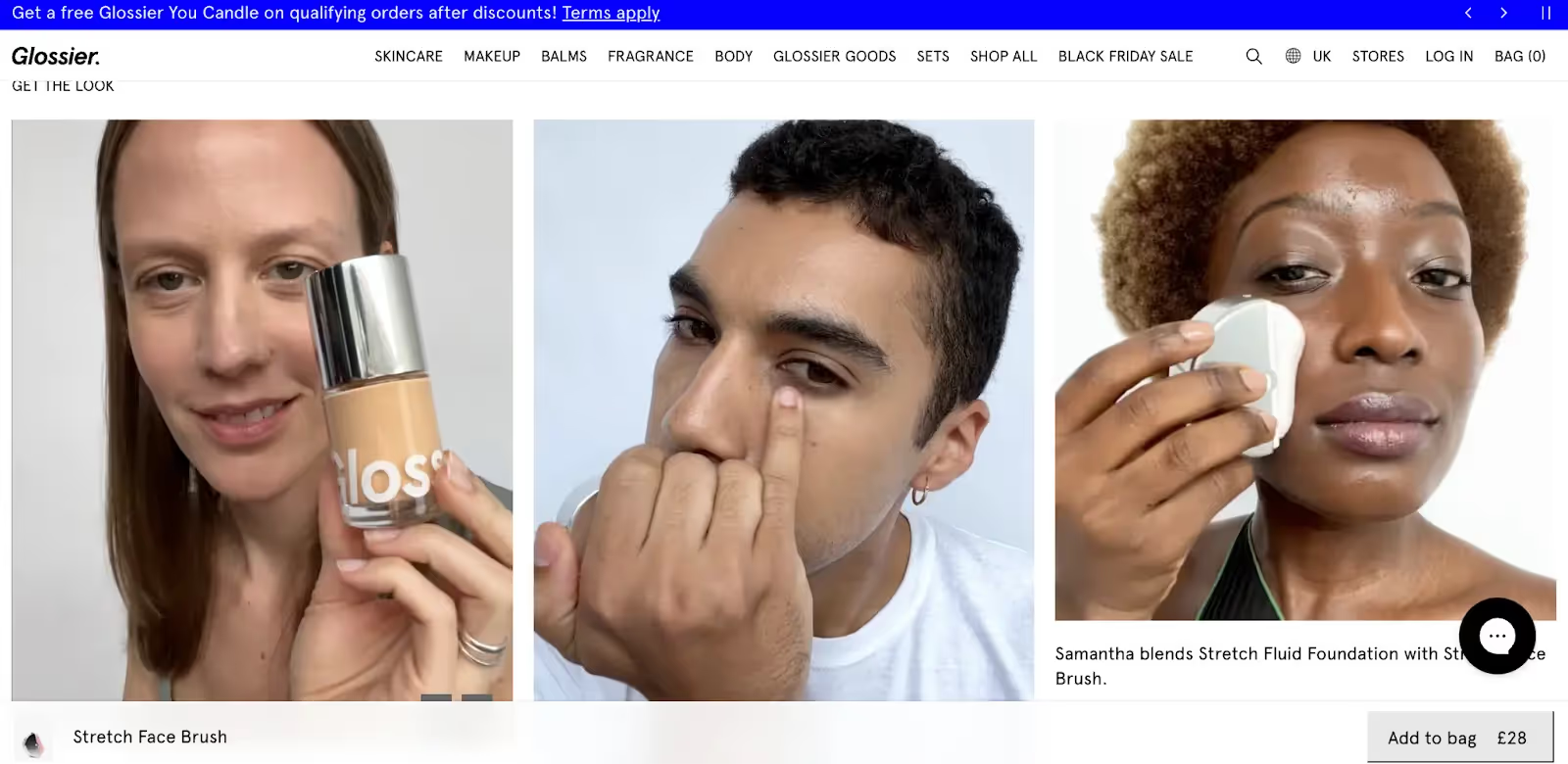
    Retention starts with showcasing reviews, user-generated content (UGC), and social proof across your store and social channels. When potential buyers see real customers using and enjoying your products, like in the example from Glossier above, it builds instant credibility and reduces the hesitation that often comes from purchasing from new or unfamiliar brands. UGC also reinforces authenticity, which is key with how crowded ecommerce is becoming.

    Rewarding loyal customers is another great strategy. Having a valuable loyalty program, exclusive discounts, birthday rewards, or VIP-only early access to sales can make customers feel seen and appreciated, ultimately encouraging more repeat purchases. In many cases, merchants rely on tools like a Shopify loyalty app to help manage these programs and keep customer engagement organized behind the scenes.

    Subscription services can further strengthen retention by offering convenience. Whether it’s refillable products, curated sets or boxes, or bundles, these subscriptions create ongoing engagement and sales, as well as more recurring and predictable revenue.

    By prioritising loyalty and retention for your Shopify store, you’ll build stronger customer relationships, increase lifetime value (LTV), and stand out. Plus, by improving your experience, nurturing existing customers, and retaining new ones, you naturally create a better overall customer experience that attracts new shoppers organically, or through word-of-mouth. 

    4 – Maximise Sales & AOV with Strategic Promotions

    Turning a customer’s cart into a bigger sale doesn’t have to feel pushy, it’s about giving shoppers options they actually want. Upselling, cross-selling, and bundling let you do exactly that: guide customers toward products that complement their purchase while also growing your AOV. 

    Consider this: 72% of sales teams rely on upselling and cross-selling, and these efforts contribute to roughly 30% of their overall revenue. By guiding customers to products that complement their original purchase, you help them discover more of what they love and boost your sales in the process.

    Here’s some ways to implement these promotions on your Shopify store: 

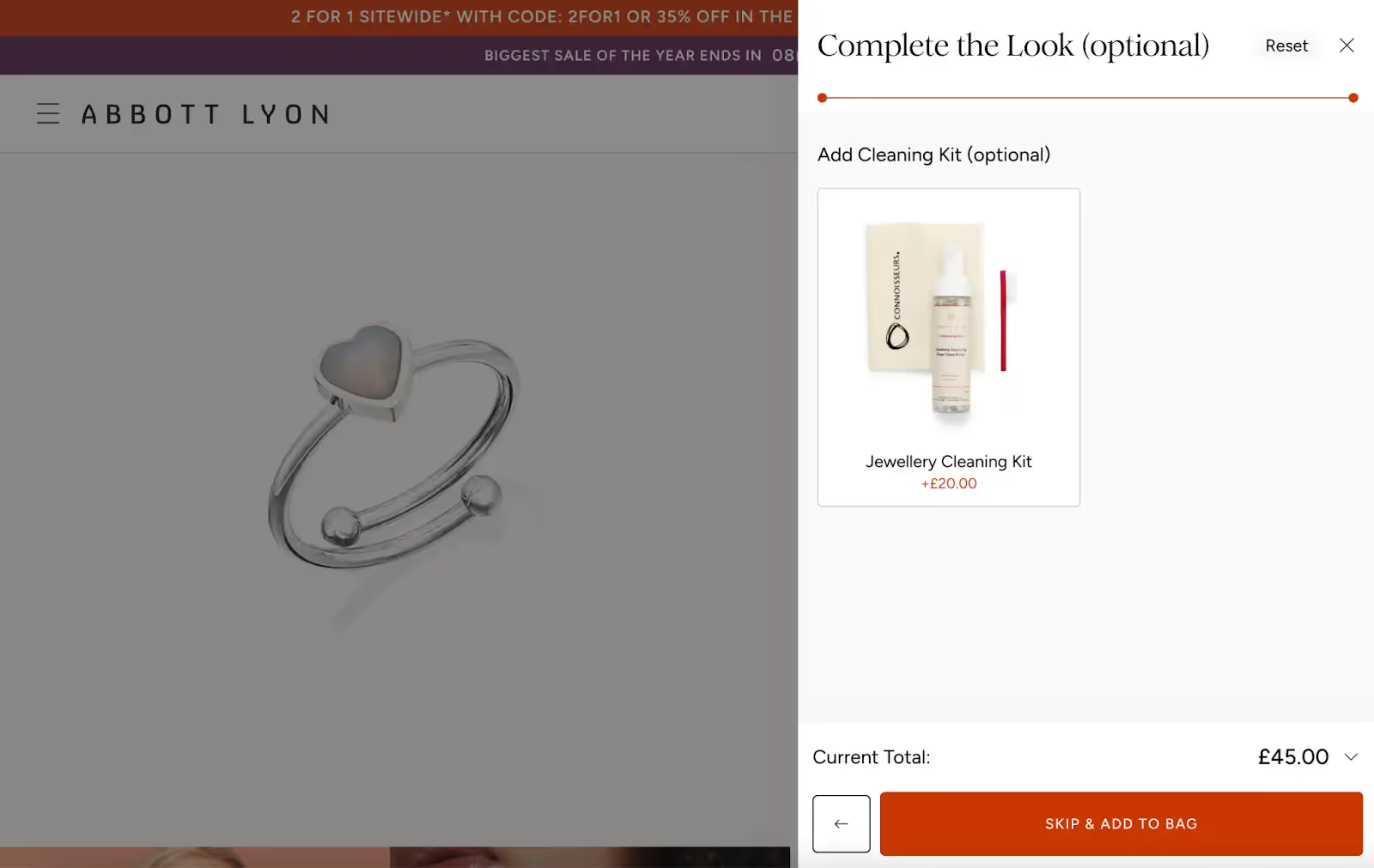
    • “Complete the Look” Bundles: Ideal for fashion, beauty, or lifestyle brands. Pair related items (like a foundation with a matching concealer) or offer a discounted bundle including multiple complementary products. 
    • Complementary Discounts: Encourage multi-item purchases by offering small savings on items that go together, such as a yoga mat and resistance bands or a handbag and wallet set.
    • Checkout Upsells: Suggest useful add-ons like gift-wrapping, premium shipping, or exclusive accessories to increase AOV while improving the shopping experience. 
    • Tiered or Bundle Promotions: Reward larger purchases with deals like “Buy 2, Get 1 Free” or “Save 15% on Bundled Sets” to motivate higher spending. 

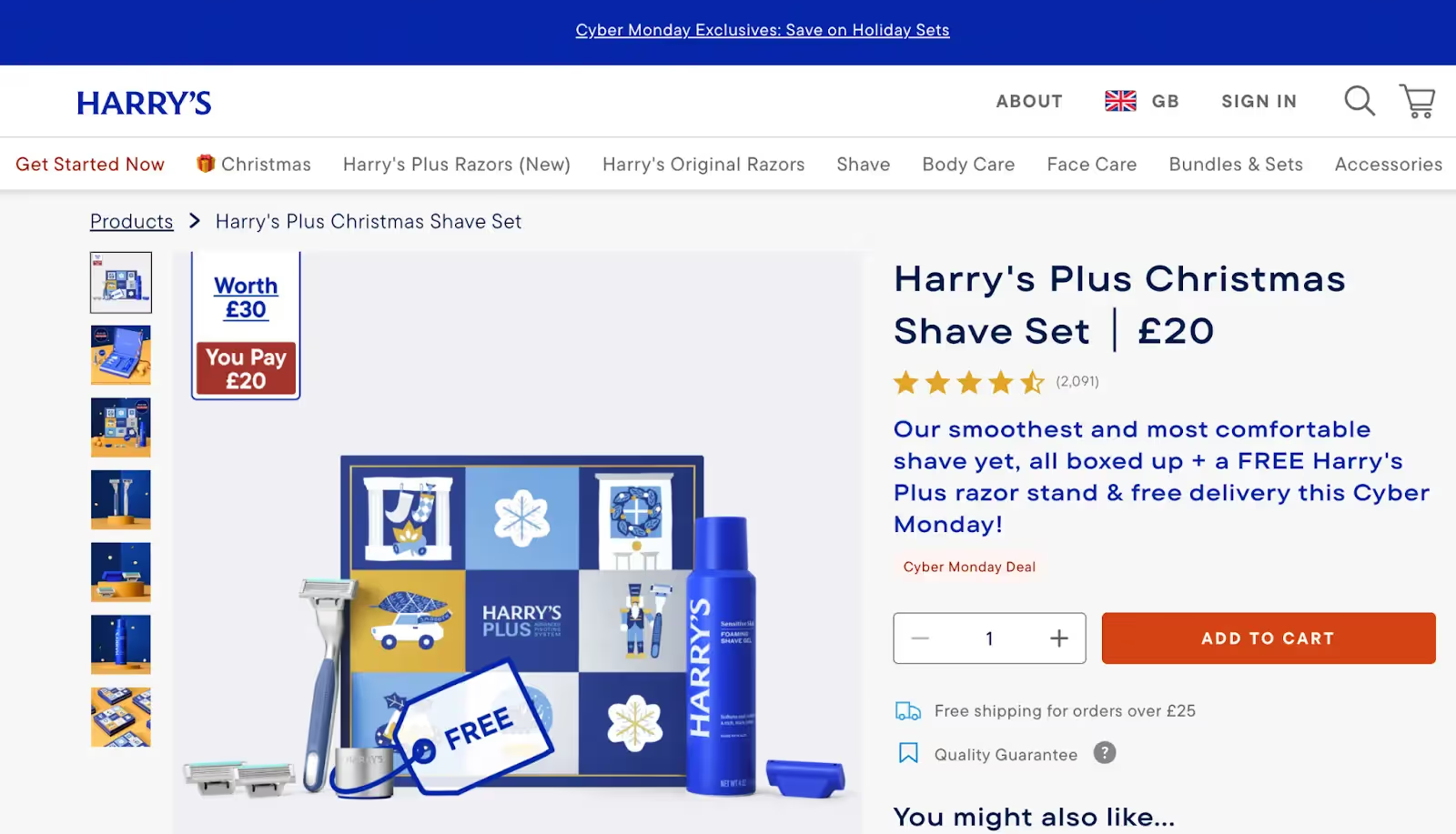
    Running strategic promotions like these is especially powerful around major shopping events like Black Friday and the Christmas holiday season. Customers are already primed to buy, and well-timed upsells, cross-sells, and bundles can significantly increase both revenue and customer satisfaction.

    You should also make sure to promote these offers across social media, email campaigns, push notifications, and paid ads during these key sales events to reach your audience wherever they are and maximise impact.

    Final Thoughts

    Remember, seeing more success for your Shopify store in 2026 won’t happen overnight. Getting your strategy right takes time, and a willingness to test, measure, and adjust.

    The stores that thrive aren’t necessarily the ones with the biggest budgets, they’re the ones that combine data-driven decisions with a real focus on making the customer experience perfect.

    Think of growth as a continuous process: every new strategy, every tweak, and every insight adds up. Some tactics will deliver immediate wins, while others lay the foundation for growth that builds over time.

    By staying patient, learning from what works (and what doesn’t) and prioritising your customers’ experience at every touchpoint, you’ll set your Shopify store up for huge wins in 2026.

  • App Store Review Guidelines: Will Your Webview App Be Rejected?

    App Store Review Guidelines: Will Your Webview App Be Rejected?

    If you want to launch an app for your site, and it already looks and works great on mobile, a webview (wrapper) approach is often the most efficient way to do it.

    You keep the site you have already invested in, and deliver it inside a native app shell.

    Then you start reading about App Store rejection forum threads about “webview wrappers” getting rejected under Guideline 4.2 for “minimum functionality”.

    You feel stuck between two bad options: a six-figure custom build you do not need, or a cheap wrapper that gets rejected.

    The fear is real, because Apple aggressively removes low-quality apps that feel like “web clippings”.

    However, Apple does not hate web technology, they hate poor user experiences. Thousands of major brands successfully use webviews. The difference lies entirely in execution.

    In this guide, we explain exactly what Apple’s reviewers look for and how to turn your site into an app that sails through approval, keeping all your existing site optimizations while adding a native app layer on top.

    The “Webview Wrapper” Stigma

    A webview is simply a browser engine embedded within an app.

    Apps built around webviews can have a reputation for being lower quality, but that reputation comes from how they are sometimes used, not from the technology itself.

    The stigma comes from the “gold rush” era, when spammers flooded the App Store with thousands of low-effort apps that did nothing but display a URL. These apps offered no value over a Safari bookmark.

    To clean up the store, Apple cracked down. But it is crucial to distinguish between a “Lazy Wrapper” and a high-quality webview-based app.

    • Lazy Wrapper: A generic container that effectively loads your website URL and does almost nothing else. There is no native integration. If your internet cuts out, you get a white screen. These get rejected.
    • Webview-Based App with Native Layer: An app that uses webviews for core content such as catalog and checkout but surrounds them with native code. It has a native tab bar, manages push notifications, handles offline states, and communicates with the OS. This is the standard for modern convert website into webview app workflows.

    Founders often confuse the two. Amazon, Instagram, and Basecamp all rely on webviews. The technology is not the problem, the lack of native “feel” is.

    Understanding App Store Guideline 4.2

    The rule that trips up most webview apps is Guideline 4.2: Minimum Functionality.

    Apple’s official developer guidelines state:

    “Your app should include features, content, and UI that elevate it beyond a repackaged website. If your app is not particularly useful, unique, or “app-like,” it doesn’t belong on the App Store.”

    In practice, reviewers reject apps that are “not sufficiently different from a mobile web browsing experience.”

    Related Rules

    • Guideline 4.2.2: Apps should not be simple “web clippings” or content aggregators.
    • Guideline 4.2.6: Apps built from templates must be submitted by the content owner. (This is why Vendrux publishes apps under your Apple Developer account, keeping you compliant).

    Why This Guideline Exists

    Apple wants the App Store to be a premium ecosystem, not a list of bookmarks. Users expect apps to be responsive, with intuitive navigation and features they cannot get by typing a URL into Chrome.

    Common Rejection Triggers

    Reviewers spot “lazy wrappers” instantly by looking for:

    • Browser UI: Loading bars that look like Safari or non-persistent logins.
    • Lack of Native Navigation: Relying entirely on a web-based hamburger menu instead of a native tab bar.
    • No Platform Features: Failure to use push notifications or location services.
    • Empty States: Standard “You are offline” browser errors.

    To pass App Store requirements and pitfalls, you must go deeper than just displaying HTML.

    How to Ensure Your Webview App Gets Approved

    You do not need to rewrite your site. You need to enhance the container it lives in.

    By adding a cohesive layer of native functionality, you satisfy Guideline 4.2 while preserving every optimization, test, and tweak you have already made to your mobile site.

    Strategy 1: Implement Native Navigation

    Navigation is the biggest giveaway. In an app, users expect a persistent interface, not a browser back button.

    When navigation feels this anchored, reviewers see an app with its own frame, not a mobile site in a box.
    • Native Tab Bar: Use a bottom menu on iOS or side drawer on Android to switch between Home, Search, Cart, and Account.
    • Native Headers: Keep the top navigation stable while web content scrolls.
    • Native Transitions: Ensure page transitions feel smooth and screen based rather than like a page reload.

    This tells the reviewer: “This is not just a website. It has its own app structure.”

    Strategy 2: Deep Integration with Device Capabilities

    Apple expects meaningful use of device features. For ecommerce, one of the most powerful is push notifications.

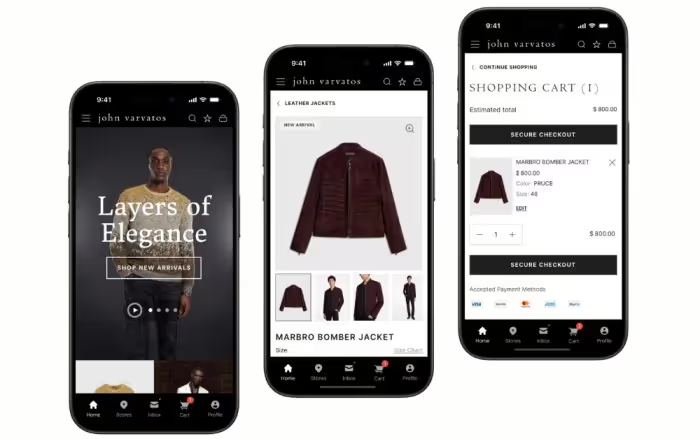
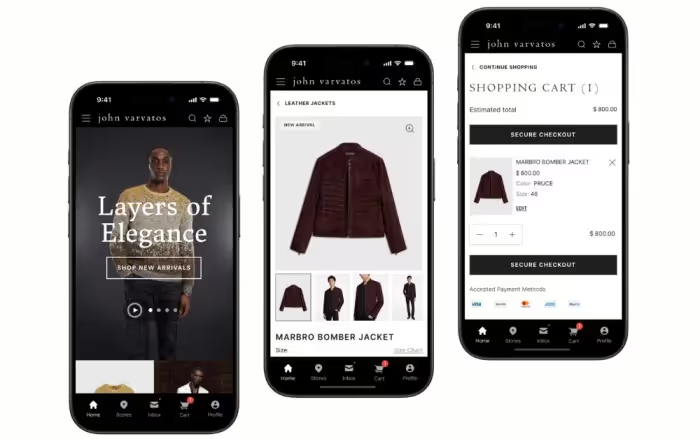
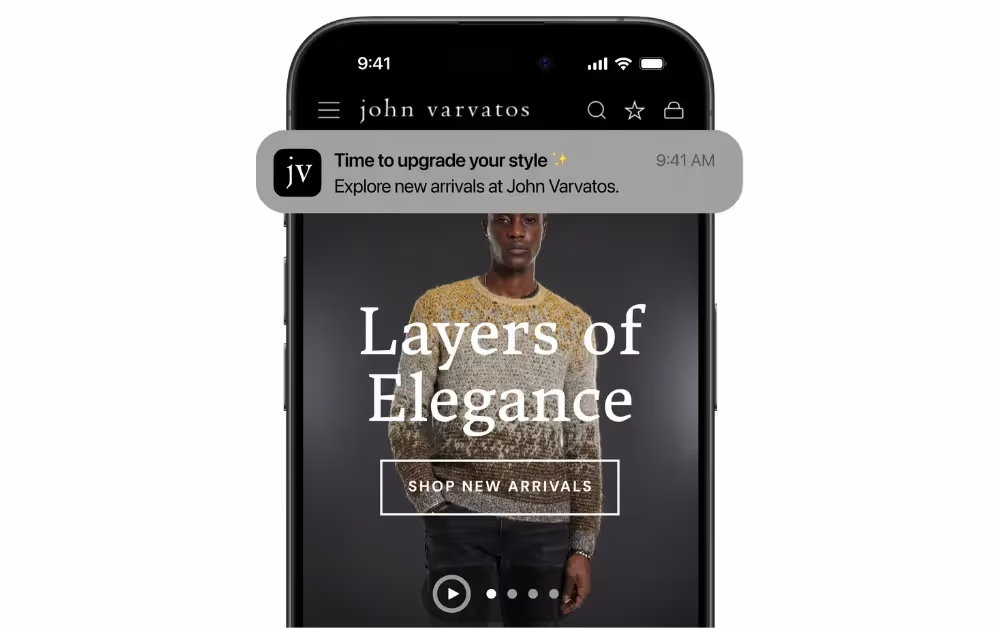
    John Varvatos uses push like this to keep VIPs coming back, app customers now generate around 10x more revenue per user than mobile web.

    A mobile website cannot send reliable iOS push notifications. An app can.

    By integrating a native push engine that ties into your CRM (like Klaviyo), you provide unique value and new revenue opportunities.

    Go further with:

    • Native Sharing and Camera: Use system tools for sharing, scanning, or uploading.
    • Advanced Features for Custom Builds: For bespoke, heavily customized apps beyond what most platforms provide out of the box, teams can even explore features like biometric login (Face ID or Touch ID), which require additional native integrations and careful implementation.

    Note: Simply bolting on push is not enough if the user experience still feels like Safari. Deep integration must pair with native navigation.

    Strategy 3: User Experience Polish

    Hide the fact that content is loading from the web:

    • Splash Screens: Show a branded launch screen while data loads.
    • Loading Indicators: Use native spinners, not browser progress bars.
    • Error Handling: Create custom “No Internet” screens with “Retry” buttons.
    • External Linking: Open third-party links in an in-app browser, keeping users inside your app.

    If you’re shaping your UX around what Apple already approves, grab our webview conversion guide and model your app on proven patterns instead of guessing.

    Why You Should Build an App (Despite the Hurdles)

    The App Store approval hurdle is just a filter. Once you pass it, you unlock a superior channel for your best customers.

    • Higher Revenue Per User: Mobile apps can convert significantly better than mobile websites, but the real power is not just a higher conversion rate. App users come back more often, view more products per session, and buy repeatedly, so your revenue per user grows over time.
    • Retention Dominance: Users spend 90% of their mobile media time in apps. An icon on the home screen is a persistent reminder of your brand and a direct route to repeat purchases.
    • Push Driven Engagement and Revenue: Push notifications often see much higher engagement than email and complement your email and SMS campaigns. Being able to reach customers instantly on their home screens for a flash sale or back in stock alert is a capability you do not get from mobile web alone.

    Meeting Apple’s standards forces you to build a product customers actually want to use and gives your top customers a better, stickier way to buy from you.

    Skip fragile DIY wrappers and six-figure rebuilds, turn your existing site into a compliant mobile app with Vendrux.

    The Vendrux Approach: Guaranteed Approval

    Using a DIY wrapper rolls the dice with Guideline 4.2. You are responsible for arguing with reviewers and fixing bugs.

    Vendrux is a full-service website to app platform that builds a native app experience on top of your existing site and guarantees App Store approval.

    We have launched thousands of apps for major brands, refining a webview-based approach that consistently meets Apple’s criteria.

    Our platform provides the required native layer:

    • Native Navigation: We configure native tab bars and menus that integrate tightly with your site structure.
    • Powerful Push: We integrate with OneSignal and your marketing stack for unlimited notifications.
    • Technical Compliance: We handle the binary build, certificates, and submission using the correct WebKit framework.
    • Reviewer Communication: We answer Apple’s questions using proven phrasing. We ensure specific compliance with web clipping and app-generation rules.

    We do not just “wrap” your site. We fuse it with a native app shell to create a full-featured, native-feeling mobile app. You get guaranteed App Store approval without writing code, while keeping the site you have already invested in as the core of your experience.

    Want to see what that looks like in practice? Browse real apps built with Vendrux to see how they look and feel like any other high-quality native app.

    Final Thoughts

    Guideline 4.2 is a barrier for spammers, not businesses. Apple approves webview-based apps that offer distinct, high-quality experiences.

    The secret is embracing native features like persistent navigation, push notifications, and polished offline handling so your app feels clearly different from a simple mobile website.

    You can build this yourself with a team of engineers, or partner with Vendrux.

    We help you use the site you already have, layer on a native app experience that meets Apple’s criteria, and launch a mobile app your best customers will keep coming back to.

    Ready to get your brand on the App Store? Book a demo with us today.

  • The Mobile App Impact on BFCM 2025: Key Stats & Trends

    The Mobile App Impact on BFCM 2025: Key Stats & Trends

    Black Friday/Cyber Monday is evolving.

    It’s no longer a short sprint lasting a few days. And it’s getting harder to drive consistent returns from traditional engagement and retention channels.

    What hasn’t changed is its importance. BFCM is still one of the most important blocks on the ecommerce calendar, with the potential to generate momentum brands can carry into the new year.

    This BFCM, we analyzed results from 100+ shopping apps, including Vendrux customers and other popular DTC apps, to understand how brands approached Black Friday; particularly through mobile apps, one of the most underutilized yet consistently overperforming ecommerce channels.

    A few patterns stand out:

    • The BFCM window is stretching longer
    • Push notifications are emerging as a secret weapon for busy promo events
    • Apps move the needle in real way, for a number of key revenue metrics

    Let’s dive deeper now. Here’s what we learned:

    The BFCM Promo Window

    We studied 87 popular shopping apps over the BFCM period, primarily independent DTC brands across categories including fashion, beauty, home & kitchen, food & beverage, supplements, and luxury.

    The first notable takeaway was that 75% of brands (65 of 87) were running BFCM promos in full-swing on Monday the 24th (the Monday prior to Black Friday).

    Black Friday/Cyber Monday is no longer Friday-Monday. The window is stretching, with brands looking to gain visibility when there’s less competition for attention.

    Opting out of BFCM?

    By Cyber Monday (December 1), 93% of brands (81 of 87) were running a BFCM promotion in their app.

    Two things stand out:

    • The share of brands running early BFCM promotions is even higher when excluding those that skipped the period entirely.
    • It suggests that a small but notable group (just under 10%) appeared to opt out of BFCM in their app altogether.

    In several cases, brands ran BFCM promotions on their website but not in their app.

    That usually points to one of two issues:

    • The app was deliberately excluded from the promotion
    • The app experience is out of sync with the website, often due to neglect

    Either way, the takeaway is the same: many brands still aren’t fully utilizing their apps during the most important sales period of the year.

    And as a channel, there’s still a lot of untapped potential.

    Push Notifications: the Secret Growth Lever

    How many emails and promotional SMS did you get this Black Friday?

    Answer: a lot.

    Brands with mobile apps have access to a different channel – less saturated and often more effective during high-intent moments: push notifications.

    Less than 5% of successful ecommerce brands have their own apps. And among those brands, many still aren’t sending push notifications frequently.

    This matters because the ROI on push notifications is incredible.

    • Zero cost to send
    • Near guaranteed visibility (shows up on the customer’s lock screen)
    • Minimal friction to purchase (one tap brings the customer straight into the app)

    We wanted to see how brands were using push over the BFCM period; how many brands are using push, what they’re sending, and how the frequency differs from a normal period.

    That’s why I personally sacrificed my lock screen for two weeks, receiving over 1,000 push notifications, and collating the results.

    What we saw in the data

    During the core BFCM week (Nov 24-30):

    • 8 brands sent an average of 2 or more push notifications per day
    • 6 brands sent 20+ notifications across the week
    • The most aggressive sender pushed 44 notifications in one week
    • The average brand sent 8.6 notifications that week
    • The median was 7 notifications, compared to a typical baseline of ~3-5 per week

    After Cyber Monday (Dec 1-7):

    • Only 5 brands maintained an average of 2+ pushes per day
    • Just 3 brands sent 20+ notifications
    • The top sender dropped from 44 the previous week to 35
    • Average volume fell to 7.15 notifications
    • Median dropped to 5.5, only slightly above normal levels

    Crucially, nearly 20 brands weren’t sending push notifications at all during BFCM.

    That’s a major growth lever, and as many Vendrux customers have told us, the number one reason to launch an app, not being used.

    The biggest missed opportunity

    The bigger miss is not the brands who aren’t using push at all. It’s those who are, but don’t have one core flow set up.

    Only 26 of the brands we studied were sending abandoned cart notifications.

    Abandoned cart notifications automatically follow up with app shoppers who leave an item in their cart, unpurchased.

    They get a notification right on their lock screen, and one tap brings them back into the app to finish their purchase.

    This automated sequence takes very little work (zero, after the initial setup), and recovers would-be lost revenue on autopilot.

    We’ve seen brands recover over $200,000 in revenue in just 30 days with abandoned cart notifications.

    And the impact could be even bigger over BFCM, with more distractions, more chances for the shopper to get pulled away.

    We saw this clearly in the data:

    • One beauty brand saw a 152% increase in abandoned cart push revenue, while total store revenue rose just 29%. Cart recovery accounted for 83% of their total push revenue.
    • One wellness brand recovered over $30,000 from abandoned cart push during BFCM alone; roughly 20% of their total app revenue.

    Given the ease of setup and upside, abandoned cart push should be a baseline requirement for any brand running an app, especially during peak traffic periods.

    How Mobile Apps Drove Revenue During BFCM

    Numerous Vendrux merchants drove hundreds of thousands in revenue through their apps over the two week extended BFCM period.

    We saw consistent lifts across key revenue metrics, from revenue contribution to AOV, conversion rate, and revenue per user.

    Here are the highlights.

    Higher Revenue & Revenue Contribution

    We’re seeing a meaningful share of brands’ overall revenue come through their app during the BFCM period. 

    In many cases, app revenue grew faster than mobile and overall revenue, showing their promotions are having a stronger impact from their app cohort.

    • A fashion brand saw app revenue contribution (percentage of total revenue from their app) increase by 18% compared to the previous period.
    • A fashion brand saw app revenue increase by 42% versus the previous period.
    • A beauty and fragrance brand saw app revenue increase by 125% (compared to an 81% rise in total mobile revenue).
    • A fashion/maternity brand saw app revenue increase by 337% and app transactions increase by 233%.
    • A luxury fashion brand saw app revenue increase by 95%, compared to a 44% increase across mobile overall.
    • A home decor brand saw app revenue increase by 69% compared to the previous period.

    Higher Average Order Value (AOV)

    Apps consistently drive larger baskets, not by a few percentage points, but often by 25-100%+, especially in higher-consideration purchases.

    This pattern appeared consistently across fashion, beauty, home, and specialty retail.

    • A fashion brand saw app AOV of $116.52 compared to $92.85 on mobile web (a 25.5% increase).
    • A luxury fashion brand saw app AOV of $533.31 compared to $397.05 on mobile web (+34.3%).
    • A beauty and professional supplies brand saw app AOV of $309.48 compared to $144.61 on mobile web (+114%).
    • A home decor brand saw app AOV of $94.70 compared to $73.84 on mobile web (+28.3%).

    Higher Revenue Per User

    Across categories, apps consistently generated significantly more revenue per user than mobile web during BFCM. In many cases, multiple times higher.

    • A fashion brand saw app revenue per user of $19.51 compared to $7.11 on mobile web (a 174.4% increase).
    • A luxury fashion brand saw app revenue per user of $42.41 compared to $5.41 on mobile web (nearly 7x higher).
    • A beauty brand saw app revenue per user of $11.16 compared to $3.08 on mobile web (a 262.3% increase).
    • A pet supplies brand saw app revenue per user of $7.92 compared to $2.55 on mobile web (a 210.6% increase).

    Higher Conversion Rates

    Apps also consistently delivered meaningfully higher conversion rates than mobile web during BFCM.

    • A fashion brand saw app conversion rate of 5.31% compared to 2.96% on mobile web (a 79.4% increase, or nearly 1.8x higher).
    • A food and beverage brand saw app conversion rate of 5.76% compared to 2.77% on mobile web (a 107.9% increase).
    • A pet supplies brand saw app conversion rate of 6.41% compared to 2.16% on mobile web (a 196.8% increase, or almost 3x higher).
    • A beauty brand saw app conversion rate of 12.63% compared to 5.92% on mobile web (a 113.3% increase).

    It’s worth noting that these apps largely mirror the brands’ websites. There’s no major redesign or feature overhaul.

    Yet even small improvements, combined with the self-contained nature of an app, were enough to drive 2-3x higher conversion rates during BFCM.

    Push Notification Revenue

    Several brands saw large increases in push-attributed revenue, including notable contributions from cart abandonment campaigns.

    • A fashion brand saw push-driven revenue increase by 152% compared to the previous period.
    • A beauty and fragrance brand saw push revenue increase by 174%.
    • A pet supplies brand saw push revenue increase by 260%.
    • A wellness brand generated over $30,000 from cart abandonment push notifications, representing roughly 22% of total app revenue.

    App User Growth & Engagement

    In addition to revenue metrics, brands also saw growth in app usage and engagement. This included increases in new app users as well as longer session durations compared to mobile web.

    • A fashion brand saw new app users increase by 168% over the period.
    • A fashion brand saw new app users increase by 85% compared to the previous period.
    • A luxury fashion brand saw average app session duration of 5 minutes 45 seconds versus 2 minutes 55 seconds on mobile web.

    Overall BFCM performance summary: apps vs mobile web

    Here’s an overall look at how our brands achieved better results during the promotional period (measured from Nov 23 – Dec 5).

    • 25-35% higher average order value (AOV) from app users, with some categories seeing lifts of 100%+.
    • 2-7x higher revenue per user.
    • 80-115% higher conversion rates vs mobile web (in several cases 2-3x higher).
    • App session duration often 60–100% longer.
    • Many brands seeing 150-260% push revenue growth, while new app user growth ranged from 15-85%.

    Key Takeaways for Ecommerce Brands

    BFCM is still the most important few days on the calendar for any ecommerce brand.

    There’s more traffic, stronger intent, and excitement that can be weaponized to drive major revenue.

    But the period is getting longer. Competition is getting stronger. It’s becoming harder to stand out, and there’s a bigger swing from brands that do BFCM right, and those who miss the mark.

    At a time when attention is more abundant, but also harder to secure, having a mobile app gives you a powerful leg up.

    You get a more direct connection with your best customers; a shopping experience that’s your brand, and nothing else; and push notifications, still the most underutilized channel in ecommerce.

    BFCM 2025 has just finished, but you can (and should) start planning already for BFCM 2026.

    That means, if you haven’t already, launching your own mobile app. Vendrux is the most straightforward way to do it. No rebuilding, no templates, no duplicate work to keep your website and mobile app in sync.

    If you want to see what your app could look like, get a free preview now – or book a free consultation to talk it over.

  • How to Increase Customer Engagement in Ecommerce

    How to Increase Customer Engagement in Ecommerce

    Customer engagement in ecommerce is more important than ever. As shoppers tighten their budgets, merchants are realizing that promotions alone won’t build a sustainable business.

    The reason is simple: customers are now pickier. They compare options. They hunt for the best value. That’s why long-term growth depends on building strong relationships, not just driving one-time purchases.

    In fact, Twilio notices brands that have mastered customer engagement were 41% more likely to report their conversion rates as “much higher” compared to the previous year.

    In this guide, we’ll share six actionable customer engagement strategies for your brand, plus which metrics to track and how to avoid common mistakes that hurt customer engagement. 

    Customer Engagement in Ecommerce: The Definition

    Customer engagement in ecommerce is every interaction a customer has with your brand. These interactions happen across multiple touchpoints throughout the customer journey. 

    When we talk about customer engagement, we’re looking at what prompts customers to interact with your brand and how often those interactions occur.

    The goal is to turn these experiences into real, positive relationships. When you get this right, you build loyalty, drive repeat purchases, and grow your business over time.

    A great product or competitive price may attract customers. But engagement is what keeps them coming back for more.

    Customer engagement often gets mixed up with customer experience and customer satisfaction:

    • Customer engagement is the way customers engage with your brand over time.
    • Customer experience is how they feel after those interactions.
    • Customer satisfaction measures how well your product meets their needs.

    Why Customer Engagement in Ecommerce Matters (With Metrics)

    Strong customer engagement directly impacts your store’s growth and performance, including:

    • Higher cart value: Engaged customers tell you a lot about their preferences. Use this insight to recommend add-ons and personalized upsells that increase average order value
    • More customer-driven feedback: Engagement keeps you connected with your customers. You get clearer insights into what they need and expect. And when problems come up, you can fix them fast.  
    • Shorter sales cycle: The more you engage, the more customers trust you. And when they trust you, they decide faster. They already know your brand, your value, and your quality. 
    • Stronger customer loyalty: A good customer engagement practice helps build emotional connections. This keeps customers coming back. It reduces the chance they’ll switch to competitors. 
    • Better customer satisfaction: When you deliver relevant, timely, and personalized experiences, customers feel understood. This leads to higher satisfaction and a stronger impression of your brand.

    To measure customer engagement, keep an eye on these metrics on your online stores:

    • Click-through rate (CTR): How often people click your emails, social posts, website links, or notifications.
    • Conversion rate: The percentage of visits that lead to a purchase.
    • Returning customer rate over time: The number of customers who come back within a given period.
    • Bounce rate: The percentage of visitors who leave after viewing only one page.
    • Time spent per session: Average time users spend on your site.

    Learn more: Customers engage more often, and for longer, in mobile apps. See how much, in our exclusive Ecommerce Mobile App Benchmark Report.

    6 Actionable Engagement Strategies (With Real Examples)

    Enough with the theory and numbers. Below are six actionable customer engagement strategies, each paired with real examples.

    Personalized Customer Engagement

    The best customer engagement should feel personal. Instead of treating every shopper the same, you tailor each interaction to their preferences and needs.

    Beauty Pie does this well. The popular cosmetics brand has created a simple questionnaire that helps users find the most relevant products.

    This kind of personalization increases customer engagement. Customers spend more time with the brand, feel more confident buying, and are more likely to come back. 

    Collect and Showcase Feedback & Reviews

    Let customers know their voices matter. Inviting and responding to feedback is a key part of customer engagement. It shows that you value your customers and their opinions beyond the transaction.

    Make it easy for them to share feedback. At the same time, display those reviews on your website. When people see their opinions matter, they feel valued. And valued customers stick around.

    Wise Trail Running knows. For every product page, the brand includes a “They talk about us” section that highlights real customer reviews.

    This builds trust with new shoppers and shows existing customers that their feedback helps shape better products. When brands invite feedback and visibly act on it, customers are more likely to interact, trust the brand, and return.

    Build Engagement in a Human-Centric Way

    Build your customer engagement strategy on trust and empathy.

    Whether you sell online or in person, customers want to feel like people, not transactions. Lead with that, and loyalty will follow.

    United By Blue is a great example of making things feel human. The brand adds an “Accessibility Adjustments” section. It includes multiple options to improve usability for different needs, like “ADHD Friendly Profile” and “Vision Impaired Profile.” There’s also a live chat button so customers can reach a real person fast.

    These aren’t big, splashy features. But they show customers that the brand sees them. That’s what human-first engagement looks like.

    Leverage Community Engagement Channels

    To build genuine relationships, foster a sense of community.

    Create spaces where customers can connect. Use social media, online forums, and exclusive events. When customers feel part of something bigger, they become loyal advocates.

    Kylie Cosmetics nails this. Founder Kylie Jenner has a massive social media following. She regularly engages with these fans through product launches, restocks, and sneak peeks. This builds hype and keeps her audience hooked.

    But Kylie’s influence alone doesn’t drive the brand’s success. The company also sends PR packages to high-profile beauty influencers. These creators review and promote the products to their own audiences. This helps the brand tap into wider beauty communities.

    What started as a makeup line has grown into a lifestyle. That sense of community is what keeps customers loyal and engaged.

    Engage Customers at the Right Moment

    One effective way to boost customer engagement is to prompt customers to act at key moments in their shopping journey.

    When customers see a progress bar like “Add $15 more for free shipping!”, it transforms passive browsing into active participation. They’re now engaged in reaching a goal, not just shopping.

    It’s a simple tactic, but easy to get wrong. Set it too high, and customers abandon their cart. Set it too low, and you lose profit.

    Check your average order value first. Then set your threshold slightly above it to avoid cart abandonment

    Blanc Space is a great example. The phone case brand sets its free shipping threshold at €45. Their cases cost €23 to €30 each. This pushes customers to add a second item to qualify.

    Make Every Purchase Meaningful With Reward Programs

    Shopping feels more memorable when customers receive something extra.

    Reward programs show customers you value them. They build long-term relationships beyond a single purchase.

    Witch, Please! understood this goal. They wanted to engage with customers without confusing points programs. With Koin, they launched a simple cashback program. Customers earn store credit with each purchase and can redeem this credit on their next order.

    As a result, the customer engagement strategy drove a strong increase in returning customers and generated more than $34,000 in total sales.

    How to Know If Customer Engagement is Working

    There’s a fine line between engaging customers and pushing them away. Watch for these signs to see if your engagement efforts work:

    Customers return for repeat purchases

    This is the easiest way to measure success.

    Repeat purchases show that customers are satisfied. They like your products and shopping experience. Over time, this loyalty creates a steady revenue stream that benefits your business.

    People engage across your omnichannel touchpoints

    If your customers engage across all the channels you expect them to be on, your customer engagement strategy is working well. You can then refine each channel along the way as you uncover new insights and customer behaviors.

    Engaged customers don’t stick to just one channel. So be present where your customers are.

    For example, if your customers buy on mobile, make your site fully responsive. Similarly, if your customers frequently engage through email or social media, those channels should deliver a consistent experience that supports their buying journey.

    Customers leave positive reviews 

    Reviews and feedback are the two best indicators of customer satisfaction. They show how customers truly feel about their experience with your brand. Consistent positive feedback signals your engagement efforts are working.

    Don’t be discouraged if customers don’t leave reviews. Sometimes, people are simply busy or forget. All they need is a gentle nudge to share their experience and provide feedback. Consider offering small incentives, like gift cards or store credit, to increase response rates.

    However, creating meaningful engagement isn’t as easy as it sounds.

    Common Mistakes That Hurt Your Customer Engagement

    Before you get started, know what could go wrong.

    Many brands unintentionally drive customers away. These mistakes can quickly damage your brand perception and erode customer trust.

    According to Emplifi, 70% of consumers admit that they will leave a brand after just two bad experiences. 

    Here are common mistakes merchants make when executing their customer engagement in ecommerce:

    Create too many pop-ups with the wrong timing

    Pop-ups are great for engagement. You can capture emails, promote offers, or reduce cart abandonment.

    However, pop-ups create frustration when they appear too frequently, at the wrong moment, or interrupt the browsing experience.

    To maintain positive engagement, set pop-ups to appear after customers scroll 75% of the page. Or show them after two page views.

    This approach gives visitors time to understand your brand first, improving trust and the likelihood of conversion.

    Neglect customer data protection

    Customer engagement in ecommerce is built around trust. When customers share personal information, they expect you to protect it.

    But most merchants overlook this. KPMG reports that 60% of consumers believe companies routinely misuse their personal data.

    Before building engagement, prove yourself reliable. Essential privacy practices include:

    • Being transparent about your privacy policy.
    • Applying SSL certificates (HTTPS) on every page.
    • Using trusted, PCI-compliant payment processors.
    • Complying with privacy regulations like GDPR and CCPA.

    Overlook user experience

    Your landing page makes or breaks whether customers shop on your site.

    A well-designed site shows you’re credible and professional. Clear navigation, fast loading, and mobile-friendly design all contribute to a seamless experience.

    A poorly designed site signals the opposite. Consider this: If you don’t invest in a quality site, why should customers trust your products over competitors?

    Final Thoughts

    Customer engagement is about building genuine relationships. Turn first-time buyers into loyal advocates.

    The six strategies in this article give you a strong starting point. Start by understanding your customers. Then find the channels they use most. From there, implement strategies that fit their behavior and preferences. Test, measure, and refine as you go.

    Remember: customer engagement is a continuous commitment to creating positive value at every touchpoint.

  • The Best Shopify Inventory Management Apps in 2026 (Free & Paid)

    The Best Shopify Inventory Management Apps in 2026 (Free & Paid)

    Finding the best Shopify inventory management apps matters now, more than ever before.

    Your customers refuse to wait. In fact, 91% of shoppers will switch brands if what they want is unavailable, instead of waiting for a restock.

    And inventory management in 2026 is no longer just about tracking stock levels. 

    Choosing the right Shopify inventory management app makes the difference between smooth growth and daily operational stress.

    This guide explains when you need one and highlights the best Shopify inventory management apps worth your attention this year.

    What Is a Shopify Inventory Management App?

    A Shopify inventory management app is a third-party tool integrated through the Shopify App Store to help you track, control, and optimize stock across products, locations, and sales channels in real-time. 

    These apps automate and scale inventory processes for ecommerce merchants, preventing issues such as overselling or stockouts that plague poor management. 

    Compared to Shopify’s native dashboard, these apps go beyond it by adding features such as automated low-stock alerts, bulk CSV imports/exports, and barcode scanning for warehouse efficiency.

    Shopify built-in inventory vs inventory management apps

    Shopify’s built-in core stock tracking lives inside your Shopify admin. It provides a great solution for small stores with simple needs. It allows you to track stock by product and location, adjust quantities, and receive low stock alerts.

    However, Shopify’s built-in inventory is limited when your business scales. It does not support advanced forecasting, multichannel management, manufacturing workflows, or deep reporting.

    Inventory management apps extend Shopify by adding automation, analytics, and control that growing sellers need. They extends Shopify with advanced capabilities like forecasting, automated purchase orders, multi-warehouse and multichannel orchestration, deeper analytics, and more complex workflows.  

    5 Best Shopify Inventory Management Apps In 2026 

    After reviewing features, pricing, use cases, and real seller needs, we put together the 5 best Shopify inventory management apps in 2026. 

    This list is designed to help you quickly find the right solution to manage inventory more efficiently and scale your Shopify business with confidence. Let’s dive into it! 

    LitCommerce

    LitCommerce is one of the best Shopify inventory management apps for sellers who operate across multiple sales channels. It works as both a multichannel selling tool and an inventory management solution, allowing Shopify sellers to control listings, orders, and stock levels from one central dashboard. 

    With real-time inventory sync, bulk editing, and automated updates, LitCommerce helps reduce overselling, save time, and keep inventory accurate as your business scales. You will get prompt notifications when inventory levels approach predefined thresholds.  

    Additionally, instead of manually adjusting price and product quantity on each listing, you can create rules to display the desired information across Shopify and sales platforms automatically and quickly. 

    Pricing

    7-day free trials | Pay-as-you-go paid plans from $29 scale (up to 3 channels) (4.8 stars from 702 reviews) 

    Key features 

    • Real-time inventory sync across Shopify and multiple marketplaces
    • Centralized dashboard for managing products and stock
    • Bulk listing and bulk inventory updates using smart templates and recipes
    • Automatic stock adjustment after each sale 
    • Easy integration with major marketplaces
    • Price and order sync help centralized order management 

    Pros

    • Near real-time inventory and price sync. 
    • Strong bulk listing tools, templates, and QuickGrid-style editing.
    • Easy for beginners with simple onboarding
    • Flexible pricing with a free trial, pay-as-you-go style plans. 
    • Excellent customer support.

    Cons

    • Advanced analytics features are limited
    • Bulk edits can be slower with large catalogs.

    Best for:

    Small to medium Shopify brands selling on Etsy, eBay, Amazon, Walmart, and TikTok Shop who need simple, accurate inventory sync and easier listing management.

    Stocky Shopify

    Stocky is a Shopify owned inventory planning app designed for merchants who use Shopify POS Pro. The app focuses on demand forecasting and purchase order management for retail businesses. 

    Stocky uses historical sales data to suggest what to reorder and when. This helps physical and hybrid stores avoid stockouts and overstocking. 

    Pricing

    Free with Shopify POS Pro subscription (2.7 stars from 209 reviews) 

    Key features 

    • Inventory tracking across multiple locations
    • Stocktakes (cycle counts) and stock transfers between locations to rebalance inventory based on demand.
    • Create and manage purchase orders in one place
    • Forecast‑based reorder suggestions using sales history
    • Product recommendations for replenishment

    Pros

    • Deep integration with Shopify POS
    • Accurate sales-based forecasting
    • No extra app cost with POS Pro

    Cons

    • Only available for POS Pro users
    • Not suitable for multi-channel selling

    Best for:

    Brick and mortar or hybrid retailers using Shopify POS Pro

    If you also sell on marketplaces, this guide to Shopify marketplace apps can help you expand without losing control.

    Prediko

    Prediko is an AI-powered inventory forecasting and planning app built for data-driven Shopify brands. The app focuses on helping you understand future demand and plan inventory accordingly.

    Prediko analyzes sales velocity, seasonality, and trends to generate smart restock recommendations. This app on the list of best Shopify inventory management apps is a top choice for D2C brands that rely on accurate forecasting and want a smarter, less manual replenishment process.

    Pricing

    Free to install | Paid plan from $49 – $199/month (4.9 stars from 175 reviews)

    Key features

    • AI-powered demand forecasting and supply planning 
    • Smart replenishment alerts and health bars 
    • Purchase order management to create, track, and bulk-edit POs
    • Real-time inventory tracking with restock alerts, low-stock notifications, and out-of-stock prevention tools.
    • Raw materials management with bills of materials (BOMs) 

    Pros

    • Strong AI analytics and forecasting
    • Clean and modern interface
    • Useful for scaling brands

    Cons

    • Advanced features require paid plans
    • Not an all-in-one inventory system (forecasting only)

    Best for:

    Shopify stores with fast-moving products, multi-location stock, or teams that want AI-driven forecasting and inventory planning. 

    Syncio

    Syncio is a Shopify app that connects multiple stores so inventory, products, and orders stay in sync in real time, helping prevent overselling and cutting out manual updates across shops.

    Syncio lets one store act as the source with master inventory and product data, while other “destination” stores automatically mirror stock levels and selected product details from it.

    It is designed for brands with multiple Shopify stores, supplier–retailer networks, dropshippers, and marketplaces that need centralized control but separate storefronts. 

    Pricing

    Free | Paid plan from $19 – $39 monthly (4.9 stars from 151 reviews)

    Key features

    • Inventory sync & real-time stock adjustment using SKU or barcode
    • Import and sync product fields 
    • Sync order information 
    • Find and connect with new suppliers or retailers 

    Pros

    • Reliable real-time inventory sync between multiple Shopify stores 
    • Strong support for multi-store and supplier–retailer workflows
    • Handles large SKU volumes

    Cons

    • Can be complex for unique, multi-location, or large-scale needs
    • Sync speed can slow down on very large catalogs

    Best for:

    Brands managing multiple Shopify stores or wholesale relationships.

    Katana Cloud Inventory

    Katana is a cloud inventory and light-ERP platform for Shopify sellers that centralizes stock, production, and order management. It syncs inventory in real time, automates material planning and purchase orders, and connects multiple Shopify stores to prevent stockouts and keep fulfillment accurate and efficient. 

    This best Shopify inventory management gives you visibility into what is in stock, what is being produced, and what materials are required to fulfill orders.

    Pricing

    Free | Paid plans from $399 to 1.999 monthly (4.6 stars from 134 reviews)

    Key features

    • Multilocation inventory management 
    • Production planning and scheduling
    • Smart purchase orders based on material requirements
    • Centralize fulfillments across multiple locations and sales channels

    Pros

    • Excellent for manufacturing and raw material tracking
    • Strong automation and centralized workflows
    • Very high customer satisfaction
    • Easy to use, with a modern, visual interface and clear workflows

    Cons

    • High monthly pricing for full features
    • Not so friendly with the mobile app. 
    • Less optimal for larger, highly complex operations that need extensive customization

    Best for:

    Product-based businesses that need to manage both inventory and production, manufacturers, and D2C brands selling via Shopify and other channels.

    When Do You Need a Shopify Inventory Management App? 

    A Shopify inventory management app becomes necessary when your store operations outgrow manual tracking or basic Shopify inventory features.

    As order volume increases, inventory mistakes can quickly lead to lost sales and unhappy customers. 

    Here are the traits that you need in a Shopify inventory management app:  

    • You sell on multiple channels, such as Amazon, Etsy, eBay, …, and need real-time inventory syncing to avoid overselling.
    • You manage multiple locations or warehouses and lack clear stock visibility.
    • You frequently experience stockouts or overstocking due to poor forecasting.
    • You handle bundles, kits, or wholesale orders that Shopify cannot track accurately.
    • You manufacture products and need to manage raw materials and finished goods.
    • You spend too much time updating inventory manually instead of growing the business. 

    If one or more of these situations apply, Shopify built in inventory is no longer enough.

    How to Choose the Best Shopify Inventory Management Apps

    Not all apps solve the same problems, even with the best Shopify inventory management app. The best option depends on how and where you sell. Here’s the list of the criteria below, and reference real app examples to choose the best apps for your Shopify store: 

    You can start by identifying your sales channels.  

    • Choose LitCommerce if you sell on multiple marketplaces and need real-time inventory sync across channels
    • Choose Syncio if you manage multiple Shopify stores or wholesale and retail stores together

    Next, consider how complex your inventory operations are. 

    • Basic stock tracking works with Shopify’s built-in inventory or light tools
    • Advanced planning apps like Prediko are better for forecasting and replenishment decisions

    Then, define your business model to make the right choice. 

    • Retail and POS focused stores benefit from Stocky Shopify, which supports demand forecasting and purchase orders
    • DTC brands benefit from Prediko, which focuses on sales trends and cash flow planning.
    • Manufacturing businesses should choose Katana Cloud Inventory for production and material tracking.

    Make sure the app can grow with your business by considering pricing and scalability. 

    • Apps like LitCommerce offer free plans for small sellers and scalable pricing for growth
    • Forecasting and manufacturing tools like Prediko and Katana usually follow premium pricing models

    Finally, look at how easy the app is to adopt and maintain. 

    • Apps such as LitCommerce and Syncio are known for simple setup and user-friendly dashboards
    • More advanced systems like Katana require onboarding time but offer deeper operational control. 

    The best inventory management apps for Shopify are the one that meets your needs today while supporting where you want your business to go next. 

    Best Shopify Inventory Management Apps: FAQs

    What is the best inventory app for Shopify?

    The best Shopify inventory management app depends on your business needs, with top contenders including LitCommerce, Stocky, Prediko, Syncio, and Katana Cloud. For basic needs, Shopify’s built-in tools are sufficient, but growing businesses require apps for forecasting, multi-channel synchronization, and complex stock tracking. 

    Does Shopify have an inventory management system?

    Yes, Shopify has built-in inventory management tools that allow you to track stock levels, manage quantities, create purchase orders, handle transfers, and view basic reports, syncing across online sales and Shopify POS for unified stock control. 

    For more advanced features, like low-stock alerts or deeper analytics, you can use apps, such as LitCommerce, Prediko, and more! 

    Which app is best for inventory management? 

    The best inventory management apps depend on your business needs. LitCommerce is best for multichannel inventory syncing. Stocky works best for Shopify POS retailers. Prediko is ideal for forecasting and planning. Katana is best for manufacturing. Choose the app that matches how you sell and scale. 

    Wrapping Up!

    Choosing the right inventory tool can shape how smoothly your Shopify store grows in 2026.

    From multichannel syncing with LitCommerce to forecasting with Prediko and production control with Katana, each solution serves a different selling model and a specific growth stage. 

    The best Shopify inventory management apps are those that reduce errors, save time, and support smarter decisions, so you can focus on scaling with confidence.

  • The 2025 Shopping App Report: 13 Trends Shaping Mobile Commerce

    The 2025 Shopping App Report: 13 Trends Shaping Mobile Commerce

    2025 was a big year for mobile commerce – especially shopping apps.

    The majority of shoppers today are mobile-first. They’re convenience-first. They’re largely becoming engagement-first.

    In 2025, live shopping finally hit the mainstream. Discount marketplaces like Temu kept their grip on the top of the charts. And resale apps had their best year yet.

    This report breaks down the 13 trends that defined mobile commerce in 2025, based on data from Sensor Tower, Appfigures, Statista, and company disclosures.

    Read more: Check out our Top Shopping Apps of 2025 – original rankings listing the 25 top-performing shopping apps of the year.

    Executive Summary

    Here are the most significant numbers and biggest players on the scene in 2025:

    • Whatnot grew downloads 541% year-over-year and hit $6B in GMV
    • Temu remained the #1 shopping app globally for the third year in a row, with 530 million monthly active users
    • Vinted was named Best Retail App 2025 in the UK; the US secondhand market grew 14% to $56 billion+
    • Blinkit led global ecommerce download growth at 165%
    • Holiday 2025 hit $257.8 billion in online spending (November-December), up 6.8% from last year

    The pattern that stayed consistent across the whole market was that apps that got people to come back (not just buy once) were the ones that grew.

    13 Trends That Defined Mobile Commerce in 2025

    1. Live Shopping Went Mainstream

    Live shopping app Whatnot did $6 billion in GMV in 2025 – double what they did in 2024. Downloads grew 541%. In November alone, they added 1.61 million new installs.

    Here’s the stat that gets people’s attention: users spend 80 minutes a day on Whatnot. That’s more than Netflix.

    Live shopping works because it combines entertainment with commerce. People tune in, they build relationships with sellers, and they keep coming back.

    Apps like Whatnot are just the beginning. Live shopping is already massive in certain markets, like Southeast Asia. In 2026, expect this channel to become an even bigger factor in Western markets.

    2. Community-Driven Sellers Beat Anonymous Storefronts

    Whatnot’s sellers aren’t faceless merchants. They’re collectors, enthusiasts, experts. People follow them.

    The platform’s reward program drives a 20% lift in repeat purchases. That’s not a small number.

    When buyers trust the seller (not just the platform) they buy more and come back more often.

    3. Discount Marketplaces Held Their Ground

    Temu remained the #1 shopping app in the world (in terms of new downloads) for the third straight year. 

    The numbers are hard to wrap your head around: 1.2 billion total downloads, 530 million monthly active users, top ranking in North America, Latin America, Middle East, Africa, Japan, and South Korea.

    They spend over $2 billion a year on marketing. They connect directly to manufacturers. They keep prices lower than almost anyone else. It’s a hard model to compete with.

    4. Fast Fashion Kept Growing (Controversies and All)

    SHEIN had 74 million downloads in the first half of 2025. Their supply chain runs on 7-day production cycles. Estimated revenue hit $58.5 billion.

    There’s plenty of criticism around labor practices, environmental impact, and IP issues. But the download numbers keep climbing, especially among younger, price-conscious shoppers.

    5. Resale Had Its Best Year

    Vinted grew revenue 36% and was named Best Retail App 2025 in the UK. The US secondhand market hit $56 billion, up 14% from last year.

    This isn’t just a Gen Z thing anymore. Sustainability concerns are real, and so is the appeal of saving money. Vinted’s zero-fee model gives them an edge over competitors who take a cut.

    6. Quick Commerce Proved It Works

    Indian instant delivery app Blinkit grew downloads 165% from January to October. That made it the fastest growing ecommerce app in 2025.

    Their promise: groceries in 10 minutes. In dense urban markets, with people living increasingly busy lives, that’s a huge selling point.

    This category is still mostly an emerging-market story, but it’s starting to show up in US cities too.

    7. Discovery Beats Search

    Whatnot’s whole design is built around stumbling onto things you didn’t know you wanted. They have an “and whatnot” section – basically uncategorized stuff – where new categories emerge organically.

    Add to that the success of TikTok Shop, where consumers discover new products rather than searching for a specific thing, and the growing dominance of influencer-leg UGC ads, and we’ve got a major trend to follow.

    Users say they’re more satisfied when they find something unexpected than when they search for something specific and find it.

    For years, ecommerce was about making search as efficient as possible. Now the apps winning on engagement are the ones that make browsing feel like discovery.

    8. Niche Apps Found Their Footing

    Sole Retriever (sneaker drops and raffles), ThriftAI (thrift store arbitrage), and other category-specific apps stayed in the top 100 shopping app rankings all year.

    They do one thing really well for a specific audience. The big marketplaces can’t match that level of specialization. If you’re deep into sneakers, Sole Retriever does things Amazon never will.

    9. BNPL Became Part of Shopping, Not Just Checkout

    Klarna, Affirm, and Afterpay were all mainstays in the top 15 shopping (and shopping-adjacent) apps throughout 2025.

    But they’re not just payment apps anymore.

    Klarna has marketplace features now. Affirm keeps expanding merchant partnerships. They’re becoming shopping experiences, not just payment options.

    10. Big Retailers Adapted Well

    Amazon, Walmart, Target, and Best Buy all maintained positions in the top 25 most-downloaded shopping apps. The Amazon Shopping app has 105+ million monthly active users.

    While niche apps and discount retailers are having their moment, the big players in retail are still seeing major success.

    Their advantage is logistics: same-day delivery, in-store pickup, returns anywhere. Mobile apps make that more convenient. For a lot of shoppers, that convenience beats lower prices elsewhere.

    11. Rewards Programs Keep People Coming Back

    Capital One Shopping, Fetch Rewards, and similar apps stayed among the top 15-30 most popular shopping apps the whole year.

    The mechanics are simple: use the app, get money back, repeat. Fetch’s automatic receipt scanning makes it even easier. Once people start accumulating rewards, they don’t want to stop.

    12. Marketplaces Consolidated, But Differentiation Still Won

    Despite competition, long-standing marketplaces like eBay, Etsy, and Alibaba all remain hugely successful.

    Each one carves out a distinct lane: eBay has auctions, Etsy has handmade goods, Alibaba has B2B.

    But newcomers like Whatnot and Vinted still grabbed share by doing something different; live shopping and zero-fee resale. Format innovation still works.

    13. Global Expansion Pays Off

    Temu grew across North America, Latin America, the Middle East, Africa, Japan, and South Korea. Blinkit scaled across India. Whatnot expanded to Europe with 340,000 hours of weekly livestreams.

    Emerging markets are adopting mobile commerce fast – sometimes faster than developed markets.

    What This Means for Ecommerce Brands

    A few things stand out from the data:

    1. Engagement matters more than transactions.

    The apps that grew weren’t just optimizing for checkout. They were getting people to spend time; 80 minutes a day in Whatnot’s case. Brands that treat their app as a destination, not just a store, see better results.

    2. Community creates loyalty.

    Push notifications, personalization, rewards programs: these things work. But the deeper play is building a relationship where customers actually want to hear from you.

    3. Discovery is underrated.

    Search optimization is table stakes. But the apps winning on engagement are the ones surfacing products people didn’t know they wanted.

    4. Mobile-first is the expectation now.

    If it wasn’t before, it’s clear now that your customers are mobile-first. You should be designing your experiences with mobile in mind – as well as building mobile-first retention channels like apps.

    5. Retention beats acquisition.

    Customer acquisition costs keep rising. The math favors brands that get more value from customers they already have.

    Looking Ahead to 2026

    Based on what we saw in 2025, here are some predictions for where the market is heading in 2026:

    • Live shopping will expand to more categories and more markets
    • Discount marketplaces may face more regulatory pressure, especially in the US and EU
    • Quick commerce will keep growing in emerging markets and start testing in more US cities
    • Resale will keep accelerating – it’s not just a young-consumer trend anymore
    • Retention will become the main battleground – the brands that win will be the ones that get customers to come back

    The brands that treat mobile as a core channel, not an afterthought, are the ones set up to grow.

    Build Your Mobile App with Vendrux

    The data here tells a clear story: retention, convenience, and mobile-first engagement are hugely important for today’s shoppers.

    And that’s where mobile apps stand out.

    Apps drive engagement and retention in ways mobile web doesn’t.

    Vendrux turns your existing website into a native mobile app. Same storefront, same checkout, same experience, always in sync. Push notifications to reach your best customers for zero cost. 

    Everything’s done for you. Vendrux handles the build, app store submissions, and maintenance.

    You get the benefits of an app without the usual cost or timeline.

    For brands who want to stand out in 2026, turning your site into an app is the best way to do it.

    Get a free preview of your app to see what’s possible, and map out your path to launch.

    Report published January 2026. Data sources: Sensor Tower, Appfigures, Statista, Business of Apps, company disclosures. Coverage Period: January – December 2025. Markets: United States (primary), Global context. Platforms: iOS App Store + Google Play. Compiled by Vendrux – turn your ecommerce website into an app in 30 days.