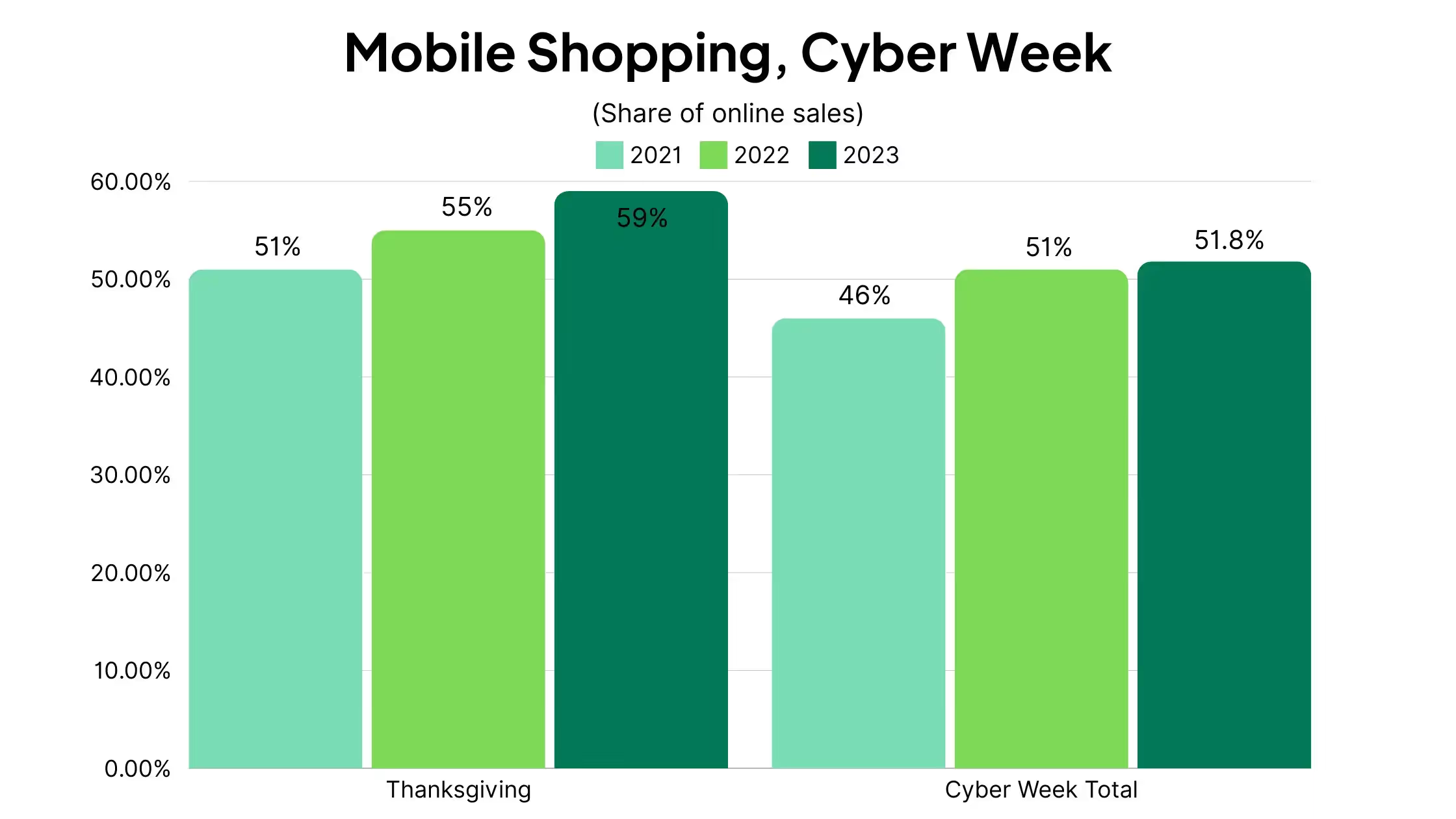
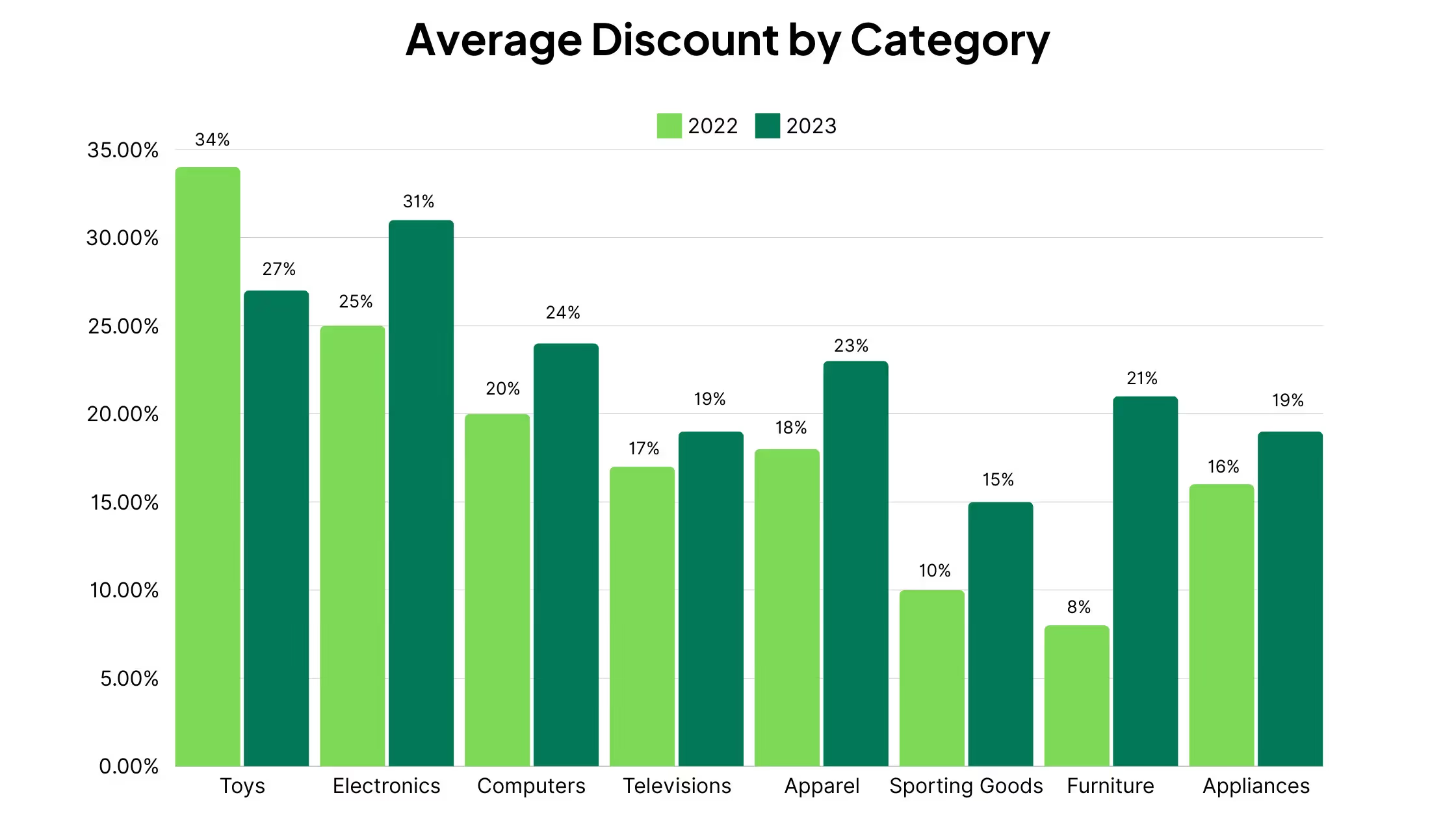
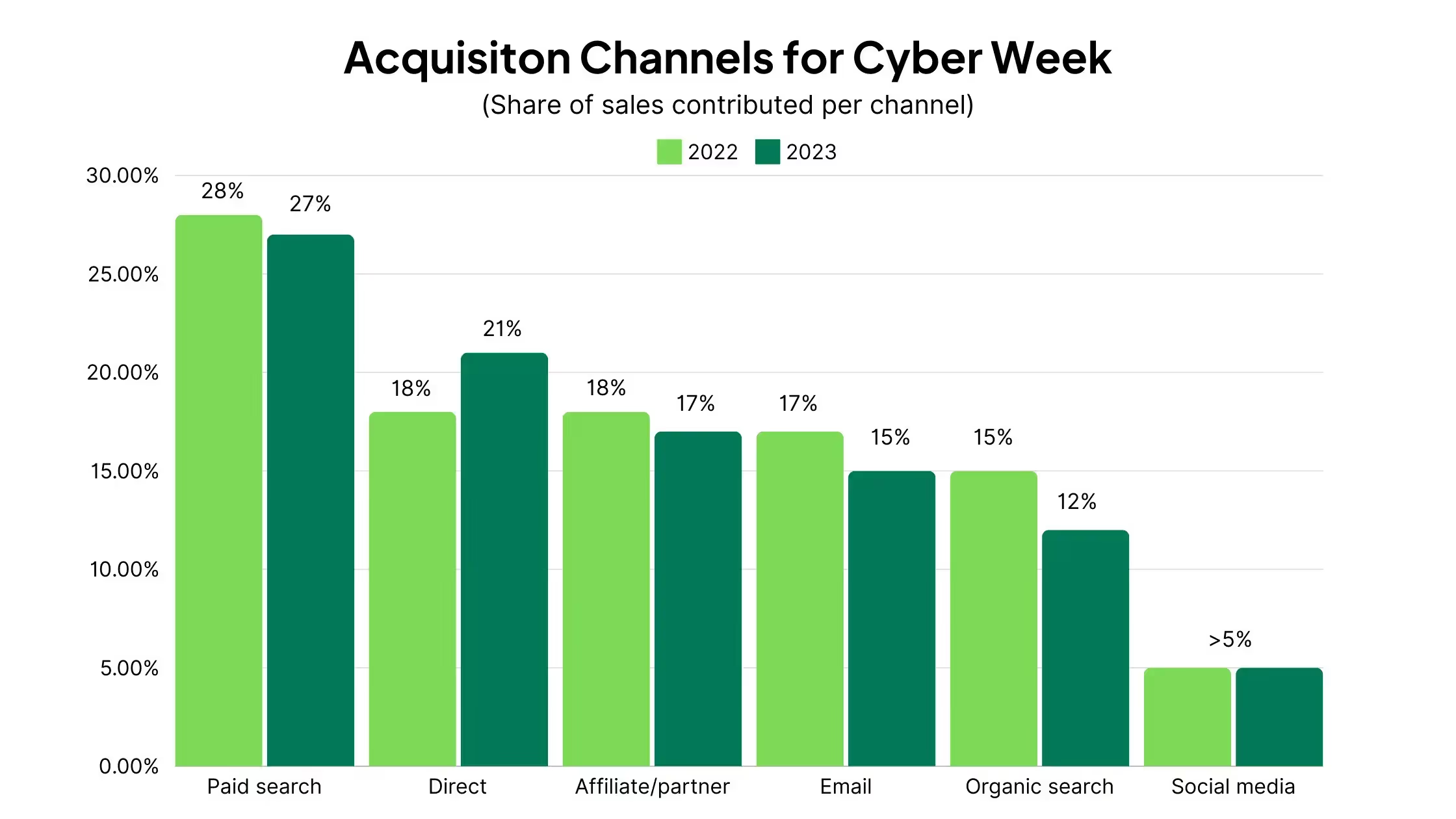
It’s getting more expensive by the minute for ecommerce brands to acquire new customers.
A large reason why is that the “big” acquisition channels are getting more saturated.
Increased competition leads to higher ad costs, dwindling margins, and you, sitting with a cup of coffee in hand, wondering if your CAC will ever be the same as it used to be.
Unfortunately, we’re unlikely to go back to the “good old days” of low-cost acquisition on Meta and Google.
TikTok had its moment, but now you can expect high costs here as well, as every brand knows how effective it can be for sales.
So, what can you do?
You can shut up shop. Close your business and find a less stressful way to make a living than running a DTC brand – like farming.
Or, you can find other ways to drive sales, get in front of potential customers, and grow your brand.
Nine Alternative Marketing Channels to Consider in 2026
There are many other ways to get your brand out there, grow visibility, and even drive sales, outside of the big (and expensive) powerhouses like Meta and Google.
You don’t have to (nor should you) dive into every channel at once. And there are likely some here that you’re already using.
But you might find something here that adds a new angle for your brand, and offers a leg up that helps you stay afloat as CAC continues to grow out of control.
YouTube
TikTok’s showing us that people love video content (and, honestly, video content on Facebook and Instagram should have convinced you of that already).
So why not dip into the king of video content itself?
Technically, YouTube is part of Google. But for the point of this article, you should consider it a different growth channel.
Especially if you focus on creating your own content on YouTube, rather than using it as an advertising channel.
You can put out a variety of content on the platform;
Short, reel-style content on YouTube shorts
Deep dives and tutorials centered around your product
UGC (customer testimonials, case studies, unboxings)
Longer form, educational content related to your niche
The best part about YouTube content is that it has a long shelf life.
Videos can generate organic traffic long after you publish. And, as long as it’s still relevant, a video can drive leads and sales for years.
You can post one video on YouTube, then chop it up and repurpose into short-form videos for other channels.
It’s more difficult (and expensive) to create high-quality video content, compared to static Meta ads, but that higher barrier of entry just makes it more rewarding to those who are willing to do the work.
Mobile Apps
With rising CAC, and access to data and attribution becoming more scarce, three things are becoming increasingly valuable for DTC brands.
More mobile shoppers means more opportunity to get people into your app, where they have a larger chance of becoming loyal, engaged, long-term customers.
App users convert at a higher rate, spend more in each order, and spend more over their lifetime.
And most importantly, an app gives you a direct line to your customers.
No filtering from a third party, no platform risk. Your brand is on their home screen, in their pocket, 24/7.
That kind of direct relationship with your customers today is invaluable.
Push Notifications
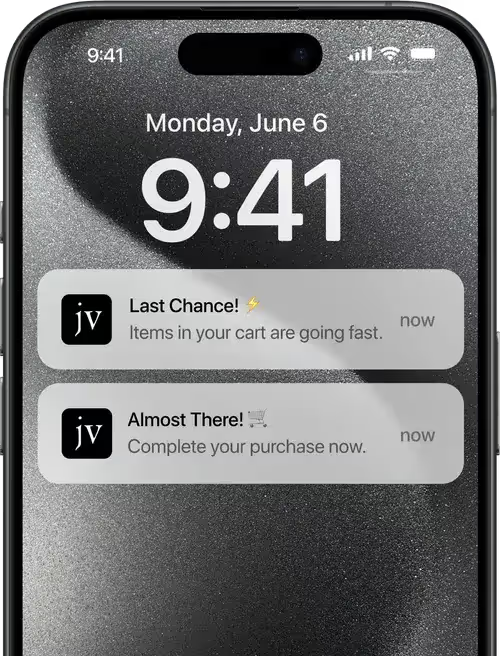
Push notifications are a large part of what makes mobile apps so powerful.
Push is the most direct, most effective way to communicate with your customers.
It’s:
You’re probably not going to reach many new customers with push, since those who download your app and opt in are probably customers already.
But if your business has a lot of SKUs/variations, with high repeat purchase potential, you could leverage push notifications for a significant boost to LTV, which would offset rising advertising costs in other areas.
Email
Contrary to what you may have been told, email is not dead.
It’s definitely getting less effective. Inboxes are crowded, privacy laws are more strict.
But with the low cost of email, and (like push) the easy ability to set up evergreen, automated flows, the ROI of email is still very good.
And, also like push and mobile apps, it’s a channel you own. Though emails aren’t as direct, they’re still a straight line of communication to your customers, that you don’t rent from a social media platform or a marketplace.
These owned channels are crucial today.
If you’re not putting much thought or effort into email, perhaps it’s time to change that.
Think about how you can grow your list size, and send more emails to your list.
Some brands worry about sending too many emails to their list and upsetting customers, but today, most are guilty of the opposite.
It’s easier for people to pass over emails today, which means two things;
People are less likely to unsubscribe if they get a lot of emails from your brand
It takes more touchpoints to get someone to notice you
You might send four emails that the customer takes no notice of, but then the fifth gets through.
Luckily, there’s basically no extra cost involved. So email ends up being a low-cost, mid to high upside promotional channel.
Tl:dr; grow your list, send more emails. It won’t double your revenue, but the ROI is worth it.
SEO
SEO is another channel that many believe is dying (or is already dead).
But the truth is more nuanced.
Yes, SEO has been upended in the last couple of years, with the introduction of LLMs and AI overviews in search.
Yes, volatility seems to be higher than ever, and SEO-first businesses are becoming increasingly unstable.
But that just means more opportunity for ecommerce brands.
Like email, even if the ROI of SEO is dropping, it’s very good, considering the long-term value of ranking in Google and generating organic sales.
Yet the ROI for ecommerce may not actually be that much worse (or worse at all) than it used to be.
Google tends to prefer product pages, directly from brands, to informational posts like buying guides.
And the kind of searches that AI is eating up are the informational, low-intent searches; rather than high-intent searches from people looking to buy.
Perhaps best of all, the affiliate site model is dying, which may actually lower competition for your product niche overall.
It’s not worth the risk for affiliate sites getting a small return per conversion; but for a brand, there’s much higher upside.
SEO is long-term! @Pilothouse_team said it in such a perfect way to describe why it’s SO vital and important to have a strategy behind it.
Latest Episode of the DTC Podcast is out! Find it wherever you get your podcasts – plus don’t forget to subscribe – 🔗 in bio! pic.twitter.com/xpJ6yCn8EU
AppLovin is a mobile advertising platform that’s starting to make real noise in ecommerce.
It operates a massive ad network, leveraging AI-driven ad placements across high-intent mobile users, particularly inside mobile games (a market boasting 2.6 billion users worldwide).
The AppLovin ecosystem is less saturated than Meta, leading to lower CPMs for many brands.
Nick Sharma said this about AppLovin in his newsletter:
“If you’re generally selling to net-new customers (bedding, leather goods, cookware, etc.), the channel works well. If you sell a consumable, you end up paying for customers you’ve already acquired, so the incremental new customer acquisition number is not that high.”
It remains to be seen whether AppLovin is a good long-term channel, but for those looking to experiment with something that’s not Meta, it’s worth looking into.
LinkedIn/Twitter
In DTC, it’s becoming increasingly important to think big picture about your brand, rather than focusing intently on immediate sales.
Founder-led content is starting to blow up right now. More founders and business leaders are posting; about their business, what their brand is doing, and the landscape in their industry.
While this kind of content probably isn’t going to drive sales, it can:
Invite creative input from other founders and ecommerce leaders
Build a small group of loyal followers of your brand, who contribute visibility via word-of-mouth
Attract top talent to work with your brand
Put your brand in front of VCs, angel investors and retail buyers
You might find it grows the overall footprint of your brand, and opens up partnerships that you would have struggled to secure otherwise.
Again, you’re not going to build a profitable sales channel on LinkedIn (unless maybe your target buyers are founders and professionals).
It’s about as top of funnel as it gets (perhaps not even in the funnel at all).
But posting about your process, wins, struggles, and insights is an interesting approach that comes with little downside, and potentially huge upside.
Marketplaces
Marketplaces are not a new channel; and building your business around selling on marketplaces is not the most stable strategy.
But they’re still a good way to grow visibility for your brand.
These platforms come with their own audience, a pre-built sales engine you can tap into.
There are downsides as well. Margins are typically less, you have less control, you don’t own your traffic, and they’re essentially a black box for analytics.
You’ll have to weigh up whether the upside is worth it.
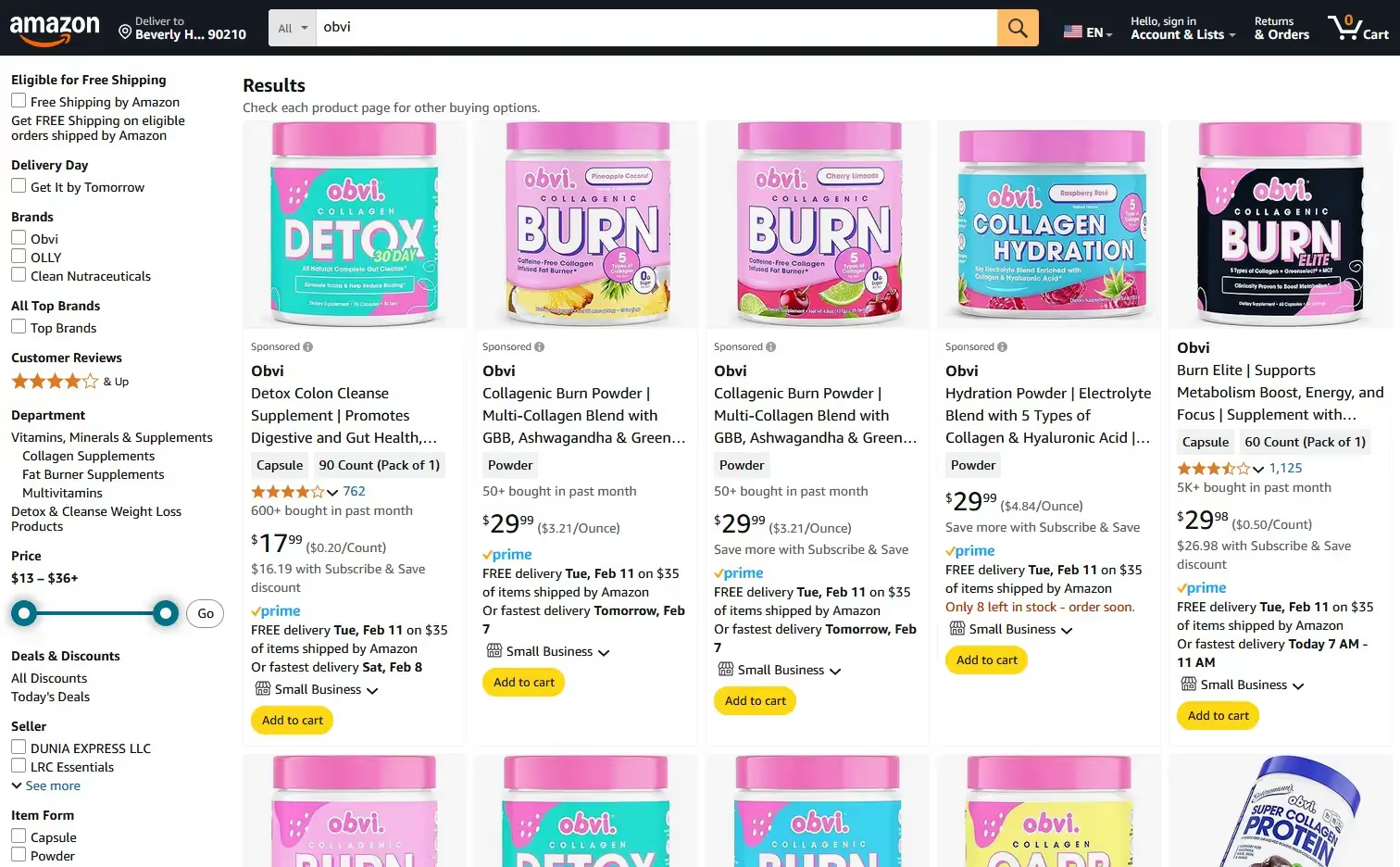
While some brands prefer to keep everything DTC, on their own site, and in their control, others will find the benefits of being on a platform like Amazon (and having access to more than 2 billion monthly visitors) are too hard to pass up.
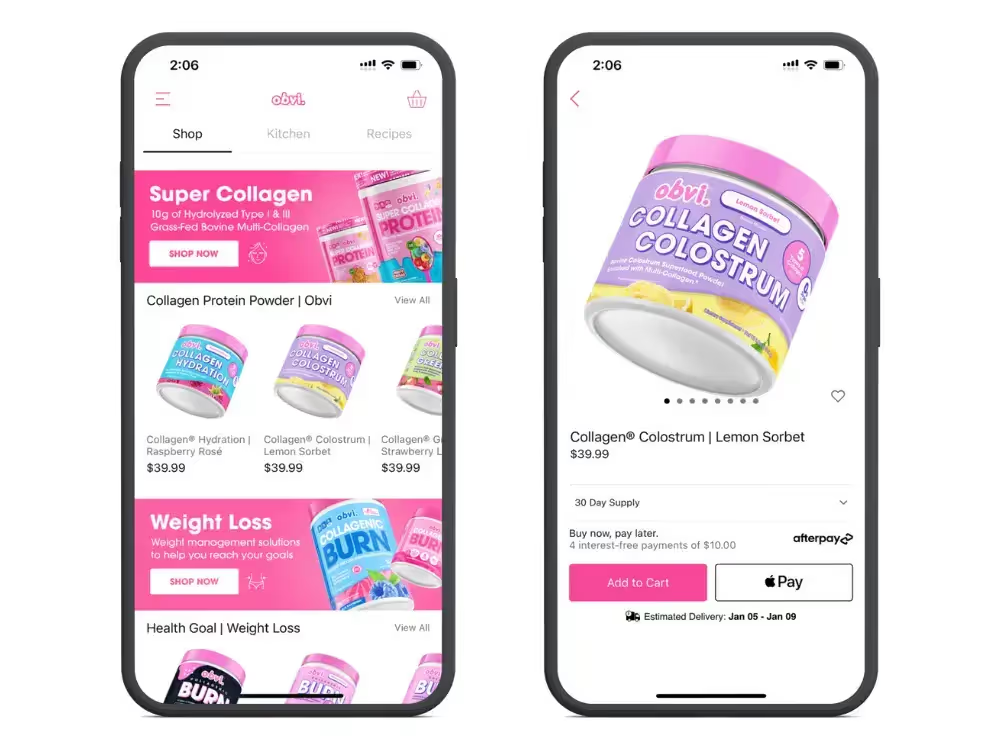
Obvi is a huge consumer brand that doesn’t need Amazon – but sells on the platform regardless
Direct Mail
Finally, while all your competitors are going high-tech with automated ads run by a Deepseek agent, you could consider expanding your brand with low-tech engagement.
There’s been growing chatter in the ecommerce industry around direct mail.
Yes – people still have mail boxes, and businesses still send marketing material to those mail boxes.
Direct mail has 90% open rates, and it stays in your customers’ consciousness for longer.
And unlike other channels, it’s becoming less saturated, as most brands are going fully digital.
You’re not going to run your whole business through physical mail, but it could be an interesting wrinkle to add incremental revenue and increase margins.
Final Thoughts: Are Meta/Google/TikTok Finished?
To sum up, we just want to say that we’re not suggesting you should ignore big channels like Meta.
These channels are still the most effective way to get new customers.
You just can’t compare to their reach, or their algorithm, even if the cost is getting crazy high.
But a smart strategy is to mix in alternative channels to offset the cost.
Low-cost channels like mobile apps, push notifications, SEO and email may provide valuable breathing room in terms of margins, allowing you to compete on Meta when other brands can’t.
You should also consider that not all your marketing has to be direct response.
Think bigger picture. Grow your brand.
A brand people recognize and love is what will keep you afloat when other brands drown.
Looking for more high-level insights from the ecommerce & retail world?
Check out The Retention Edge, our podcast and newsletter where ecom and retail leaders share their hot takes on the future of CX and retention.
There’s no substitute for experience. Especially in ecommerce – operators who have a unique, real perspective, built from the real experience of running their business, are the number one resource to tap into, whether you’re starting a new business or trying to scale an existing one.
That’s why ecommerce communities are so valuable. They connect you with like-minded business owners, with real perspectives, not the kind of fluff that gets regurgitated online for engagement.
Not all communities are worth your time (or the cost to be a member). But find a good one, and it can be the best way to kickstart your growth.
Keep reading and we’ll explain all the benefits – and some of the best communities to join.
Want weekly insights into how 7, 8 and 9-figure brands are driving sustainable growth? That’s what you get with our value-packed newsletter, The Retention Edge. Subscribe for free today.
What a Good Community Does for You
Here are some of the things you get from being a part of a high-quality community.
Solutions for problems other operators have already solved
Running an ecommerce brand means hitting the same walls thousands of people have already hit.
Checkout friction & conversion issues.
Returns that eat your margins.
A 3PL that ships slow in peak.
Your first international market.
The lonely version of that is Googling or ChatGPTing, reading contradictory threads, sorting through AI slop, and guessing. The community version is posting a question and getting five detailed replies within an hour from operators who have already done it.
You still have to apply the advice to your business. But you don’t pay the tuition twice.
Get honest benchmarks
Ecommerce is full of numbers nobody will show you publicly. Email revenue share. Mobile vs desktop AOV. First-order contribution margin. What a healthy repeat rate looks like for your category.
Inside a real community, people post their actual numbers. Not vanity metrics on Twitter. Real ones, because there’s trust and because everyone benefits from the transparency. When you can see that your AOV sits in the 60th percentile for your category, or that your return rate is actually low, you stop making decisions based on vibes.
Opening doors you can’t cold-email your way into
The best agencies, operators, investors, and vendors don’t answer cold outreach. They answer warm intros from people they trust. Communities are how those intros move.
You meet someone in a Slack channel. A year later you need a Klaviyo freelancer who is actually good, and they send you three names with context. The value of one good intro can be six figures.
Stack your vendor economics
Group buying is one of the most underrated benefits of premium communities. The better operator groups negotiate deals with attribution tools, email platforms, 3PLs, ad platforms, and analytics software. Discounts of 20 to 50 percent on software you were going to buy anyway. For a brand doing $10M, those savings can cover the membership fee several times over.
It makes the lonely parts of the job survivable
Most ecommerce founders are running their business alone, even if they have a team. Cash flow stress, a bad month, a co-founder conflict, a burnout stretch. Employees can’t be your sounding board for any of that. Spouses get tired of hearing it.
Other operators get it. They’ve had the same month. They know what it feels like when inventory is stuck and ads are underperforming and you have payroll on Friday. That peer support doesn’t show up on a P&L but it’s the reason a lot of founders make it to year five.
Early signal on what’s working
Playbooks hit Twitter and LinkedIn long after they’ve stopped working. What’s actually working right now is being discussed in private chats between operators who are running the tests. New creative formats. Meta policy shifts. What’s happening to Amazon PPC costs. Which TikTok Shop categories are still profitable.
You won’t find the edge in a public thread. You’ll find it in a DM from someone who trusts you enough to share.
Accountability
Most operators don’t have a boss. The thing they say they’ll ship by end of quarter slides to next quarter, then the quarter after. Communities with regular operator calls, mastermind groups, or cohort structures pull you out of that drift. You commit to peers. You report back. The goals you set with other operators in the room tend to actually happen.
How to Identify a Community Worth Joining
The communities that work for a $500K brand are not the communities that work for a $30M brand, and vice versa. Picking wrong is the most common mistake. A solo founder joining a $200M operator group will feel imposter syndrome and drop out in six months. A nine-figure operator joining a beginner Facebook group will get nothing from it.
Three filters worth running before you pay for anything:
Revenue band. The best discussions happen when everyone in the room is within one order of magnitude of you. Look for communities that gate on revenue or stage, not just anyone who wants to join.
Format match. Some operators get value from live calls and in-person dinners. Others want async Slack and never want to get on a Zoom. Match the community format to how you actually work.
Give-to-get culture. Lurkers get nothing. Before joining, check whether the community has a strong culture of sharing data, intros, and honest takes. A private forum full of people waiting to be sold to is worthless.
Just being part of a community isn’t enough.
It’s about finding the right community for you, and surrounding yourself with the right people to help you get where you want to be.
Five of the Best Ecommerce Communities
These are the ones we’d recommend to most ecommerce operators, depending on stage and channel.
Million Dollar Sellers
When your business hits 7 or 8 figures, the questions you face start to change. And so does the kind of support that’s actually useful. Million Dollar Sellers (MDS) is an invite-only membership group built for founders at that stage.
The community brings together over 700 ecom entrepreneurs doing between $1M and $500M+ a year. Members gain access to a trusted network of Amazon (and beyond) sellers, expert advice on operations, strategy, exits, and all business-related matters.
A 24/7 active online space, weekly live calls, in-person events across the globe, 17+ local Chapters, and smaller Squads for more focused conversations.
Sound like your kind of room? Book a free discovery call to see what it’s all about.
Workspace6
Workspace6 stands out as the premier community for 7, 8, and 9 figure+ ecommerce operators – just ask anyone who’s experienced its magic firsthand.
Rub shoulders with a carefully curated group of brand owners spanning various industries, all united in their quest to strategically scale their brands to new heights.
With over $10 billion in collective revenue across hundreds of members, Workspace6 offers unparalleled networking opportunities and exclusive discounts on essential ecommerce software like Northbeam, Triple Whale, and Post Pilot.
Plus, with weekly digital meetups, you’ll be networking on a whole new level. 24/7 active communication, networking, and knowledge await you around the clock.
eCom Fuel
You may already be familiar with Ecommerce Fuel through their popular podcast, but there’s a lot more than that. With over 1400 members, they’re a community of seasoned entrepreneurs, not just beginners or vendors, ensuring a wealth of meaningful ecommerce experience to share.
Their discussion forum is a bustling hub of activity, offering rapid, insightful answers to your ecommerce queries. With thousands of new comments each month and years of archived discussions, you’ll find a pandora’s box of knowledge, all professionally moderated to maintain quality and keep pitches at bay.
With an average member revenue of $5 million, joining Ecommerce Fuel offers a potential 10X ROI guarantee, all for as low as $199 a month.
Startup CPG
According to them, virtual get-togethers are so 2020. Can’t help but agree!
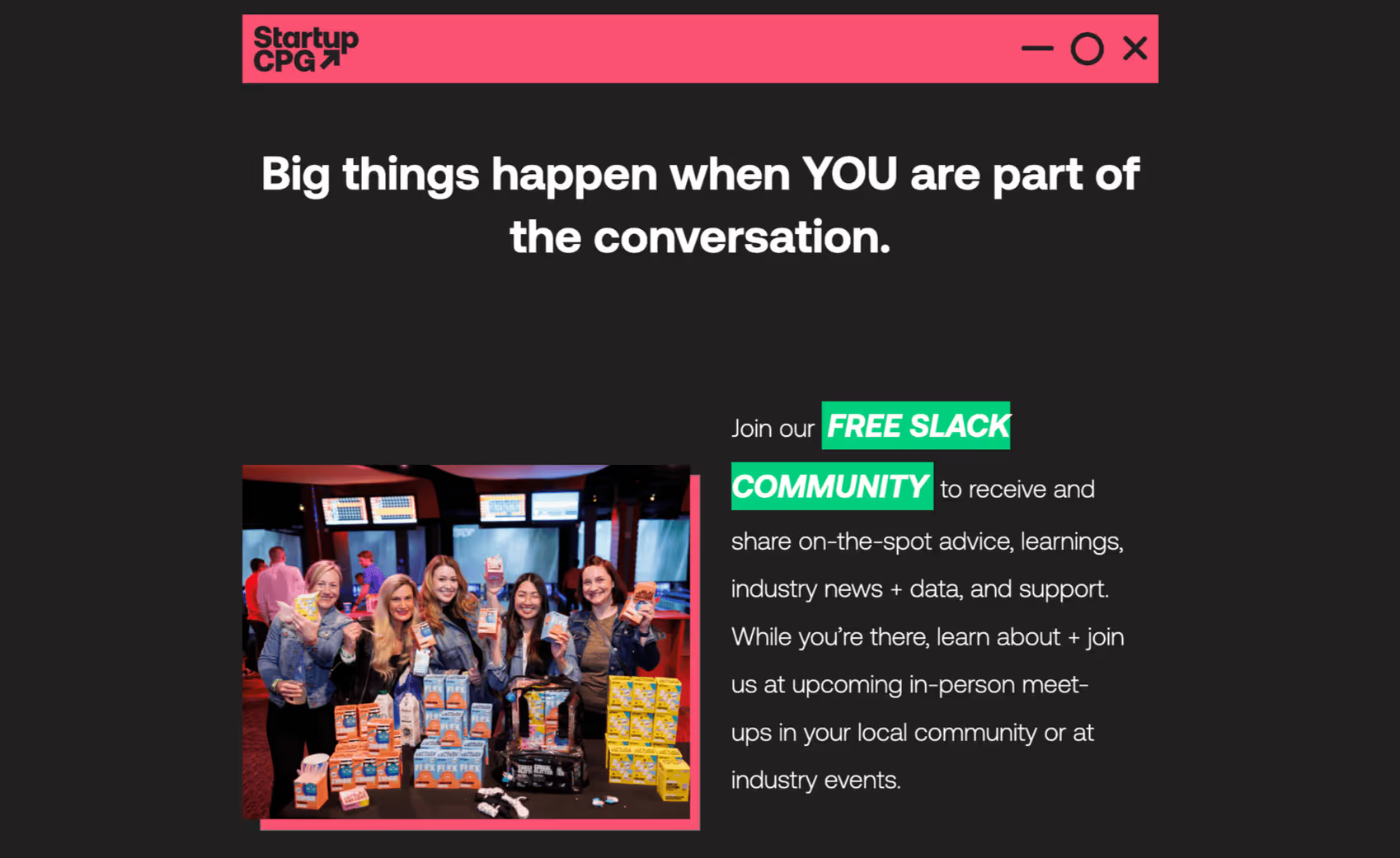
With 10 city hubs, Startup CPG hosts regular meetups for all 20,000 of their members. Whether it be talking about the latest brands, getting on-the-spot advice, industry news, and dates, you won’t regret joining Startup CPG.
How can you join, you may ask? Subscribe to their newsletter, look for the introduction email in your inbox, and join the conversation on Slack to stay up to date.
The Takeaway
Joining a community is a small decision that compounds. The operators who treat it as a line item and actually show up get a network, a set of benchmarks, a vendor stack, and a set of relationships that pay off for a decade. The ones who join and lurk get nothing.
Pick one that matches your stage. Post in it within your first week. Offer help before you ask for any. In a year you’ll look back and wonder how you ever operated without it.
—
Once you’re ready to turn that network into more repeat revenue, a mobile app is one of the highest-leverage moves for brands past $3M. See how Vendrux turns your website into a native iOS and Android app without rebuilding anything, and why top operators use it to drive retention, AOV, and LTV.
You’re paying more than ever to acquire customers. Your existing customers have promo fatigue – they don’t buy if you’re not offering a discount, and even your discounts aren’t making people as excited as they used to be.
Enter a powerful tool to drive exclusivity, excitement, and high-margin sales: early access.
Early access is one of the best ecommerce strategies to build long-term customer loyalty, and frame your brand in a premium light.
Keep reading as we explain tactical uses for early access, the behavioral psychology behind it, the business outcomes, when to use early access, and real examples of the early access ecommerce strategy in use from real, successful brands.
Vendrux not only helps you create the perfect, high-ROI mobile app, we also make it easy to set up app-exclusives that spike retention and engagement. Want to learn how? Start with a free preview of your app now.
What Is Early Access?
Early access is when you give a select group of customers first dibs on new products, sales, or events before the general public. This might mean:
Loyalty program members getting a head start on Black Friday sales.
App users unlocking new collections before anyone else.
Email subscribers gaining exclusive entry to limited product drops.
In essence, early access transforms a routine promotional activity into a VIP event.
It shifts the narrative from “please buy now” to “you’ve earned this.” That subtle repositioning strengthens the relationship between brand and customer.
It’s about building a sense of belonging, which in turn leads to better engagement and loyalty.
Types of Early Access Marketing Strategies
Let’s look at a few ways you might use early access incentives in your business.
Exclusive Access to Product Drops
Let a select segment (loyalty members, app users, subscribers) shop a new product before the general public.
This tactic creates controlled hype and demand concentration among your highest-value customers. It makes the launch feel special, not just another SKU going live.
Bonus? The early buyers become your review base, UGC engine, and feedback loop, helping to drive momentum once you launch to the rest of your audience.
Restocks
If you have items with limited availability, you can give certain groups first crack at a high-demand restock.
If you’ve sold out before, the perceived value of the product is already high. Letting VIPs in early rewards loyalty and reduces public frustration over missing out (again) – and gives a great incentive for your top customers to maintain loyalty.
Early Access to Promotions
Give a head start for VIPs, subscribers, or app users before a broader sale event (think BFCM, anniversary, spring promo, etc.).
You’ll get early insight into performance, flag any issues, and build urgency through visible “selling out” signals, while rewarding the kind of loyalty you want to see from your customers.
Beta/Product Testing Groups
Many brands offer a hand-picked group early access to unreleased or under-development products in exchange for feedback.
This is great because You’re not just offering exclusivity. You’re inviting collaboration.
Customers feel like insiders and brand advocates, not just buyers. The qualitative feedback is a goldmine for improving product-market fit, and it’s an excellent way to build a powerful brand asset like a community.
Early access works great because it taps into deep psychological drivers that influence buying behavior.
These drivers include:
Scarcity: Limited-time and limited-audience offers feel more valuable. The perception of exclusivity increases perceived product value.
Commitment & Consistency: Once a customer signs up for access, they’re more mentally committed. The act of enrolling or downloading reinforces intent.
Reciprocity: Giving customers something special, even just a head start, triggers a subtle urge to give back, often by making a purchase.
Loss Aversion: People are more motivated by the fear of missing out than the hope of gain. “Miss it and it’s gone” is a stronger motivator than “buy now and save.”
The best marketing strategies are built around core human psychology. You’re not just telling your audience “hey, buy this.” You’re tapping into the psychological principles that get people excited and eager to buy, and using this to drive conversions.
Brand owners: want the latest insights into how 8 and 9-figure brands drive sustainable growth? Check out our weekly newsletter and podcast, The Retention Edge. Subscribe for free today.
Early Access vs Traditional Incentives (like Discounts)
Early access is an incentive play, in much the same way that most brands use discounts.
For example, you might offer members of your VIP list, or people who download your app, an exclusive discount – or exclusive early access to promotions, or product launches.
Most of the time, early access is a better incentive than a discount. Discounts are easier; less work to manage, clearer value proposition. Early access is more work, but that work pays off.
Let’s compare how these two strategies play out as incentives.
Brand Perception
Early access feels exclusive and premium. It aligns with high-AOV positioning and builds long-term equity.
Discounts, on the other hand, can undermine perceived value. They train customers to wait for markdowns, and discourage them from buying at full price.
Impact on LTV
Discounts tend to attract deal-seekers, who return at a lower rate.
They don’t come because they love the product or the brand, only because they got a good deal.
Early access nurtures more committed customers (especially when used in combination with loyalty programs and retention channels like mobile apps), resulting in stronger retention and repeat purchase behavior, and ultimately higher LTV.
Cost
The best part about early access as a perk is that it costs you nothing. Letting members of your VIP list get first crack at a new product drop or restock doesn’t cut into your margins like discounts do.
That makes it a much more sustainable incentive strategy, and particularly valuable in times like these when so many brands are struggling to maintain steady profits.
Effectiveness at Scale
Early access can be harder to scale than discount incentives.
It’s cheaper at scale – sure. But you’re relying on all these shoppers being excited about getting first access to your product launch or promotion. It’s easier to get people excited about getting 10% off a dress or a supplement.
Plus, early access relies on exclusivity. If you open it up to too many people, the incentive loses a lot of its power.
Operational Impact
Early access takes more work to manage. You’ve got to manage who’s on the early access list and who isn’t, then set up the infrastructure so that only they have access to the product or promotion.
It’s not like you’re building a rocket to Mars, but it does take more work than simply distributing a discount code.
Summing Up
We’re not saying you should never offer discounts. Just about every brand does it, and discounts are a good way to capture leads and new customers at scale, with minimal effort.
But early access often ends up being a lot more powerful, driving real loyalty and positioning your brand in a premium light – while maintaining higher profit margins at the same time.
Real Business Impact of Early Access Strategies
When executed well, early access strategies can deliver meaningful performance lifts across multiple parts of your business.
You’ll often see:
Higher conversion rates during exclusive windows, as urgency and exclusivity drive more immediate action.
Increased list growth and loyalty program sign-ups, since early access acts as a compelling incentive to opt in.
Boosts to campaign revenue by concentrating purchase intent among your highest-value customers.
Improved customer retention and repeat purchase rates, thanks to the sense of privilege and priority that early access creates.
Better utilization of owned marketing channels (email, SMS, push) as customers engage more deeply when there’s a real reason to pay attention.
In short, early access doesn’t just build hype. It sharpens the performance of your promotional calendar, amplifies customer engagement, and strengthens key growth levers like LTV and list health.
Examples of Brands Using Early Access
Your customers’ other favorite brands are using early access to good effect. Why aren’t you?
Amazon
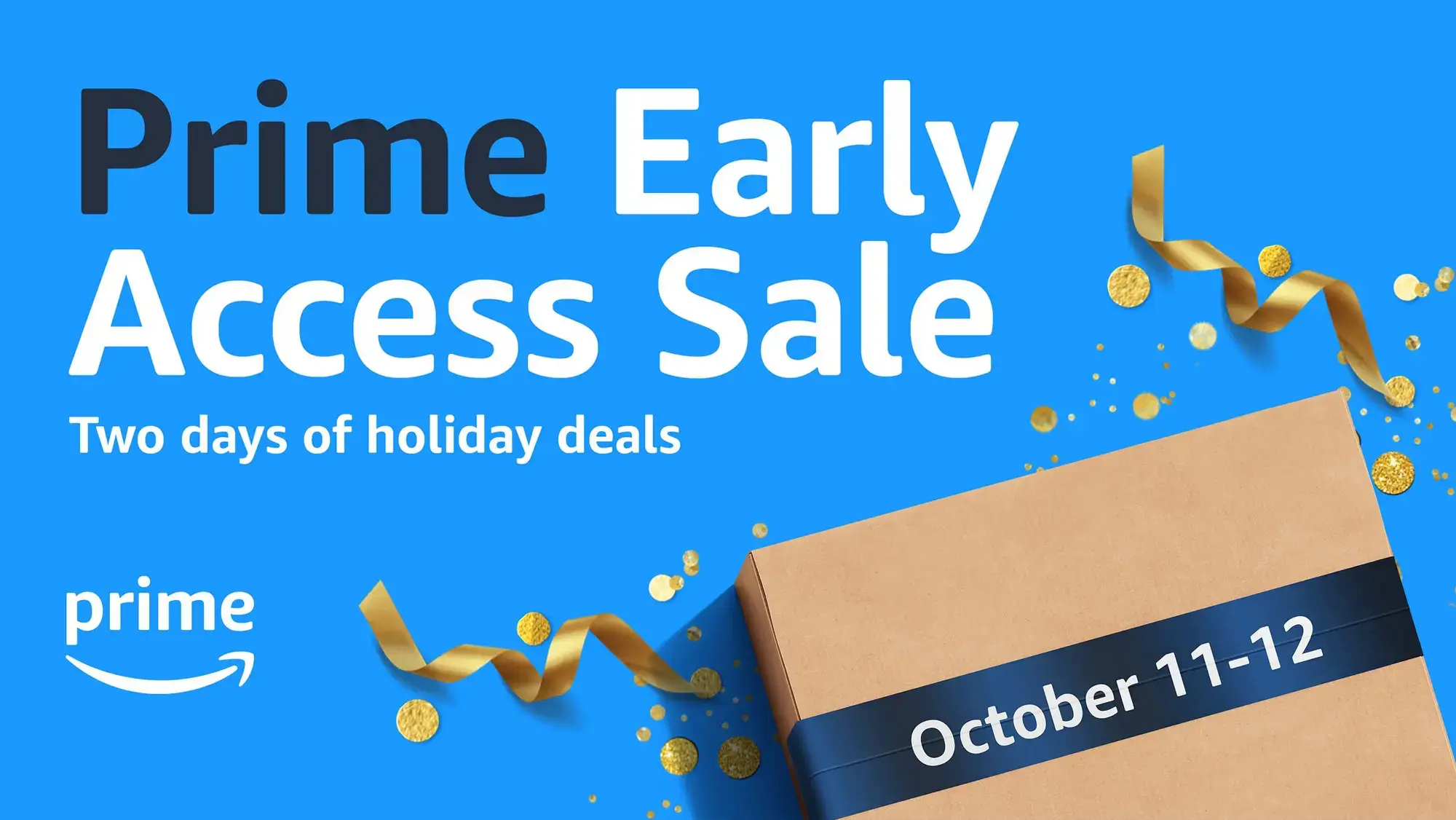
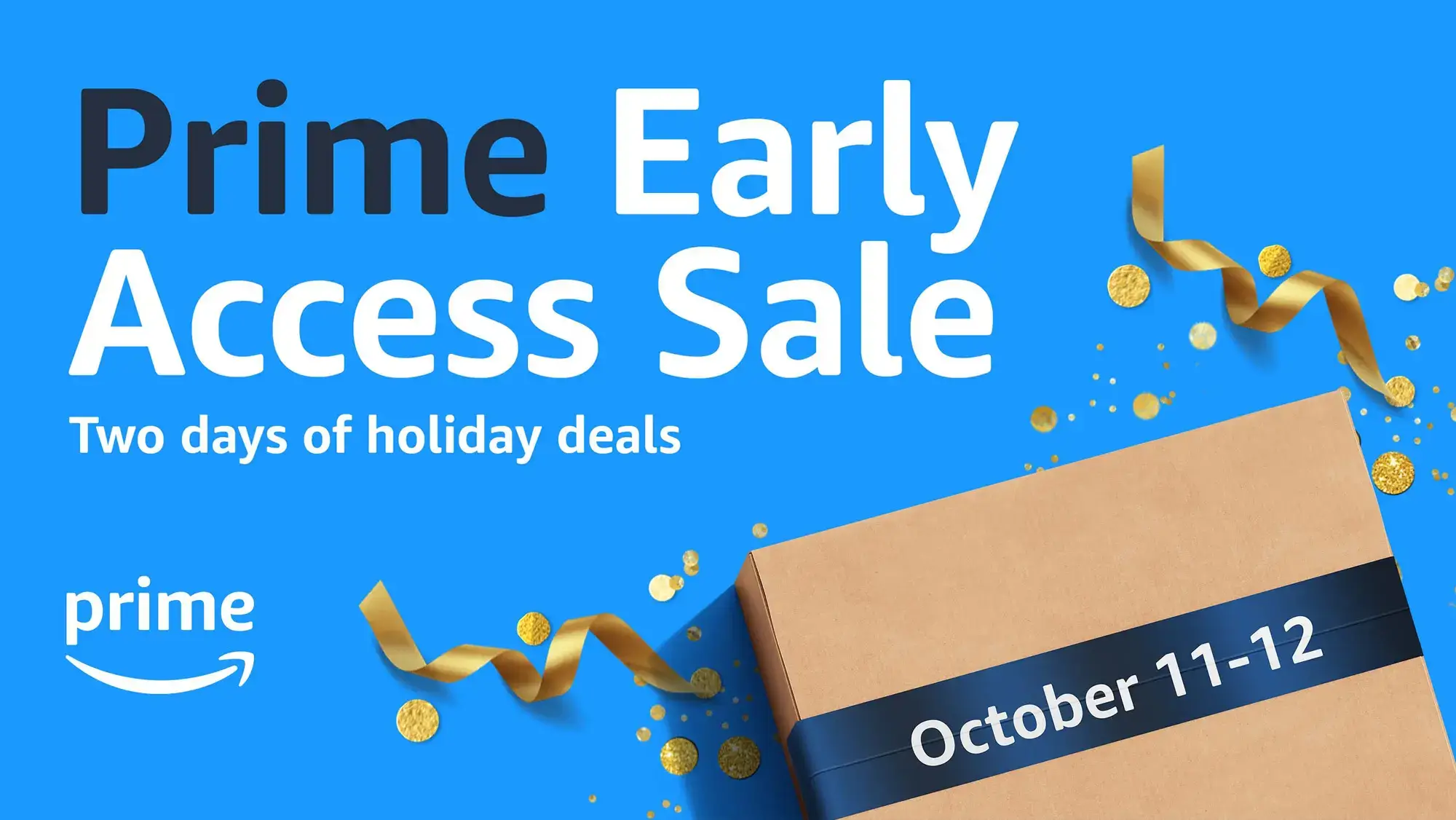
Amazon runs early access promotions for Amazon Prime members. These promotions build excitement around the brand, drive a ton of engagement, and give shoppers a reason to subscribe to their Prime membership.
Sephora
Sephora’s extremely successful loyalty program provides exclusive first access to new products to “Rouge” members – their top-spending customers, who spend over $1,000 per year with the brand.
Farfetch
Farfetch also ties early access to their loyalty program, opening up exclusive access to sales for members of their loyalty program, plus early access to other perks for higher tiers.
Carhartt
Carhartt provided early access to their Black Friday sale for members of their list.
Daily Harvest
Daily Harvest also promotes early access to members of their email list, incentivizing engagement and driving excitement.
Fashion Nova
Fashion Nova has a dedicated page for collections that are coming soon, where shoppers can enter their email to be notified when new lines are available for purchase, creating excitement and also helping to grow their email list.
Your Early Access Playbook: Putting It To Use for Your Brand
If you’re not leveraging early access incentives in your business, you’re missing out.
Here’s how to start.
Integrate it as an incentive for key actions or steps in your customer journey. The key is to think about what you can incentivize that will ultimately grow long-term brand loyalty and sales.
Loyalty program: provide early access for members of your loyalty program, rather than the basic points-based setup.
Email/SMS opt-in: frame your lists as a “VIP members group”, where people who sign up get first access to promos or product drops.
App downloads: offer exclusive first access to app users, giving an incentive for customers to download your mobile app (and keep using it).
Purchasing tiers: offer it not just to people who sign up to your loyalty program, but to those who spend above a certain amount.
Paid membership: early access can be a great way to encourage signups to a paid membership (like Amazon Prime).
Community access: create a community and give members first access to new products, restocks, etc.
Waitlists: let people sign up for a waitlist to be the first to know about a new product drop or a restock.
With all of this, you’re building customer behavior or brand assets that directly grow LTV.
You’re cultivating loyalty and repeat purchase. You’re getting more app downloads, more email signups, more community members. And you’re doing it without dangling discounts that degrade your price perception and margins.
Final Thoughts
If you want to stop relying on discount incentives, reclaim margins, drive loyalty and create more excitement around your brand, early access is a great way to do it.
It’s an excellent tactic paired with mobile apps.
You offer exclusive early access to app users as an incentive to download the app. That gives users a good reason to keep using the app (unlike a discount, which might result in them deleting the app after using their discount), as well as to keep push notifications turned on.
The result is a big win for your brand. App users are more valuable (our data shows they’re worth 6-10x as much as people who shop on your website), thanks to the fact that they shop more than twice as often, shop for longer, and convert at a higher rate.
And having your app on their phone, with push notifications on, gives you a direct line to the customer that is so valuable today.
Winning brands are combining early access + mobile apps to build a retention and loyalty engine that drives significant LTV and profit, while building brand equity at the same time.
Building your app is easy – Vendrux helps you do it with minimal cost and zero effort required, by leveraging what already works on your website.
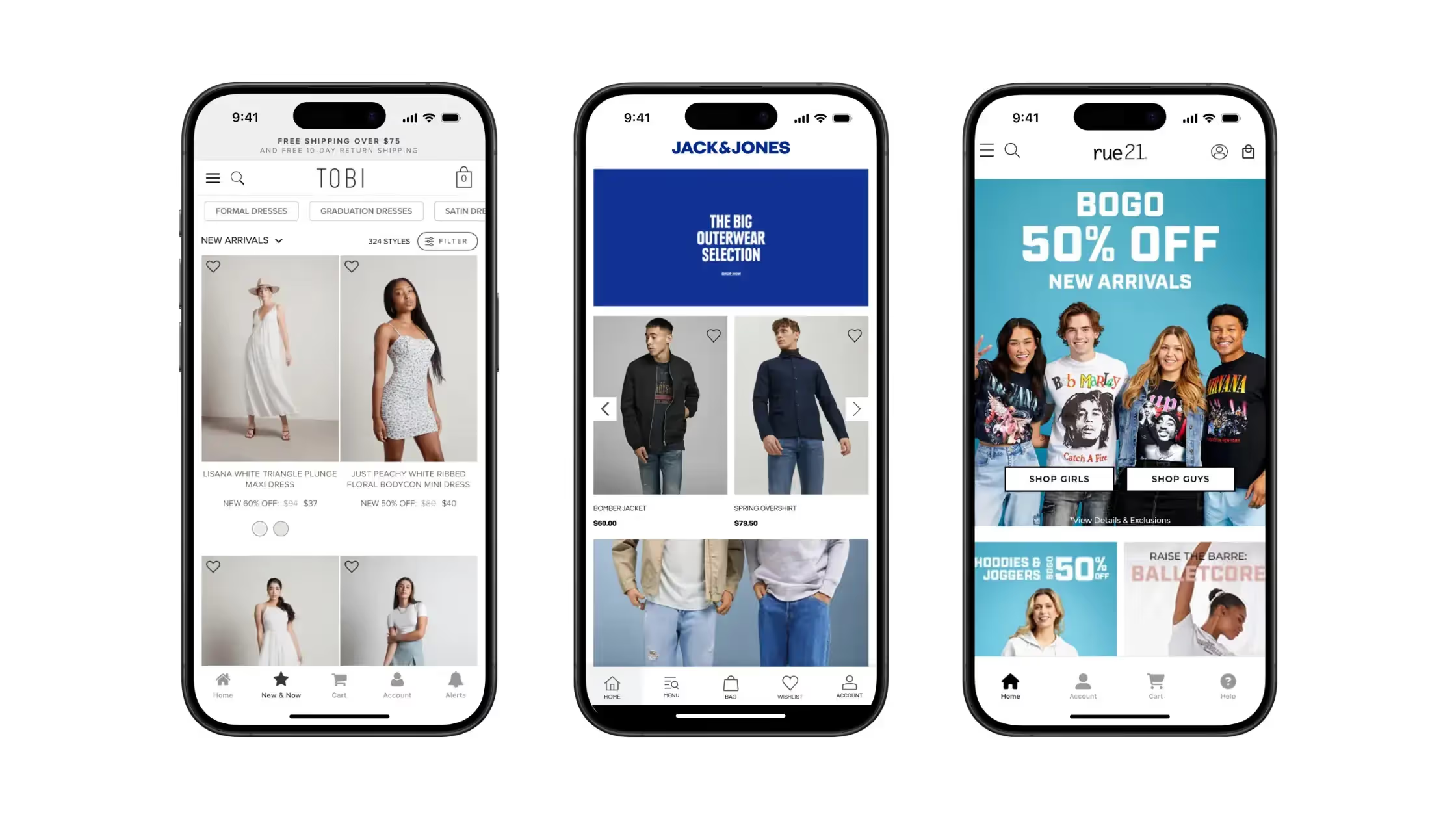
Get a free preview of your app to see how it works, or read through our case studies to see how brands like John Varvatos, Jack & Jones, buybuyBaby and more use Vendrux to power sustainable growth.
Mobile commerce has exploded in recent years, with more consumers shopping on their smartphones than ever before.
For DTC brands, this raises the big question: do you need a mobile app?
Many brands assume that an optimized mobile website is sufficient. Why go through the hassle and expense of developing an app when your website already converts well?
However, the brands that lean into mobile apps aren’t just surviving—they’re thriving. Apps offer a direct line to customers, better retention, and higher LTV compared to brands that are web-only.
Now, with CAC rising and profit margins shrinking, it’s becoming more important than ever to build sustainable growth through retention, and mobile apps are the perfect way to do this.
Yet not all brands need an app. For some, a mobile app just won’t move the needle enough to justify the time, cost and energy you put into building and launching it.
Keep reading and we’ll explain which brands should (and shouldn’t) build an app, and a clear action plan to launch for those who do have an app on their to-do list.
Want weekly insights into how 7, 8 and 9-figure brands are driving sustainable growth? That’s what you get with our value-packed newsletter, The Retention Edge. Subscribe for free today.
Which Brands Benefit the Most from a Mobile App?
Not every DTC brand needs a mobile app.
However, for some, it’s a game-changer for retention, repeat purchases, and community engagement.
The key? Brands who derive a significant amount of revenue from repeat purchases, and those with a long customer lifecycle.
If you fall into any of these categories, an app could be a massive retention and revenue driver:
High-Frequency Purchase Brands
Brands selling products that customers repurchase frequently (like supplements, cosmetics, coffee, or pet food) can benefit a ton from an app.
With one-tap reordering, personalized recommendations, and subscription management, an app makes repurchasing frictionless.
Subscription-Based Businesses
If your business runs on a recurring revenue model (meal kits, memberships, or replenishment services), an app is perfect for managing subscriptions.
Customers can easily pause, modify, or upgrade their subscriptions, reducing churn and increasing LTV.
Loyalty-Driven Brands
Fashion, luxury, and community-centric brands thrive on engagement. A mobile app allows you to offer:
Exclusive member perks
Early access to new collections
Personalized content and offers
Brands with Customization & Personalization
Skincare, footwear, and home decor brands that offer customized products benefit from an app’s ability to store customer preferences and deliver a tailored shopping experience.
Experience-Driven Brands
Some brands go beyond selling products—they create immersive experiences through apps with gamification, AR/VR try-ons, or community-building features.
If your brand thrives on exclusivity or VIP experiences, an app strengthens customer loyalty.
When a Mobile App Does NOT Make Sense
Mobile apps can have huge benefits for some brands. But for others, an app won’t move the needle very much.
We’re basically looking at the inverse of the previous section. Brands that have a naturally low retention rate, where customers typically only purchase once (or with a long time between purchases).
Think; what’s the reason for customers to download your app? Does it provide value, or improve the customer experience?
A furniture brand, for example, doesn’t make a lot of sense to build an app. Someone might buy once (a $3,000 sofa). Do they need an app, or does this just add another unnecessary step to the buying process?
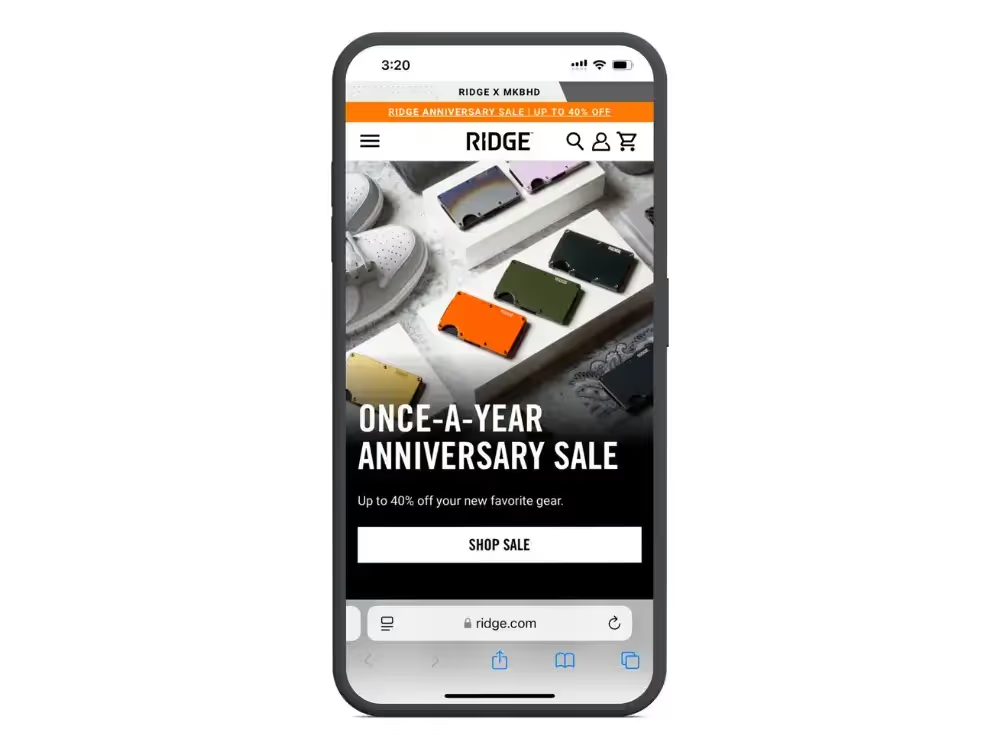
A great example would be Ridge. They’re immensely successful, doing $100M+ in revenue.
It’s not a matter of cost; they can certainly afford an app.
But, (by CEO Sean Frank’s own admission), they’re a naturally low-LTV business. They don’t sell consumables; in fact their wallets are specifically designed to last FOREVER (they even offer a lifetime guarantee).
So people aren’t going to download an app and make regular purchases (though that may change as they expand to new product lines).
For them, an app just doesn’t add much to the customer experience.
Why Brands With a Great Mobile Web Experience Should Launch Apps
A common objection to building a mobile app is when brands already have a high-converting and engaging mobile website.
They believe that the website is enough; an app would be redundant.
However, it makes even more sense for brands with a great mobile web experience to launch a mobile app.
Your website is proof of concept; your customers are happy shopping on mobile.
An app just takes that and packages it in a more convenient format.
Your loyal customers will be able to load the site (now your app) via one tap from their home screen, rather than accessing it through the browser, and you can drive increased engagement with push notifications.
Some will still prefer to use the website, and that’s fine. Those who prefer the convenience of the app will use the app.
Typically 2-5% of your web users will download your app, which is more than enough (with the higher LTV from app users) to justify the cost.
And if your mobile web experience is already app-like, you’re in the perfect position to launch an app. Using a service like Vendrux you’ll be able to launch in no time, just by converting what already works well for you on the web.
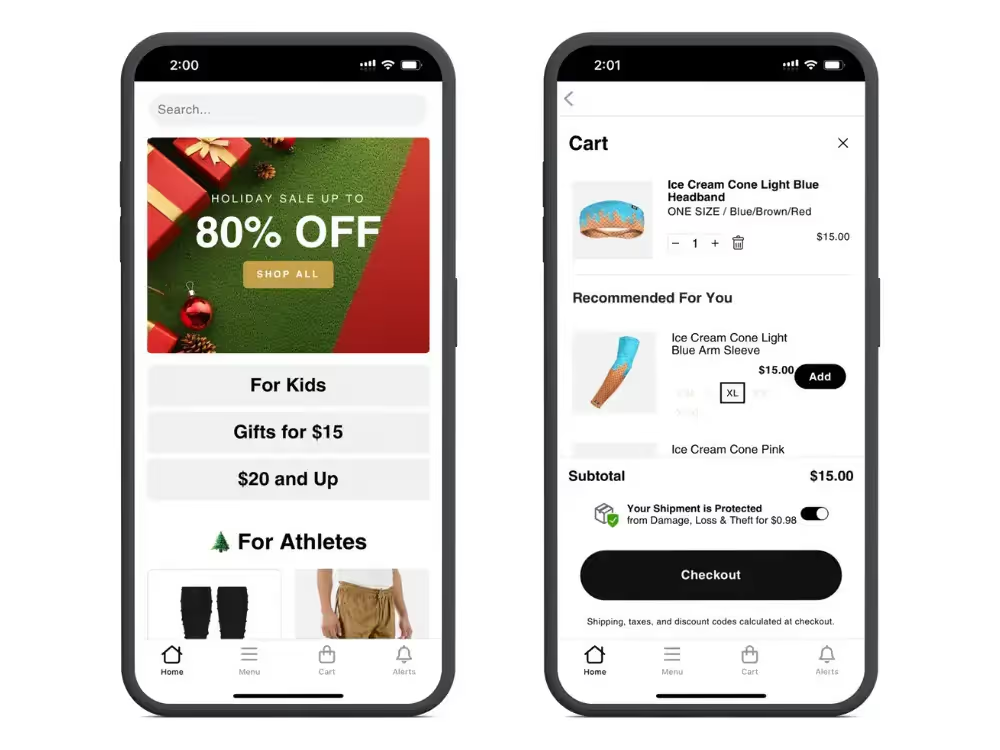
A great mobile web experience transitions perfectly into a great mobile app
The Retention & LTV Boost: Why Retail Apps Work
Why build a mobile app?
A mobile app isn’t just another sales channel. It’s a retention engine.
While most brands obsess over customer acquisition, sustainable profitability in DTC comes from repeat purchases and maximizing lifetime value.
A well-executed mobile app creates a sticky ecosystem where customers return not just out of necessity but because they’re engaged in the brand experience.
Here’s why apps are one of the most effective tools for retention and LTV growth:
1. Push Notifications & Retargeting
One of the biggest challenges in retention marketing is staying top of mind without being ignored.
Email open rates have dropped to around 20%, and SMS is seeing declining engagement (and is much more expensive at scale).
Enter push notifications: they have an average open rate of 90% and offer a direct, non-intrusive way to nudge customers back into your ecosystem.
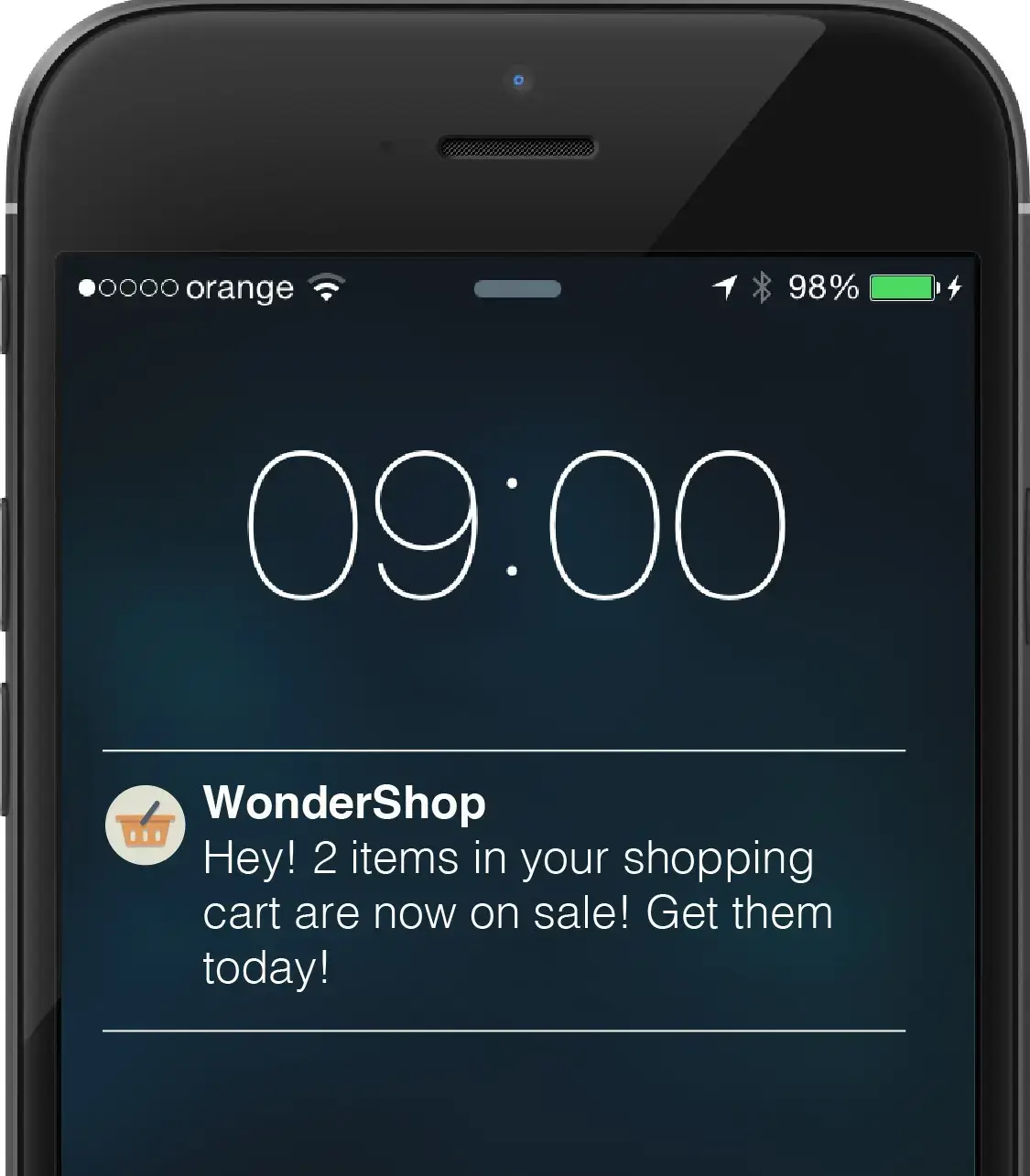
With push, brands can send hyper-targeted messages based on customer behavior, purchase history, and browsing activity, such as abandoned cart notifications and automated re-ordering reminders for consumables.
2. Frictionless Shopping
Apps provide less friction and fewer distractions, making for a smoother and higher-converting shopping experience (even if the app is just a wrapped version of the website).
It’s quicker to get in (one tap from the home screen), the customer is already signed in, and there are no browser tabs to distract them.
The result is higher conversions, fewer abandoned carts, and a more inviting experience for regular customers.
A mobile app allows brands to bake loyalty directly into the shopping experience, boosting participation and engagement.
With an app, loyalty members can track their points in real time, receive personalized offers based on their tier status, get push updates when they earn points, and redeem rewards instantly (without needing to log in or navigate a separate loyalty dashboard).
It makes earning and using rewards feel effortless, which increases repeat purchase rates and brand affinity.
Your best customers crave exclusivity. Mobile apps give brands the ability to offer premium, members-only experiences that drive app adoption and keep users engaged long-term.
Brands like Nike and Adidas use their apps to drop exclusive, limited-edition releases that are only accessible to app users.
Beauty brands often offer early access to new collections, while premium fashion labels provide app-only discounts or invitation-only shopping events.
These perks drive engagement, as well as creating a strong incentive for customers to keep the app installed (and push notifications turned on).
5. Better Data for Personalization: Using Customer Insights to Drive More Revenue
With third-party cookie tracking becoming more restricted, owning your customer data is more valuable than ever.
A mobile app gives you direct insights into browsing behavior, purchase frequency, product preferences, and engagement patterns, allowing for hyper-personalized marketing.
For example, an app can track:
Which products a customer views but doesn’t buy
How frequently they engage with the brand
Their most common purchase categories
Their preferred time of day for shopping
Armed with this data, brands can deliver personalized recommendations, send perfectly timed promotions, and optimize marketing efforts for each individual customer.
How to Build & Scale a Mobile App That Converts
Another objection many brands have is that they see a mobile app as a big, expensive, time-consuming project.
It’s a “nice to have”, but with all the other fires going on around the business, it’s just never the right time.
It’s actually not that big a project anymore, with the no-code and low-code tools on the market. It won’t cost you six figures+ like legacy shopping apps, and you can go live in a matter of weeks, without hiring and managing developers.
Here’s a five-step process to building (and scaling) your brand’s mobile app:
Prioritize your mobile web UX – building your mobile app will be so much easier if your mobile website is already amazing (and you’ll get more visitors on the mobile web anyway).
Launch and promote your app using existing retention channels, such as your email list, SMS list and website.
Set up automated push campaigns (abandoned cart, browse abandonment, welcome messages), as well as sending regular (multiple times per week) engagement-driving push notifications.
Test, analyze and iterate – track engagement, try different campaigns (such as app-exclusive product drops) to get more of your customers to download the app.
Today, any brand can launch their own app – it doesn’t take millions in funding or an in-house development team to build an app.
Want to learn more? Get a free consultation and learn how Vendrux will bring your app to life.
Measuring Success: What Metrics Matter?
With the right measurement frameworks, you can ensure you see your app’s contribution to business growth.
Several key metrics to look for include:
App Install Rate & Active Users – Are people downloading and staying engaged?
Conversion Lift vs. Mobile Web – Does the app outperform your website in checkout conversion?
Push Notification Open & Conversion Rates – Are notifications driving action?
Repeat Purchase Rate & LTV Lift – Are customers buying more frequently through the app?
App-Exclusive Revenue Contribution – How much revenue is coming directly from app users?
Case Studies: DTC Brands Winning with Mobile Apps
There are many public examples of DTC brands launching apps and achieving success.
50k+ push notification subscribers – Direct access to high-value customers.
Sleefs’ mobile app is a retention and revenue powerhouse.
App users spend more, shop more often, and convert at higher rates than any other platform.
With push notifications giving them instant access to 50k+ engaged customers, Sleefs has built a direct, high-intent sales loop that keeps revenue flowing.
5x higher customer lifetime value – App users stick around and keep spending.
4x higher ARPU – More revenue per user, more profitability.
10% of total revenue from the app – A major revenue driver.
Boozebud’s app isn’t just boosting sales. It’s locking in high-value customers.
With 5x the LTV and 4x the ARPU of non-app users, the app creates a sticky, high-engagement shopping experience that drives repeat purchases.
The result? A direct, high-retention revenue stream that now accounts for 10% of total sales.
“We’re seeing that the customers who do use the app are more engaged, they’re spending more time on site, they’re spending more per transaction, they’re spending more overall. Push notifications give us a way to get in front of high-value customers within a walled environment. The app is paying for itself.”
+63% total revenue growth – The app isn’t just performing—it’s scaling the business.
7x higher conversion rate – Turning browsers into buyers at an unmatched rate.
50% repeat purchase rate – 20% higher than mobile web, locking in loyalty.
16.89% abandoned cart conversion – Recovering lost sales with high-impact push notifications.
25k monthly active users, 200k sessions – A deeply engaged customer base.
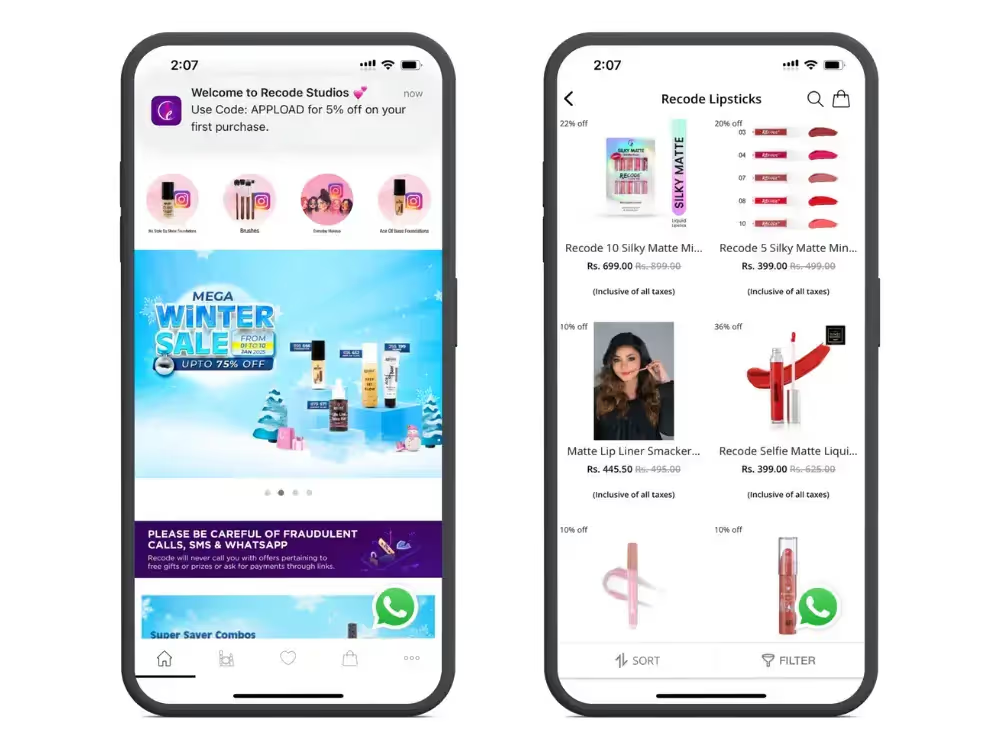
Recode Studios’ app is a profit engine.
With a 7x conversion rate boost, 50% repeat purchase rate, and abandoned cart notifications converting at nearly 17%, the app drives revenue while keeping customers coming back.
With 25k+ active users and 200k monthly sessions, it’s clear: the app is Recode’s top retention tool.
–
Learn more: check out these articles for a closer look at the case for DTC brands to launch apps, plus the best examples of successful ecommerce apps.
Final Verdict: Should Your Brand Build an App?
With the low barrier to entry provided by no-code solutions like Vendrux, it makes sense for the majority of successful DTC brands to launch their own mobile app.
Here’s a simple checklist. If you check 3+ boxes, an app is worth considering:
You sell products that customers reorder regularly.
Your business has a loyalty, subscription, or community component.
Your mobile site already performs well, (making an app easy to launch).
You want higher retention and better customer data.
You can invest in driving app downloads and keeping users engaged.
If an app isn’t the right fit, focus on building a great mobile web experience that converts.
But keep the idea of an app in mind – if, in the future, your business model pivots to focus more on retention and repeat business, an app might suddenly make a lot of sense.
Next steps?
If your mobile website works great, get in touch with our team to schedule a free consultation, and get a free preview of your app.
You can also learn more about what Vendrux does, and why it’s the best way for modern brands to level up their retention game with a mobile app.
The landscape for Direct-to-Consumer (DTC) brands is markedly different from just a few years ago.
Customer acquisition costs are surging, and traditional engagement channels are becoming harder to rely on for sales.
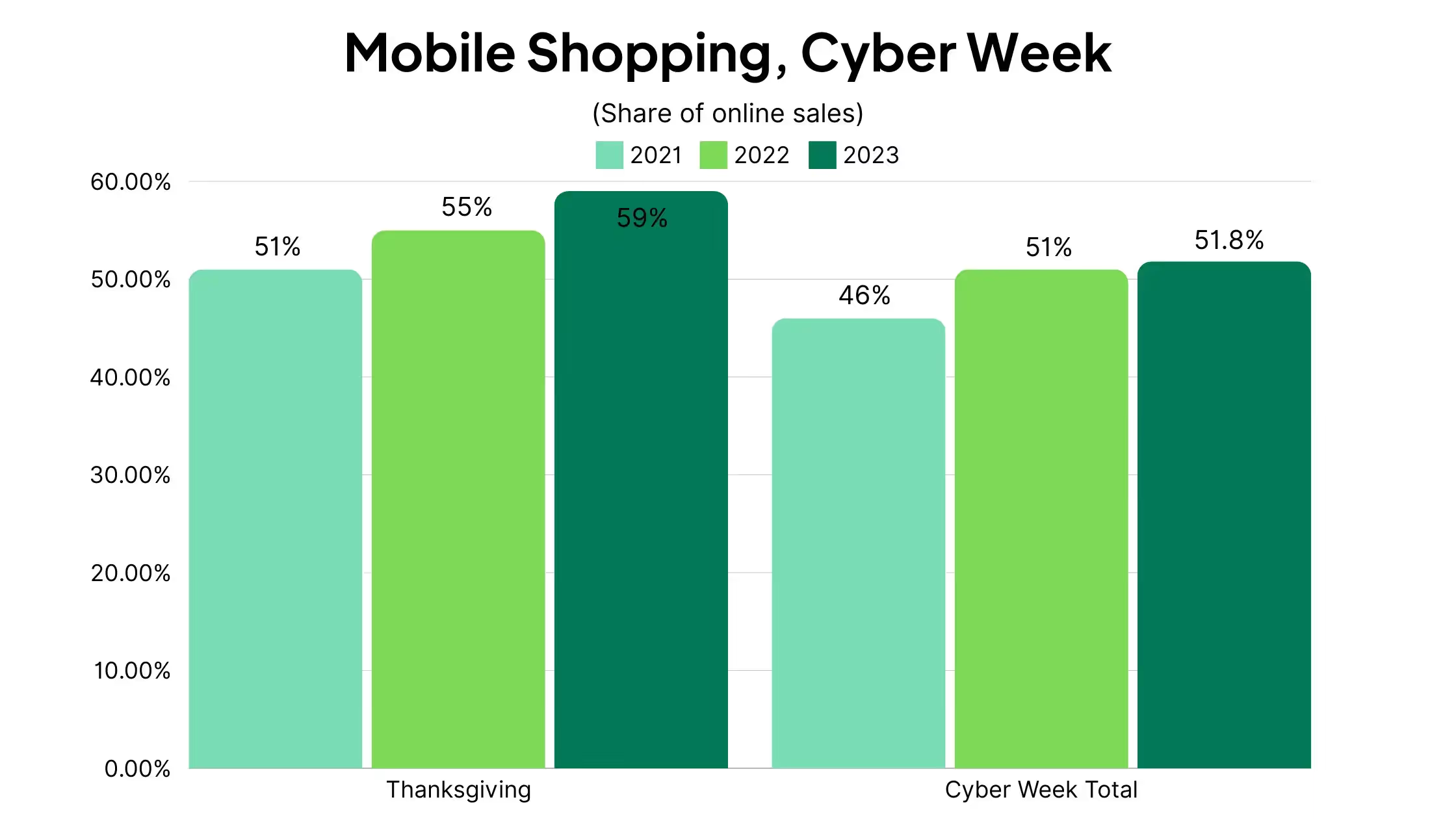
And on top of everything else, mobile is taking an increasingly larger share of the eCommerce market, making it essential to appeal to shoppers on smartphones.
For your brand to stay relevant in 2026, you need an approach tailored to the current day.
That means a focus on retention and lifetime value, and a mobile-first user experience.
Luckily for you, there are many brands well ahead of the curve that you can learn from.
This article will provide a deep dive into how DTC brands can leverage mobile apps to not only survive, but thrive in 2026.
We’ll explain why cheap engagement is getting harder, explain what you can do to overcome the surge in CAC, and show real examples of real brands who follow this blueprint.
So keep reading, and learn all you need to know to build a DTC eCommerce brand that lasts.
Vendrux helps successful brands boost revenue and retention by turning their websites into mobile apps. To learn more about how we can help your brand grow, without the overhead of traditional app development, get a free consultation now.
The Three Core Challenges for DTC Brands in 2026
It’s tough out there for DTC eCommerce brands.
It’s harder (and more expensive) than ever to reach your customers. Gathering data about your customers is more difficult. And consumers don’t interact with brands the same way they used to.
Your brand needs to adapt.
There are three challenges in particular you need to be aware of, that you need to build a strategy to combat.
Let’s look at these challenges now.
Traditional Engagement Channels Are Less Effective
For a decade plus, brands have been using a combination of email, paid ads and organic social media to reliably generate engagement and drive sales.
These channels are becoming harder to rely on.
Organic social media reach has collapsed to below 10%, while email open rates have dropped to 20-25%.
With organic reach dropping, brands can no longer rely on social platforms for free customer engagement.
And using paid ads to skip the queue is not as easy as it once was.
Ever since Apple’s iOS 14.5 privacy update in 2021, the reliable playbook of scaling through Facebook ads doesn’t work anymore.
It’s More Expensive to Get Customers
When engagement becomes harder, acquisition costs go up.
Nearly half of DTC brands are seeing higher costs in 2024 than 2023. The combination of lower organic reach, lower email open rates, and rising ad costs means lower profit margins for many brands.
In fact, a large number of brands are struggling to recoup the money they spend to acquire each customer.
This, obviously, is an unsustainable situation.
The brands who survive the surge in CAC are those who shift focus from acquisition to retention – devoting more resources to finding ways to increase revenue from their existing customer base.
80% of eCommerce traffic comes on smartphones. And with the average mobile conversion rate less than half of desktop, that can mean a decline in sales.
Many brands are stuck in a desktop-first mindset, when it should be the opposite.
Social commerce has changed the game even further.
Customers discover products while scrolling Instagram or watching TikToks, and they want to buy right then and there.
Scroll through Temu or Shein and you’ll see endless product feeds that feel more like TikTok than an eCommerce site.
The days of carefully browsing category pages are over. If you can’t convert that impulse into a purchase in seconds, you’ve lost them.
For your brand to survive, you need to understand how modern customers buy, and deliver an experience that meets their expectations.
Why You Should Bet on Mobile Apps
Mobile apps have shifted from a nice-to-have to a strategic necessity.
The old DTC playbook of scaling through paid social and email marketing is broken.
Privacy changes have made tracking harder and acquisition more expensive.
Anti-spam measures are making it nearly impossible to reach customers through email.
You own the customer relationship, no Meta middleman required.
Push notifications cut through where emails get buried.
Customers who download your app are your best customers, and they shop more often.
Your app will convert better than your mobile website (even if the design and functionality is fundamentally the same).
In 2026, having an app isn’t about jumping on a trend or checking a box. It’s about having a direct line to your customers in a world where every other marketing channel is becoming more expensive and less reliable.
Let’s dive deeper into why every brand should have its own app.
Own Your Data and Customer Relationships
In an era where access to third-party data is disappearing and platform algorithms control customer access, mobile apps offer something invaluable: direct relationships.
Apps allow brands to:
Build first-party data profiles without platform intermediaries.
Track customer behavior across the entire shopping journey.
Understand product preferences and browsing patterns.
Own the customer relationship without platform dependence.
Reach their users directly using push notifications.
An app lets you take ownership of your audience, rather than renting it through a third-party platform.
You should only expect these platforms to tighten their hold on customer data, making it more important every year to build an audience you actually control.
Increase Customer Lifetime Value
App users deliver more value than web-only customers.
The download itself acts as a natural filter, selecting for customers who already have a strong affinity for the brand.
Installing an app is a high-friction decision. Consumers must value the brand enough to dedicate precious phone real estate and go through the download process.
But on the other hand, shopping in an app is a lower-friction option.
It’s easier to open (with one tap from the customer’s home screen). It’s typically faster and easier to navigate, and there are less distractions to contend with.
This makes for a more pleasing shopping experience, and a higher likelihood of the customer coming back to buy from you again.
Nurturing high-LTV super-fans is crucial for DTC brands today, offsetting the increase in CAC with more steady, predictable, long-term revenue.
Reduce Your Dependency on Paid Social Media
Relying on paid social media to drive sales has become unsustainable.
It’s harder than ever for modern brands to measure and attribute their marketing efforts which, in combination with increased competition, is driving costs up.
Apps offer more efficient remarketing to existing customers, which offsets more expensive channels with a high-ROI revenue channel.
Apps have lower long-term customer acquisition costs post-install, and deliver more long-term value per customer, as discussed already.
You don’t need to quit Meta ads altogether, but in 2026, you need other, cheaper ways of getting traffic.
Unlock the Power of Push Notifications
Many brands find that push notifications, on their own, are reason enough to build an app.
With email open rates declining to 20-25%, push notifications offer a more immediate and effective communication channel.
Unlike email or social media, where marketing messages often go unseen, push notifications cut through the noise, with direct access to your customers’ devices.
They bring customers back at the right moments – when items come back in stock, during flash sales, or when cart items are about to sell out.
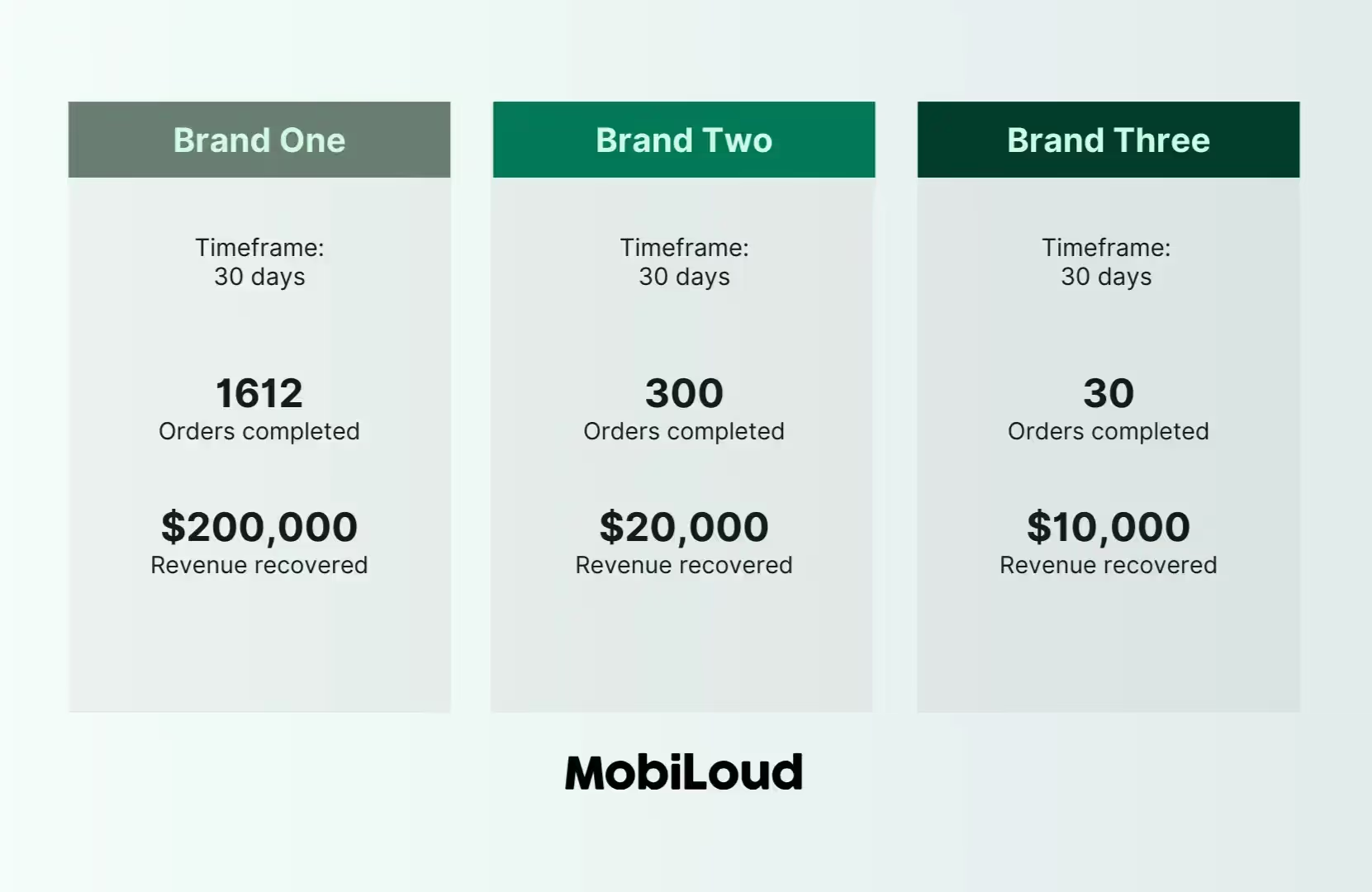
The ability to automate abandoned cart notifications alone can generate tens or hundreds of thousands in revenue, for almost no extra cost and effort.
How Much Revenue Can a Mobile App Generate for a DTC Brand?
The amount of revenue you can get from a mobile app depends on the scale of your store, but as a percentage, brands often see around 10-30% of their total revenue coming through their apps.
Brands with higher purchase frequency/mobile usage may see more, while those with a low repeat purchase rate (and more first-time customers) can expect to come in on the lower end of the revenue scale.
What’s the Average ROI for a Mobile App for Ecommerce Brands?
The ROI depends on factors like business model (high-frequency vs low-frequency), how much you promote the app, and the investment you put into making it.
Brands we work with at Vendrux often see significant ROIs – as much as 53x in some cases, due to the low cost and effort required to build and maintain the app.
What’s the Best Mobile App Platform for DTC Brands?
There are a lot of great platforms for DTC ecommerce brands to launch apps, but for most, Vendrux is the best. It’s the ideal mix of flexibility, service & support, and cost, letting you go live with beautiful mobile apps that require very little work to maintain, without the limitations of traditional no-code tools.
For DTC brands, the benefits of mobile apps compound.
The combination of higher customer value, lower acquisition costs, and better engagement creates a virtuous cycle that transforms their economics.
The potential return from an app, along with the low barrier to entry made possible by website to app services like Vendrux, makes it a winning strategic choice.
If you want to discuss how Vendrux can help you launch an app for your site in the next 30 days, book a free consultation now.
Otherwise, to learn more about what’s possible, here are a few examples of major DTC brands who are having notable success through their mobile apps.
The Sleefs mobile app has proven to be a game-changer for their business.
App users have 30% higher AOV compared to other platforms, highlighting the app’s ability to drive more significant and sizable purchases.
App users also shop three times as often as non-app customers.
Plus, with a higher conversion rate in the app and over 50,000 push notification subscribers, Sleefs can directly reach and convert a highly active customer base, solidifying their app as a key driver of revenue.
The transformative results of Boozebud’s app include 5x customer lifetime value for app users, 4x higher ARPU, and one tenth of their total revenue coming via the app.
This is thanks to a more engaging customer experience, where app users spend more time, and ultimately more money, each time they visit Boozebud’s online store.
“We’re seeing that the customers who do use the app are more engaged, they’re spending more time on site, they’re spending more per transaction, they’re spending more overall. Push notifications give us a way to get in front of high-value customers within a walled environment. The app is paying for itself.”
10% of direct-to-consumer (DTC) revenue driven by the app.
7x LTV growth.
10% higher mobile AOV.
2x higher mobile conversion rates.
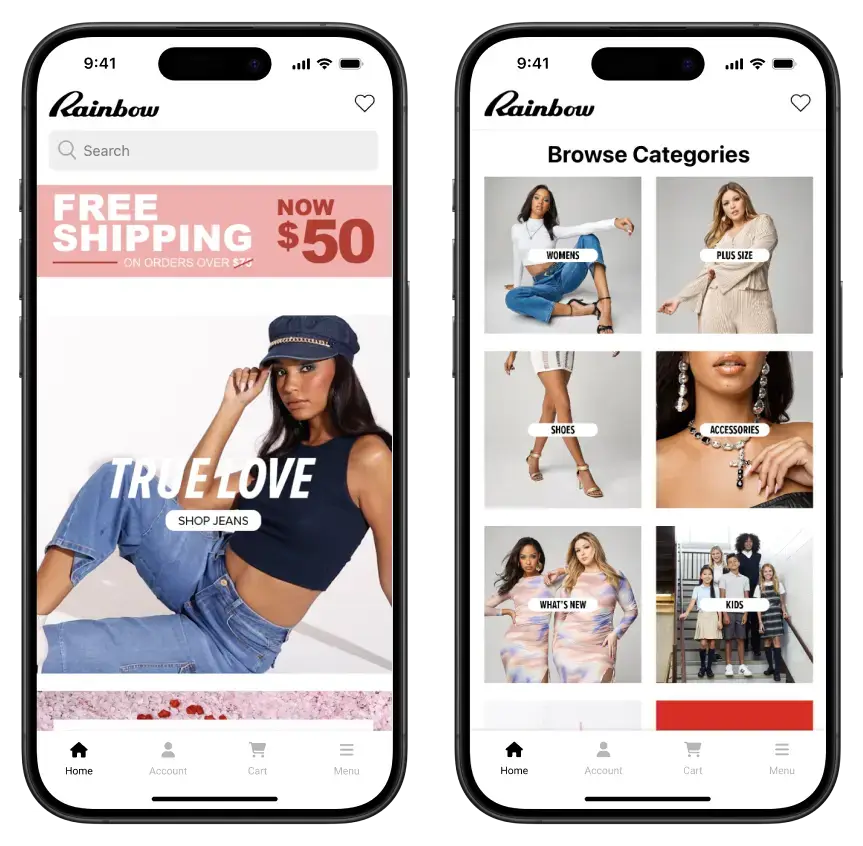
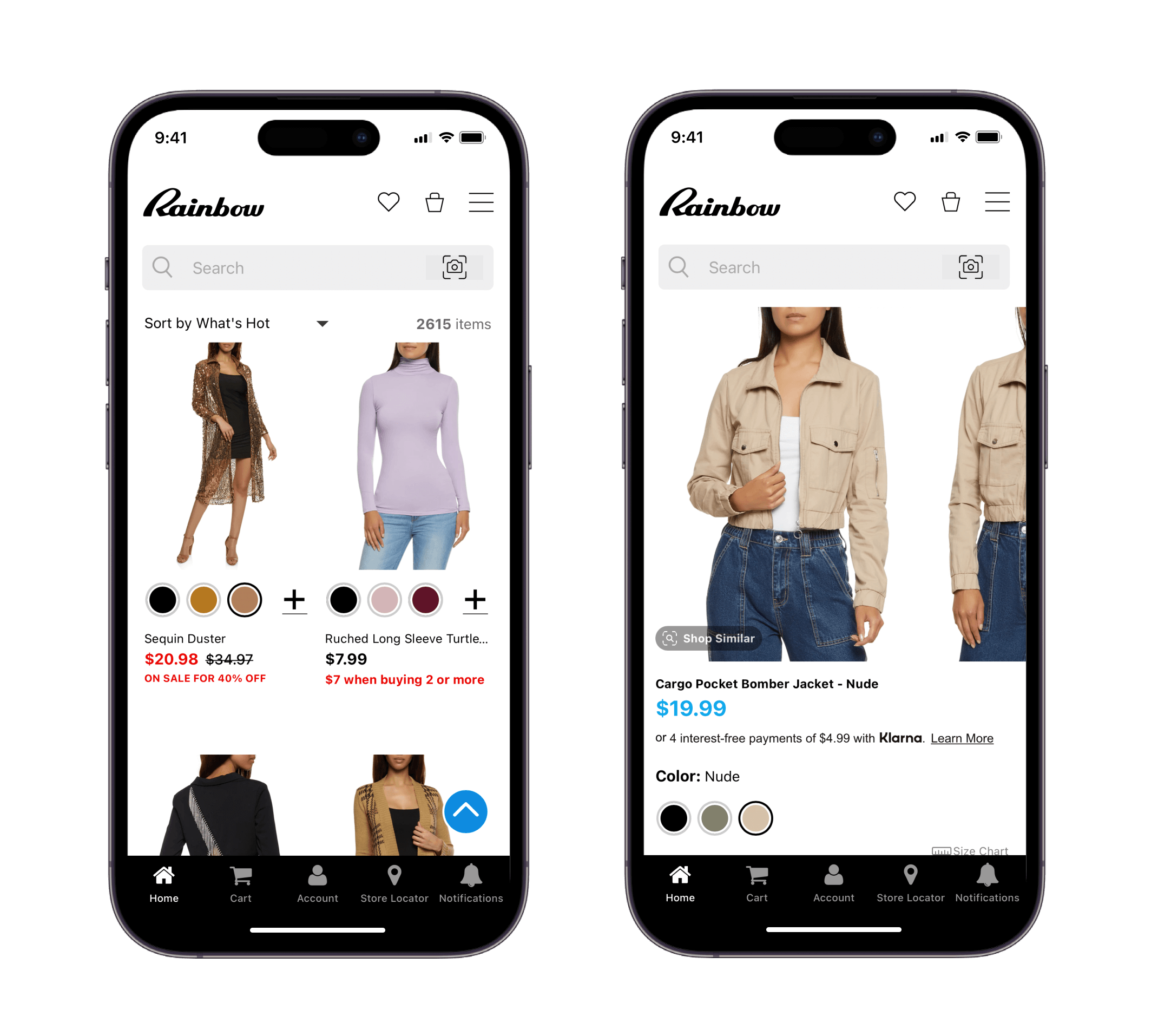
The Rainbow Shops app is an integral part of their DTC strategy, driving 10% of their direct-to-consumer revenue.
App users have a massive 7x higher lifetime value, convert at twice the rate of those on their website, and spend 10% more in each order than shoppers on their mobile website.
The brand is also able to use push notifications to drive cheap traffic, that tends to be more engaged and higher value than customers from more expensive channels.
“Push notifications are the cheapest and most powerful communication channel we have. We find that users who prefer to interact via an app are more loyal, buy from us more often and spend more time with our content.”
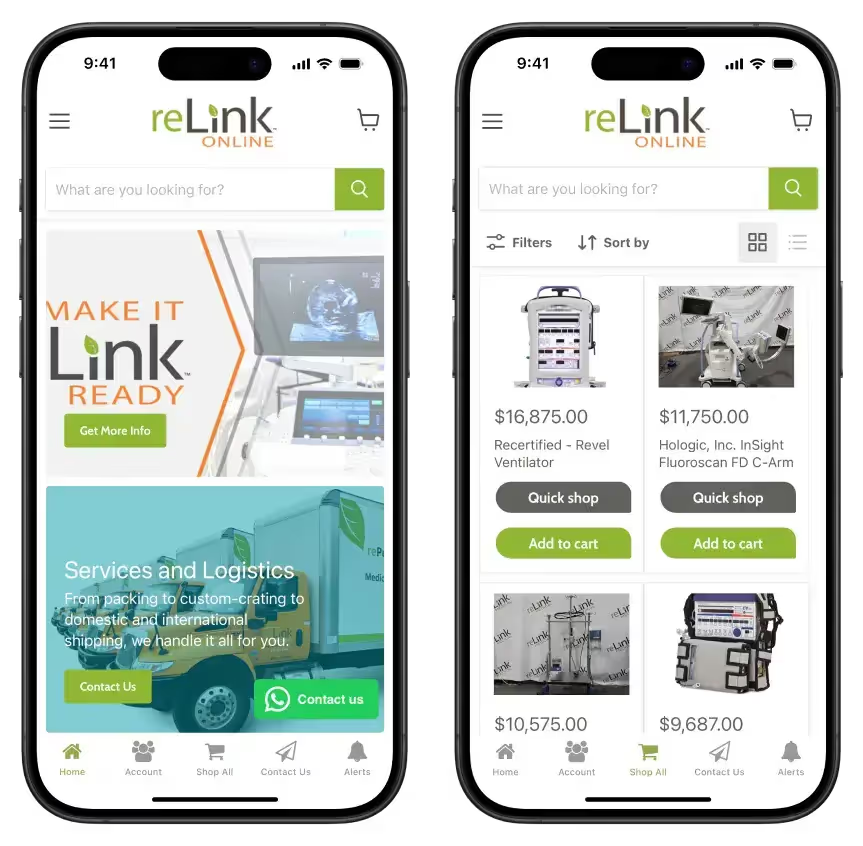
Medical equipment provider reLink Medical found immediate success by launching an app, which helped them pivot into a DTC model, after previously relying on rented sales channels like eBay.
The app provides for one fifth of their total B2C revenue, and customers who use the app have a 4x higher lifetime value and generate 7x higher ARPU, illustrating the ability of mobile apps to create long-term, high-value relationships with customers.
“About half our buyers on eBay are using mobile. If you’re gonna play in this world today, you need an app.”
$20k increase in monthly revenue (7% increase in revenue) in the space of three months.
15% higher average order value in the app.
20% of total revenue generated through the mobile app.
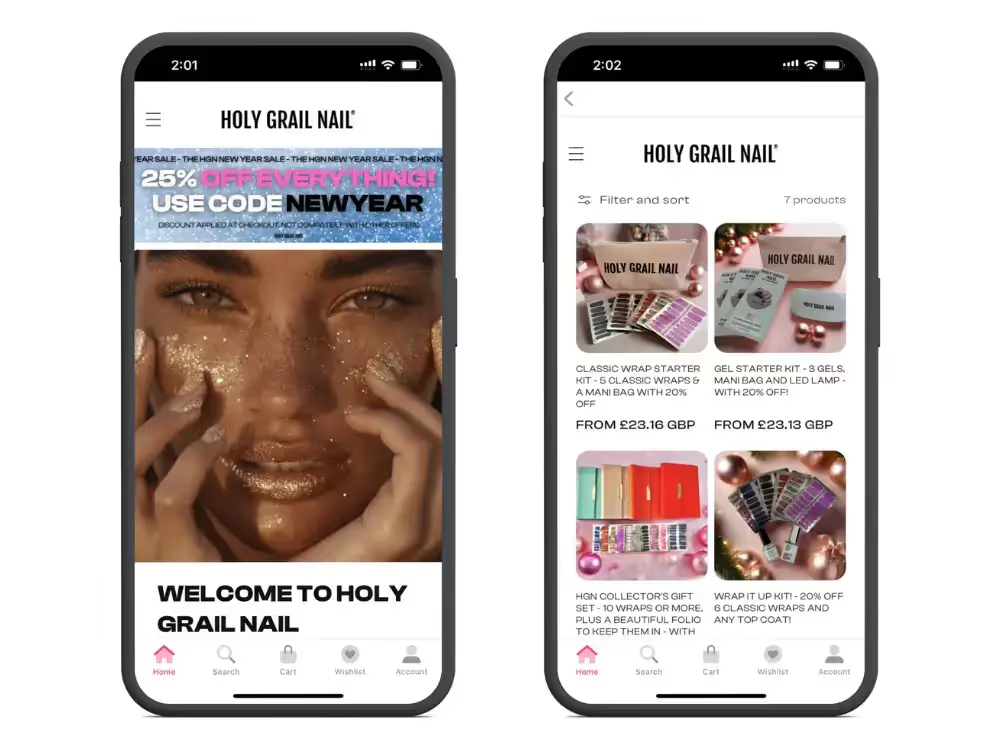
Holy Grail Nail has achieved remarkable results by launching their mobile app, adding $20k in monthly revenue in only three months – a 7% overall revenue boost.
Customers through the app spend more in each transaction, and the app as a sales channel has growth to contribute one fifth of their total revenue.
56% higher sales per session in their app, compared to the website.
43% higher conversion rate in the app.
10-20% of total monthly sales coming through the app.
BrüMate’s app delivers exceptional returns compared to their website, with a notable increase in conversion rate and sales per session.
Their app offers a more personalized and engaging customer experience, with the addition of push notifications as a scalable, low-cost sales channel that the brand has full control over.
The app now generates 10-20% of their total monthly revenue, with a much increased efficiency ratio compared to all their other sales channels.
Push notifications generate 2x higher response rates than email.
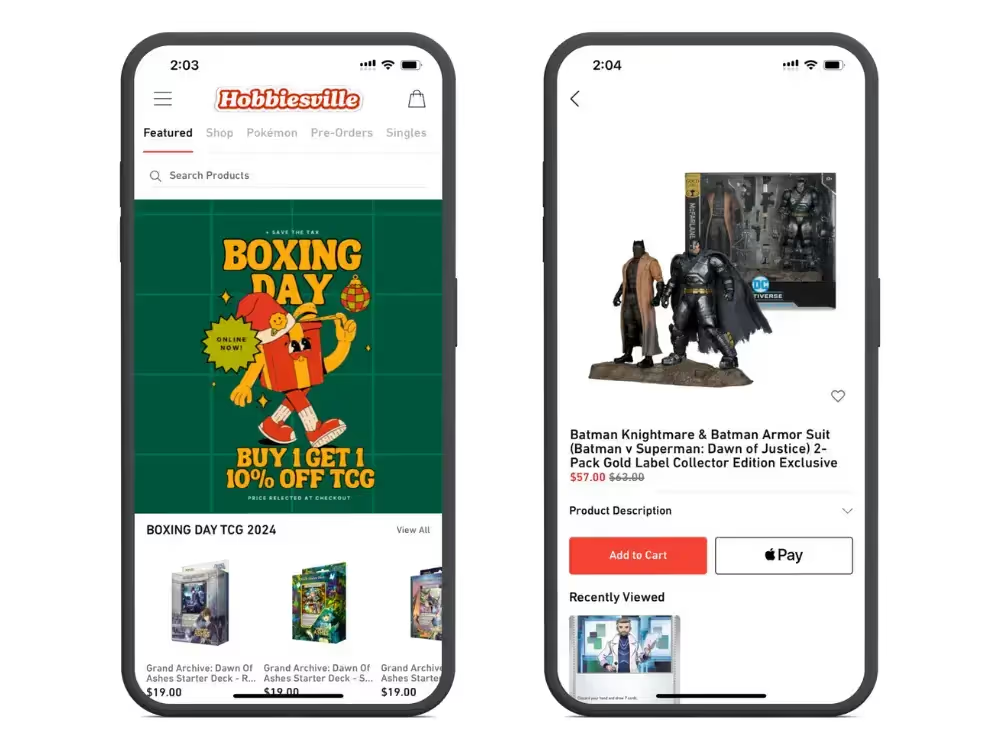
Hobbiesville’s app has become a powerhouse sales channel. 10% of their customers use the app, but this segment generates 40% of the brand’s total revenue.
A large part of this is due to the effectiveness of push notifications, which generate 2x higher response rates for Hobbiesville than email, as well as the app’s CRO, which significantly outperforms their website in conversion rate.
2.5x conversion rate in the app, compared to their mobile website.
5x higher lifetime value from app users.
1.5x average order value in the app.
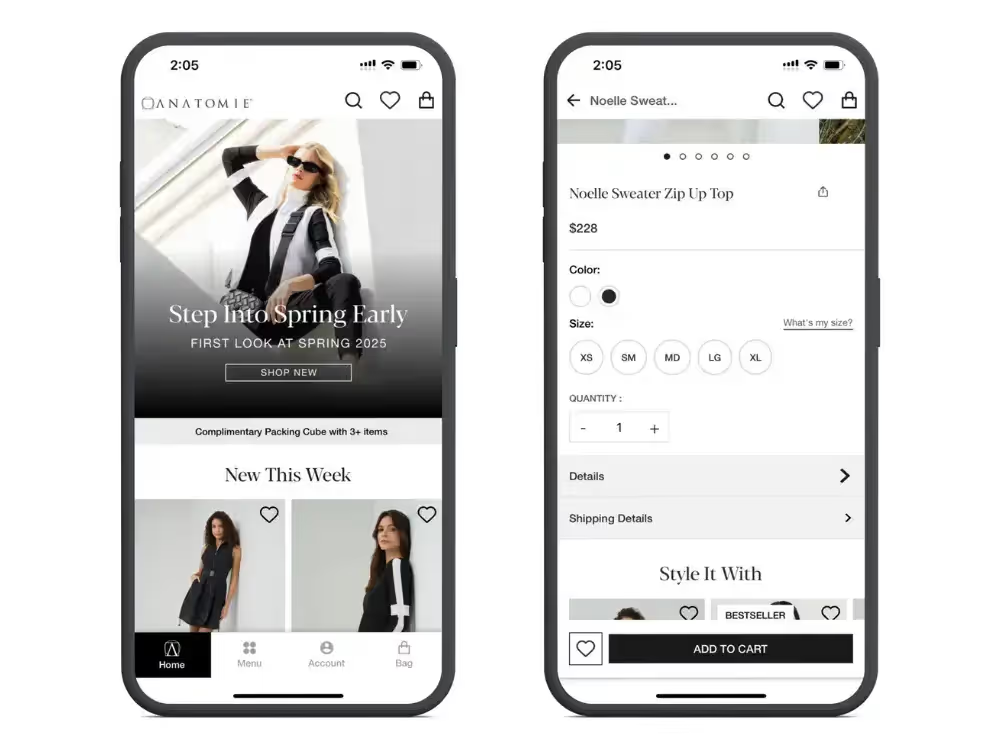
For Anatomie, an app has proved to be a powerful platform for cultivating long-term customer loyalty and increasing revenue per transaction.
Customers in Anatomie’s mobile app have a 2.5x higher conversion rate compared to those on their mobile website, as well as a 1.5x higher average order value, both of which contribute to a significant increase in lifetime value from customers who shop through the app.
2x higher conversion rate in the app vs the mobile website.
98.6% app user retention.
15.2% higher AOV for app users.
Over 137k push notification subscribers.
Obvi’s app drives impressive results, with double the conversion rate compared to their mobile website, and an almost flawless retention rate of app users.
Additionally, app users spend more, with a 15.2% higher AOV, while over 137k push notification subscribers provide a direct channel for engagement.
3.4x higher conversion rate in the app vs the mobile website.
4.6x higher order value per session in the app.
>20k total app downloads.
Art of Tea’s app delivers a premium shopping experience, with a higher conversion rate and AOV than their mobile website. With over 20 thousand downloads, the app has successfully captured a dedicated audience and significantly elevated the brand’s online sales performance.
50% repeat purchase rate through the app (20% higher than their mobile website).
16.89% conversion rate on abandoned cart notifications.
25k monthly active app users.
200,000 app sessions per month.
Recode Studios’ app has revolutionized their business, growing their total revenue as a result of a 7x higher conversion rate and a 50% repeat purchase rate through the app – highlighting the effectiveness of mobile apps on CRO and retention.
Another key aspect is the app’s power to recover lost sales, with the brand generating an impressive conversion rate of nearly 17% on abandoned cart push notifications.
Want to see more brands having success with mobile apps? Check out these case studies of brands who used Vendrux to turn their website into high-converting mobile apps.
4 Steps to Make Mobile a Priority for Your DTC Brand
Mobile optimization is no longer optional for eCommerce brands. It’s the baseline.
With a growing majority of eCommerce sales happening on mobile devices, catering to these shoppers must be your top focus.
Beyond ensuring your website is responsive and functional on mobile (a given for most brands today), here are four steps to truly prioritize mobile and help your brand achieve its full revenue potential.
1. Design Mobile-First
Although most websites today are usable on mobile, many are still designed with desktop users in mind.
The result? A “shrink and fit” experience that treats mobile as an afterthought, limiting your site’s effectiveness on smaller screens.
Instead, adopt a mobile-first design approach.
Begin by crafting your site specifically for mobile users, focusing on intuitive navigation, fast loading times, and a seamless user experience.
This ensures your site feels native to mobile devices rather than forced to fit.
Mobile shoppers demand simplicity and speed. Unlike desktop users, they’re less tolerant of extra steps or clunky processes that disrupt the buying journey.
To keep mobile users engaged and prevent drop-offs, eliminate unnecessary friction in your purchase flow.
Key optimizations include:
One-click checkout and mobile wallet integrations (e.g., Apple Pay or Google Pay).
Simplifying form fields and inputs.
Reducing the number of checkout pages.
Optimizing site speed to minimize delays.
These changes aren’t just nice-to-haves – they’re critical for capturing mobile shoppers’ attention and loyalty as mobile commerce continues to dominate.
3. Launch Your App
Once your mobile website is fully optimized, the next step is to launch an app.
A mobile app brings unmatched value to your brand, helping you drive more revenue from your existing traffic.
App users tend to spend more per order, shop more frequently, and exhibit greater lifetime value than mobile web users.
Apps also provide an owned channel for engaging your customers and collecting invaluable first-party data, especially as privacy regulations tighten.
One of the best parts? If you’ve done the first two steps, you’re already most of the way there.
As long as you have a mobile-optimized website, you need only minimal adjustments to repackage your website into an app that customers can download and enjoy.
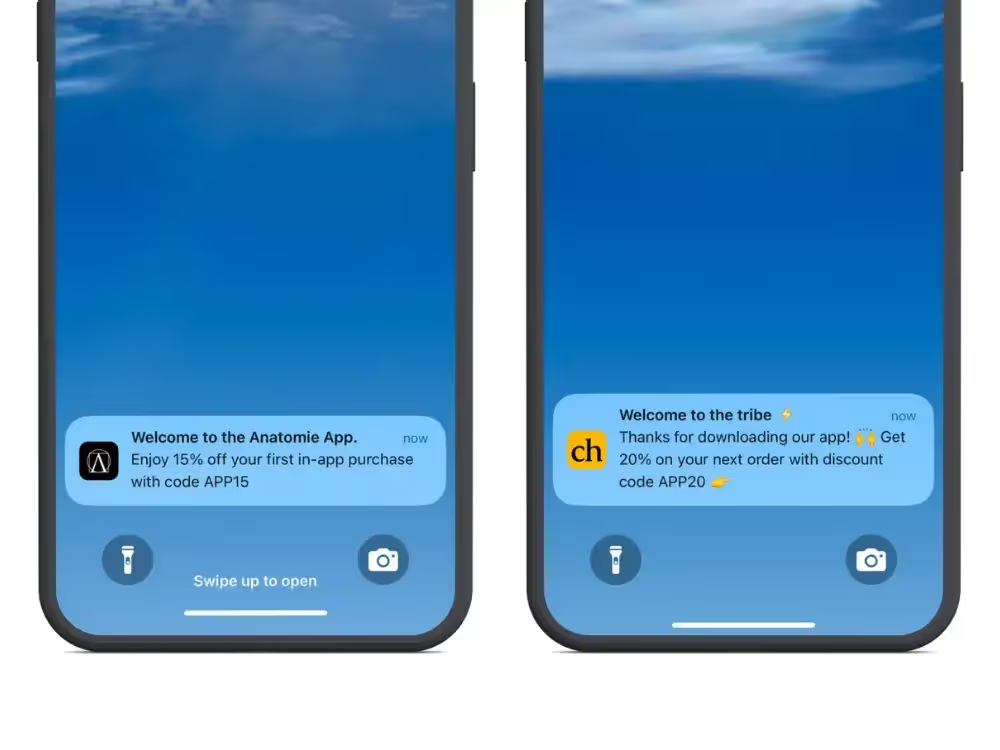
Having an app unlocks powerful opportunities, and chief among them is push notifications.
Push notifications are a game-changer for DTC brands, providing a direct, cost-effective way to engage customers.
Use them to:
Announce promotions and new product launches.
Recover abandoned carts with timely reminders.
Drive repeat purchases with personalized messages and promotions.
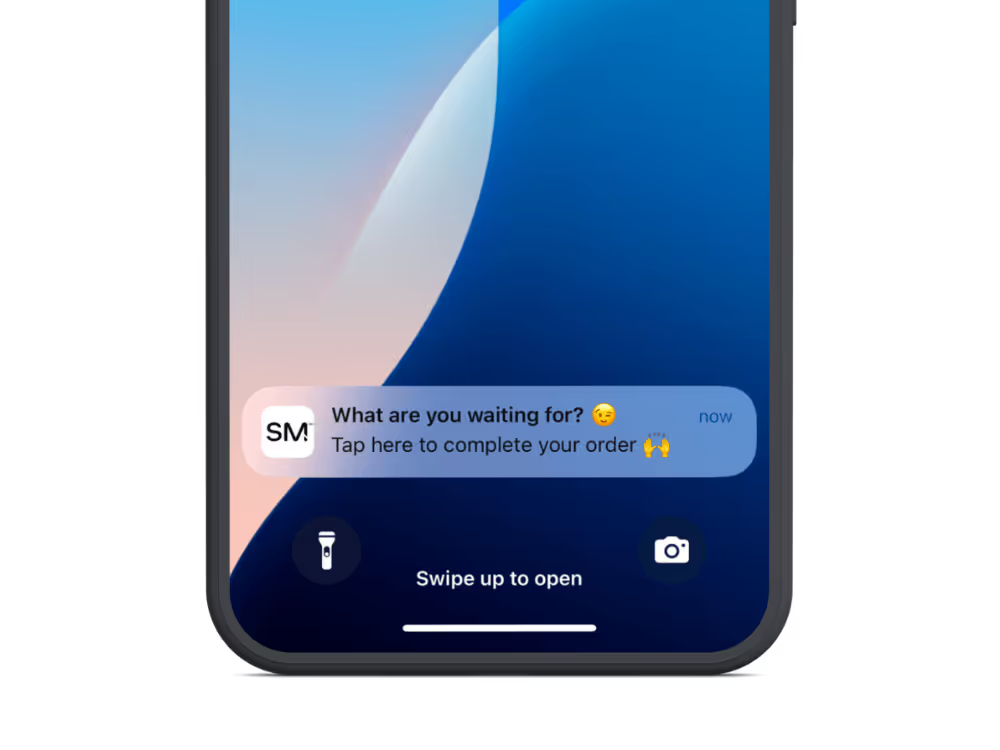
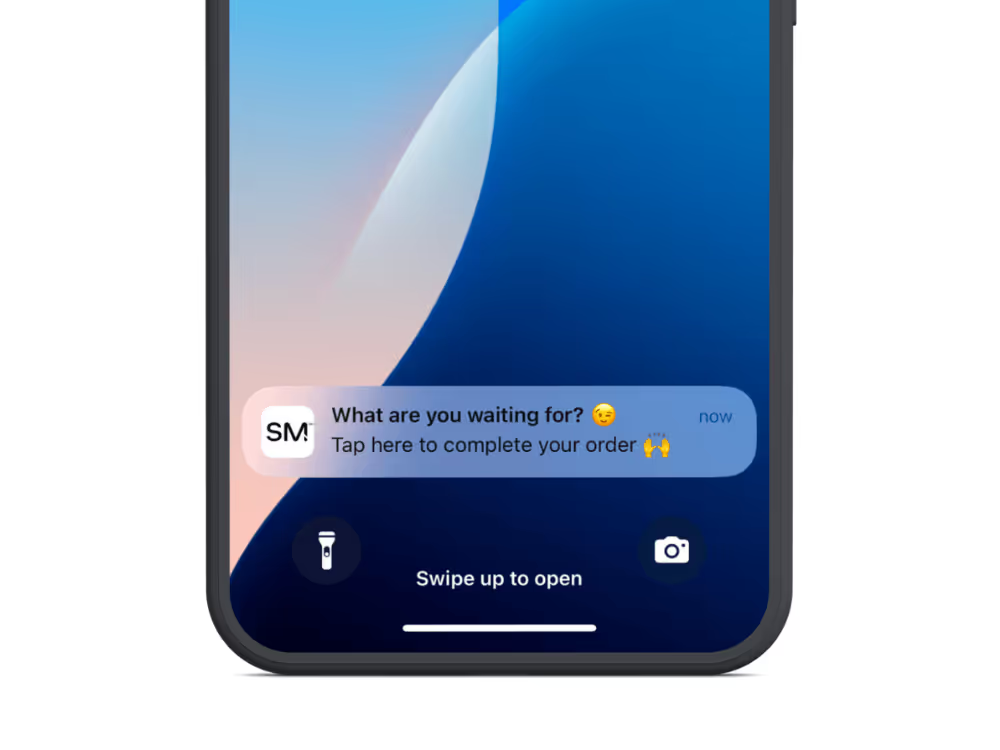
Unlike email and SMS, which are increasingly losing their edge, push notifications show up directly on users’ lock screens, commanding immediate attention.
Despite their low cost and high impact, many brands are only beginning to explore their full potential.
Learn everything you need to know about using push notifications to drive sales and boost retention in our ultimate guide.
Wrapping Up
The brands that fully embrace mobile will be the ones to thrive in the rest of the 2020s and beyond.
As smartphone usage continues to grow, especially for eCommerce, traditional engagement channels like email and social media are becoming less reliable for driving consistent engagement and revenue.
A mobile-first, app-first strategy is the key to building a sustainable, future-proof brand.
Here are just a few reasons Vendrux is the best way to build your app:
Your app comes with native features built in, including push notifications and native navigation UI.
Your apps sync perfectly with your website, eliminating extra management overhead.
We handle everything, from building and publishing your apps to ongoing maintenance, so your team can stay focused on growth.
There’s minimal cost involved, as well as a money-back guarantee, so there’s literally no risk to see what an app can do for your brand.
If you’re ready to future-proof your eCommerce business with mobile apps, we’re here to help.
Learn more about our process, and why this is the smartest way to build shopping apps in 2026, then book a free consultation to bring your app to life.
You’re spending big to drive traffic to your store. But traffic doesn’t pay the bills – conversions do.
The average ecommerce store converts 2.5-3% of visitors into customers. The top quartile converts at 5% or higher. For a $10M brand, closing that gap is worth roughly $2M a year with no incremental ad spend.
The instinct is usually to chase tactics: button colors, shorter forms, a third social-proof badge in the footer. Those occasionally win, but the bigger lift sits upstream, in the research that figures out where visitors drop off and why.
The sections below cover what a CRO program looks like in practice, what it costs, the shortlist of agencies worth considering, and how to decide whether to hire one in the first place.
What is CRO? And What Does an Agency Do?
CRO – Conversion Rate Optimization – is about boosting your store’s conversion rate, and getting a higher share of website visitors to follow through and make a purchase.
A good CRO program does three things:
Instruments the site so you can see where the funnel leaks.
Runs controlled experiments that prove or disprove why.
Compounds the learnings so each round of testing sharpens the next.
The headline metric is conversion rate. The metrics that move with it are revenue per visitor (RPV), cart completion rate, AOV, and repeat purchase rate. Healthy programs track all of them, not just the topline.
One thing to understand is that CRO is not the same everywhere. For a D2C ecommerce site, it’s a unique project, that you shouldn’t get confused with CRO for other verticals.
Two things separate ecommerce CRO from CRO in B2B or SaaS:
Checkout is where most of the loss happens
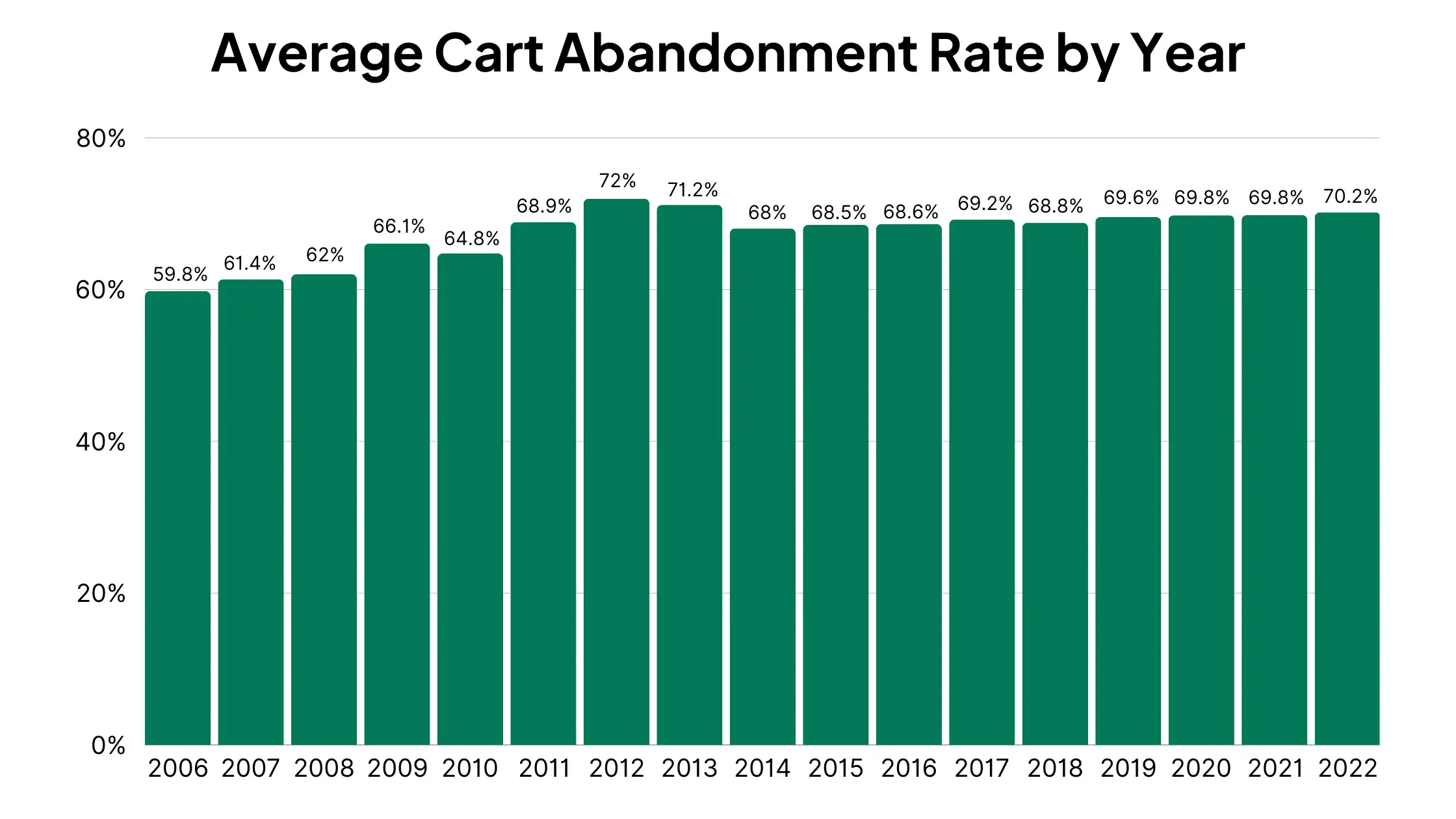
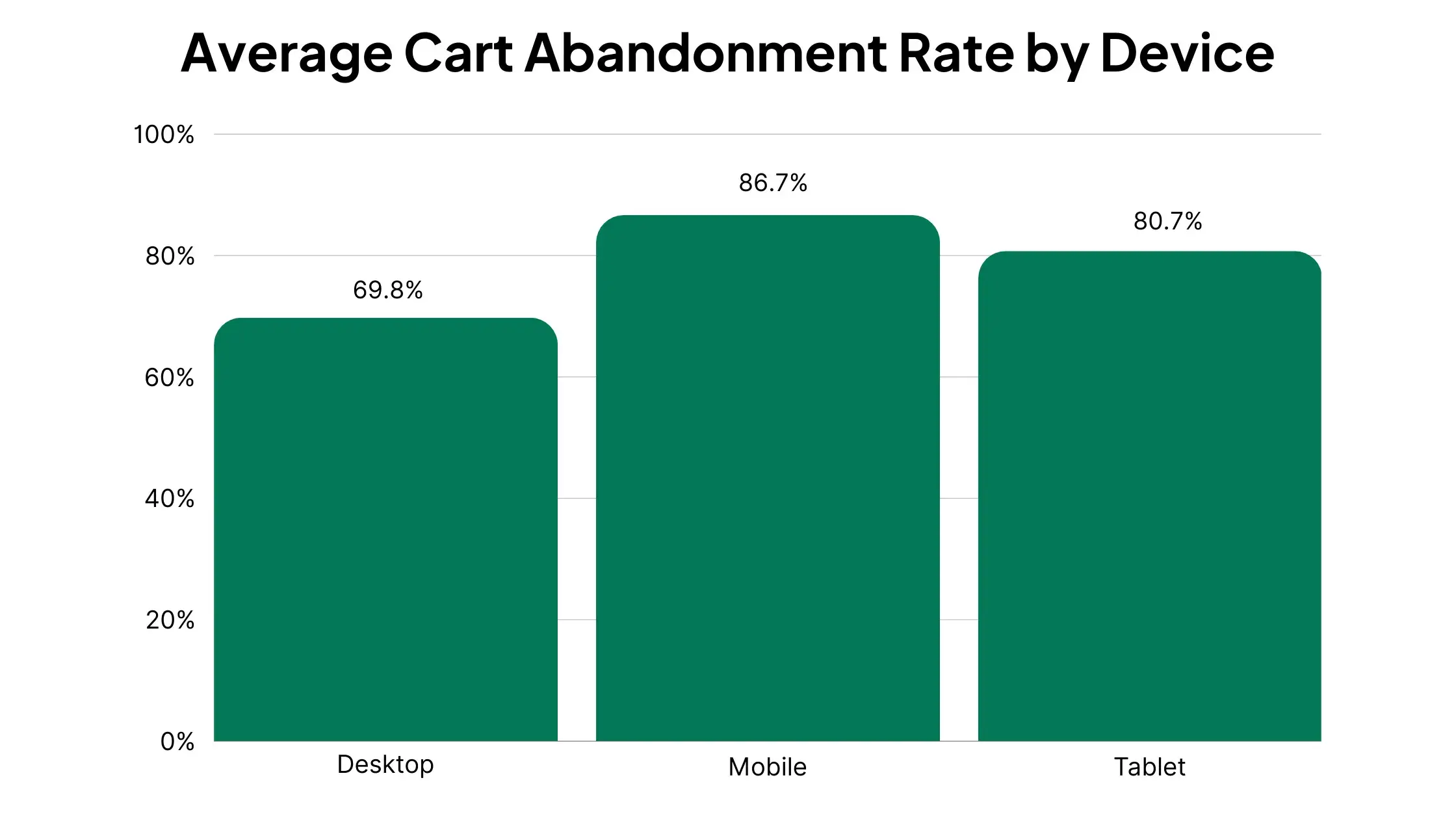
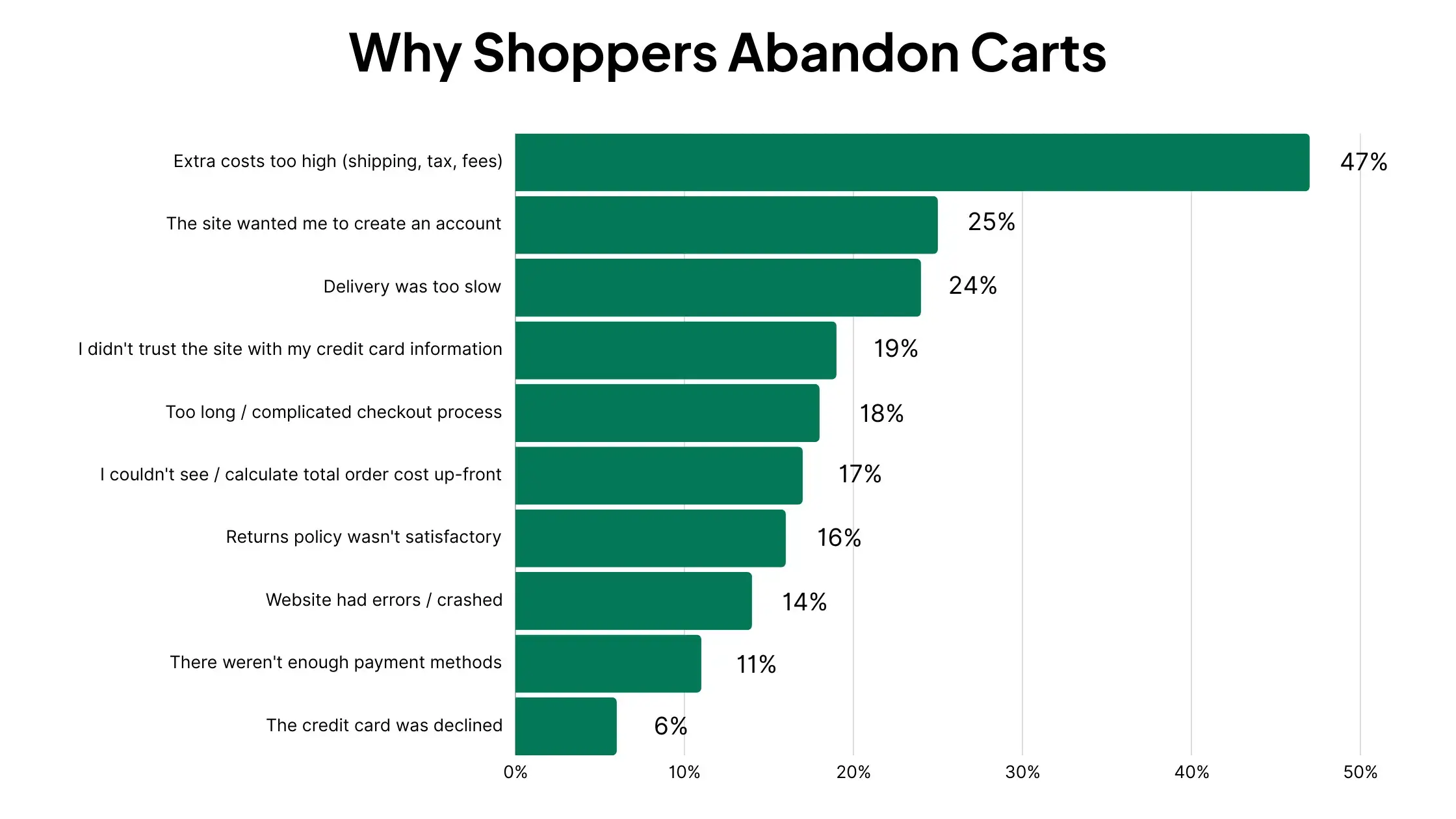
Every ecommerce site has a multi-step purchase flow with shipping, payment, taxes, discounts, and account decisions stacked into it. Baymard puts the average cart abandonment rate at 70.19%. A program that doesn’t focus on improving your checkout experience first is missing the most obvious lever for improvement.
Mobile is the majority channel (and the worst-converting one)
Mobile traffic makes up 60-75% of sessions for most brands, but converts at less than half the rate of desktop. A 0.5-point lift on mobile usually moves more revenue than a 1-point lift on desktop, simply because the base of sessions is larger.
Where Ecommerce Funnels Lose People
Before you optimize anything, you need to know where you’re losing people. CRO is as much about plugging leaks as it is about smooth copywriting and convincing people to buy.
If they’re on your site already, they’re interested. Yet most sites lose potential sales, by creating unnecessary friction, or leaving objections unanswered.
Here are the most common offenders:
Product Detail Pages
Most visitors who land on a PDP don’t add to cart, and the reasons are rarely aesthetic.
They can’t find a size, they can’t tell when the order will arrive, the photos aren’t clear, the reviews are thin, the price hits differently than the ad implied.
PDPs are for objection handling. CVR lifts usually come from making the product feel real: better photography, clearer sizing, ship-by-date logic, structured reviews, social proof tied to the specific product rather than the brand.
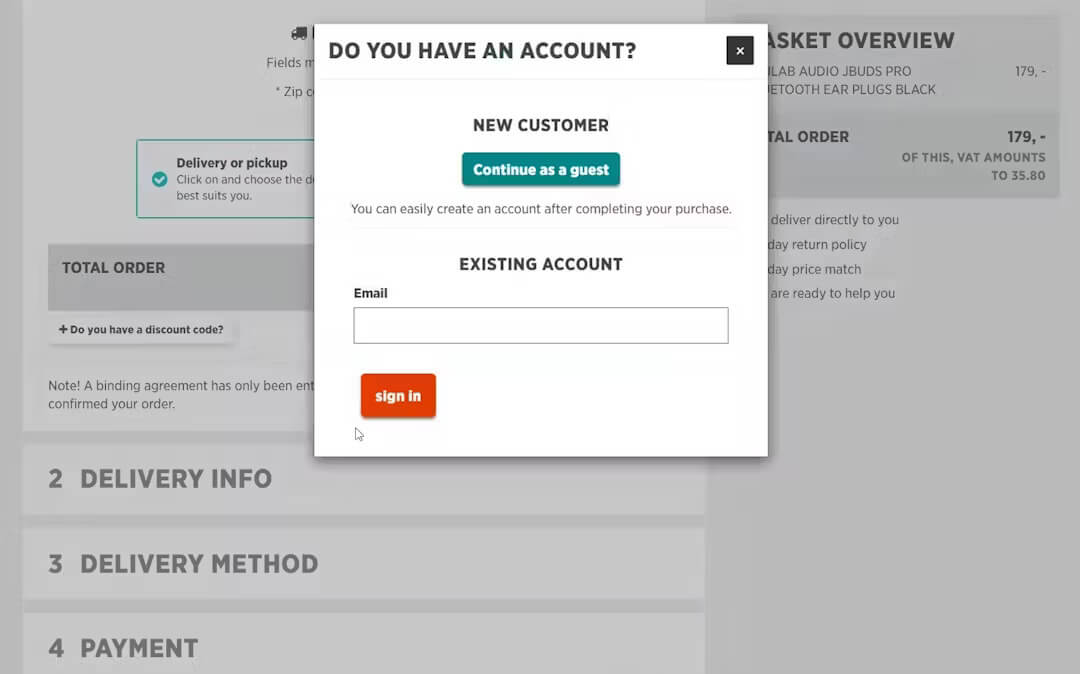
Requiring the customer to create an account, opaque tax math, and checkout flows that feel longer than they are, round out the rest.
Some things help improve CVR, and reduce lost carts here:
Show shipping cost on the cart page or earlier
Shorten the visible checkout to one screen
Offer guest checkout as an option
It’s all about avoiding surprises, and reducing friction that could cause your customer to change their mind.
Mobile Experience
Slow load times, cramped layouts, thumb-unfriendly forms, and the friction of typing card details on a small screen all compound to add friction and decrease conversions.
A site converting at 4% on desktop and 1.5% on mobile isn’t a “mobile problem” in a vague sense. It’s a specific list of fixable frictions, almost always with names attached: time to interactive, image weight, form field density, payment method support.
What a CRO Project Looks Like
Here’s what a project typically looks like when you’re hiring a CRO agency.
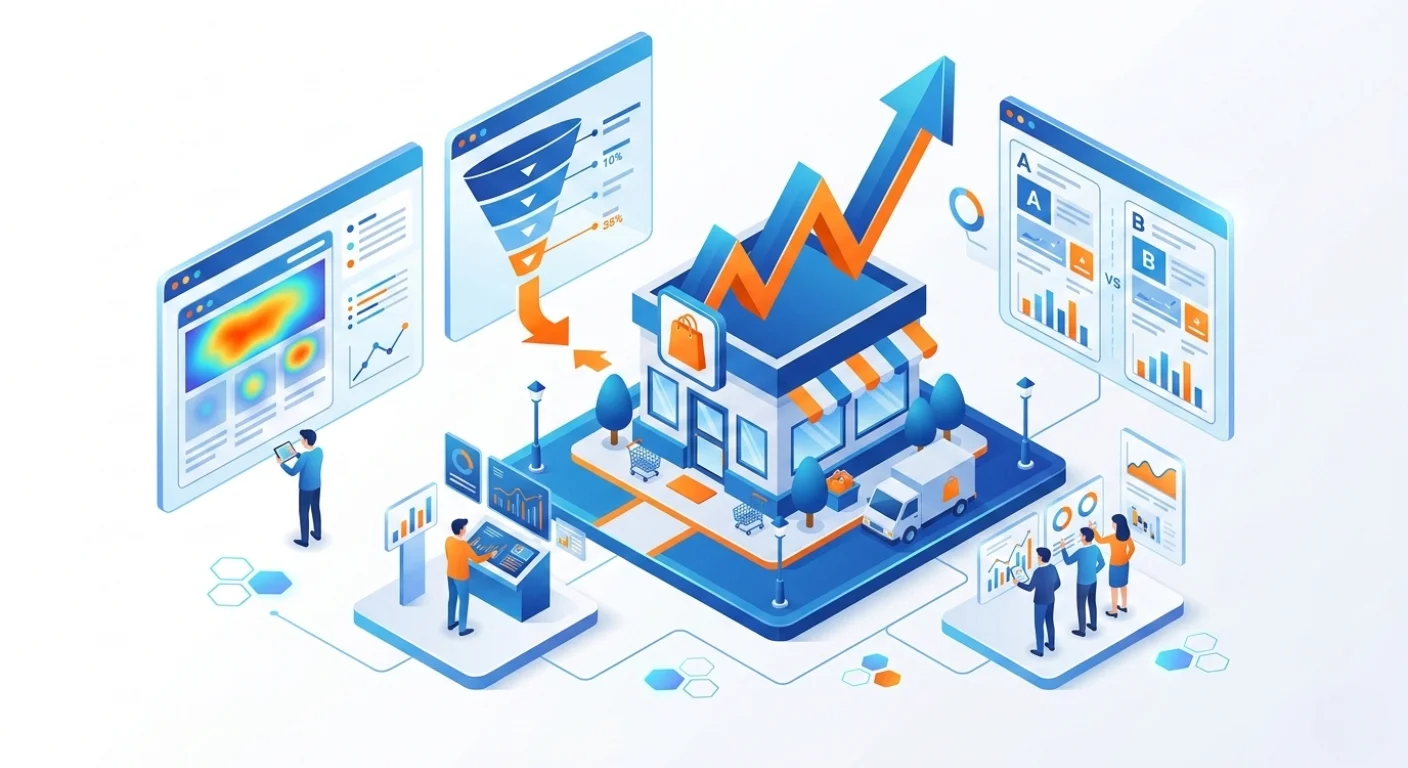
The cycle, simplified: instrument, research, hypothesize, test, ship, revisit. The instrumenting and research take longer than most brands expect, and they’re where the program lives or dies.
In the first weeks, the agency or in-house team gets the analytics in shape, deploys session recording (Hotjar, Crazy Egg, Contentsquare), runs heatmaps, polls customers, and reviews support tickets. The output is a prioritized list of conversion barriers and a written hypothesis for each one.
A good hypothesis sounds like this: “Cart abandonment spikes 22 points between cart and shipping because cost isn’t surfaced earlier; adding an estimator at the cart page should recover 6-10 points.” Not just “let’s try a green button.”
The backlog gets ranked, and the top items move into test design. Variants are built, QA’d, and deployed through Optimizely, VWO, AB Tasty, or Convert. Sample sizes are calculated up front. Tests run until they hit statistical significance or the time limit.
Winners ship. Losers are documented along with the learning, which is often more valuable than the win itself. The cycle repeats.
The single biggest mistake teams make is killing tests early. A 15% lift on day three usually flattens to a tie by day fifteen. Statistical discipline is what separates a working program from a sequence of inconclusive tests.
What You’re Buying From a CRO Agency
A CRO agency sells four things, regardless of how it’s marketed:
A research process that produces hypotheses with specific impact estimates.
Testing platform setup and the discipline to run tests properly: sample size, runtime, significance.
Backlog prioritization, so the highest-impact tests run first.
An implementation pipeline that ships winners without quarter-long handoffs to your dev team.
The differences between agencies show up in the depth of each piece. A research-led agency runs eight weeks of qualitative work before its first test. A velocity-first agency starts testing in week two with shallower research.
Both can be right; the wrong fit for your situation will burn six to twelve months and a few hundred thousand dollars.
DIY, Agency, or In-House?
CRO can be done in a number of ways. Smaller companies might have this as a small task among others; high end companies might have a specific CRO team in-house.
Here are a few recommendations on how to approach this:
DIY Below $1M Revenue or 50K Monthly Sessions
Below this scale, classical A/B testing is statistically dishonest. You don’t have enough sessions to reach significance on meaningful changes, and the math punishes you with false positives. Use heatmaps, session recording, and customer surveys to find the obvious friction. Apply known best practices rather than testing them. The opportunity cost of a founder running experiments is high; cleaner wins live elsewhere.
Agency Between $5M and $50M
This is where agencies pencil out. The traffic supports real testing, the revenue justifies the retainer, and you don’t yet have the scale to staff a dedicated optimization team. A good agency compresses the learning curve by years; you get pattern recognition built across dozens of comparable brands rather than discovering it solo.
In-House at Scale, Often Hybrid
Once you’re running 15+ experiments a month and have dedicated analytics and dev resources, in-house starts winning on iteration speed and product depth. The hybrid that performs best: an in-house testing core for day-to-day, an agency on retainer for specialized work like personalization sprints, deep research projects, and major rebuilds.
A common path is to hire an agency for six to twelve months specifically to build the testing culture, frameworks, and backlog, then bring the program in-house gradually as capability develops.
What Does CRO Cost?
Here’s a general idea of what you can expect from a CRO agency, plus the different kinds of pricing models used.
Monthly retainers ($5K-$25K) are the default for ongoing programs. The retainer typically buys a set number of experiments per month, research, reporting, and a strategic lead. Enterprise programs at high testing velocity run above $25K per month.
Project pricing covers audits and one-off engagements. A comprehensive site audit costs $5K-$15K. A targeted project (rebuilding the checkout flow, launching a personalization program) ranges from $10K-$50K.
Performance-based pricing is offered by a minority of agencies, usually tied to measurable lift. The model aligns incentives well but generally requires meaningful traffic to generate statistically significant tests fast enough for the contract math to work.
The agency you choose will give you an exact quote. It’s typically a good return on investment, and one of the easiest ways to see a real, incremental lift from your investment, since the goal is to lift metrics that directly impact revenue.
How to Choose the Right CRO Agency
There are thousands of agencies out there that can help you with CRO. Choosing the wrong one can set you back thousands, not to mention the time and opportunity cost.
Here are some tips on picking the right partner.
Match the Specialization to Your Problem
If checkout abandonment is your biggest leak, hire an agency that specializes in this, with case studies that show similar problems to yours.
If you don’t yet know where you’re losing visitors, hire one that leads with research and funnel analysis. A landing-page specialist will run landing-page tests no matter what your real problem is.
Press on Win Rate
Ask for the past year’s win rate on tests run for brands your size. A healthy figure is 25-35%. Higher than that usually means the agency is running risk-free, predictable tests; lower usually means hypotheses aren’t grounded in research. Either way, the answer tells you something.
Read Case Studies Skeptically
Conversion lift percentages are almost always cherry-picked. The more useful numbers are revenue impact, RPV change, and how long the program ran. “300% lift on PDP A” tells you less than “$1.4M incremental annual revenue across nine months of testing.”
Watch for Traffic-Method Fit
Classical A/B testing requires sessions to reach significance. If you’re under 50K monthly visitors, look for agencies that combine qualitative research with sequential testing or Bayesian methods. A good agency tells you upfront whether your traffic supports their methodology.
Avoid 12-Month Locked Plans
CRO is iterative; the right roadmap evolves with what the data reveals. Be cautious of any agency that delivers a year-long fixed plan in the pitch. Better arrangements have a 90-day opening, a research-led first phase, and explicit reroutes baked into the contract.
Top Ecommerce CRO Agencies
Here are some examples of highly regarded CRO agencies, and what they specialize in. Check these companies out as you start your search.
Blend Commerce
Blend Commerce is a specialist Shopify CRO agency that helps brands increase revenue by getting customers to Buy Now, Buy More, and Buy Again. Their approach goes beyond surface-level UI tweaks. They run full-funnel behavioral analysis, A/B testing, and onsite personalization to uncover what’s blocking conversions and implement changes that drive measurable and sustainable revenue uplift.
Blend leverages their Buy TrifectaFramework, which focuses on improving your core growth metrics: Conversion Rate, Average Order Value, Customer Retention and Purchase Frequency. This ensures brands aren’t just getting more first-time purchases, but also nudging customers toward higher-value orders and repeat buying behavior.
Their work is backed by ecommerce industry awards, statistically significant A/B testing results, and deep Shopify technical knowledge. Blend typically starts with a CRO Insights & Roadmapping engagement, using a PECTI scoring model to prioritise high-impact experiments. Brands then move into CRO Implementation Retainers where Blend builds, tests, and measures ongoing improvements each month.
Their program is best suited for Shopify brands doing at least 7 figures per year and who want structured, data-backed experimentation over guesswork or generic best practices.
Blend drives home its value with data-backed wins at every turn. In one experiment, making subscription benefits more visible on product pages doubled sign-ups, a 104% increase in auto-ship selections.
In another case, a simple “Popular” badge on products increased revenue per visitor by 28.95%. Within just six months, one wellness brand saw an astounding 124X ROI and 36K new subscribers thanks to Blend’s optimizations.
With 2+ new A/B tests per client each month and a 95%+ first-pass QAQC rate ensuring quality, this multi-award-winning Shopify CRO specialist backs up every bold promise with tangible results.
Convertibles
Convertibles was founded to help Shopify brands move beyond generic conversion optimization toward true personalization.
They recognized that most ecommerce stores show the same experience to every visitor – regardless of who they are, where they came from, or what they’re looking for – and that this one-size-fits-all approach leaves significant revenue on the table.
This shapes their approach to conversion rate optimization, with a hyper-focus on personalization, built for today’s ecommerce brands.
Convertibles bridges the gap between paid advertising and on-site experience, ensuring that different customer segments receive tailored experiences that match their intent, demographics, and buying psychology.
Spiralyze
Spiralyze is the original predictive CRO agency, pioneering the predictive conversion optimization strategy that uses data science and AI to forecast winning designs before testing. They operate on a performance-based model, guaranteeing clients an average 30 percent lift in conversions within 90 days or they pay nothing.
Every discipline from research, UX design, copywriting, and development to analytics and QA, is handled in-house, giving clients a full-service team that launches experiments faster and delivers measurable, scalable results.
Notable clients include Okta, ServiceMax, and several Fortune 500 companies, with proven uplifts ranging from 30 to 90 percent in conversion rates across landing pages, product pages, and lead funnels.
Invesp
Founded by Khalid Saleh, Invesp is one of the pioneers in experimentation and conversion rate optimization in North America.
From eBay to 3M and even the Discovery Channel, Invesp is more than just an agency. They’re hired for their sharp conversion optimization insights, user experience design that answers all your questions, user research that uncovers your business’s motivations and barriers, and training that transforms your team into agile, data-driven pros.
With 22,000 A/B tests and a success rate 4.5 times the industry average, Invesp is the real deal.
Speero
Speero is a top-tier conversion optimization agency that collaborates with marketing and product teams to build and scale CRO programs through user experience research and experimentation.
With an impressive client list including MongoDB, Native, Miro, eBay, P&G, Codecademy, and Monster, they are clearly doing something right.
Their process includes internal audits, CRO assessments, user research, and A/B tests, and they even help integrate these experiments into your business operations.
Fun fact: they helped MongoDB ramp up to 100 tests per year in just six months and boosted Native’s revenue by $1.5 million. Talk about a game-changer!
The Final Word on Hiring a CRO Agency
The agencies that consistently win are research-first, statistically disciplined, and honest about what their methodology can and can’t do at your traffic level. The brands that get the most out of them come in with a clear sense of where their funnel leaks and what they’re trying to recover.
Pick the agency that fits the problem you have, not the one with the most recognizable client logos. Run them for 90 days against a research-led opening phase before signing a longer engagement. Judge them on revenue impact, not test counts.
Done well, CRO is the highest-return spend in most ecommerce marketing budgets. Done badly, it’s a $200K-a-year bonfire. The difference is the process behind the testing, and that’s what you’re hiring for.
Your checkout flow is a critical part of your overall customer experience.
The global cart abandonment rate stands at a staggering 69% – and the majority of abandoned carts happen during checkout.
The checkout is the money page. The key, make or break moment where you either get paid or the customer abandons their cart.
Reducing the bounce rate here by just a few % can mean hundreds of thousands or even millions on the bottom line.
Luckily, it isn’t rocket science.
There are a few logical factors that are proven to improve the checkout experience due to the basic facts of human psychology.
By following best practices, measuring the results, and continuously tweaking things over time – you’ll have a perfectly optimised checkout and make more money.
So, if you’re ready to take your checkout process from good to great, you’re in the right place.
Read on and let’s cover the strategies that will help you keep your customers happy and your sales soaring.
Understanding Checkout Optimization
On a high level: our goal is to streamline the process as much as possible, removing friction where we can, while making the customer’s experience as smooth and efficient as possible.
Fundamentally, most checkout problems are caused by unnecessary friction, over-complication, and a lack of upfront transparency.
Common Checkout Challenges
More specifically, these common culprits can ruin checkout UX, leading to customers getting frustrated and putting their credit cards back in their wallets:
Confusing navigation or complex processes that frustrate shoppers
Lack of transparent pricing or unexpected costs added during checkout
Insufficient payment options that don’t meet customer needs
Security concerns and lack of trust
These tend to be the core problems. In a later section, we’ll cover all the ways these crop up in much more detail.
Fogg’s Behavior Model
B.J. Fogg, psychologist and behavior scientist at Stanford, is famous for creating the Fogg Behavior Model.
The model is useful as an overall north star for our checkout flow optimization.
Fogg’s model essentially states that the likelihood of a specific behavior is determined by three elements converging at the same moment:
Motivation
Ability
A prompt
Put another way, you need to make it easy for someone to do something, make them want to do it, and then trigger them to take the action.
The prompt must come when motivation and ability is high. Otherwise it will be perceived as irritating and will be less effective.
As you read through the advice in this article, think about how it ties into Fogg’s model – everything we do will be somehow increasing motivation and ability.
What Makes a good Checkout Flow
So, given what we’ve learned, what makes a checkout experience good?
On a high level: simplicity, clarity, and speed.
Well optimised checkouts tend to have:
Clear Navigation: guiding customers through the process with intuitive design and clear instructions
Transparency: disclosure of all costs upfront, including shipping and taxes, to avoid unwelcome surprises for customers
Multiple Payment Options: a variety of payment methods for different preferences
Mobile Optimization: a smooth UX process on mobile devices, where a significant % of transactions occur
Security & trust Features: display security badges and trust signals to reassure customers that their information is safe
We want to inspire confidence in the customer, and trust in our brand, while respecting their limited time, privacy and attention span.
In Fogg’s terms, we want to maximise their motivation and ability to complete the checkout while prompting them to do so optimally.
8 Checkout Optimization Best Practices
Let’s get more granular with 14 specific, actionable tips.
In CRO, best practices are not to be blindly followed, but they are to be used as a starting point if you’re getting subpar results.
Once we have all the best practices covered, then we can establish a useful baseline from which to test, measure and tweak in a continuous process of optimisation.
1. Allow Guest Checkout
If there’s one thing you take from this article: allow guest checkout.
This is an absolute must for reducing bounce rates and abandoned carts. One ecommerce brand made an additional 300 million dollars simply by ditching forced registration and allowing guest checkout.
If you don’t need them to create an account or even log in to order, why would you make them?
You’re adding friction and decreasing the customer’s ability to make complete the checkout, therefore making it less likely.
Don’t be needy, don’t be greedy for information for your CRM. Respect their time and privacy, and give the option to check out as a guest if you can.
Of course, you can and should incentivise account creation too. You can do this with a simple message like this, lifted from the $300m example above:
“You do not need to create an account to make purchases on our site. Simply click Continue to proceed to checkout. To make your future purchases even faster, you can create an account during checkout.”
The average checkout flow today is 5.2 steps long and has 11.8 form fields….. This unnecessarily increases the perceived and actual complexity of a checkout for the end user
They also found that 26% of users have abandoned purchases during the checkout solely because it was too long or complex.
For most sites, the form fields can be reduced to 8, so this is a good target to aim for.
Baymard have a few suggestions for reducing form fields and simplifying the process for customers:
Opt for a single “Name” field rather than separate first and last name fields
Consider hiding unnecessary fields like “Address Line 2”, “Company”, and “Coupon Code” to simplify the form
Implement zip/postal code autodetection to streamline the address input process
Hide “Billing Address” fields when possible, assuming it’s the same as the shipping address
Allow users to delay account creation until after the checkout process is completed
Reducing the overall number of form fields only to the essentials reduces the cognitive load on shoppers, making it much easier to complete purchases.
You should also try to pre-fill forms wherever possible to reduce friction further.
For a deeper dive, check out:
3. Use Progress Indicators
Progress indicators guide users through the checkout, offering a visual cue of their completion status.
It’s a way to reassure customers that they’re making progress, and that the end is in sight. This can reduce the chances of them becoming frustrated and quitting.
Make the progress indicators:
Visually prominent
Simple and understandable
In keeping with your brand
This can significantly enhance user experience by setting clear expectations.
4. Add Trust Signals
Remember that you’re asking people to hand over important personal information and money. You really need to make sure that a lack of trust doesn’t put them off at the last moment.
Research also suggests that a customer’s perception of the security of the checkout is driven by “gut feeling” and that they make an evaluation very quickly. Some ways you can nail this:
Use well-known trust signals like SSL certificates and trust badges
Confirm that you offer secure payment options
Explicitly explain what “SSL” means if you have non technical customers
Visually highlight the credit card field (more later on)
According to more research by Baymard Institute, the actual specific certificate you use doesn’t seem to matter much, with completely “made up” certificates with padlock logos performing better than the majority of official badges.
The important thing is that it “looks” like a secure checkout should look in the customer’s mind.
5. Offer Free Shipping & Remove Additional Costs
Unexpected costs are the number one reason for cart abandonment.
The customer getting to the checkout and seeing that the real price is 20% higher than they were expecting is a sure way to have them close the tab. Nobody likes “surprises” of this nature.
That’s why free shipping is offered by a ton of the top brands today. According to Invesp:
“9 out of 10 consumers say free shipping is the top most incentive to shop online more and orders with free shipping average around 30% higher in value. 93% of online buyers are encouraged to buy more products if free shipping options are available whereas 58% of consumers add more items to cart to qualify for free shipping”
There are many ways you can go about this.
For a start, be upfront on the product pages about any shipping costs you have and make customers aware of the price inclusive of taxes.
When it comes to offering free shipping, its something you need to think about how it makes sense for your business.
For example you could offer it for all items, over a certain order threshold, or to members or repeat customers.
A popular one is to offer it over a certain threshold, for example 10% higher than your average order value. This could actually increase AOV itself, interesting research by UPS found that ~40% of customers will often increase their order to get free shipping when available.
6. Offer Multiple Payment Options
According to the Baymard Institute, 21% of all online stores fail to offer more than one payment option.
These days, that isn’t enough.
According to Statista, the traditional credit and debit card payments are still popular, making up ~30% of ecommerce transaction volume in recent years.
Digital wallets though have emerged as the #1 option though in recent years, driving more than half of all transactions and predicted to rise to 56% by 2026.
Other payment methods are also growing in popularity, albeit more slowly.
A growing segment of customers appreciate buy now, pay later (BNPL) services. According again to Statista:
BNPL accounted for 5 percent of global e-commerce transaction volume last year and is expected to grow at a CAGR of 16 percent between 2022 and 2026.
BNPL platforms are lead by PayPal currently, with dedicated services like Klarna, Affirm and Afterpay capturing decent slice of the market.
Depending on your niche – you may also want to consider other options like cash on delivery or crypto payments.
So the bottom line: make sure you offer the option to pay by digital wallet, credit and debit card, and BNPL if appropriate. You’ll make more sales and your customers will be happy to have their preferred option available.
According to Statista – in 2023 $2.2 trillionof ecommerce sales occurred on mobile. That’s 60% of total sales worldwide.
So having a great mobile checkout UX is crucial.
The first thing is to make sure everything loads fast.
Google research way back in 2015 found that consumers are more impatient on mobile, and since then they’ve come to expect an even better and faster experience as web and mobile technology have both improved dramatically.
This is something to task your web developers with. If you think your checkout might be too slow on mobile – optimizing images, using browser caching, and cutting out any heavy scripts are all potential improvements.
When it comes to the general UX, less is more. Make sure you minimize the number of steps and form fields required to complete the purchase, leveraging autofill and stored payment information whenever possible.
8. Make your Cart Persistent
This isn’t exactly a checkout optimization tip, but it’s closely related.
A persistent cart saves the items a customer has added. Even when they abandon their cart and “bounce” from the site, when they return later, the cart will still have the same items in it so you have a second chance at getting them to complete the checkout.
Persistent carts generally rely on cookies for guest users, and user data for customers who are signed in to your store.
Persistent carts should be used alongside abandoned cart notifications – email, SMS and mobile push notifications that remind customers of the items in their cart and nudge them to return and complete the purchase.
This is very effective.
You can use a service like Mailchimp, Klaviyo, or OnmiSend for email and SMS notifications.
For abandoned cart push notifications – more effective than both email and SMS – building apps with Vendrux is the best option. We built a custom feature that sends abandoned cart notifications on autopilot (more on that later).
Testing and Analyzing Checkout Performance
Once you’ve implemented the above you’ll have a good starting point for the optimal checkout experience.
As we said though, best practices aren’t to be blindly followed in all cases. They’re best seen as a starting point for further testing and optimization.
Let’s look at how to use A/B testing to analyze your checkout data so we can continuously refine and improve.
A/B Testing Checkout Elements
A/B testing, also known as split testing, involves comparing two versions of your checkout page to determine which one performs better.
This allows you to make data-driven decisions and improve your checkout.
To get started:
Identify important variables: pinpoint elements on your checkout page that might affect the buyer’s decision. These could range from the layout, call-to-action (CTA) buttons, form fields, different trust badges, and copy
Create variants: Develop alternate versions of your checkout page. Change one element at a time to isolate its effect on the conversion rate.
Test Simultaneously: Launch both versions of your checkout page at the same time to a similar audience, so that external factors don’t skew your results.
Analyze Results: Use analytics tools to measure which version leads to higher conversion rates. The key is to focus on statistically significant data to guide your decisions.
Remember, A/B testing is an ongoing process. Continuously test and update your checkout page to adapt to what your customers are telling you.
You can get a thorough guide to A/B testing here.
Analyzing Checkout Conversion Rates
Whatever tool you use to test and gather data on your checkout, there are a few common pointers to keep in mind.
Track the Right Metrics: Focus on metrics that directly impact conversions such as cart abandonment rate, average order value, drop off points, and dwell time.
Customer Journeys: map out the customer’s path to purchase to pinpoint where you’re losing potential sales. Tools like heatmaps, session recordings, and form analytics can give insights.
Segmentation: Break down your data by customer segment (e.g., new vs. returning customers, mobile vs. desktop users) to uncover specific patterns.
Performance Benchmarks: Compare your metrics against industry benchmarks to set realistic targets for improvement. Also establish your own benchmarks to track future improvements and optimization.
By implementing the 8 best practices we outlined above – and by continuously testing and tweaking – you’ll be well on your way to an optimized checkout.
How to Deal with Abandoned Carts
One key point we made was the importance of a persistent cart.
Unfortunately, even with a perfectly optimized checkout you’ll still get abandoned carts. Life happens, people get distracted suddenly, anything can happen.
What you do after they abandon their cart is just as crucial. Effective cart abandonment strategies can transform lost opportunities into conversions.
Here are a few important tactics:
Act Quickly with Email Reminders: send abandoned cart reminders by email, SMS and push within 24-48 hours. Highlight key incentives like free shipping and returns, and ensure the call-to-action (CTA) navigates directly back to the checkout (with their items saved)
Personalize the Recovery Experience: Tailor your messages to display the specific products left behind. Personalization increases the relevance and urgency of the message, making it more effective
Offer Incentives: Sometimes a small nudge is all that’s needed to convert an abandoned cart into a sale. Consider offering a limited-time discount or free shipping to entice customers back to their carts.
There are plenty of platforms for sending email and SMS notifications to customers.
Push notifications are in a league of their own though, but you can only send them through native ecommerce apps for iOS and Android.
Native ecommerce apps usually take months to build though, and cost hundreds of thousands of dollars.
This is where Vendrux comes in. We build apps for you, in just weeks for a fraction of the usual price. We do this by converting your existing web store into iOS and Android apps. These apps are high-end, feature rich, and worthy of a multibillion dollar brand.
The great thing about this is that you can reuse everything from your existing web store. That includes your now well-optimized checkout experience.
Everything we’ve previously recommended – from multiple payment options and trust signals to progress indicators and guest checkout – will work in your apps just like it does on the web.
That means you can just focus on creating a great mobile UX for your web store, and the apps will take care of themselves because they update automatically and sync directly with your site.
We give you unlimited push notifications – you can send out targeted, customized push messages how you want, when you want.
And we built a specialfeature for abandoned cart notifications too. It uses local notifications, and detects when a user has closed your app with items still in their cart. This triggers a notification sequence designed by our team to entice users back into the app and close the sale.
It’s everything you need to give users the best possible experience on mobile, boost sales and conversions, and maximize cart recovery.
Check out some of our example apps, and get in touch with one of our team to learn more.
In this article, we’re going to share the latest and most insightful cart abandonment statistics, including:
Average cart abandonment rate
Cart abandonment rate by device
Cart abandonment rate by traffic source
Yearly cart abandonment trends
Cart abandonment by product category
Why people abandon carts
… and more.
Read on as we share everything you’ll ever need to know about shopping cart abandonment, followed by some quick tips on how to improve cart abandonment rate for your business.
Cart abandonment is when a user adds a product to their cart, but doesn’t complete the checkout process and pay. Cart abandonment is a large cause of lost revenue for eCommerce stores, and improving this metric is one of the most direct ways to increase your store’s income.
What is the Average Cart Abandonment Rate?
The average cart abandonment rate across all eCommerce sites is 70.19%, according to Baymard Institute.
This number is an average taken from 59 different studies on shopping cart abandonment. The averages from these studies range from 56-84%.
With 70% of eCommerce shopping carts abandoned, that means for every 10 customers who add a product to their cart, only 3 will go through and complete their purchase.
Cart Abandonment Trends
Since 2006, the average shopping cart abandonment rate has increased from 59.8%, to approximately 70% as it stands now.
Cart abandonment peaks at 72% in 2012, before dropping slightly, though has been steadily increasing since 2014.
Here are the yearly average cart abandonment rate each year since 2006:
Shopping Cart Abandonment Statistics
Now let’s run through some more insightful data surrounding shopping cart abandonment, so you can get a complete understanding of how different user attributes (such as location, demographics, device and traffic source) affect how likely it is for someone to leave your site without completing the checkout process.
Shopping Cart Abandonment Rate by Device
Here is the online shopping cart abandonment rate for desktop, mobile and tablet respectively:
The data shows that desktop users are significantly more likely to complete their checkout than tablet and mobile users.
This implies a huge opportunity to decrease cart abandonment rate, and thus increase your online sales, by making improvements to your checkout flow on mobile.
Which Categories Have the Highest Cart Abandonment Rates?
According to SaleCycle, Telco, Home Furnishings and Automotive are the categories with the highest rates of cart abandonment.
On the other end of the scale, Groceries and Electronics have significantly lower rates of cart abandonment, meaning shoppers are a lot more likely to complete their purchases with these product categories.
Check out the full data below:
Cart Abandonment by Traffic Source
Traffic source makes a big difference in how many customers abandon online shopping carts.
Data shows users from social media are most likely to abandon their carts, at a huge 91%. On the lower end, search traffic users are the least likely to result in an abandoned cart.
Cart Abandonment Rates Around the World
Cart abandonment is more or less common in different areas of the world.
According to SaleCycle data published in Statista, users in the Caribbean have the highest average abandonment rate, while Asia & Pacific consumers have the lowest.
Europe and North American shoppers come in on the lower end of the scale as well.
Cart Abandonment Demographics
A study by Contentsquare found that the 25-34 age group is most likely to result in an abandoned cart.
Their study found that 21% of 25-34 year olds had abandoned a cart at least once. The next most common were 35-44 (20%) and 45-54 (13%).
Overall, 81% of their respondents reported abandoning a cart at least once.
Why Do Shoppers Abandon Carts?
The shopping cart abandonment statistics above give some interesting insight into what kind of online shoppers are more or less likely to leave their cart abandoned. But there’s not a lot you can action from that data, other than adjusting your expectations for users from different age groups, traffic sources, etc.
More importantly, you want to know why online shoppers abandon their carts. With this information, you can start crafting strategies to reduce card abandonment and capture more revenue that would otherwise be lost.
According to a survey from Baymard Institute, far and away the most common reason shoppers abandon their cart is due to extra costs that appear during checkout, such as shipping costs, taxes or other fees.
In their study, 47% of respondents said they had abandoned a cart for this reason.
Distant second and third place reasons were that the site wanted the customer to create an account (25% of respondents) and slow delivery (24%).
See the full results below:
The Impact of Abandoned Carts
If you’re not yet convinced that shopping cart abandonment is a big deal, let the data convince you.
Customer engagement platform Swrve suggests that $4 trillion worth of products will be left abandoned in carts this year alone.
Some of this “lost” revenue will come back, if you implement smart abandoned cart email and retargeting campaigns. Some will be gone forever.
In the worst case scenario, a shopper who abandons their cart in your online store will turn around and buy the item(s) they were looking at from a different retailer.
A study in the UK found approximately 26% of abandoned carts resulted in the shopper buying from a different store – a clear sign that there were solvable issues with the original store that turned them off from making a purchase.
If you don’t address the issue of cart abandonment, not only are you leaving revenue on the table, you’re providing a platform for consumers to research products in your store, but complete their purchase with your competition.
Abandoned Cart Recovery Statistics
The good news for retailers is that revenue left in an abandoned cart is not necessarily gone forever. Experts estimate that $260 billion in abandoned revenue is recoverable.
Retargeting ads and direct messaging channels are commonly used and effective ways to recapture users who abandoned their cart in your store.
Abandoned Cart Retargeting Ads
According to MotoCMS, retargeting ads reduce cart abandonment by 6.5%, and have the potential to increase sales by 20%. Yet only 27% of the retail industry utilizes retargeting ads for abandoned carts.
Abandoned Cart Emails
When it comes to emails, a Moosend survey found that 40-45% of abandoned cart emails are opened, a significantly higher rate than the baseline average for eCommerce marketing emails.
In addition, these emails have a 21% click-through rate, and 50% of users who engaged with an abandoned cart email converted into a sale.
Klaviyo reports that abandoned cart emails deliver $5.81 in revenue per recipient.
Push Notifications for Abandoned Carts
While email and retargeting ads are the most common ways for retailers to recapture abandoned carts, push notifications are another option, and may be the most effective of them all.
With the significantly higher open rates and engagement rates for push notifications (50% average open rate and 10% average click-through rate), it stands to reason that push is be the best way to remind shoppers to return to your store and complete their purchase.
There’s little data available on the effectiveness of push notifications for abandoned cart retargeting yet, which just means that this channel is underutilized, and offers a huge opportunity for you to get a leg up on your competition.
How to Recapture Lost Revenue from Abandoned Carts
Using the insights gained from these shopping cart abandonment statistics, here are seven tips to help you reduce cart abandonment and capture more lost sales.
Simplify Your Checkout
A simple, smooth checkout experience will result in significantly fewer abandoned carts.
Of the top five most common reasons for people to abandon their cart, two are related to checkout processes with too much friction. A long and complicated checkout process is a surefire way to make excited customers turn around, give up and go somewhere else.
Make your checkout flow fast, requiring as few clicks and form submissions as possible (particularly on mobile).
Offer Guest Checkout
It’s understandable that you want to capture customer information when they make a purchase, as this is a powerful asset you have to incentivize repeat purchases.
But some shoppers don’t want their information stored by every company they purchase from online. 25% of shoppers have abandoned their cart for this very reason.
Giving the option for people to check out as a guest will result in a higher percentage of users completing their purchase.
Provide Fast and Cheap Delivery
Of the top five cart abandonment reasons, two relate to delivery.
You can put a damper on your customers’ excitement to buy when they get to checkout and see exorbitant shipping prices, or see that they’ll be waiting a long time until they get their product.
We want fast shipping, and we want it cheap (ideally free). Give that to shoppers and fewer of them will dump their cart before buying.
Build Trust Signals
Trust is a significant barrier between online retailers and potential customers. Online stores need to break through this barrier with multiple trust signals, to make customers feel comfortable about making a purchase.
This means giving shoppers the confidence that they’re buying a high-quality product, and that information they enter into this website will be safe.
Build signals to overcome the barrier of trust, such as customer reviews and testimonials, integrations with trusted payment gateways, and consumer guarantees.
Make Sure Your Website is Fast and Bug-Free
Avoid any technical issues that are going to result in shoppers abandoning their carts.
Slow load speed or bugs with your website make for a frustrating user experience, as well as a negative trust signal.
If a potential customer has to wait around for a number of seconds for the checkout page to load, that’s a big point of friction, which is often going to result in shoppers giving up and finding another place to shop.
Improve Mobile Usability
Data shows that mobile users abandon their carts significantly more than those on desktop. That’s because the checkout experience is generally a lot less intuitive on mobile devices.
Some sites are poorly optimized for mobile, but even those that are mobile-friendly tend to present more friction in checking out, specifically when it comes to entering forms and filling out delivery/payment information.
Mobile commerce currently makes up 38% of all digital spending in the US, which means there’s a lot of potential revenue out there for online stores that embrace mobile shoppers.
Making sure your site is responsive on mobile comes first. On top of that, make it as easy as possible for users to get through the checkout when they’re on mobile, by reducing form submissions, saving customer details for easy checkout, and integrating with mobile payment solutions.
Follow Up with Abandoned Carts
With the simple, cost-effective methods available to reach out to customers and recapture lost revenue from abandoned carts, there’s no excuse not to put this to use.
Set up abandoned cart campaigns with email and retargeting ads and, if you have the ability, push notifications too.
For more tips on how to reduce cart abandonment, plus a deep dive into the cart abandonment topic, check out this post.
Reduce Abandoned Carts with Your Own Mobile App
One of the best things you can do to improve your abandoned cart rate is to launch your own mobile app.
Mobile apps provide a more contained shopping experience, free from the distractions of other browser tabs, which often pull users’ attention away from completing their purchase.
They also provide a smooth shopping experience on mobile, make it easy to save your user’s information for frictionless checkout, and act as a positive trust signal.
Possibly the best thing about mobile apps when it comes to cart abandonment is that they give you the full power of mobile push notifications, the most effective tool to reach out and recapture abandoned carts.
Vendrux lets any eCommerce store launch their own app, without the need to pay for and manage a complicated and expensive development team. Vendrux does it all for you, from converting your website to mobile apps, to submitting your app to the app stores, and even keeping your app up-to-date and bug-free moving forward.
Sample eCommerce Apps Built With Vendrux
You can go live with an app in less than a month, for under four figures upfront – a far cry from the hundreds of thousands of dollars it usually takes to develop an app.
Launching your own shopping app is a great way to boost average order value, conversion rate, retention rate, reduce abandoned carts, and position yourself as an authoritative and trustworthy brand. And for what it costs you to launch an app with Vendrux, it’s hard not to come out with a positive ROI.
In this article, we’re going to explore some conversion rate optimization techniques for luxury ecommerce brands.
Taking the chic and elegant from beautifully designed in-store spaces and recreating them online is indeed a great challenge. Maybe that’s why it took luxury brands a little longer to make the digital shift. Luxury ecommerce is not just the product. It’s the experience, the mystery, and the personal touches that complete it. For those who did make the shift, statistics show online sales will contribute to 25% of their overall sales.
But how do we grow from there? With millions of ecommerce sellers online, there are products of every price range available side by side. Consumer trends have also changed over the years. Luxury buyers are not just millennials with overflowing pockets. It’s people from diverse income segments and age groups – a large portion of whom don’t mind thrifting or getting a look-a-like product from time to time.
With all these new factors in play, how can luxury ecommerce brands catch their attention and further, get their conversion rates up?
Conversion Rate Optimization Tips for Luxury Ecommerce Brands
Here are our top seven strategies to grow your luxury ecommerce conversion rate in 2026.
1. Deliver a luxury experience
From the design, layout, colors, personnel, and of course, the price tags in-store, you know luxury when you see it. Transcending this in-store experience in all of its glory to the online world, where users can experience it from the comfort of their homes, is surely going to be tricky.
Why is this important? The experience and uniqueness you provide each customer is what makes you stand apart from phony look-alike product pages. It holds up brand reputation and encourages brand loyalty. Moreover, your website can help you deliver key brand messages to your audience without sounding forced. The complete creative freedom over text and design can give you more flexibility to showcase who you are.
Again, the same aspects play a major role. Investing in a good UI/UX design for your ecommerce website will easily be one of the best decisions for your business. Make sure the design and colors you choose for your webpage reflect your customers’ ideal experience or even more.
Ensure that your website delivers the same experience on all screens. Not just desktop, but mobile too. Optimize your website and give users a seamless action flow- no crossroads or confusion. The best way to test this out is to run focus groups and user testing.
2. Stay true to your brand
Luxury brands have strong personalities and values which their audience looks up to. It can be expressed through their layout style, imagery, or web copy.
You can think of it this way- Whenever a customer sees your store- offline or online, they should be able to recognize, relate, and say ‘Hey, I’ve seen this place before!’.
However, you choose to express it, stay consistent. Use authentic images, and stick to your brand aesthetic. Understand how your audience searches. Constantly analyze website data and understand how shoppers shop at your digital store. Don’t be afraid to A/B test and find what works best for you.
3. Create a brand identity
We live in an era where customers expect more than just products from brands. Brand value and company missions are more than just a statement. They are words to live by.
Taking up digital initiatives with an inclusive approach gets your audiences’ attention. Several such campaigns like the #TurnYourBack challenge by Dove have received tons of positive responses. Use all your marketing channels like social media, blogs, websites, and even ads to support your campaign.
Once you get the momentum going, if your audience catches on, that’s tons of user-generated content, easy discoverability, and a proud moment for your luxury brand altogether.
4. Reassess your audience
The stereotypical luxury shopper would be a 28 year old woman in her chic outfit and high heels with a lot of branded shopping bags. Here’s a surprising fact for you- More than 50% of luxury shoppers are male. Research states that by 2025, millennials and Gen Z will be responsible for 45% of luxury product sales.
An ecommerce website opens up your brand to a wider range of audience. There’s a high chance of users discovering your brand when looking for similar products or doing their due diligence.
To understand who your online audience is, analyze your website traffic. Monitor user data and their journey through your page. You can use heatmaps, recorded user sessions, and run focus groups to identify what works great and what is not so great for your website. Understanding user behavior can, in turn, help build strategies to improve your luxury ecommerce conversion rate.
Here’s one more tip. Being humans, expectations change over time and generations. In identifying your specific audience segment, you can utilize demographic studies to understand them better. This might help you get a clearer picture of what ‘luxury’ means to them.
5. Integrate technology
Technology can be a great addition to your website to stand out from the competition and offer something unique for your audience. From AR filters, holograms, machine learning, and AI to 3D visualization of products, technology has come a long way in the retail space. Integrating them into your website can provide an additional dimension and encourage users to spend more time on your webpage.
Use your tech stack to give shoppers a personalized experience. Give them something to interact with and share. Make them feel like royalty even if they’re at home in their pajamas.
6. Develop customer loyalty programs
Introduce a customer loyalty program for your in-store shoppers. This encourages them to check out your online website and stay updated with your latest launch. You could build it as a points system, referrals-based, or simply, early access to product drops, discounts, and sales.
Additional features like same-day delivery, fast shipping, or in-store pickup can be equally enticing. Did you know that 22% drop out of an online shopping session because shipping is too slow?There are many softwares to help you build your brand’s loyalty program like Xoxoday Plum, LoyaltyLion, etc.
Additionally building loyalty programs can boost your re-targeting efforts for recurring customers. Same person or not, it doesn’t really matter if it improves the conversion rate for your luxury ecommerce brand, no?
7. Create a mobile app
Finally, if you haven’t already, you should consider launching your own branded mobile app.
Selling luxury products online is all about authority. You need to signal to customers that your brand is an authority, and that they can trust your brand to deliver on the promises of quality.
One of the best authority signals you can deliver is having your own mobile app. Apps – at least as most people perceive them – take a huge amount of time, effort and money to create. So when a customer sees you have a mobile app available, they’ll think you’re the real deal.
Luckily, it doesn’t actually take that much to create your own app today. With Vendrux, you can convert your website into a mobile app and leverage the customer experience you’ve already built for the web to launch a beautiful app quickly and affordably.
Just see these example case studies – which include numerous high-revenue ecommerce brands – to learn what’s possible. As long as your website is mobile-friendly, you could be live and in the app stores in as little as two weeks.
Whether you’ve got a luxury fashion brand, jewelry, or any other high-ticket ecommerce store, an app can have a huge impact on your conversion rate, as well as your overall revenue.
In a word – yes. Launching an app for your luxury brand is a great way to build a more immersive and contained shopping experience, which has a direct impact on conversion rates.
When someone shops on your app, they have fewer distractions to contend with. No browser tabs, no other sites contending for the customer’s attention. Just a smooth user experience purpose-built for mobile.
Besides conversion rates, mobile apps are a great way to boost revenue, full stop. Ecommerce app revenue saw an 8.1% increase in the last year alone.
Having an app increases your reach, boosts retention, boosts average order value, and increases the lifetime spend of each customer.
Your brand will be visible to more potential customers by being able to enter the app stores.
A mobile app is a natural retention engine; an icon on the user’s homescreen makes it more likely that they’ll come back and shop more than once.
A smoother, more contained, distraction-free shopping experience means shoppers will spend more time on your site and will likely purchase more.
Higher retention and AOV means a higher spend over the customer’s lifetime, especially when factoring in the power of push notifications to communicate with customers and boost engagement.
Bottom line, if you can build an app, and it’s not going to cost you hundreds of thousands of dollars, you should do it – especially for luxury ecommerce brands, where small increases in conversion rate, retention and AOV add up to a significant increase in profit at the end of the day.
Final Takeaways
Luxury brands should be dialed in to find any ways they can to increase conversion rate.
Even incremental improvements in conversion rate will have a huge impact on your bottom line when you’re selling high-ticket items.
One of the best ways to boost conversion rate, along with long-term revenue, is to launch your own app.
With Vendrux, you can launch an app in as little as two weeks, which replicates the luxury experience you’ve built on your website.
Unlike other no-code solutions, you can keep all the features and all the design from your website – you don’t need to rebuild anything. There’s also no work for you to do. It’s a fully managed service, including taking care of your app after launch. We do everything for you, with a white-glove service package for every user.
The cost of building an app with Vendrux is less than many luxury brands will make in just one sale – so if your app just gets you one or two extra sales per month, it could already provide a positive ROI.
With mobile commerce booming, and more and more people making mobile their preferred way to shop, you shouldn’t wait any longer to build and launch your own luxury ecommerce app.
The retail & ecommerce space is constantly evolving. What worked last year may not work this year. And you simply cannot rely on the same techniques you used to drive sales 3, 4, 5+ years ago.
It’s important to stay on top of the latest trends in ecommerce, particularly when it comes to major events on the shopping calendar, like Black Friday and Cyber Monday.
This weekend can make or break a brand’s year. Any retailer will tell you this time is crucial, for giving you the momentum you need to own the holiday season, and enter the new year strong.
To help you out, we’ve compiled a list of the top ecommerce and Black Friday trends you need to be aware of, and for each, actionable steps to take to ensure this year’s Cyber Week is the best ever for your brand.
Want to learn how to drive low-cost sales and better retention this Black Friday? Get the 2025 BFCM Mobile App Playbook to learn why apps are a competitive advantage, and how to ace Cyber Week with mobile apps & push notifications.
Fastest-Rising Black Friday Trends (and Takeaways For Your Brand)
We like to stay on top of all the latest trends in the ecommerce and retail industry, so we can share the most up to date insights with you, our reader.
Here are (in our opinion), the top trends you need to know coming into this year’s Black Friday/Cyber Monday period, based on recent BFCM statistics, as well as recent trends in the ecommerce space.
More People Shopping Online
Ecommerce, in general, keeps rising every year, even more so during Black Friday, Cyber Monday and the days in between (“Cyber Week”).
Cyber Week 2023 accounted for $35.3 billion in online spending in the US, and a record $11.3 billion on Cyber Monday.
Cyber Monday’s numbers were up 5.8% on the previous year, while Cyber Week in general was up 4% year on year.
Overall, ecommerce’s share of retail sales in the US is growing each year at a pace of around 1% per year – projected to make up 20.3% of all retail spending in 2024.
With Black Friday’s reputation for drawing huge crowds (which many people say puts them off shopping), and the ease of shopping online today, expect another record-breaking Black Friday-Cyber Monday for ecommerce.
Takeaways: As an ecommerce brand, make sure you have enough stock on hand and the capability to handle more sales each year – don’t miss out on the BFCM gold rush because you run out of stock!
The Mobile Revolution
Like ecommerce revolutionized retail, another technology is currently staging a revolution in the ecommerce industry – mobile.
One notable statistic from Black Friday 2024 was mobile continuing to facilitate a greater share of all online sales.
For two years in a row, more sales came on mobile than desktop for Cyber Week (51% in 2022, 51.8% in 2023).
In 2024, this number increased to 57%.
Mobile sales on Thanksgiving day surged to a massive 59% of all online sales.
There’s no reason to assume this trend will slow down. Instead, expect mobile commerce to keep growing, and again make up the majority of all online sales during Cyber Week.
Takeaways: The mobile commerce trend is nothing new, so most brands should be well positioned to convert mobile shoppers in 2024. But if you’re still behind on this, make it a priority to get your website fully optimized for mobile. Additionally, launch your own mobile app to pounce on the opportunity to turn BFCM sales into loyal, long-term customers.
Higher Spend Per Person
There’s more money being spent online during Cyber Week, and the holiday period in general.
But it’s not just more people shopping online. People are typically spending more in each transaction, and more over the entire period.
Average holiday spending has been rising each year, with 23% of people spending more than $1,000 in the holiday season in 2023 (up from 14% just two years prior).
The average cart price for Shopify merchants during the 2023 BFCM period was $108.12 – up from $102.10 in 2022, and 100.70 in 2021.
Expect this to continue this year.
Takeaways: Understand the psychology of Black Friday shoppers – people are in more of a mood to spend money, and this is a great chance to boost sales volume and move inventory.
More Customers Using BNPL
The big winners of BFCM 2023 were Buy Now Pay Later services (such as Affirm, Afterpay and Klarna).
On Cyber Monday alone, $940 million was spent using these services, an increase of 44% from the previous year.
There were 85% more BNPL orders in Cyber Week 2023 than the week prior, and 88% more revenue generated – showing that shoppers are willing to get creative to take advantage of the great deals on offer.
Takeaways: Offering a range of payment options is essential. And along with allowing people to pay by various card types and mobile wallets, it’s becoming key to offer BNPL as an option, to capture as many conversions as possible.
Longer Promotional Period
Once upon a time, Black Friday was for brick-and-mortar sales, and all the big online deals reserved for Cyber Monday.
Then Black Friday grew to include ecommerce sales as well, “Small Business Saturday” emerged, and it became “Cyber Week”, rather than just Black Friday and Cyber Monday.
It’s not stopping there. Thanksgiving is growing as a part of Cyber Week, with 35% of people planning to start their Black Friday shopping on Thursday.
And don’t expect it to be contained to the period of Thursday-Monday – there’s even growing adoption of the term “Cyber Ten”, referring to the period of ten days starting from the Sunday before Black Friday through to the Tuesday after Cyber Monday.
With the intense competition for consumers’ attention (and money), more and more brands are starting their promotions early, instead of waiting until the traditional Cyber Week period.
Look for this to continue, as “early Black Friday” sales present an opportunity to get ahead of the primary Cyber Week rush.
Takeaways: While shorter promotions create a sense of urgency, it may be worth running longer promotions or starting your promotions before Cyber Week kicks off, in order to beat the virtual crowds, and the millions of other brands trying to make a sale.
Higher Discounts (In Most Categories)
Competition for discounts is on the rise. Each year, the standard for what is enough to capture consumers’ attention grows.
Electronics: average discount of 31% off (2023) vs 25% off (2022).
Computers: 24% off (2023) vs 20% off (2022).
Apparel: 23% off (2023) vs 18% off (2022).
Furniture: 21% off (2023) vs 8% off (2021).
The one category where the average discount declined in 2023 was Toys, which went from 34% off on average to 27% off (although this is still up on the average discount from 2021).
Don’t be surprised if the averages rise again this year.
Takeaways: Be prepared to have to offer higher discounts on your products than last year, or else come up with more creative ways of catching your customers’ attention during BFCM.
Less Reliance on Paid Advertising
While paid ads are still the most common way to drive traffic during BFCM, this channel’s market share is slowly decreasing, with paid search contributing 27% of sales in 2023 vs 28% in 2022.
These channels are becoming more competitive, more expensive, and less effective, with more stringent control of cookies and user privacy making it more difficult to target the right audiences.
Look for other channels to rise, particularly owned channels like SMS and push notifications.
According to Omnisend, merchants sent 308.9% more SMS messages on Cyber Monday 2023, and sent 12.7 million push messages over the Cyber Ten, a YoY increase of 91.3%.
These channels are the perfect low-cost alternative to paid ads, and a more effective option than fighting for visibility in consumers’ clogged email inboxes at this time.
Takeaways: Start working early on building your customers lists for channels like SMS and push, to be able to utilize these channels during Cyber Week. If you don’t already have one, consider building a mobile app for your store, to get access to native mobile push notifications for your BFCM campaigns.
Higher Competition, Higher Bar for the Shopping Experience
All up, there’s simply more competition in the retail space every year.
With more competition, the bar for what consumers expect gets higher. They want higher discounts, and you need more persuasive copy to convert them.
Just as importantly, you need a better shopping experience.
If shoppers find it frustrating to navigate your checkout process, or find what they’re looking for, there are deals from a hundred other brands waiting for them, and they’ll be quick to jump ship.
Takeaways: Put the work in to make sure your customer experience is fully optimized before Black Friday. Streamline your checkout flow and fix any bugs or usability issues on your website.
Check out our Ultimate PDP Guide for tips on building high-converting product pages.
How to Own Cyber Week 2025 with Mobile Apps
One of the best things you can do to own Cyber Week this year, and for years to come, is to launch your own mobile app.
A mobile app is a powerful tool to have in your Black Friday arsenal.
It lets you provide a contained shopping experience, free from many of the distractions shoppers are faced with during this period.
Apps offer a more mobile-friendly experience, catered towards the growing number of mobile-first shoppers.
You can cut through the noise on Black Friday, with an app icon on your users’ home screens and access to native push notifications.
Apps are geared towards retention, making it easier to build the momentum of BFCM into long-term revenue.
In the years to come, you’ll see brands with their own app dominate Black Friday and Cyber Monday.
Get Started Now
If you don’t have an app yet, it’s not too late to build one.
Contrary to popular belief, it doesn’t have to take 6 months to a year, and hundreds of thousands of dollars invested, to launch your own mobile app.
Want to build amazing ecommerce apps like these? Check out Vendrux.
With Vendrux, it takes just a few weeks to build your app, with no effort, expertise or major investment required.
You’ll simply convert your existing site into an app – no rebuilding, no overhead, no messing around with new codebases, developers, or agencies.
We do all the work for you, using what you’ve already built and the features and optimizations you already know work, to deliver an app experience your customers will love.