Category: Docs

  • Why You Don’t Need In-app Purchase In Your Canvas App

    Why You Don’t Need In-app Purchase In Your Canvas App

    For many years now Apple and Google have both imposed the use of in-app purchases for apps available in their app stores. This means that app developers, startups and site publishers with a mobile app must use in-app purchases as a way to charge for in-app content or functionality.

    This has been met with lots of criticism, especially in recent years, from small developers and large web companies alike. Both complain it is too difficult to use in-app purchases alongside other payment methods and that it limits how they can monetize their apps. On top of that, clearly, everyone is tired of paying Apple and Google 15-30% of their revenue – for companies that have an existing web presence, it’s hard to argue in-app purchase is a better user experience. It’s usually a hassle for the companies and the users!

    If you’re selling digital content or functionality in your app e.g. unlocking premium articles, courses, or parts of your app, there’s no way around it. To sell in your app, you must use in-app purchase.

    You can’t use Paypal, Stripe or any other payment processor to directly sell access to your app’s content. Even if that’s what you’re doing on your website and the only method your website or platform supports.

    If you’re using our News platform for WordPress content sites and digital magazines, we do support in-app purchase and can make it part of your app’s experience. Consider this though as a way to unlock premium content for mobile app users, and not a way to sell them access to the website and other membership benefits. If you accept the downside of having two types of subscribers – app subscribers and site subscribers – then this can work quite simply and provide additional revenue directly generated by the app.

    In the context of a Canvas mobile app, so a mobile app that leverages your website or web app for its content and functionality, there’s a few solutions or workarounds in this situation, though none allows you to sell content within your mobile app:

    1. Offer users only the option to log in to access an existing content and what they’ve purchased. All purchases will need to happen outside the app.
    2. Allow free user registrations and offer free content and functionality. Lock down premium features and content without the ability to purchase in the app. Contact users outside of the app to upsell them to a subscription. This has only recently been allowed by Apple.
    3. Don’t sell inside the app, sell the app. That means making your app a paid application, with a one-time fee, offering access to all (or a subset) of your premium features or content. This is straightforward on the app-side of things and is much simpler to manage compared to subscriptions. It’s not recurring, but one-time app sales could be a nice addition to your revenue streams, if compatible with your business model. The only difficulty might be for you to create an alternative view for app users that gives users access to premium content – this is something you should build on your site, we can provide more guidance if needed.

    For Apple to accept the solution 1 and 2 above, your app needs to be considered a “reader” app. That’s an app that displays outside content on iOS devices, like videos, music, magazines, newspapers, and books that have been previously purchased.

    If you have already subscribed to a service like Netflix or Spotify, then you can use their app on your iPhone and enjoy your premium content. But you won’t be able to subscribe to either service directly from the app.

    This might sound very inconvenient, and it is. You might think you’d want to find a solution allowing you to sell content or functionality in your app using in-app purchase alongside direct sales on your website, but here’s a few reasons why we think you really shouldn’t.

    Why you don’t want to sell on your website AND with in-app purchase in your app

    1. If you have both a site and a mobile app (like all Vendrux customers), selling on the web and in the app using in-app purchases would create a lot of extra complexity you don’t want. It’s not just the app that should integrate with Apple and Google, your website platform should integrate with Google and Apple to validate subscriptions and handle cancellations correctly (e.g. what happens when an Apple subscriber cancels your subscription with Apple? The information needs to be updated on your site’s database…) – this means a lot of additional investment for almost no return.
    2. In addition to what it would cost to integrate Apple and Google in-app purchases, you’ll also pay a 15-30% fee to Apple and Google for the privilege. So the economics will always be better on the web. It keeps getting harder and harder to justify investing in supporting in-app purchase payment methods on top of what you’re already using on the web.
    3. This is not something specific to Vendrux or Canvas. It would be the same with any other platform or service you’d use or if you built an app with an agency.
    4. Even if a competing app platform offers in-app purchase and it works out of the box with your back-end (unlikely), using in-app purchases would still be a lot of extra complexity your business really doesn’t need. Think about having to deal with subscribers on three different platforms (Web e.g. Stripe, Google, Apple…). That alone sounds like a situation a small business should avoid. 
    5. Adding to that, you’ll have zero visibility into customer data and subscriptions with Apple and Google, making supporting your users with billing issues a real nightmare. It doesn’t look like Stripe. Apple doesn’t let you search by customer name and handle a customer’s subscription. The only information they share is a token (imagine a number) representing a transaction. Your systems need to tie that information to your user and subscription records.

    Your app is about engagement and retention

    This is not necessarily as bad as it sounds. Your mobile app could help with user/customer acquisition, but the main function it serves is to provide convenience to your users/students/readers when consuming your content or making use of what you’ve built – ideally, after they’ve purchased with you.

    Your mobile app will keep people engaged, returning to the content, getting value from it and so helps you improve retention, course completion rates, engagement rates, return traffic etc.

    Ultimately, you’ll have a simpler, better business if you focus on selling on the web and use your mobile app as an additional benefit for users/subscribers and a tool to grow engagement and retention.

    Things might change in the future

    Things will change in coming years, mostly through litigation and pressure from large web companies like Netflix and Spotify and gamig companies. It’s possible Apple will eventually be forced to allow payment systems different from their in-app purchase system. They might still impose a fee, but at least on the technical front it might soon be possible to charge users using the same payment methods and user flows you’re using on the web.

    Overall, in most cases, a mobile app is valuable even without the ability to sell subscriptions and content within the application. After all, the workarounds listed above are the same used by Netflix, Spotify, Kindle and hundreds of other big web brands. The app provides a reader or companion experience to the site, gives access to the content and convenience, but it’s not a storefront.

  • Building a News Aggregator mobile app with WP RSS Aggregator & vendrux

    We’ve worked with the fine folks at WP RSS Aggregator to help them build mobile apps for their WP News Desk website.The result is a great example of what can be achieved combining their fantastic RSS aggregation plugin with our News mobile app platform.The WP News Desk app aggregates all the most interesting WordPress news from the community and makes it available on your mobile (on iOS and Android), which you can download for free and test out.Want to build an app like this?Here’s what you need:

    The app will show your aggregated content out of the box, but there might be some changes you’d want to do to ensure you’re respecting the original author’s rights.WP News Desk asked us to make the following edits:

    • The source name should appear below the article’s title
    • An excerpt should be displayed, no full content unless it’s a post we created ourselves
    • A button should be added to let users navigate to the news source

    So what follows is the exact code we used on their site, using the Vendrux’s plugin own code editor.PHP right of date:We show the content source below the title, aligned right$post_id = $post->ID;
    $src = ”;
    $source = get_post_meta( $post_id, ‘wprss_ftp_feed_source’, true );

    if ( ! empty( $source ) ) {
    $src = get_the_title($source);
    print($src);
    }PHP before content:We print the excerpt (summary), only when the article is imported from RSS Aggregatorif ($post->ID == 232241) echo do_shortcode( ‘[wprss_custom_feed_listing order=”ASC”]’ );

    $excerpt = html_entity_decode(urldecode(strip_tags(get_the_excerpt($post->ID))));
    $excerpt = str_replace(‘Continue Reading →’, ”, $excerpt);

    $source = get_post_meta( $post_id, ‘wprss_ftp_feed_source’, true );
    if (! empty( $source ) ) {
    print($excerpt);

    }

    ob_start();PHP after content:We add a button linking to the original article source.$data = ob_get_clean();

    $src = ”;
    $url = ”;
    $source = get_post_meta( $post_id, ‘wprss_ftp_feed_source’, true );
    if ( empty( $source ) ) {
    echo $data;
    }
    if ( ! empty( $source ) ) {
    $src = get_the_title($source);
    $url = esc_url( get_permalink( $source ) );

  • WordPress Mobile App Plugin | vendrux

    The Vendrux WordPress mobile app plugin provides an interface for configuring your mobile app and makes it possible for your app to retrieve content from your site.The plugin has a number of tabs offering access to a range of settings to customize how your mobile app works.

    Key features

    1. Customize all menus in your app, including header navigation, hamburger menu and tab menu
    2. Update the branding such as logo and colors
    3. Change text used throughout the interface for logins & in-app purchase subscriptions
    4. Configure advertising units for Admob, Facebook or Google DFP
    5. Access the Code editor for further customization
    6. Configure settings for automatic push notifications
    7. Send push notifications manually

    Configuration

    The Design tab

    The Design tab will allow you to upload and update the logo displayed on the top navigation of your app. You can also adjust the navigation bar color, which affects both the navigation bar and top tab bar navigation, which can be used for categories, pages or tags.The Menu tab, to control all app menusThe Settings tab, to change settings affecting lists and article screenThe Advertising tab, to configure advertising integrationsThe Subscriptions tab, to adjust settings related to in-app purchase subscriptionsThe Analytics tab,The Editor tabThe Push tabThe Login tab

    Send push notifications manually

  • Why do I have to pay monthly or annually?

    In short, two reasons why you pay a recurring fee:

    • To pay for the license that gives you access to our platform
    • To get our support and maintenance service for required updates and improvements that make sure your app works as it should on the latest iOS and Android versions and latest devices.

    If you were to go out to an agency or hire developers and get your app built from scratch, you’d own the IP in the product, but you’d spend at least 20x what Vendrux charges.You also wouldn’t get something as deeply integrated with your website, synced with new content, something you can manage and update from your website’s dashboard.And you’d quickly find out, you have to continuously maintain this product over time, at a rate of thousands a month if you employ someone or work with a freelance developer.

    App development doesn’t stop with a first version

    Apple and Google release new OS versions every year, new iPhones come on the market, new screen sizes, etc. This means your app has to routinely catch up with these changes to make sure it’s stable and works as expected.You see this in every app you have installed: they are frequently updated with new versions and that’s needed not just for improvements, but also for stability (avoiding crashes), security reasons and legal compliance (e.g. new privacy laws).Everything around your app changes all the time, Apple and Google change their platforms and SDKs. The libraries and services that are integrated into your app also get frequent updates e.g. the library used for analytics, crash logging or push notifications.When you work with Vendrux you get to benefit from a platform 7 years in development – which saves you a ton of time and money – and from all the improvements we bring to it as time goes.As its typical of every SaaS solution, you get a license to use our platform and that license needs to be renewed yearly or monthly.When you work with us, you don’t have to worry about maintaining the app, as that’s included. The annual or monthly fees you pay include all the updates required for your app to run smoothly and crash free and any updates you might need if things change on your end and the app needs an update e.g. a logo change.

  • Why my users are not receiving push notifications on Android?

    Why my users are not receiving push notifications on Android?

    Notifications may not be showing up or behaving as expected on some devices for multiple reasons.

    Below we will go through the most common situations that could cause some sort of issue with notifications on Android devices.

    Note that each device and operating system will have its own interface and design, but in general, the settings mentioned below are present in all devices even if using a different name or design.

    The app is configured to not receive push notifications

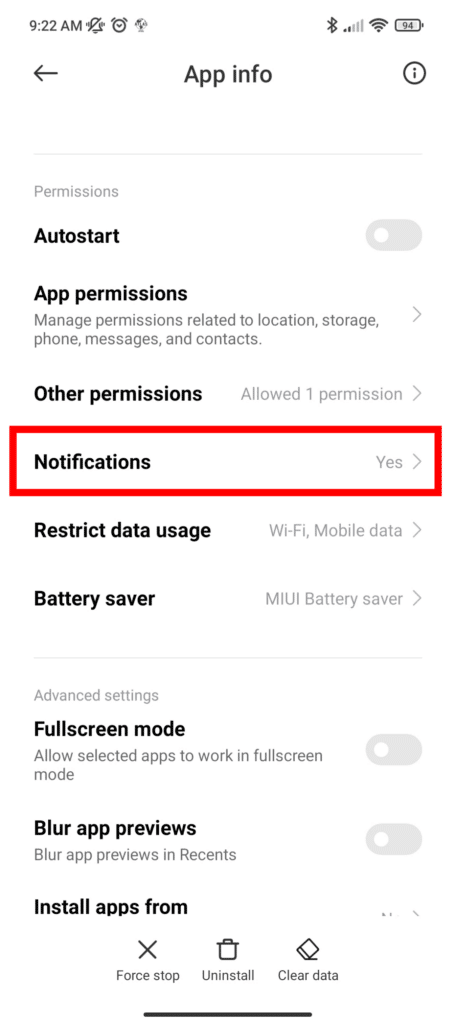
    This is definitely the first thing you will want to check as this setting must be enabled in order for a device to be able to receive push notifications at all.

    In order to find it go to:

    1. Settings
    2. Apps or Applications
    3. Manage apps
    4. Find your app in the list

    You will then see a few settings for your app, look for the “Notifications” one and make sure it is enabled.

    Battery saver is enabled

    One of the most common ways of saving battery is to disable push notifications, for this reason, you will want to check if any battery saver options or apps are running on your device.

    There are two places where you must look, the app settings and the device settings.

    For the app settings go to:

    • Settings
    • Apps or Applications
    • Manage apps
    • Find your app in the list

    Make sure the following option is set to “No restrictions” so the notifications are not blocked:

    For the device settings just pull down the top of your screen to show device settings, then look for the Battery Saver option and make sure that is disabled, as you can see below:

    Background data is disabled

    In order for your app to be able to receive push notifications, it needs to be connected to the internet, either through a wi-fi network or mobile data.

    Under the app settings, make sure that your app has permissions to use Wi-fi and mobile data while in the background, as you can see here:

    Still not receiving notifications?

    If even after confirming that all the settings are properly configured your user is not receiving push notifications, our recommendation is to ask the user to reinstall the app.

    It is possible that the user device didn’t get properly configured into the push notifications provider when the app was first installed, reinstalling it might help with resolving such a situation.

  • Why is my app no longer available in the App Store

    Why is my app no longer available in the App Store

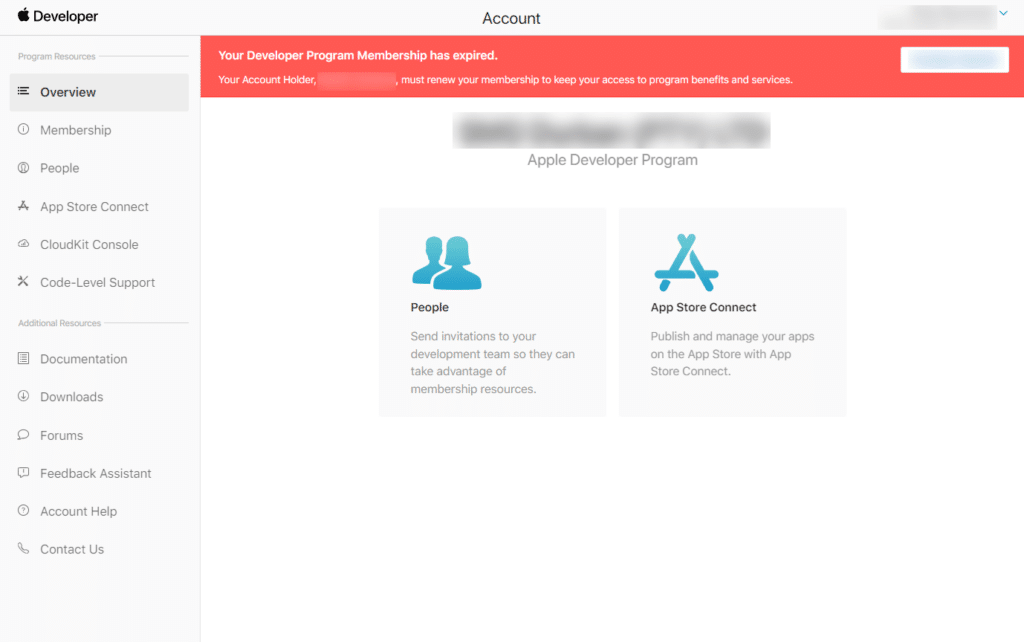
    If all of sudden your app no longer shows in the App Store, chances are that your Apple Developer Subscription has expired and needs to be renewed.

    Apple charges a $99 annual fee for the Apple Developer Program, which is required in order for the apps you have on your account to remain accessible through the App Store.

    In order to have your app reinstated all you need to do is renew your Apple Developer Membership.

    To confirm that this is really the problem you can log in to your Apple Developer Account here: https://developer.apple.com/account/

    If your membership is expired you will see a red alert displayed at the top:

    To resolve the problem make sure you are logged in as the account owner, you will then see a button that says “Renew Membership”.

    If you are not seeing the “Renew Membership” button it is likely that you are not logged in as the owner of the account, in that case, you will need to contact the owner and ask him to renew the membership for you.

    If you are still having problems contact the Apple Developer support team through this link: https://developer.apple.com/contact/topic/select

  • What is a DUNs number and where to find it?

    A D-U-N-S Number is a number that is used to identify your business. D-U-N-S stands for Data Universal Numbering System, a system developed in the 60s by the Dun & Bradstreet (D&B) company for their own business. It has become a standard to identify a business and Apple uses it to verify the identity of your company.

    A DUNS number is a unique nine-character identification number Dun & Bradstreet provides free of charge.

    The ‘DUNS’ system was quickly adopted worldwide and it’s used by Apple to verify you’re a registered business and the identity of your Company.

    Where do I register a DUNS number?

    Before you start, use the DUNS Number look up tool to check if you already have one. If your company is not in the database, you can submit your information and get your DUNS number.

    How long does it take?

    Obtaining a DUNS Number for your business is quite straightforward. The process usually takes about five working days.

    Once you receive your number, please allow up to 2 business days for Apple to receive your information from D&B. After this, you can apply for the Apple Developer Program as a company.

    What information will I need to provide?

    To apply for a DUNS Number if your business, you will need to supply the following information:

    • Your work contact information
    • Legal structure or type of business (corporation, partnership, proprietorship, etc.)
    • Year the entity was created
    • The primary line of business
    • Total number of employees (full-time and part-time)

    How much does it cost?

    The service from D&B is free for normal registration. You shouldn’t pay anything for requesting a DUNS number. You are also not obligated to purchase any of D&B’s products.

  • vendrux News functionality and features

    https://www.youtube.com/watch?v=wfSzVeA_oaMYour app will gather content automatically from your WordPress site, display posts and pages, including custom post types. Your users will be able to read content online and offline, share it with a single tap, save their favourites, leave comments on your articles and receive push notifications alerting them to new content.Read more about our Features.Here’s a list (never complete, as we keep adding to it!).

    • Your own design for icon, launch images, logo and UI colors
    • Unlimited automatic and manual push notifications (compatible with posts and custom post types)
    • Customisable app menu with pages, categories, tags, custom taxonomies and links
    • User preferences for push notifications (by category)
    • Support for posts, pages, categories, custom post types and custom fields
    • Support for videos, images, galleries and almost every HTML5 widget you can embed in your content
    • Advertising with AdMob, Adsense, MoPub, Google DFP or your own custom HTML ads
    • Banner, interstitial and native ads supported
    • Offline access to your content
    • Support for Google Analytics with complete app usage statistics
    • Custom HTML/PHP/CSS in the article contents (add all the functionality you need)
    • WordPress, Facebook and Disqus comments supported
    • Social Sharing features (one tap to share to Facebook, Twitter, Whatsapp, email and more)
    • Support for Youtube, Vimeo and other video players, Soundcloud and any HTML5 widget or player
    • Support for image galleries
    • User favourite posts
    • Multilanguage mobile apps, including English, Arabic, French, Spanish, Italian, German, Swedish and Portuguese.
    • RTL support for Arabic and Israeli
    • Create a members only, login protected mobile app with access to your WordPress user database
    • App Submission service to Apple App Store and Google Play (we do all for you)
    • Ability to publish with your own Developer accounts on Google Play and App Store
    • Complete integrations with WP Groups and the WordPress user database for login protected mobile apps
  • What are Apple and Google’s fees and revenue share percentage on in-app purchases and subscriptions?

    Every App Store, including Apple App Store and Google Play Store charge a fee on in-app purchases. They take a significant cut of your revenue on any one time and subscription charge in your app, that’s how they make money.

    Subscription billing is particularly popular these days and both Apple and Google have tried enticing developers with a revenue structure that reduces their commission over time.

    What percentage does Apple take from in app purchases?

    For one-time purchases Apple charges a 30% fee.

    Since 2016, Apple has reduced the fees they charge for subscriptions, but only after 12 months of service.

    In the first year of a subscription, Apple takes a 30% cut of your revenue, so you receive 70% of the subscription price at each billing cycle, monthly or annual, minus applicable taxes.

    After a year of service, your revenue share increases to 85% of the subscription price, minus applicable taxes, so Apple takes 15% of your revenue.

    Update: Want to avoid Apple’s 30% App Store fee? Apple is changing their rules about what’s allowed and what not. It’s now allowed for you to contact app users about payment options outside of the app. You can’t link to other payment options yet, but you might be able soon.

    All subscriptions on all Apple platforms are eligible, including paid introductory periods (pay as you go, pay up front). The period calculation excludes free trials and bonus periods. Upgrades, downgrades, or crossgrades between subscriptions in the same group don’t affect the one year calculation. A move to a subscription in a different group resets the count of days.

    What percentage does Google take from in app purchases?

    Like for one-time purchases, Google’s revenue share on subscriptions is 30% of the price. You receive 70% of the payment.

    Like for Apple, Google’s cut on your revenue for subscriptions decreases to 15% after a year, so you’ll retain 85% of the revenue after 12 months.

    Subscribers within a grace period, or that recover from an account hold, grace period, pause, or subscription restore still count. Same for people that sign up at introductory pricing, those that upgrade or downgrade or re-sign up within two months of cancelling. What doesn’t count towards the 12 months are free trials, refunded purchases and any time while the account is on hold.

    Payout schedules

    You don’t get your money immediately when you sell a subscription. Google pays out just a few days after the end of the month, with no minimum.

    Apple makes payments 30 days following the end of each monthly period. To receive payment, you must have provided all required banking and tax information and meet a minimum threshold, ranging from 10USD to 150USD.

  • Welcome to Canvas | vendrux

    Welcome to Canvas | vendrux

    Welcome to our Canvas resource center, here you will find everything you need to learn how to use, configure and customize your apps.

    To get you started, here is a quick overview of how Canvas works.

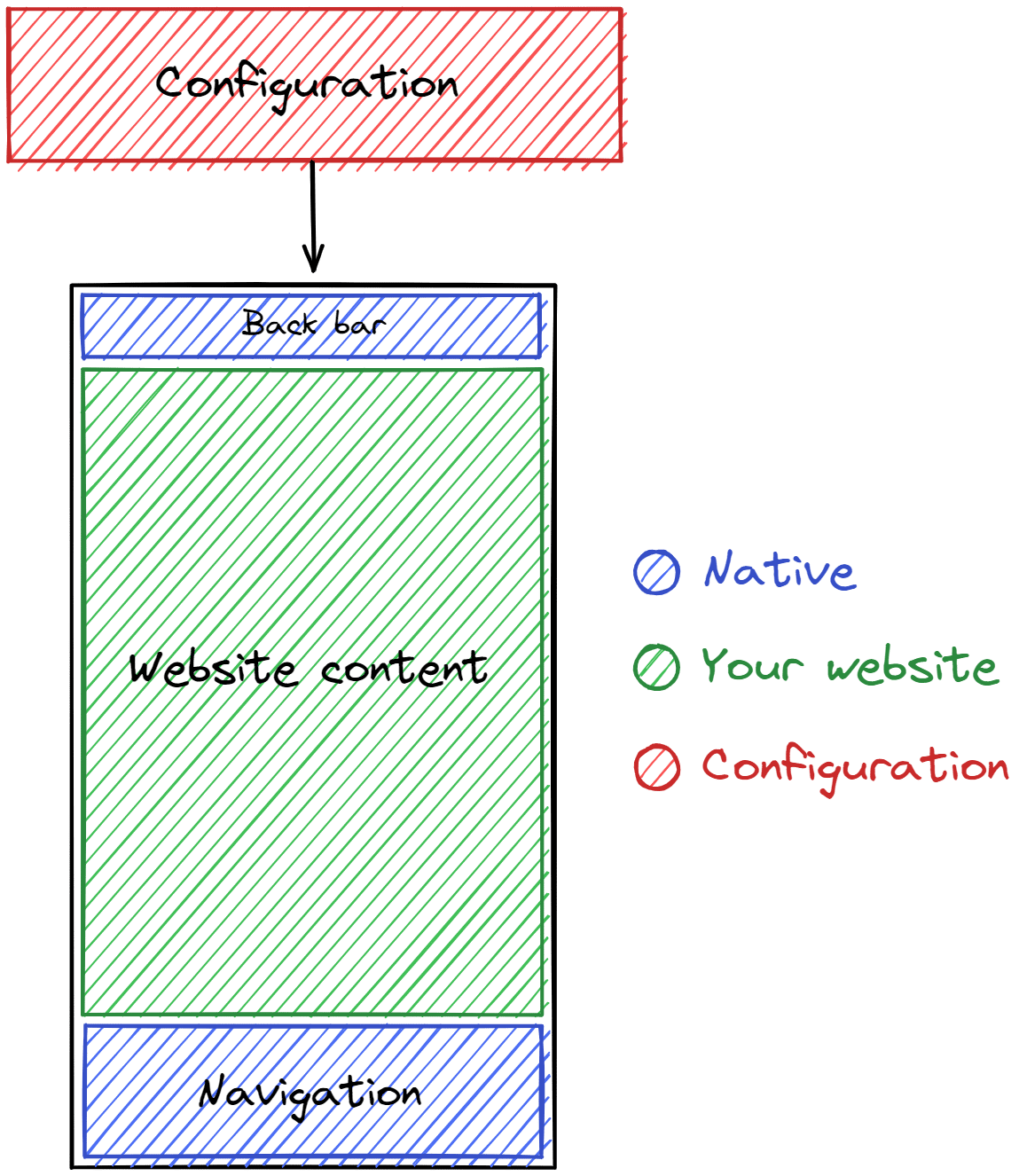
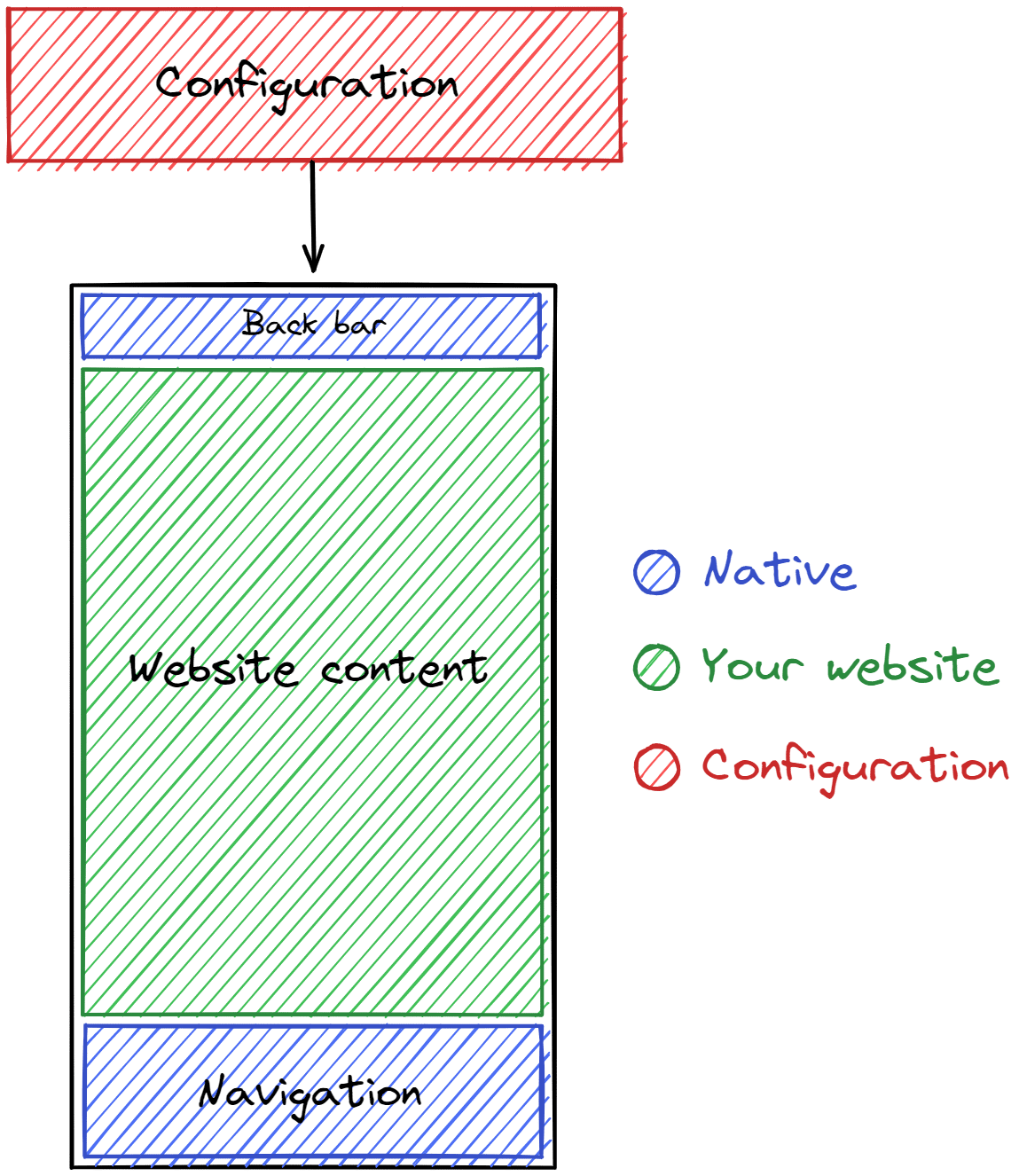
    A Canvas app is made of 3 main parts, each listed and described below:

    Native

    As a mobile app, Canvas was built using native code (Swift for iOS, and Kotlin for Android).

    On the native side of things, we have a core element that allows Canvas to display your website content inside an app, called WebView.

    We also have integrations with third-party platforms such as OneSignal for push notifications and Firebase for app analytics.

    Your website

    This is what makes Canvas so powerful, your website is responsible for feeding the app with all the content, features, and design.

    A great website, with meaningful features, good user experience, and fast performance will always convert into a great mobile app using Canvas.

    Another awesome benefit of using your website to power your app is that whenever you make changes to your website, those changes will automatically reflect in your app.

    Configuration

    Whenever your app is opened it will pull a configuration file from the web, which contains all the instructions about which pages should be displayed and how the menus should be organized.

    This allows you to easily make changes to your app without having to go through the process of rebuilding the app and resubmitting it for a new review in the stores.

    Here is a diagram for reference:

    Next steps

    Hopefully, the concept of Canvas is now a bit clearer to you.

    Moving forward you will find resources on how to use your app feature, change its configuration and integrate it further with your website.

    We have separated a list of frequently asked questions below, but feel free to navigate through our resources using the sidebar on the left.